Talvez você tenha acabado de sair de uma consulta clínica. Um fornecedor citou mais para microagulhamento de RF, enquanto outro disse que o microagulhamento regular seria suficiente. Então você pesquisou on-line e encontrou mais perguntas: RF é realmente melhor, ou soa apenas mais avançado? Quão doloroso é? Quanto tempo de inatividade você deve esperar? E o que você deve fazer com os relatórios sobre alterações de pigmentação e perda de gordura facial?
Uma maneira útil de comparar o microagulhamento de RF com o microagulhamento é perguntar se o calor adicionado atende ao seu principal objetivo de tratamento.. Ambos os tratamentos usam agulhas para criar microlesões controladas. O microagulhamento RF também fornece energia de radiofrequência e calor localizado. O custo extra e a complexidade só fazem sentido quando essa etapa adicional tem um propósito claro.
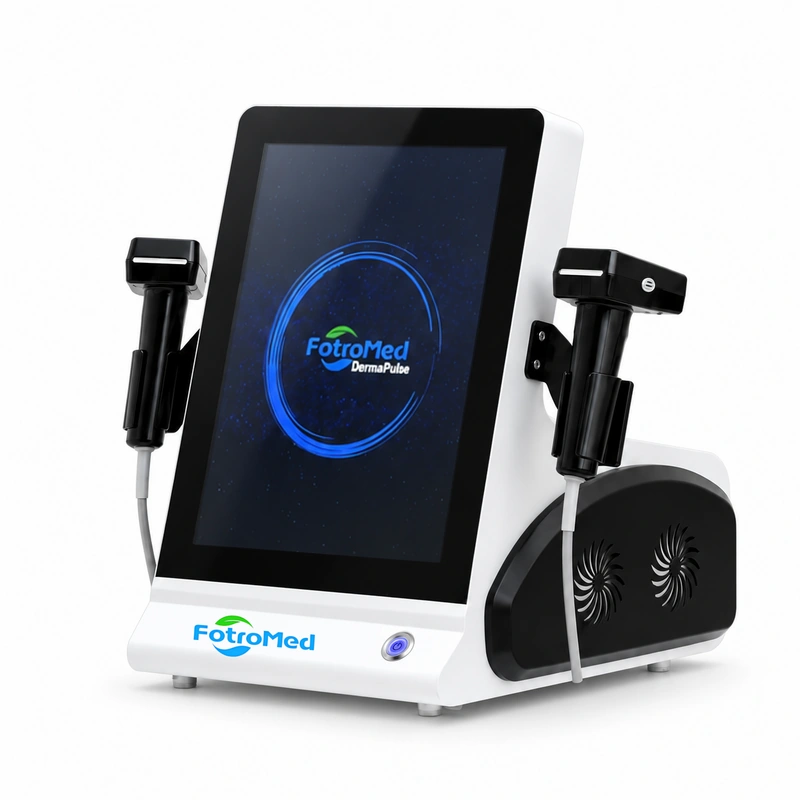
Fabricamos dispositivos profissionais de microagulhamento, então sabemos como o dispositivo, cartucho de agulha, entrega de energia, área de tratamento, e a técnica do operador podem alterar um tratamento de RF. Os consumidores não deveriam ter que entender as configurações da máquina antes de fazer uma escolha sensata. Este guia explica o que a RF muda, quando cada opção merece consideração, e o que esclarecer com seu provedor antes do tratamento.
Microagulhamento RF vs microagulhamento: comparação rápida
| Ponto de comparação | Microagulhamento tradicional | RF Microneedling |
|---|---|---|
| O que o tratamento faz | Agulhamento desencadeia reparação da pele e remodelação do colágeno. | Adiciona aquecimento localizado por radiofrequência ao agulhamento. |
| Quando considerar isso | Textura áspera, poros, linhas finas, tom irregular, e algumas cicatrizes superficiais de acne. | As mesmas preocupações com frouxidão leve, ou cicatrizes de acne que precisam de calor adicional. |
| Planejamento de cicatrizes de acne | Pode melhorar algumas cicatrizes atróficas de acne; profundo, cicatrizes estreitas são geralmente mais difíceis de tratar. | Usa agulhas e calor RF para tratar algumas cicatrizes de acne deprimidas. |
| Desconforto e recuperação | Os efeitos comuns incluem vermelhidão, aperto, peeling, leve inchaço, ou identificar sangramento. | Adiciona desconforto relacionado ao calor e risco às reações usuais de agulhamento. |
| Sessões | Sobre 3 para 6 sessões, espaçado 4 para 6 semanas de intervalo. | Um curso inicial é muitas vezes 3 para 4 sessões, cerca de um mês de intervalo. |
| Comparação de custos | $200 para $700 por sessão; sobre $600 para $2,100 por três sessões. | $800 para $1,500 por sessão; sobre $2,400 para $4,500 por três sessões. |
| Principal diferença de risco | Os riscos relacionados às agulhas incluem infecção, mudanças de pigmento, e cicatrizes. | As complicações relatadas também incluem queimaduras, perda de gordura, e danos nos nervos. |
Nossa recomendação
Para microagulhamento RF versus microagulhamento tradicional, concentre-se no que o calor pode tratar. Vale a pena considerar o microagulhamento tradicional para textura áspera, poros, linhas finas, e algumas cicatrizes superficiais de acne. A RF tem um propósito mais claro quando essas preocupações vêm com flacidez leve ou cicatrizes de acne que precisam de calor controlado. Se os resultados esperados forem semelhantes, escolha o microagulhamento tradicional; de outra forma, pesar o benefício adicional da RF em relação ao custo, recuperação, e risco.
Qual é a diferença entre microagulhamento RF e microagulhamento?
Como funciona o microagulhamento tradicional
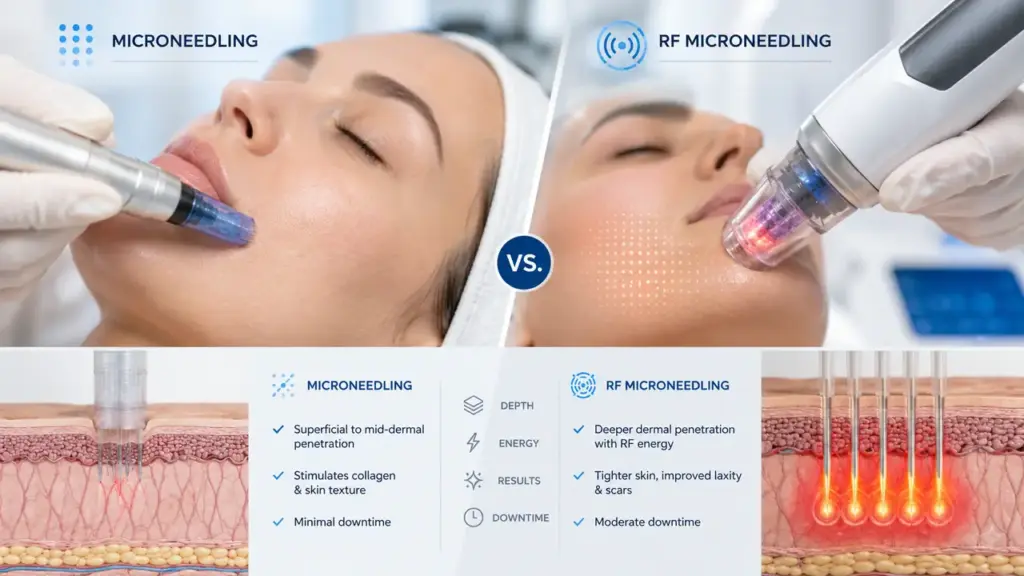
O microagulhamento tradicional move repetidamente agulhas finas para dentro e para fora da pele para criar muitas perfurações controladas. Alguns dispositivos motorizados profissionais permitem que o operador ajuste a profundidade e a velocidade da agulha. A pele responde a essas microlesões reparando-se e remodelando o colágeno.
Em termos de tratamento, microagulhamento tradicional é mecânico. O médico ainda seleciona o dispositivo, cartucho de agulha, profundidade, padrão de cobertura, e curso de tratamento, mas a RF não cria uma zona de tecido aquecido.
O que a RF acrescenta ao microagulhamento
O microagulhamento RF mantém a ação do agulhamento, mas dá às agulhas um segundo trabalho: eles atuam como eletrodos que fornecem energia de radiofrequência dentro ou abaixo da pele. A resistência do tecido converte essa energia em calor localizado, então o tratamento combina microlesões mecânicas com energia térmica controlada. Os EUA. Administração de Alimentos e Medicamentos (FDA) descreve o microagulhamento de RF em termos semelhantes: microagulhas fornecem energia de RF em profundidades definidas e produzem pequenas zonas de calor intenso.
O calor adicionado é a razão para considerar a RF. O rótulo por si só não mostra como um tratamento se comportará. O dispositivo, projeto do eletrodo, área de tratamento, profundidade, entrega de energia, e a técnica do operador afetam onde e como o aquecimento ocorre. Nosso Guia de microagulhamento RF explica essas variáveis técnicas; este artigo fica focado na escolha entre tratamento com e sem RF.
Nossa perspectiva de fabricante
O microagulhamento tradicional usa agulhas para iniciar a reparação da pele. Microagulhamento RF adiciona calor localizado. Compare-os perguntando o que esse calor extra pode fazer pela preocupação que você deseja tratar.
Qual tratamento se adapta melhor à sua preocupação principal?
Quando o microagulhamento tradicional pode ser suficiente
O Academia Americana de Dermatologia lista textura áspera, poros visíveis, linhas finas, e tom de pele irregular entre as preocupações tratadas com microagulhamento tradicional. Punções com agulha fina estimulam a reparação da pele e a produção de colágeno sem calor RF. Depois de uma avaliação profissional, não há razão para adicionar RF simplesmente porque parece uma atualização.
O microagulhamento tradicional também pode melhorar algumas cicatrizes de acne deprimidas, mas o tipo de cicatriz importa. Notas sobre medicina de Yale tão profundo, cicatrizes estreitas de picadores de gelo são geralmente mais difíceis de melhorar com microagulhamento do que cicatrizes mais largas. Cicatrizes mais complexas podem precisar de outro tratamento como parte do plano. Mudar para RF não os resolve automaticamente. O tratamento deve corresponder à cicatriz em vez de oferecer o máximo de recursos.
Diferença de preço de RF
Nas clínicas fornecemos, cursos comparáveis de microagulhamento por RF normalmente custam 35% para 45% mais que cursos tradicionais, em grande parte porque a RF usa cartuchos de agulhas descartáveis. Esta comparação do lado do fornecedor cobre cursos semelhantes; as faixas de preços públicos acima combinam diferentes clínicas, dispositivos, e áreas de tratamento. Se RF custar mais do que 1.5 vezes a opção tradicional, peça uma explicação detalhada.
Quando o microagulhamento por RF pode ser considerado
O microagulhamento RF pode ser considerado após avaliação profissional se você quiser tratar algumas cicatrizes de acne deprimidas ou se problemas de textura vierem acompanhados de frouxidão leve. O calor RF adiciona outro estímulo para a produção de colágeno, então um plano pode abordar textura e algum aperto. Esse calor extra deve ter um propósito claro para o problema que você deseja tratar.
Para cicatrizes de acne, Microagulhamento RF é um tratamento de cicatriz de acne, mas o tipo de cicatriz ainda importa. Profundo, cicatrizes estreitas ou depressões presas ao tecido subjacente podem precisar de outros tratamentos. Espere uma melhora gradual na profundidade da cicatriz e na textura da pele, correção não completa em uma sessão.
A adequação também depende do dispositivo, área de tratamento, e sua pele. Tons de pele mais escuros e histórico de hiperpigmentação pós-inflamatória necessitam de avaliação cuidadosa. A afirmação generalizada de que um tratamento se adapta a cada tom de pele não é suficiente.
Como os efeitos colaterais e os riscos de segurança diferem?
Riscos compartilhados por ambos os tratamentos
Com ou sem RF, microagulhamento penetra na pele. O Listas da FDA vermelhidão, secura, aperto, peeling, e identificar sangramento entre possíveis reações. Esses efeitos geralmente desaparecem, mas infecção, mudanças de pigmento, e cicatrizes podem ocorrer. Ambos os tratamentos requerem técnica e cuidados posteriores adequados. Cada sessão deve usar um novo, cartucho de agulha descartável. Um cartucho usado nunca deve ser limpo e reutilizado, mesmo na mesma pessoa.
Riscos adicionais a serem considerados com microagulhamento de RF
Microagulhamento RF aquece tecido, então lesões por calor são um risco adicional. A FDA recebeu relatos de complicações graves com certos usos, incluindo queimaduras, cicatrizando, perda de gordura, e danos nos nervos. Essas lesões requerem cuidados médicos e são diferentes de vermelhidão ou rigidez de curta duração. Escolha um profissional que tenha sido treinado no dispositivo específico de microagulhamento de RF.
Perguntas frequentes
Microagulhamento RF vs microagulhamento regular: o que é melhor?
O microagulhamento por RF é mais adequado apenas quando o calor localizado tem uma função clara no plano de tratamento. O microagulhamento tradicional continua sendo uma opção profissional para textura, poros, linhas finas, e algumas cicatrizes de acne. Compare o objetivo, evidência, tempo de inatividade, risco, e curso total. Um nome que soa mais avançado não garante um melhor ajuste.
Qual é a desvantagem do microagulhamento RF?
RF acrescenta complexidade ao tratamento e risco relacionado ao calor. Os resultados dependem do dispositivo, área de tratamento, entrega de energia, e técnica do operador. Um preço mais alto também deve ter um motivo claro. Complicações graves relatadas ao FDA com certos usos incluem queimaduras, cicatrizando, perda de gordura, e danos nos nervos.
Qual tipo de microagulhamento é mais eficaz?
Nenhum tipo é melhor para todas as preocupações. Comece com a condição, padrão de cicatriz ou grau de frouxidão, tom de pele, área de tratamento, e tempo de inatividade aceitável. O fornecedor deve explicar por que o método escolhido se enquadra nesses fatores e o que vem a seguir se o primeiro curso for insuficiente.
Duas sessões de microagulhamento RF são suficientes?
Duas sessões podem ser suficientes para mostrar melhora, mas se eles são suficientes depende da mudança que você deseja. Um curso inicial de microagulhamento por RF é frequentemente 3 para 4 sessões com cerca de um mês de intervalo, ajustado ao indivíduo. Após a segunda sessão, dê tempo à sua pele e compare o progresso no acompanhamento. Fotos tiradas sob a mesma luz e do mesmo ângulo são mais úteis do que olhar no espelho todos os dias.
O microagulhamento RF pode fazer você parecer mais velho?
Pode ocorrer se a perda de gordura não intencional deixar o rosto com uma aparência mais vazia ou retraída. O microagulhamento RF tem como objetivo melhorar a textura e firmeza da pele, mas a perda de gordura é uma complicação relatada. Se o seu rosto já é magro ou preservar a plenitude facial é importante para você, diga isso durante a consulta e peça ao médico para incluir a preservação do volume no plano de tratamento.
O microagulhamento RF pode apertar a papada?
Frouxidão leve pode ser um motivo para discutir microagulhamento por RF. Antes de tratar o queixo, pergunte quanta mudança é realista, como será documentado com fotos ou outro método, e se a área de tratamento está próxima de regiões onde a perda de volume é indesejada.
Quanto custam três sessões de microagulhamento?
Com base no público dos EUA. preços de clínicas, três sessões tradicionais de microagulhamento custam cerca de $600 para $2,100, enquanto três sessões de microagulhamento RF custam cerca de $2,400 para $4,500. Use esses intervalos como orçamento inicial. Os preços reais variam de acordo com a área de tratamento, dispositivo, e clínica, e um pacote de três sessões pode custar menos do que comprar cada sessão separadamente.
Como você deve escolher?
O microagulhamento tradicional é um tratamento completo baseado em agulhamento mecânico controlado. Microagulhamento RF adiciona calor controlado, e essa etapa extra deve ter um propósito específico.
Se suas principais preocupações são textura, poros dilatados, linhas finas, ou algumas cicatrizes de acne, o microagulhamento tradicional já pode ser uma opção profissional adequada. Se o plano tiver uma meta térmica definida, como remodelar algumas cicatrizes ou tratar flacidez leve, RF merece consideração. O provedor ainda deve explicar o dispositivo, área de tratamento, curso, recuperação, e risco adicional.
Use três verificações: definir a principal preocupação, identificar o que a RF acrescenta a esse objetivo, e compare o curso completo em vez de uma sessão. Em seguida, escolha um fornecedor qualificado que possa explicar claramente as compensações de segurança.
Referências & fontes
- NÓS. Administração de Alimentos e Medicamentos: Dispositivos de microagulhamento
- NÓS. Administração de Alimentos e Medicamentos: Riscos potenciais de certos usos de microagulhamento de RF
- Academia Americana de Dermatologia: Microagulhamento pode desbotar cicatrizes, Tom de pele irregular, e mais
- Medicina de Yale: Microagulhamento
- Academia Americana de Dermatologia: Tratamento para cicatrizes de acne
- Comparando microagulhamento sozinho e em combinação para cicatrizes de acne: Meta-análise de rede de ensaios randomizados
- Microagulhamento: Ainda é um bom tratamento para cicatrizes de acne? Uma revisão da literatura de 2020 para 2024 Evidência
- Intervenções minimamente invasivas para cicatrizes atróficas de acne: Revisão de evidências guiadas por fenótipo
- Laser, Microagulhamento e terapias combinadas para cicatrizes atróficas de acne moderadas a graves: Meta-análise de rede
- Microagulhamento por radiofrequência fracionada como monoterapia no tratamento de cicatrizes de acne: Uma revisão sistemática
- Eficácia do microagulhamento por radiofrequência em condições dermatológicas: Uma revisão sistemática
- Radiofrequência e Microagulhamento por Radiofrequência em Peles Negras: Uma revisão
- Perfil de segurança para microagulhamento: Uma revisão sistemática