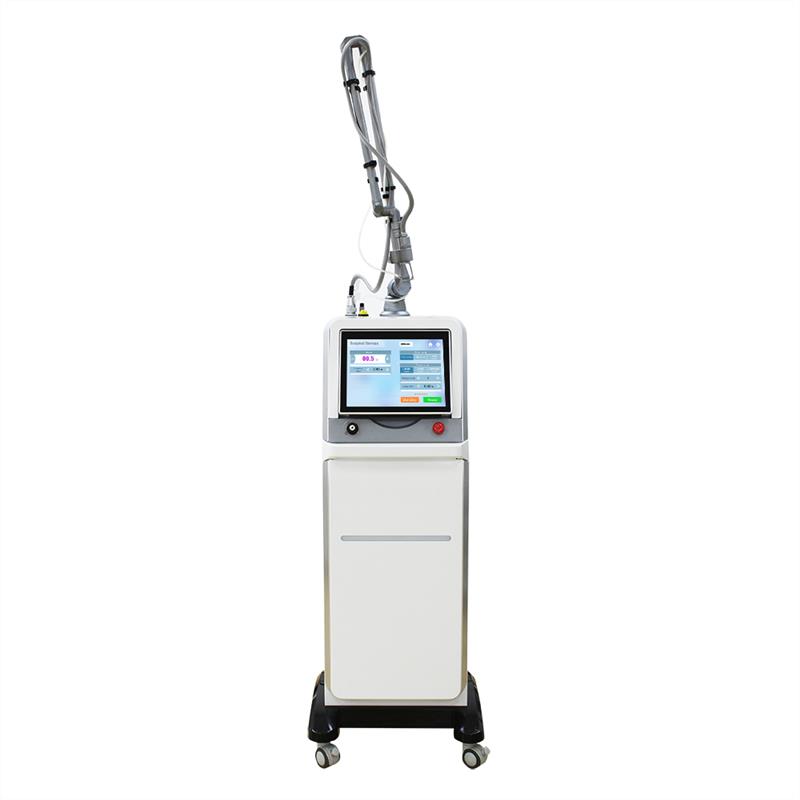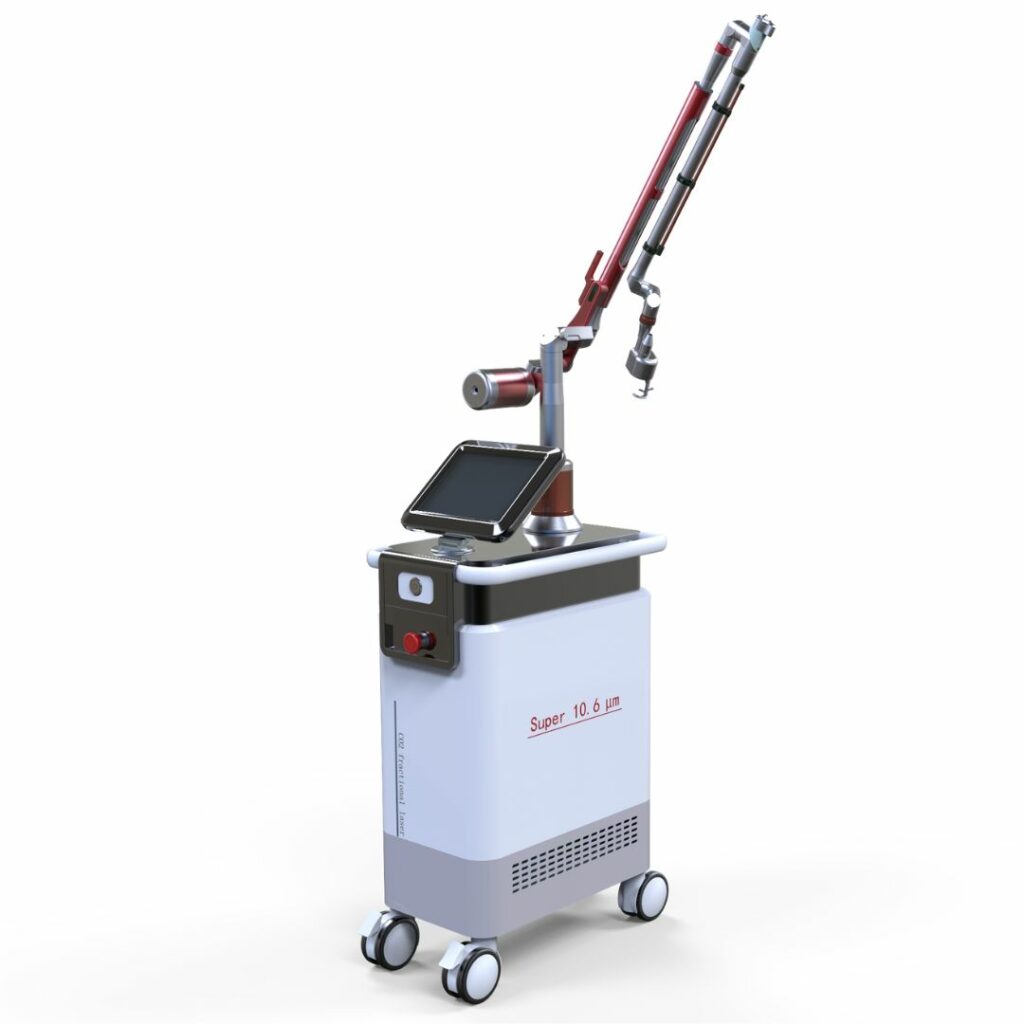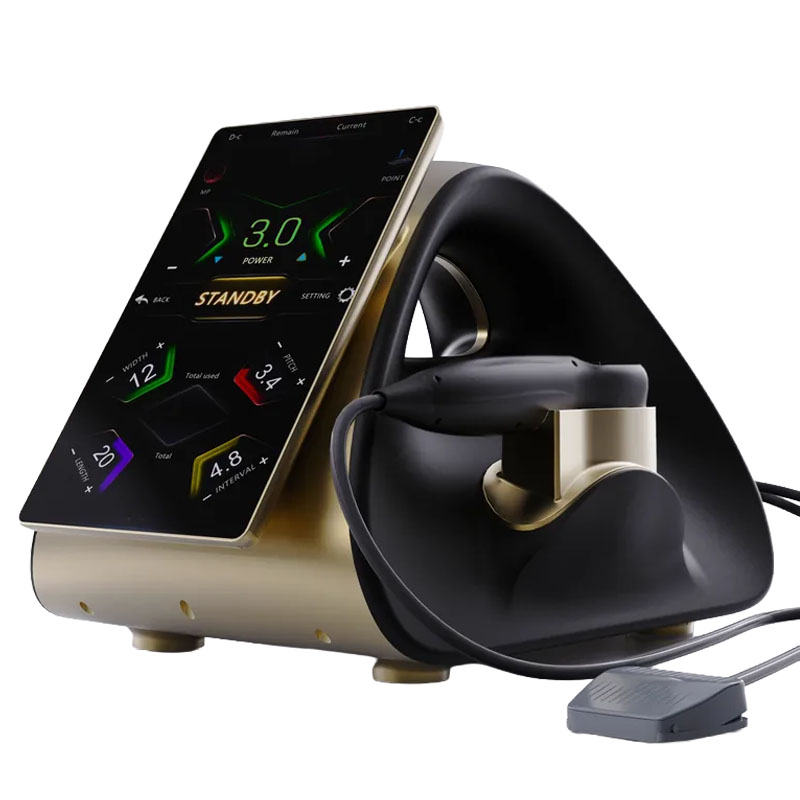
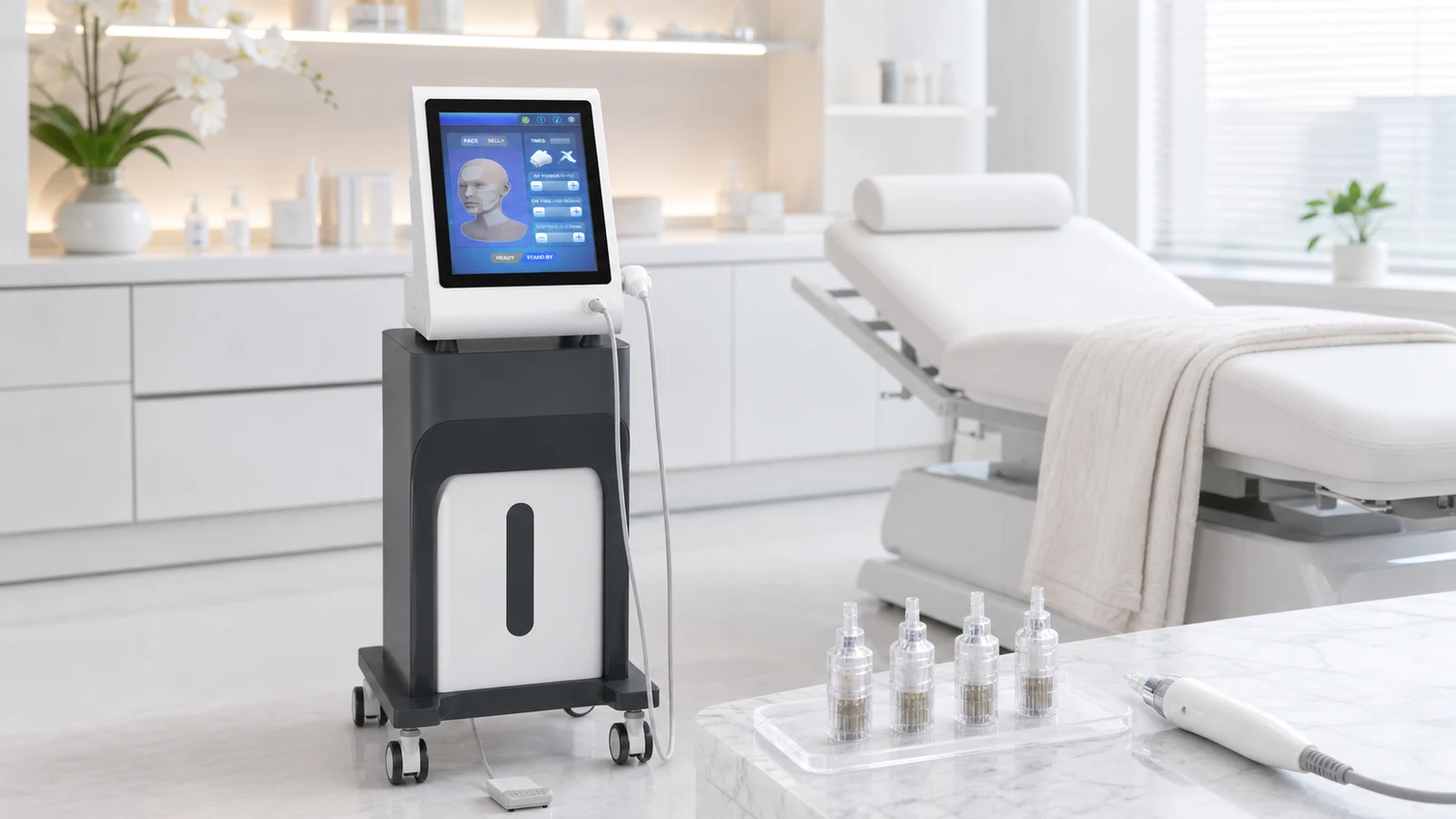
Ce guide est écrit pour les salons de beauté, cliniques esthétiques, avec spas, et distributeurs d'équipements qui évaluent une machine à micro-aiguilles RF fractionnée pour les services professionnels de rajeunissement de la peau. Il explique ce que fait la machine, comment fonctionne la technologie, quels traitements il peut prendre en charge, et ce que les acheteurs doivent vérifier avant de choisir un fournisseur.
Une machine à micro-aiguilles RF fractionnée combine des micro-aiguilles fines avec de l'énergie radiofréquence. Les aiguilles créent des microcanaux contrôlés dans la peau tandis que l'énergie RF est délivrée dans des couches sélectionnées.. Pour les entreprises, la vraie question n'est pas seulement de savoir si la technologie est populaire. La question la plus importante est de savoir si la machine a une production d'énergie stable, conseils de traitement adaptés, documents de sécurité clairs, formation pratique, support après-vente fiable, et des coûts de consommables qui ont du sens pour votre menu de services.
Points clés à retenir
- Une machine à micro-aiguilles RF fractionnée est différente d'un stylo à micro-aiguilles ordinaire car elle fournit de l'énergie RF à travers ou autour des aiguilles..
- Il est couramment utilisé par les professionnels pour raffermir la peau., aspect des cicatrices d'acné, ridules, pores dilatés, problèmes de texture, et rajeunissement de la peau du corps.
- Les acheteurs devraient comparer la profondeur de l'aiguille, Stabilité RF, options de pourboire, pièces à main, conception de confort, documents de sécurité, entraînement, garantie, et les frais de remplacement des pointes.
- Instituts de beauté, cliniques, avec spas, et les distributeurs doivent choisir différentes configurations en fonction de leur modèle de service et des attentes des clients..
- Le choix le plus sûr est de considérer cela comme un investissement d’équipement à long terme., il ne s'agit pas d'un achat unique de machine.
Qu'est-ce qu'une machine à micro-aiguilles RF fractionnée?
UN machine à micro-aiguilles RF fractionnée est un appareil esthétique professionnel qui utilise ensemble des micro-aiguilles et de l'énergie radiofréquence. Les micro-aiguilles pénètrent dans la peau à une profondeur contrôlée, et l'énergie RF est délivrée selon un schéma fractionné plutôt que sur toute la surface de la peau.. Cette prestation ciblée est l’une des raisons pour lesquelles la technologie est largement utilisée dans les menus professionnels de rajeunissement de la peau..
Le terme “fractionnaire” signifie que le traitement affecte des zones sélectionnées tout en laissant les tissus environnants non traités. L'appareil n'est pas la même chose qu'un rouleau de microneedling domestique, un stylo microneedling basique, ou un simple appareil de raffermissement de la peau par radiofréquence. Une machine à micro-aiguilles RF fractionnée combine une pénétration contrôlée de l'aiguille avec un apport d'énergie RF, ce qui donne aux utilisateurs professionnels plus de flexibilité lors de la création de menus de traitement avancés.
La Food and Drug Administration des États-Unis explique que la conception des dispositifs de microneedling peut varier, réclamations, et statut réglementaire. Les cliniques et les acheteurs doivent consulter les réglementations locales avant d'utiliser ou de publier des allégations de traitement.. Ceci est particulièrement important lorsqu'un fournisseur utilise des termes tels que “Approuvé par la FDA,” “FDA autorisé,” ou “qualité médicale,” parce que ces expressions ne signifient pas toujours la même chose sur tous les marchés.
Comment fonctionne une machine à micro-aiguilles RF fractionnée?
Un fractionnaire Machine à micro-aiguilles RF travaille dans 4 étapes de base: pénétration de l'aiguille, Livraison d'énergie RF, effet thermique contrôlé, et réponse au remodelage du collagène. L'opérateur sélectionne la profondeur de l'aiguille et le réglage de l'énergie en fonction de la zone de traitement, état de la peau, et protocole professionnel. La machine délivre ensuite de l'énergie via la pointe de traitement selon un schéma contrôlé..
D'abord, les micro-aiguilles créent de petits canaux dans la peau. Deuxième, L'énergie RF est délivrée dans les tissus au lieu de dépendre uniquement du contact avec la surface. Troisième, l'énergie RF crée un chauffage contrôlé dans les zones traitées. Quatrième, la peau réagit avec le temps, c'est pourquoi on dit souvent aux clients qu'une amélioration visible peut se développer progressivement..
L'expérience exacte dépend de la machine, le conseil, le réglage de l'énergie, la formation de l’opérateur, et l’état de la peau du client. Un fournisseur responsable ne doit pas présenter un environnement ou un plan de traitement comme étant adapté à chaque personne.. Pour un acheteur B2B, cela signifie que la formation et les protocoles sont presque aussi importants que le matériel.
Quels traitements peut-il prendre en charge?
Les machines professionnelles de microneedling RF fractionné sont couramment utilisées dans les menus de services axés sur le rajeunissement de la peau., amélioration de la texture, et les préoccupations liées au resserrement. La langue de votre site Web, brochures, et les formulaires de consultation doivent rester conservateurs. Il est plus sûr de dire le traitement “peut aider à améliorer l’apparence de” une préoccupation plutôt que de promettre un résultat garanti.
Les zones de traitement courantes incluent le visage, cou, mâchoire, abdomen, bras, cuisses, et d'autres zones du corps sélectionnées. Les objectifs de service communs comprennent:
- Raffermissement et soutien raffermissant de la peau
- Aspect des ridules et des rides
- Aspect des cicatrices d'acné
- Pores dilatés
- Texture de peau inégale
- Aspect des vergetures
- Rajeunissement général du visage et du corps
Le traitement des cicatrices d'acné est l'un des sujets les plus fréquemment associés au microneedling RF dans les discussions professionnelles et cliniques.. Les études et revues publiées sur le microneedling par radiofréquence et les cicatrices d'acné peuvent varier selon le type d'appareil., protocole de traitement, type de cicatrice, et conception de l'étude. Pour une clinique ou un salon, le point pratique à retenir est simple: évitez de promettre un pourcentage fixe d'amélioration à moins que vous n'ayez votre propre base clinique documentée et que vos réglementations locales autorisent cette affirmation.
Si votre entreprise compare encore différents appareils professionnels, Le guide FotoMed pour machines professionnelles de microneedling RF pour esthéticiennes peut vous aider à comprendre comment les cliniques et les salons évaluent différents types de machines.
Machine à micro-aiguilles RF fractionnée vs micro-aiguilles traditionnelles
Le microneedling traditionnel et le microneedling RF fractionné sont liés, mais ce n'est pas le même service. Les deux impliquent de fines aiguilles, mais la source d'énergie et la valeur commerciale sont différentes.
| Facteur | Micro-aiguille traditionnel | Machine à micro-aiguilles RF fractionnée |
|---|---|---|
| Action principale | Microcanaux mécaniques | Microcanaux et énergie RF |
| Source d'énergie | Pas d'énergie RF | Énergie radiofréquence |
| Positionnement typique | Service de texture de peau d'entrée de gamme | Service avancé de rajeunissement et de raffermissement |
| Profondeur du traitement | Cela dépend du stylo et de la cartouche | Profondeur réglable avec diffusion RF |
| Consommables | Cartouches d'aiguilles | Embouts ou cartouches de micro-aiguilles RF |
| Valeur commerciale | Billet inférieur à moyen | Souvent positionné comme un service plus onéreux |
| Ajustement de l'acheteur | Salons d'entrée, salles de soins du visage | Cliniques, avec spas, salons avancés, distributeurs |
Le microneedling traditionnel peut toujours être utile pour les salons et les cliniques car il est plus simple et nécessite généralement un budget d'équipement inférieur.. Le microneedling RF fractionné peut prendre en charge un menu de service plus avancé, mais cela nécessite également une formation plus solide des opérateurs et une communication plus attentive avec les clients.. La vraie question n'est pas “Lequel est toujours le meilleur?” C'est “Quel traitement convient à vos clients, votre équipe, votre budget, et vos règles locales?”
Principales caractéristiques à vérifier avant d’acheter
Lorsque vous comparez les machines, ne jugez pas uniquement par les photos du produit. De nombreuses machines à micro-aiguilles RF fractionnées se ressemblent en ligne, mais les détails peuvent être très différents. Un acheteur sérieux devrait comparer la conception technique, flexibilité du traitement, documentation de sécurité, consommables, et l'accompagnement des fournisseurs avant de demander le prix final.
Profondeur d'aiguille réglable
La profondeur de l’aiguille est l’une des caractéristiques les plus importantes à vérifier. Différentes zones de traitement peuvent nécessiter différentes profondeurs, et l'opérateur a besoin de contrôle. Demandez au fournisseur la plage de profondeur d'aiguille disponible, la méthode de réglage, et si la profondeur est stable pendant l'utilisation.
Par exemple, zones délicates du visage, peau du corps plus épaisse, et les services axés sur les cicatrices ne doivent pas être gérés avec le même paramètre par défaut. Si un fournisseur ne peut pas expliquer clairement le contrôle de la profondeur de l'aiguille, la machine peut être difficile à utiliser de manière sûre et cohérente dans un environnement professionnel.
Sortie d'énergie RF stable
Une production d'énergie RF stable affecte la cohérence du traitement. Si la fourniture d'énergie est instable, les clients peuvent ressentir un confort inégal, et les opérateurs pourraient avoir plus de mal à instaurer la confiance dans le protocole. Demandez si le fournisseur peut expliquer comment la machine ajuste la puissance, comment l'opérateur contrôle l'intensité, et comment les utilisateurs sont formés pour sélectionner les paramètres de manière responsable.
Vous n'avez pas besoin de devenir ingénieur avant d'acheter une machine. Mais vous devez comprendre la logique de contrôle de base. Un fournisseur professionnel doit être capable d'expliquer les réglages dans un langage de traitement pratique., pas seulement en termes techniques.
Options de pointe d'aiguille
Les options de pointe d’aiguille peuvent affecter la flexibilité de la machine. Certains systèmes prennent en charge les pointes isolées, pointes non isolées, ou un nombre de broches différent. Différentes conceptions d'embouts peuvent convenir à différents domaines de traitement et objectifs de service.
Pour la planification d'entreprise, demandez également si les embouts de remplacement sont faciles à acheter, s'ils sont emballés individuellement, combien de vaccins ou de traitements ils prennent en charge, et combien ils coûtent. Une machine avec un prix d'achat bas mais des pointes coûteuses ou difficiles à trouver peut devenir un mauvais investissement à long terme.
Fonction vide ou pression négative
Certaines machines de microneedling RF fractionnées incluent le vide ou la pression négative. Cette fonctionnalité peut aider l'embout de traitement à rester en contact plus étroit avec la peau et permettre un fonctionnement plus stable dans des zones sélectionnées..
À mon avis, le vide doit être traité comme un élément de conception utile, pas la seule raison de choisir une machine. Si un fournisseur promeut fortement le vide, demande comment ça marche, quelles pièces à main l'incluent, et si cela change la technique de traitement ou le confort du client.
Conception de refroidissement et de confort
Le confort est important car le microneedling RF n'est pas un soin du visage de base en spa. Les clients peuvent ressentir de la chaleur, pression, et sensation d'aiguille pendant le traitement. Si des pièces à main de refroidissement ou des fonctionnalités de marteau à froid sont incluses, demandez s'ils sont intégrés au système ou vendus séparément.
Le confort dépend aussi de la préparation de la peau, vitesse de traitement, technique de l'opérateur, et des conseils de suivi. Une machine avec des fonctionnalités de confort est utile, mais cela ne remplace pas une bonne formation.
Pièces à main et consommables
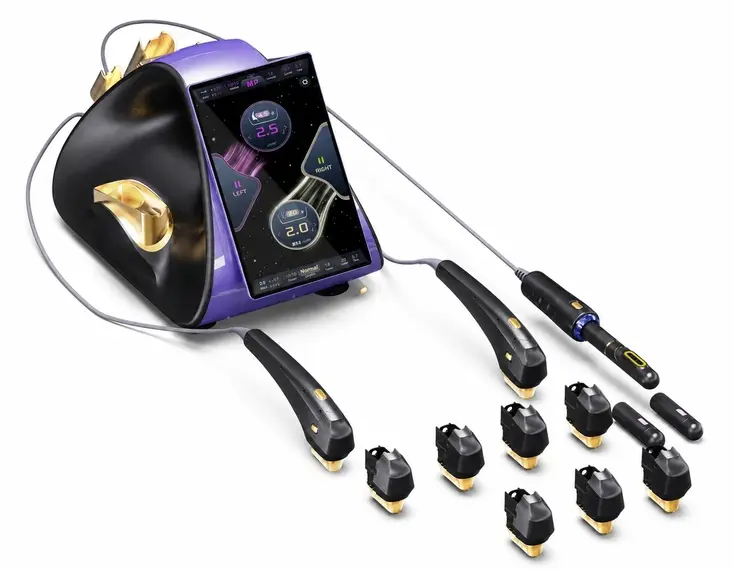
Le nombre et le type de pièces à main peuvent affecter le nombre de services que vous pouvez offrir. Un système à 1 poignée peut suffire pour un menu de salon ciblé, alors qu'un système multi-poignées peut être meilleur pour une clinique ou un distributeur qui veut faire face, corps, et des options de traitement spécialisées.
Les consommables font partie du coût réel de possession. Avant d'acheter, poser des questions sur les conseils de traitement, cartouches, conditionnement, durée de conservation, quantité minimum de commande, et délai d'expédition. FotoMed machine de microneedling RF fractionnée avec 4 poignées est un exemple de configuration professionnelle multi-poignées.
Documents de sécurité et formation
Les documents de sécurité et la formation ne sont pas des détails facultatifs. Demandez aux fournisseurs des manuels d’utilisation, conseils sur les contre-indications, protocoles de traitement, documents de certification, et conditions de garantie. OIN 13485 concerne les systèmes de gestion de la qualité des dispositifs médicaux, tandis que les bases de données sur les appareils de la FDA peuvent aider les acheteurs à comprendre si un appareil ou une entreprise dispose de dossiers réglementaires publics pertinents.. Ces ressources ne remplacent pas les conseils juridiques, mais ils aident les acheteurs à poser des questions plus précises.
La formation ne devrait pas se limiter à la façon d'allumer la machine. Il devrait expliquer les zones de traitement, paramètres, sélection des clients, préparation de la peau, suivi, contre-indications, et maintenance. Une machine sans formation peut créer un risque commercial même si le matériel lui-même semble attrayant.
Combien coûte une machine à micro-aiguilles RF fractionnée?
Le coût d’une machine à micro-aiguilles RF fractionnée dépend de la configuration, fournisseur, documents de certification, pièces à main, consommables, garantie, et quantité commandée. Il est préférable de comparer le coût total de possession plutôt que le seul prix de la machine..
Plusieurs facteurs peuvent affecter le devis final:
- Nombre de pièces à main
- Conception énergétique RF et plage de sortie
- Plage de profondeur d'aiguille et options de pointe
- Fonctions de vide ou de refroidissement
- Accessoires inclus
- Support à la formation et aux opérations
- Période de garantie et disponibilité des pièces
- Documents de certification
- Expédition, impôt, et exigences d'importation
- OEM, ODM, ou quantité commandée par le distributeur
Pour un petit salon de beauté, un système compact avec une formation claire et des consommables abordables peut être plus réaliste que la machine la plus complexe. Pour une clinique ou un spa médical, un système plus flexible peut avoir du sens si l'entreprise peut construire plusieurs packages de traitement autour de lui. Pour un distributeur, marge, vitesse de réapprovisionnement, conditionnement, documentation, et la gestion après-vente peut avoir plus d'importance que le prix unitaire le plus bas.
Si vous souhaitez comparer ce sujet avec une logique plus large de tarification et d'achat du microneedling RF, Article de FotoMed sur comment choisir une machine de microneedling RF professionnelle peut vous aider à évaluer le processus d'achat plus en détail.
Comment choisir la bonne machine de microneedling RF pour votre entreprise
Différentes entreprises ont besoin de différentes machines. Un salon de beauté, une clinique esthétique, et un distributeur peuvent tous rechercher le même mot-clé, mais ils n'achètent pas pour la même raison.
Pour les salons de beauté
Les salons de beauté ont généralement besoin d'une machine pratique, entraînable, et facile à expliquer aux clients. L'équipe peut ne pas avoir de formation médicale, la formation des fournisseurs et le langage de traitement sûr sont donc particulièrement importants.
Les salons doivent également prêter une attention particulière aux coûts des consommables, car les conseils de remplacement affectent directement le prix et les bénéfices des services.. Une machine équilibrée avec des étapes de fonctionnement claires est souvent plus utile qu'un système compliqué que le personnel ne peut pas utiliser en toute confiance.
Pour les cliniques esthétiques et les spas médicaux
Les cliniques esthétiques et les spas médicaux ont souvent besoin d'une plus grande flexibilité de traitement. Ils peuvent servir des clients qui comparent le microneedling RF avec HIFU, laser, chargement initial, ou d'autres services de rajeunissement.
Les cliniques devraient se concentrer sur la stabilité énergétique, documentation de traitement, formation des opérateurs, et des scripts de consultation qui expliquent des attentes réalistes. Un client qui comprend l’amélioration progressive et le suivi est moins susceptible de s’attendre à une transformation instantanée..
Pour les distributeurs
Les distributeurs doivent penser au-delà d’une seule machine. Ils ont besoin d'un produit qui peut être expliqué, démontré, expédié, soutenu, et réorganisé. Documentation, options de marque privée, des pièces de rechange, et le matériel de formation peut être plus important que la conception visuelle seule.
Demandez si le fournisseur prend en charge les commandes OEM ou ODM, quelles options d'emballage sont disponibles, combien de temps prend habituellement la production, et si les supports marketing peuvent être adaptés à votre marché. Un choix plus judicieux consiste à tester le processus d’assistance du fournisseur avant de passer une commande importante..
Erreurs d'achat à éviter
Cette section est importante car de nombreux acheteurs comparent les machines trop rapidement. Une machine à micro-aiguilles RF fractionnée peut prendre en charge une forte valeur de service, mais une mauvaise décision d'achat peut créer des problèmes de formation, consommables, satisfaction des clients, et un bénéfice à long terme.
Choisir uniquement par le prix le plus bas
Le prix de machine le plus bas n’est pas toujours le coût commercial le plus bas. Une machine très bon marché peut avoir un contrôle énergétique limité, moins de conseils de traitement, faible formation, documents peu clairs, ou un mauvais support pour les pièces de rechange. Ces problèmes peuvent ne pas être visibles sur les photos du produit.
Avant de choisir par prix, demandez ce qui est inclus. Le devis inclut-il les pièces à main, conseils de démarrage, formation opérationnelle, assistance à l'expédition, garantie, et conseils après-vente? Si deux machines se ressemblent mais qu'un fournisseur offre une assistance plus solide, le prix plus élevé peut être plus facile à justifier.
Ignorer les coûts des consommables
Les pointes de microneedling RF sont des coûts récurrents. Si les embouts de remplacement coûtent cher, difficile de commander, ou disponible uniquement en grandes quantités minimales, vos bénéfices de traitement peuvent diminuer. C'est pourquoi le coût des consommables doit être calculé avant d'acheter la machine..
Demandez combien de pourboires sont inclus avec la machine, combien coûtent les pointes de remplacement, et à quelle vitesse ils peuvent être expédiés. Demandez également si différents types d'embouts sont nécessaires pour les traitements du visage et du corps.. Un plan clair pour les consommables aide les salons et les cliniques à fixer les prix des services avec plus de précision.
Surveiller les protocoles de formation et de traitement
Une machine n'est utile que si votre équipe peut la faire fonctionner en toute confiance. La formation doit couvrir la configuration de la machine, évaluation de la peau, sélection des clients, zones de traitement, sélection des paramètres, suivi, contre-indications, et maintenance. Une courte vidéo peut aider, mais il ne doit pas être le seul support pour un appareil professionnel.
Sans protocoles, chaque opérateur peut utiliser la machine différemment. Cela peut conduire à une expérience client incohérente et à un positionnement du service plus faible.. La formation aide également votre équipe à expliquer le traitement de manière plus professionnelle et responsable..
Faire des allégations de traitement non étayées
Les allégations marketing peuvent créer des risques. Évitez les déclarations telles que “élimine définitivement les cicatrices,” “garantit le levage,” ou “sans danger pour tout le monde.” Ces allégations sont trop fortes et pourraient ne pas être autorisées sur votre marché..
Utilisez une formulation plus prudente, tel que “couramment utilisé pour améliorer l’apparence des cicatrices d’acné” ou “peut favoriser une peau d’apparence plus ferme dans le cadre d’un plan de traitement professionnel.” Les informations publiques sur les dispositifs de microneedling de la FDA sont un rappel utile que les allégations relatives aux dispositifs, utilisation prévue, et le statut réglementaire est important.
Acheter sans service après-vente
Le service après-vente affecte les activités quotidiennes. Si une pièce à main a un problème, si les pourboires sont en rupture de stock, ou si votre personnel a besoin d'aide pour les réglages, vous avez besoin d'un fournisseur qui répond rapidement. Une machine n'est pas un achat unique; cela fait partie de votre opération de traitement.
Avant de commander, demander qui s'occupe de la garantie, comment les pièces de rechange sont expédiées, quelle assistance à distance est disponible, et combien de temps le fournisseur met habituellement pour répondre. Si vous êtes distributeur, demandez si le fournisseur peut aider indirectement vos clients avec des manuels, vidéos, et réponses techniques.
Questions à poser à votre fournisseur avant de commander
Utilisez ces questions avant de demander la facture finale. Ils aident à séparer les fournisseurs sérieux des vendeurs qui ne fournissent que des photos et un prix bas..
| Question | Pourquoi ça compte |
|---|---|
| Quelles profondeurs d'aiguille sont disponibles? | Indique si la machine peut prendre en charge différentes zones de traitement. |
| Des pointes isolées et non isolées sont-elles disponibles? | Vous aide à comprendre la flexibilité du traitement et les options de consommables. |
| Quelles pièces à main sont incluses? | Affecte le visage, corps, et planification de services spécialisés. |
| Quels certificats ou documents de sécurité pouvez-vous fournir? | Aide à l’examen de la conformité et à la diligence raisonnable des distributeurs. |
| La formation opérationnelle est-elle incluse? | Réduit l’incertitude du personnel et améliore la cohérence du service. |
| Quelle est la période de garantie? | Clarifie le risque à long terme après l’achat. |
| Combien coûtent les embouts de remplacement? | Affecte le prix du traitement et les bénéfices. |
| Supportez-vous l'OEM, ODM, ou commandes de distributeurs? | Important pour les grossistes et les acheteurs de marques privées. |
Vous pouvez également demander des vidéos, manuels, photos d'emballage, exemples de menus de soins, et des conseils de suivi. Le but n'est pas de collecter des documents pour la décoration. L'objectif est de comprendre si le fournisseur peut soutenir votre entreprise après l'arrivée de la machine..
Pour les lecteurs comparant le positionnement professionnel et domestique, Article de FotoMed sur Microneedling RF professionnel vs microneedling RF à usage domestique explique pourquoi les systèmes professionnels ne doivent pas être évalués de la même manière que les appareils grand public.
Pourquoi envisager la machine à micro-aiguilles RF fractionnée FotroMed?
FotoMed fournit du matériel de beauté professionnel pour les salons, cliniques esthétiques, avec spas, et distributeurs. Pour les acheteurs recherchant une machine à micro-aiguilles RF fractionnée, la valeur principale n'est pas seulement l'appareil lui-même. C'est la combinaison des options de la machine, Communication B2B, soutien à la formation, fourniture de consommables, et service après-vente.
Les options de microneedling FotroMed RF et de machine MRNF peuvent prendre en charge les menus professionnels de rajeunissement de la peau, y compris axé sur le resserrement, axé sur la texture, et des services axés sur l'apparence des cicatrices. Selon le marché de l’acheteur et le type d’entreprise, FotoMed peut également discuter des OEM, ODM, coopération avec les distributeurs, conditionnement, et planification des approvisionnements à long terme.
Pour les salons, cliniques, et distributeurs, une relation pratique avec le fournisseur est importante. Vous avez besoin d'informations claires sur la machine avant l'achat, consommables accessibles après achat, et un soutien qui aide votre équipe à construire un menu de soins stable au fil du temps.
FAQ
Qu'est-ce qu'une machine à micro-aiguilles RF fractionnée?
Une machine à micro-aiguilles RF fractionnée est un appareil esthétique professionnel qui combine des micro-aiguilles avec de l'énergie radiofréquence. Les aiguilles créent des microcanaux contrôlés tandis que l'énergie RF est délivrée dans des couches cutanées sélectionnées.. Il est couramment utilisé dans les services professionnels pour le rajeunissement de la peau., amélioration de la texture, serrage du support, et l'apparence des cicatrices d'acné.
Le microneedling RF fractionné est-il meilleur que le microneedling ordinaire?
Cela dépend de l'objectif du traitement. Le microneedling régulier peut convenir aux services de texture d'entrée de gamme, tandis que le microneedling RF fractionné ajoute de l'énergie RF pour un rajeunissement plus avancé et des menus axés sur le resserrement.. Les cliniques et les salons doivent choisir en fonction des besoins des clients, formation des opérateurs, budget, et réglementations locales.
Quels traitements une machine à micro-aiguilles RF fractionnée peut-elle prendre en charge?
Les utilisateurs professionnels utilisent couramment le microneedling RF fractionné pour raffermir la peau., ridules, aspect des cicatrices d'acné, pores dilatés, texture inégale, apparition des vergetures, et rajeunissement du visage ou du corps. Les allégations doivent rester prudentes car les résultats dépendent de l'état de la peau., paramètres de l'appareil, protocole, et formation des opérateurs.
Combien coûte une machine à micro-aiguilles RF fractionnée?
Le prix dépend des pièces à main, options de pointe d'aiguille, Conception de sortie RF, fonctions de vide ou de refroidissement, documents de certification, entraînement, garantie, expédition, et quantité commandée. Les acheteurs devraient comparer le coût total de possession, y compris des conseils de remplacement et un support après-vente, pas seulement le prix de la machine.
Que dois-je vérifier avant d'en acheter un?
Vérifier la plage de profondeur de l'aiguille, Stabilité énergétique RF, conseils disponibles, pièces à main, coût des consommables, documents de sécurité, entraînement, garantie, des pièces de rechange, et rapidité de réponse des fournisseurs. Si vous êtes distributeur, renseignez-vous également sur le support OEM ou ODM, conditionnement, délai de production, et documentation pour votre marché.
Conclusion
Une machine à micro-aiguilles RF fractionnée peut être un investissement important pour les salons, cliniques esthétiques, avec spas, et les distributeurs qui souhaitent créer des services professionnels de rajeunissement de la peau. Il peut prendre en charge les menus de soins axés sur le resserrement, texture, aspect des cicatrices d'acné, pores dilatés, et le rajeunissement du visage ou du corps lorsqu'il est utilisé avec une formation appropriée et une communication client responsable.
La meilleure décision d'achat n'est pas basée sur les photos du produit ou sur le prix le plus bas. Il devrait être basé sur le contrôle de la profondeur de l'aiguille, Stabilité énergétique RF, options de pourboire, coûts des consommables, documents de sécurité, entraînement, garantie, et support fournisseur. Si ces bases sont claires, la machine est plus facile à transformer en un véritable service professionnel plutôt qu'en un simple appareil dans la salle de traitement.
Si votre entreprise compare des équipements de microneedling RF fractionnés pour les salons, clinique, ou utilisation par un distributeur, contactez FotroMed pour discuter des options de la machine, soutien à la formation, consommables, et coopération B2B.