Les systèmes laser CO2 fractionné pour spas médicaux couvrent désormais une plage de prix allant d'environ $4,500 à plus de $150,000 — un écart de 30× qui reflète la structure des canaux et le positionnement de la marque tout autant que la technologie sous-jacente. Pour un propriétaire de clinique, un opérateur de medspa ou un distributeur évaluant un achat d'entrée de gamme, la question pratique n'est pas “ quel est l'appareil le moins cher ”, mais “ quel est le coût total de possession le plus bas qui répond toujours à l'homologation FDA ou CE pour mes indications et dessert ma patientèle en toute sécurité. ”
Ce guide couvre les tranches de prix 2026 sur l'ensemble du spectre, de l'abordable au haut de gamme, une décomposition du coût total de possession (TCO) sur 5 ans que la plupart des devis omettent, le calcul du point d'équilibre pour un medspa représentatif, des considérations de sécurité pour les cliniques traitant les peaux plus foncées, ainsi qu'une liste de contrôle d'approvisionnement contenant les éléments à vérifier avant de signer un bon de commande.
En un coup d'œil : Ce qui rend un laser CO2 fractionné “ de qualité médicale ” en 2026
Avant d'aborder les sélections ou les prix, trois critères techniques et réglementaires de base séparent un laser CO2 fractionné de qualité médicale d'un appareil grand public. Un système qui échoue à l'un de ces critères n'est pas abordable — il est invendable dans un cadre clinique.
| Valeur initiale | What to Confirm | Why It Matters |
|---|---|---|
| Homologation réglementaire | Homologation FDA 510(k) pour une utilisation aux États-Unis, ou marquage CE selon le RDME de l'UE pour une utilisation en Europe, avec les indications spécifiques documentées | Un appareil homologué uniquement pour un “ usage cosmétique général ” ne peut pas être facturé pour la révision des cicatrices, les applications gynécologiques ou l'incision chirurgicale |
| Source laser | Longueur d'onde de 10 600 nm, tube métallique RF (pas un tube en verre), évalué à plus de 15 000 heures de fonctionnement | Les systèmes à tube en verre se dégradent rapidement et produisent une fluence incohérente au fil du temps ; ceci est traité en détail plus loin dans le guide |
| Système de balayage | Scanner fractionné à galvano avec densité et profondeur réglables, et idéalement un motif de balayage aléatoire | Requis pour des protocoles sécurisés sur les phototypes Fitzpatrick III–VI et pour une profondeur de traitement variable |
Le marché de 2026 s'étend d'environ $4,500 à plus de $150,000 pour les systèmes qui répondent à ces trois critères de base. La suite de ce guide explique où se situer dans cette plage pour trouver ce dont vous avez besoin, et ce qu'il faut vérifier avant de signer.
Ce que “ abordable ” signifie réellement dans cette catégorie
“ Abordable ” est l'un des mots les plus galvaudés dans le marketing des appareils esthétiques. Pour un acheteur B2B, une seule définition compte : le coût total de possession le plus bas qui répond toujours aux exigences cliniques et réglementaires de votre marché.
Cela implique trois exigences non négociables avant même que le prix n'entre en ligne de compte :
- Autorisation réglementaire pour votre marché cible. Les cliniques américaines ont besoin de l'homologation FDA 510(k) pour les indications qu'elles factureront. Les cliniques de l'UE ont besoin du marquage CE sous le RDM. D'autres marchés acceptent l'un ou l'autre, ou les deux, plus un enregistrement local. Un appareil bon marché mais qui ne possède ni l'un ni l'autre n'est pas abordable — il est invendable.
- Conception de qualité médicale. Source laser à tube métallique RF (pas de tube en verre), bras articulé avec balayage Galvo (pas de motif de tamponnage), compatibilité appropriée avec l'évacuation de la fumée, et une durée de vie documentée du tube d'au moins 15 000 heures.
- Service du fabricant ou du distributeur qui répondra réellement à un appel téléphonique en cas de panne au 14e mois.
Un système CO2 fractionné qui répond à ces trois critères au niveau de $4,500–$7,000 est accessible grâce à un modèle d'approvisionnement direct B2B — la structure d'approvisionnement décrite dans la section suivante.
Comment fonctionne la tarification directe B2B de Fotromed
La plage d'acquisition de $4,500–$7,000 pour le CeloLaser CO2 reflète un modèle d'approvisionnement direct B2B plutôt qu'une relation de distribution traditionnelle. Trois choix structurels permettent de maintenir un prix d'entrée viable sans compromettre l'homologation FDA 510(k) ni la construction de qualité médicale.
MOQ d'une seule unité avec personnalisation complète incluse. Fotromed accepte les commandes d'une seule unité, y compris les choix de configuration — ensemble de pièces à main, ensemble d'embouts de balayage, configuration de la tension et interface linguistique — sans pénalités de commande minimale. Cela est significatif pour les jeunes entreprises qui achètent leur premier système, et pour les cliniques établies qui ajoutent une deuxième machine sans s'engager dans un stock important.
Réseau mondial d'entrepôts avec un délai de livraison de 1 à 2 mois. Fotromed maintient un stock régional sur les principaux marchés. Le délai typique entre le bon de commande et la livraison est de 4 à 8 semaines, incluant la planification de la production, le dédouanement et l'expédition finale — le tout coordonné par un canal unique plutôt que transmis entre plusieurs intermédiaires.
Relation directe fournisseur-acheteur pour le service et la formation. La gestion de la garantie, le remplacement des pièces et la formation des utilisateurs sont coordonnés par un point de contact unique avec le fournisseur, plutôt que d'être acheminés par le service après-vente d'un distributeur régional distinct.
Ce modèle ne convient pas à tous les acheteurs. Les cliniques qui préfèrent fortement un technicien local sous un SLA de service de 24 heures, ou qui ont besoin d'un financement groupé auprès d'une marque basée aux États-Unis ou dans l'UE, sont généralement mieux servies par les canaux de distribution traditionnels à leurs niveaux de prix correspondants. Le modèle direct B2B répond à un profil d'approvisionnement différent — des exploitants qui privilégient la rentabilité unitaire, la flexibilité de configuration et un fournisseur unique responsable par rapport à la familiarité avec les canaux locaux.
Systèmes laser CO2 fractionné notables sur le marché
La catégorie du CO2 fractionné comprend une large gamme de systèmes provenant de fournisseurs B2B, de marques de canaux de distribution de milieu de gamme et de plateformes importées haut de gamme. Le tableau ci-dessous répertorie les systèmes notables par origine et caractéristiques distinctives. Les prix d'acquisition varient considérablement selon la région, la configuration et le canal — confirmez la tarification actuelle directement auprès de chaque fournisseur.
| Système | Origine | Caractéristiques notables |
|---|---|---|
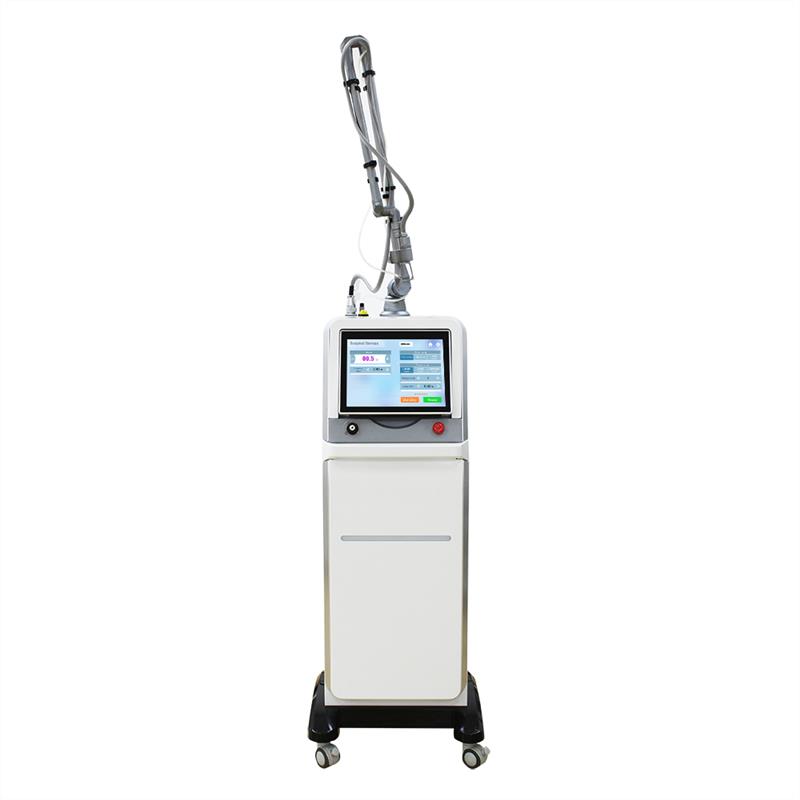
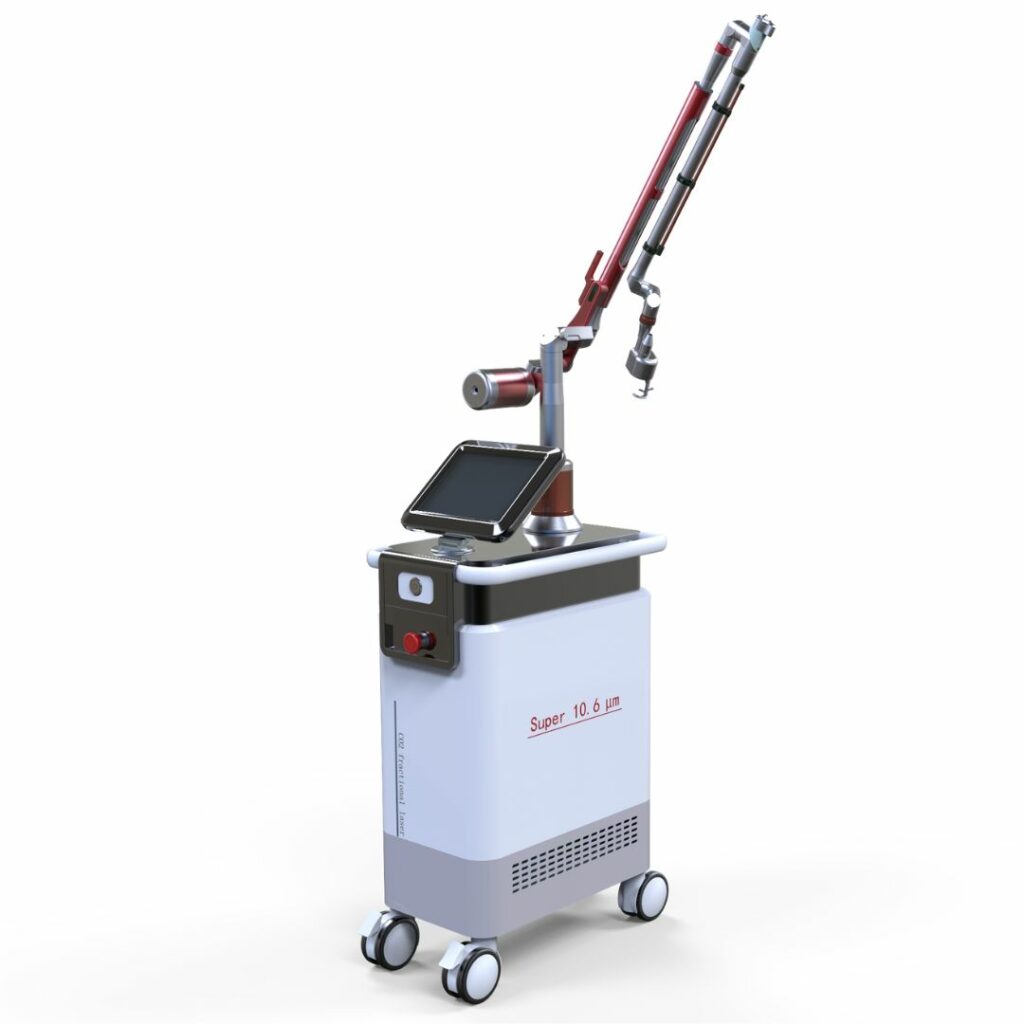
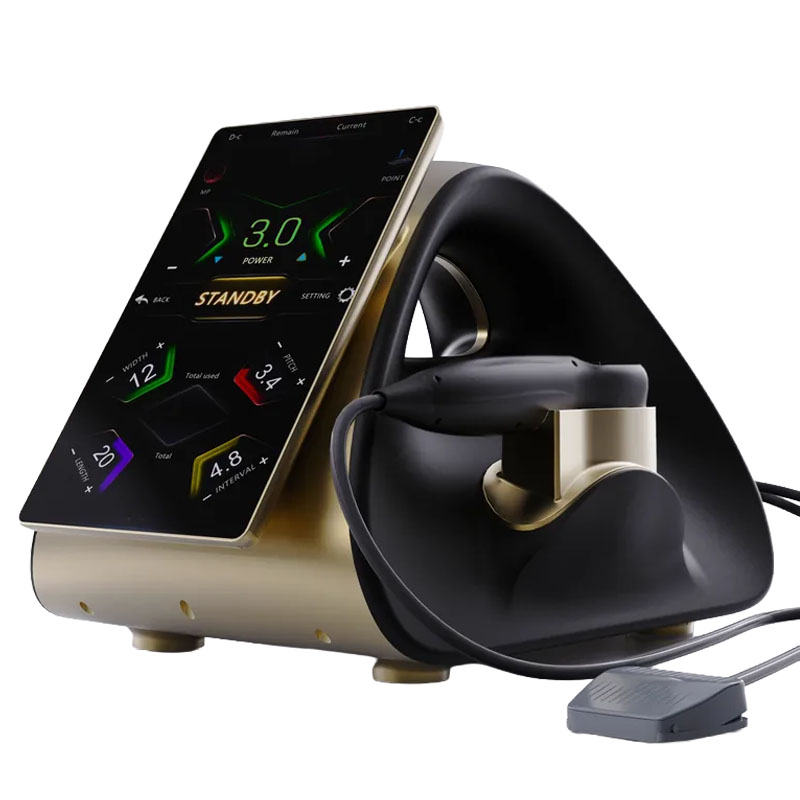
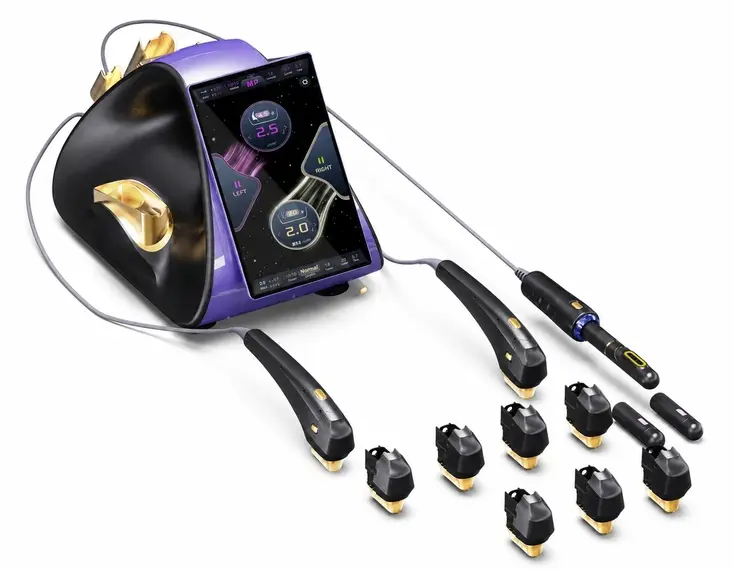
| Fotromed CeloLaser CO2 | Chine (B2B direct) | Tube métallique RF de 40 W, 10 600 nm ; bras articulé coréen à 7 articulations avec balayage Galvo ; 4 pièces à main (fractionnée, chirurgicale, vaginale, vulvaire) ; 4 embouts de balayage couvrant d'Ultra Ablatif à Ultra Non-Ablatif ; durée de vie du tube évaluée à plus de 20 000 heures ; homologué FDA 510(k) pour le resurfaçage cutané |
| Lutronic eCO2 | Corée | Profil d'impulsion réglable ; long historique dans la littérature clinique sur la révision des cicatrices |
| DEKA SmartXide | Italie | Technologies de balayage SmartPulse et DOT ; la configuration MonaLisa Touch est documentée dans la littérature gynécologique évaluée par des pairs |
| GSD CO2 Fractional | China | Courant sur les marchés cliniques de la région Asie-Pacifique ; les configurations varient selon le distributeur |
| Lumenis UltraPulse | États-Unis \/ Israël | Pièce à main SCAAR FX à carottage profond ; référence du secteur largement citée pour les cicatrices sévères et le resurfaçage ablatif du visage entier |
Pour les jeunes entreprises et les medspas en croissance, la décision pratique est rarement “ Fotromed vs Lumenis ” — ce sont des problèmes d'approvisionnement différents à des niveaux de prix différents. La comparaison la plus pertinente se situe généralement entre un système de qualité médicale approvisionné directement en B2B et une alternative de marque de milieu de gamme issue d'un canal de distribution visant des cas d'utilisation clinique similaires.
Pour plus de détails sur la configuration des propres systèmes de Fotromed, consultez la Machine laser CO2 fractionné page de catégorie.
Coût total de possession sur 5 ans : ce que le prix d'achat cache
Le prix d'achat ne représente qu'une fraction de ce qu'un laser CO2 coûtera à votre spa tout au long de sa durée de vie opérationnelle. Voici la répartition réaliste, basée sur des guides publiés du secteur et sur les propres données de fournisseur de Fotromed.
| Catégorie de coût | Année 1 | Années 2–5 (cumulé) | Notes |
|---|---|---|---|
| Acquisition (CeloLaser CO2 config moyenne) | $5,500 | — | Dépense d'investissement unique |
| Recharge / remplacement du tube laser | $0 (sous garantie) | $0–$2,000 | Les tubes métalliques RF ont généralement une durée de vie de 15 000 à 20 000+ heures ; les tubes en verre doivent être remplacés toutes les 1 500 à 2 000 heures |
| Étalonnage annuel et maintenance préventive | $300–$800 | $1,200–$3,200 | En interne avec formation du fabricant, ou visite de maintenance payante |
| Lentille de protection / consommables pour pièce à main | $150–$300 | $600–$1,200 | Remplacés 1 à 2× par an dans les cliniques à volume modéré |
| Formation de responsable de la sécurité laser (initiale + recyclage) | $400–$800 | $400–$800 | Selon Norme ANSI Z136.3 |
| Fournitures de traitement jetables (gaze, crème anesthésiante, soins post-traitement) | $1,500–$3,000 (selon le volume) | $6,000–$12,000 | Varie selon le débit de patients, pas selon le coût de la machine |
| Alimentation électrique | $200–$400 | $800–$1,600 | Consommation en fonctionnement de 1,5 à 2 kW |
| TCO sur 5 ans (config. intermédiaire, volume modéré) | — | $9,000 – $20,000 | Acquisition totale + 5 ans de possession |
Deux observations importent plus que les totaux.
Premièrement, le CO2 fractionné est l'une des modalités laser nécessitant le moins de consommables sur le marché. Contrairement au microneedling RF (embouts à usage unique entre $30 et $80 par patient) ou à certaines plateformes d'épilation (remplacement du gel de refroidissement et du cristal), un laser CO2 correctement entretenu n'engendre presque aucun coût de consommable par patient. La rentabilité s'améliore avec le volume, au lieu de se détériorer.
Deuxièmement, l'écart entre une acquisition à $5,500 et une acquisition à $35,000 ne se réduit pas avec le temps — les coûts d'exploitation sont similaires dans les deux cas, de sorte que l'écart initial équivaut à l'écart sur toute la durée de vie. C'est pourquoi la vente directe d'usine, lorsque les exigences réglementaires et de service sont satisfaites, bénéficie d'un avantage structurel.
Calcul réel du point d'équilibre pour un laser CO2 CeloLaser dans un medspa en pleine croissance
Un article B2B pertinent quantifie le retour sur investissement. Voici le calcul, avec les sources pour l'hypothèse de chiffre d'affaires par séance.
Données d'entrée (conservatrices) :
- Coût d'acquisition : $5,500
- Coût d'exploitation fixe annuel (étalonnage, consommables, électricité, LSO) : ~$1,500
- Revenu moyen par séance de CO2 fractionné visage entier en 2026 : $1,500–$3,500 (selon l'analyse des coûts HuiMain 2026 et le guide du ROI clinique Cocoon])
- Coût variable par séance (crème anesthésiante, gaze, kit de soins post-traitement) : ~$50–$100
- Contribution nette par séance à $1,500 au prix public : ~$1,400
Seuil de rentabilité :
- Séances pour amortir l'acquisition : $5,500 ÷ $1,400 ≈ 4 séances
- À 1 séance par semaine : retour sur investissement en ~1 mois
- À 2 séances par semaine : retour sur investissement en ~2 semaines
- ROI la première année à 2 séances/semaine : environ 2,400%
À titre de comparaison, le même calcul appliqué à une acquisition hypothétique dans le haut de gamme à $60,000 nécessite environ 43 séances pour atteindre le seuil de rentabilité — soit environ 5 à 6 mois au même rythme. Les deux activités peuvent être rentables ; le système d'entrée de gamme est simplement moins exposé au risque de trésorerie pendant la phase de montée en puissance de l'acquisition de patients. Le chiffre de $60,000 ici n'est fourni qu'à titre d'illustration ; le prix actuel de toute plateforme haut de gamme spécifique doit être confirmé directement auprès du fabricant.
Ces chiffres sont donnés à titre d'illustration et dépendent des tarifs locaux, de la zone de traitement et du volume de patients — mais la conclusion quant à l'ordre de grandeur reste valable.
Tube métallique RF vs tube en verre : l'aspect économique de la durée de vie
Si vous avez cherché dans le bas de gamme du marché — des appareils à moins de $3,000 sur les places de marché B2B — vous avez probablement vu des “ lasers CO2 fractionnés ” équipés de sources laser à tube en verre Il ne s'agit pas de la même catégorie de produits que les machines de qualité médicale, et le calcul du coût à long terme est impitoyable.
| Component | Tube métallique RF (qualité médicale) | Tube en verre (entrée de gamme grand public) |
|---|---|---|
| Durée de vie nominale | 15 000–20 000+ heures | 1 500–2 000 heures |
| Coût de remplacement | $1 500–$3 000 par unité | $800–$1 500 par unité |
| Remplacements sur 5 ans (usage clinique modéré ~2 000 h/an) | 0–1 | 5–7 |
| Total des remplacements de tubes sur 5 ans | $0–$3 000 | $4 000–$10 000+ |
| Stabilité du faisceau sur la durée de vie | Élevée ; plage de puissance approuvée par la FDA | Se dégrade ; la puissance dérive |
Un appareil avec tube en verre de $2 500 peut facilement coûter plus de $12 500 sur cinq ans une fois pris en compte les remplacements de tubes, les temps d'arrêt et l'irrégularité des résultats cliniques. Un système à tube métallique RF de $5 500 sans aucun remplacement de tube reste à $5 500.
La leçon n'est pas “ ce qui est bon marché est mauvais ”. La leçon est que la source laser est le composant unique qui détermine le plus le coût sur la durée de vie. Confirmez toujours le type de source laser par écrit avant de passer commande.
Sécurité pour les phototypes III à VI de Fitzpatrick : un critère d'achat peu abordé
Si votre clinique dessert un marché comptant une proportion importante de patients ayant des phototypes III à VI de Fitzpatrick — la majeure partie de l'Amérique latine, du Moyen-Orient, de l'Asie du Sud, de l'Asie du Sud-Est et des populations d'immigrants importantes sur les marchés occidentaux —, il s'agit du critère de sélection le plus important que presque aucun guide d'achat n'aborde.
Le risque clinique majeur du relissage au laser CO2 fractionné sur les peaux plus foncées est l'hyperpigmentation post-inflammatoire (HPI). La littérature dermatologique évaluée par des pairs a documenté un risque accru d'HPI chez les patients de phototypes Fitzpatrick III à VI subissant un relissage fractionné ablatif, et les stratégies d'atténuation sont bien établies : fluence plus faible, densité plus faible, motifs de balayage aléatoires (plutôt que séquentiels) et intervalles adéquats entre les traitements. (Voir Alexis et al., 2017, résumant les considérations de sécurité laser à travers l'échelle de Fitzpatrick.)
Ce que cela signifie pour l'approvisionnement :
- Motif de balayage aléatoire n'est pas une fonctionnalité marketing ; c'est la différence opérationnelle entre des protocoles sûrs et non sûrs pour les peaux foncées. Vérifiez que le contrôleur de balayage de l'appareil le propose.
- Densité et profondeur réglables sur au moins trois niveaux distincts (d'Ultra Ablatif à Non-Ablatif). Un système qui ne propose que des paramètres fixes ne peut pas exécuter de protocoles conservateurs.
- Pré-traitement avec des inhibiteurs de la tyrosinase (hydroquinone 4%, acide kojique ou équivalents) pendant 4 à 6 semaines est un protocole clinique, pas une fonctionnalité de l'appareil — mais l'appareil doit prendre en charge les réglages de faible fluence requis par le protocole.
Les quatre configurations d'embout de balayage du CeloLaser CO2 Fotromed (Ultra Ablatif, Micro Ablatif, Non-Ablatif, Ultra Non-Ablatif) et le balayage aléatoire basé sur la technologie Galvo sont particulièrement adaptés à une pratique clinique sur types de peaux mixtes. Il s'agit véritablement d'un facteur décisif sur des marchés comme le Brésil, les États du Golfe et l'Inde, et nous le mentionnons car la plupart des guides d'achat rédigés pour la dermatologie américaine l'omettent totalement.
Ce qu'il faut demander avant de signer un bon de commande (Liste de contrôle RFQ)
La plupart des erreurs d'achat dans cette catégorie ne se produisent pas lors de la démonstration. Elles se produisent dans le silence entre la démonstration et le virement bancaire, lorsque les questions qui auraient dû être posées ne le sont jamais. Voici ce qu'il faut mettre par écrit avant de vous engager.
- Statut d'homologation FDA 510(k) et les indications spécifiques qu'il couvre. Le relissage cutané, l'incision chirurgicale et les applications vaginales\/gynécologiques font l'objet d'autorisations distinctes — confirmez que l'appareil est homologué pour les procédures que vous prévoyez de facturer.
- Certificat CE (si destiné à l'UE) — document complet, pas une capture d'écran d'un logo. Notez le numéro de l'organisme notifié.
- Type de source laser, puissance nominale et heures nominales du tube. RF métal vs verre — exigez-le dans la fiche technique.
- Nombre d'articulations du bras articulé et origine. Les bras coréens à sept articulations sont actuellement la référence du secteur ; un nombre inférieur d'articulations limite les angles de travail.
- Système de balayage. Galvo avec motif aléatoire, ou estampage. Requis pour une pratique sécurisée sur les peaux plus foncées.
- Pièces à main incluses, embouts de balayage et toutes les mises à niveau requises pour réaliser les procédures prévues dans votre business plan. Les pièces à main vaginales en particulier constituent souvent une référence (SKU) distincte.
- Conditions de garantie — ce qui est couvert (source laser ? bras ? scanner ?), pour combien de temps, et l'engagement en matière de délai de réponse pour les réparations sous garantie.
- Formation incluse vs payante (en présentiel, virtuelle, documentation de certification fournie).
- Délai d'exécution du bon de commande à la livraison, dédouanement, qui agit en tant qu'importateur officiel.
- Assistance à l'enregistrement réglementaire local — pour les marchés hors États-Unis/UE, demandez si le fabricant fournit une assistance pour l'ANVISA (Brésil), la SFDA (Arabie saoudite), la TGA (Australie), la CDSCO (Inde) ou l'équivalent sur votre marché.
Un fournisseur qui répond à ces questions par écrit sans se défiler est un fournisseur auprès duquel il vaut la peine d'acheter. Un fournisseur qui esquive l'une d'entre elles est un fournisseur que vous regretterez au 14e mois.
Frequently Asked Questions
Qu'est-ce qui rend un système laser CO2 fractionné “ abordable ” pour un centre esthétique médical (medspa) ?
Abordable signifie le coût total de possession le plus bas compatible avec l'autorisation FDA ou CE pour les indications que vous prévoyez de facturer. En 2026, les systèmes de qualité médicale approvisionnés directement en B2B disposant d'une autorisation FDA 510(k) débutent aux alentours de $4,500, tandis que les plateformes importées haut de gamme et les canaux de distribution couvrent une gamme bien plus large incluant les coûts de marque, de R&D et d'infrastructure de service local.
Un laser CO2 fractionné de $5,000 est-il réellement homologué par la FDA ?
Oui. Plusieurs systèmes CO2 fractionnés B2B de qualité médicale situés dans la fourchette de $4,500–$7,000 disposent de l'autorisation FDA 510(k) pour le resfaçage cutané, la révision des cicatrices et les indications associées. Le prix reflète la structure de la chaîne d'approvisionnement — un approvisionnement B2B direct plutôt que des canaux de distribution ou de marques haut de gamme — et non le statut réglementaire. Demandez toujours une documentation écrite des indications homologuées avant l'achat.
How long does a fractional CO2 laser machine last?
Un système de qualité médicale doté d'un tube métallique RF a généralement une durée de vie de la source laser de 15 000 à plus de 20 000 heures, ce qui équivaut à 7 à 10 ans d'utilisation clinique modérée. Les systèmes à tube en verre durent de 1 500 à 2 000 heures et nécessitent des remplacements fréquents du tube qui érodent leur avantage tarifaire initial.
Quel est le ROI réel d'un laser CO2 fractionné pour un medspa ?
Avec un coût d'acquisition de $5,500 et un revenu moyen par séance de $1,500, l'appareil est rentabilisé en environ 4 séances visage entier. Une clinique réalisant 2 séances par semaine amortit le coût d'acquisition en environ 2 semaines, avec un ROI la première année dépassant 2,000%.
Un laser CO2 fractionné peut-il traiter en toute sécurité les phototypes de peau plus foncés ?
Oui, avec les protocoles appropriés. Les appareils doivent offrir une densité réglable, plusieurs profondeurs d'ablation et des motifs de balayage aléatoires. Les utilisateurs doivent appliquer une fluence conservatrice et effectuer un pré-traitement avec des inhibiteurs de la tyrosinase pendant 4 à 6 semaines. Sans ces mesures de sécurité, le risque d'hyperpigmentation post-inflammatoire est élevé chez les patients de phototype Fitzpatrick III–VI.
Quel est le coût d'entretien annuel d'un laser CO2 fractionné ?
Le coût de fonctionnement annuel réaliste pour une clinique à volume modéré est de $1,500–$3,000, couvrant l'étalonnage, les consommables de lentille/pièce à main, l'électricité et la certification LSO. Les systèmes à tube métallique RF ne nécessitent aucun remplacement annuel de tube, contrairement aux alternatives à tube en verre.
Dois-je acheter du neuf ou du reconditionné ?
Le neuf est la recommandation par défaut pour toute clinique comptant sur cet appareil pour générer des revenus. Les systèmes reconditionnés comportent souvent des garanties fabricant annulées, des heures d'utilisation invérifiables et des sources laser dégradées. L'économie réalisée par rapport à un appareil neuf en direct d'usine est généralement inférieure à $2,000, ce qui ne compense pas le risque lié au service.
About This Guide
Ce guide a été préparé par l'équipe éditoriale de Fotromed à partir des registres de fabrication et d'après-vente de Fotromed, des bases de données publiques d'enregistrement FDA 510(k) et CE, de la littérature clinique évaluée par des pairs sur le relissage au laser CO2 fractionné et des données de coûts 2025–2026 publiées par des sources indépendantes du secteur. Les prix d'acquisition situés dans la fourchette $4,500–$7,000 font référence aux tarifs direct usine de Fotromed pour le CeloLaser CO2 ; les fourchettes concurrentielles sont indicatives et issues de données publiques de distributeurs et de cliniques mises à jour en juin 2026.
Fotromed est un fabricant chinois B2B d'appareils médico-esthétiques homologués FDA 510(k) et marqués CE, fournissant des cliniques, des medspas et des distributeurs dans plus de 30 pays. Les éléments de ce guide décrits comme découlant de l'expérience d'utilisation de Fotromed reflètent nos propres observations en usine et en service après-vente et sont identifiés comme tels.
Prêt à comparer le CeloLaser CO2 avec votre sélection actuelle ?
Demandez un devis de configuration, la documentation FDA 510(k) et une réponse écrite à la liste de contrôle d'appel d'offres ci-dessus. Nous répondons en un jour ouvrable avec les spécifications complètes, les documents réglementaires et un devis unitaire — sans intermédiaire.
Parcourez les configurations actuelles sur la Machine laser CO2 fractionné page ou contactez Fotromed directement via fotromed.com.
References & Sources
- U.S. Food and Drug Administration. 510(k) Premarket Notification Database. https://www.accessdata.fda.gov/scripts/cdrh/cfdocs/cfpmn/pmn.cfm
- Laser Institute of America. ANSI Z136.3 — Utilisation sécurisée des lasers dans les soins de santé. https://www.lia.org/resources/laser-safety-information/laser-safety-resources/ansi-z1363
- Alexis, A.F., et al. Épilation au laser et autres procédures esthétiques sur peaux foncées : critères de sélection, modifications de techniques et considérations de sécurité. J Clin Aesthet Dermatol, 2017. https://www.ncbi.nlm.nih.gov/pmc/articles/PMC5675578/
- Roohaninasab, M., et al. Efficacité du laser CO2 fractionné combiné à la fraction vasculaire stromale (SVF) par rapport au laser CO2 fractionné seul dans le traitement des cicatrices de brûlures : un essai clinique contrôlé randomisé. Stem Cell Res Ther, 2023. https://www.ncbi.nlm.nih.gov/pmc/articles/PMC10518108/
- Lee, S.Y., et al. Le traitement au laser CO2 fractionné est sûr et efficace pour la prise en charge du syndrome génito-urinaire de la ménopause chez les femmes coréennes. PMC, 2023. https://www.ncbi.nlm.nih.gov/pmc/articles/PMC10254000/
- Cocoon Laser. Coût d'un appareil laser CO2 professionnel : Analyse clinique approfondie 2025 et guide du ROI pour les cliniques. https://www.cocoonlaser.com/cost-of-professional-co2-laser-machine-2025-clinical-deep-dive-roi-guide-for-clinics/
- HuiMain Beauty. Laser fractionné CO₂ : coûts et avantages 2026. https://www.huimainbeauty.com/bolg/co2-fractional-laser-machine-costs/