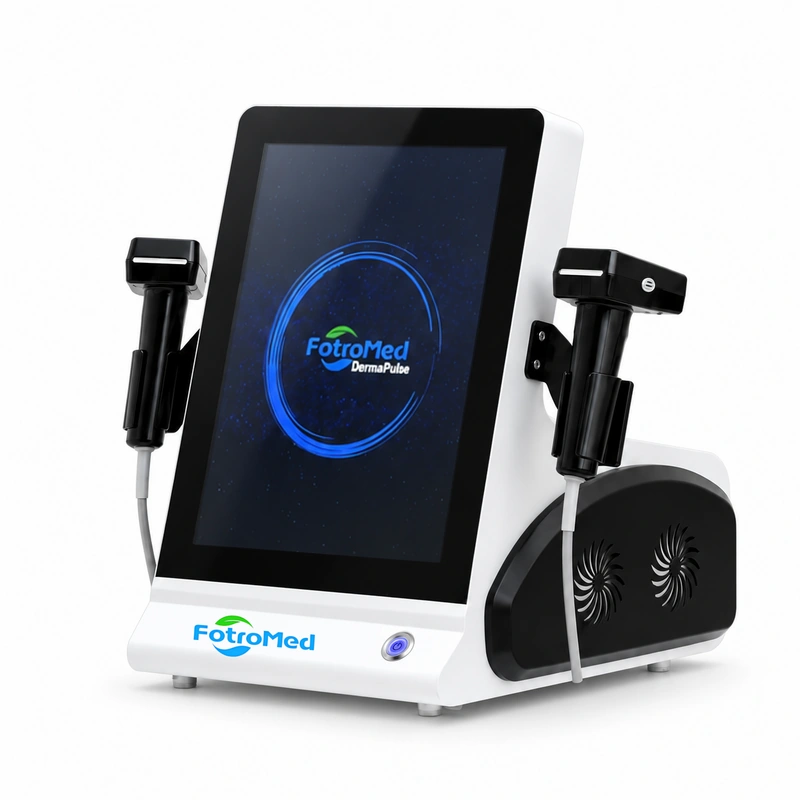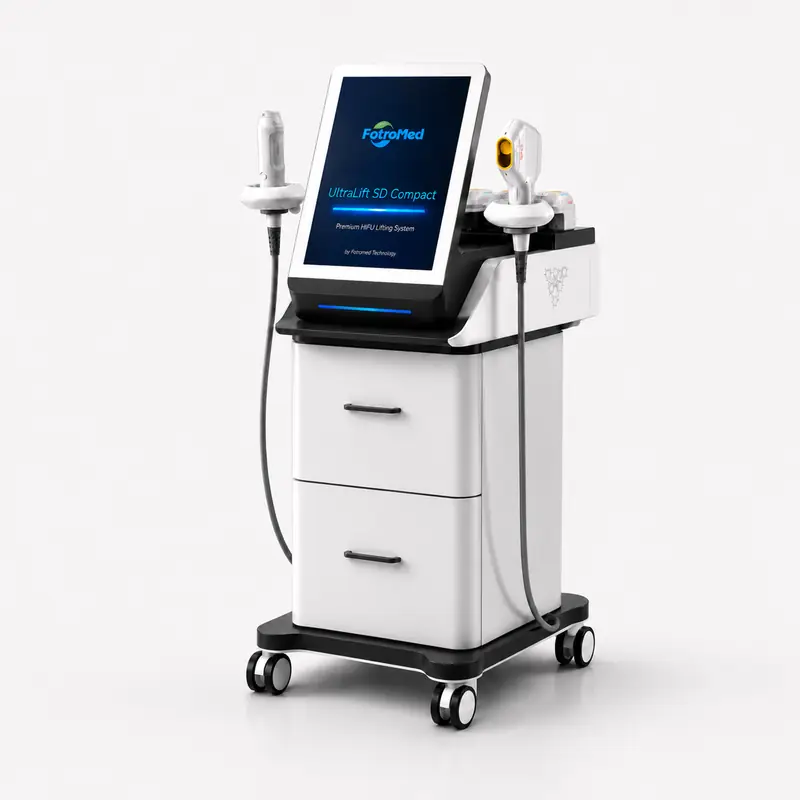
In diesem Leitfaden wird erklärt, was ein 7D-HIFU-Gerät ist, wie es funktioniert, zu welchen Behandlungsgebieten es passt, und wie Kliniken beurteilen können, ob es sich um die richtige Investition handelt. Es ist für ästhetische Kliniken geschrieben, Medspas, Händler, und Käufer, die eher eine praktische als eine verkaufsintensive Sichtweise wünschen. Käufer, die 7D mit anderen Kliniksystemen vergleichen, können sich auch unsere ansehen Liste der besten professionellen HIFU-Geräte.
In einfachen Worten, Ein 7D-HIFU-Gerät nutzt fokussierte Ultraschallenergie, um kontrollierte Wärme in ausgewählten Tiefen unter der Haut abzugeben. Auf diese Weise können Praktiker an der Erschlaffung des Gesichts arbeiten, Kieferdefinition, Probleme mit dem Doppelkinn, und ausgewählte Körperbereiche ohne Operation und mit begrenzten Ausfallzeiten. Die Marktnachfrage ist bereits klar: nichtchirurgische Hautstraffung erreicht 439,032 Verfahren in den Vereinigten Staaten in 2024 und mehr als 1.2 Millionen Eingriffe weltweit in der neuesten ISAPS-Umfrage.
Noch wichtiger, Kliniken suchen nicht mehr nach einer Einzweckmaschine. Sie wollen eine Plattform, die das Gesichtslifting unterstützen kann, Hautstraffung, und ausgewählte Körperformungsarbeiten, während die Kosten für Verbrauchsmaterialien und der Trainingsdruck unter Kontrolle bleiben. Aus diesem Grund erhält die 7D-Kategorie immer wieder Aufmerksamkeit von MedSpas, Ästhetische Zentren, und Distributoren.
Was ist eine 7D-HIFU-Maschine??
Wie eine 7D-HIFU-Maschine funktioniert
Hifu steht für hochintensitätsorientierte Ultraschall. In der ästhetischen Praxis, Das Ziel besteht nicht in einem oberflächlichen Peeling und nicht in einer allgemeinen Erwärmung der Haut. Das Ziel ist eine gezielte thermische Schädigung in ausgewählten Tiefen, wo Kollagenumbau und Gewebekontraktion im Laufe der Zeit eine sichtbare Straffung unterstützen können.
Das Gerät konzentriert die Ultraschallenergie auf präzise thermische Koagulationspunkte unterhalb der Hautoberfläche. Weil die Energie konzentriert ist, Die Epidermis ist nicht das Hauptziel. Dies ist einer der Gründe, warum HIFU häufig als nicht-chirurgische Lifting-Option und nicht als Oberflächenerneuerungsoption diskutiert wird.
Für Kliniken, Dies ist wichtig, da die Behandlungstiefe die Art des Ergebnisses verändert, das Sie realistischerweise erwarten können. Eine Maschine, die nur oberflächlich arbeiten kann, kann bei der Texturierung oder leichten Straffung hilfreich sein, Die tieferen Stützschichten werden jedoch nicht in gleicher Weise angesprochen. Eine professionelle 7D-HIFU-Plattform ist attraktiv, weil sie darauf ausgelegt ist, mit einem System mehrere Tiefen bei Gesichts- und Körperindikationen abzudecken.
MMFU-Technologie erklärt
Auf vielen kommerziellen Seiten, 7D HIFU wird zusammen mit der MMFU-Technologie beschrieben. In praktischer Kaufsprache, Dies bedeutet, dass die Plattform um mehrere mikrofokussierte Behandlungspunkte herum positioniert ist, engerer Fokus, und eine kontrolliertere Energieabgabe bei unterschiedlichen Kartuschentiefen. Mit anderen Worten, MMFU ist nicht nur ein Label. Es ist die Behandlungsarchitektur, die dahinter steckt, wie ein modernes 7D-HIFU-Gerät versucht, Präzision zu kombinieren, Hubtiefe, und Behandlungskomfort.
Dieser engere Fokus ist aus zwei Gründen wichtig. Erste, Es kann Kliniken dabei helfen, empfindliche Gesichtszonen präziser zu behandeln. Zweite, Dadurch kann sich die Behandlung sowohl für den Behandler als auch für den Patienten kontrollierter anfühlen. Auch die öffentliche Produktbotschaft für das 7D HIFU-Gerät betont die Präzision in der Tiefenschicht, kleinere Fokuspunkte, und ein komfortorientiertes Design, Dies entspricht den Erwartungen, die Kliniken normalerweise an eine moderne Hebeplattform auf MMFU-Basis stellen.
Warum sich 7D-HIFU vom herkömmlichen HIFU unterscheidet
Herkömmliche HIFU-Systeme haben ihren Ruf auf der Gesichtsstraffung und der Straffung des unteren Gesichtsbereichs aufgebaut, Der Komfort vieler älterer Plattformen war jedoch eingeschränkter, Behandlungsflexibilität, oder Auswahl der Kartuschentiefe. Eine 7D-Plattform wird normalerweise als eine verfeinerte Version dieses Konzepts und nicht als ein völlig anderes physikalisches Modell positioniert.
Der praktische Unterschied liegt nicht nur im Etikett. Es ist die Kombination von Tiefenoptionen, Geschwindigkeit, Komfort, und die Möglichkeit, sowohl Lifting- als auch Konturierungsindikationen von einer Konsole aus zu behandeln. Eine Klinik, die sich zwischen HIFU der alten Generation und neueren 7D-Systemen entscheidet, entscheidet normalerweise, ob sie ein engeres oder ein breiteres Servicemenü wünscht.
Datenschnappschuss: Warum Kliniken sich immer wieder diese Kategorie ansehen
| Markt | Verfahrensvolumen |
|---|---|
| Vereinigte Staaten, 2024 (ASPS) | |
| Weltweit, 2024 (ISAPS) | 1,239,306 |
Die obige Tabelle ist einfach, aber es unterstreicht den Hauptpunkt. Die Nachfrage nach Hautstraffung ist bereits so groß, dass Kliniken dies nicht tun müssen „erstellen“ Zinsen von Null. Sie müssen die richtige Behandlungspositionierung und das richtige Gerät für die Patienten auswählen, die sie bereits versorgen.
Hauptfunktionen einer 7D HIFU-Maschine
Facelifting und Hautstraffung
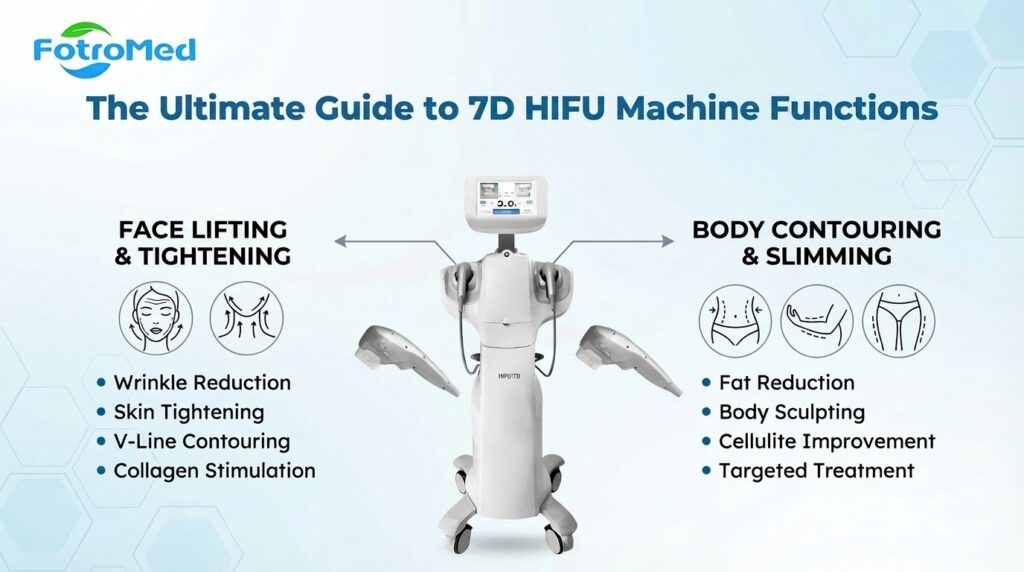
Der wichtigste kommerzielle Wert einer 7D-HIFU-Maschine ist immer noch das Gesichtslifting. Patienten kommen oft mit einer vertrauten Mischung von Beschwerden: weichere Kieferpartie, leichtes Gejammer, Absenkung der unteren Wange, frühe Nackenschlaffheit, oder müde aussehende Brauen. Sie sind nicht immer bereit für eine Operation, Aber sie wollen mehr als ein Serum oder eine routinemäßige Gesichtsbehandlung.
Hier macht HIFU Sinn. Sie wird oft gewählt, wenn die Klinik eine Behandlung wünscht, die zwischen Einstiegsniveau der Hautpflege und invasiven Lifting-Verfahren angesiedelt ist. Das Ergebnis ist in der Regel eher schleichend als unmittelbar, was im Beratungsgespräch unbedingt erklärt werden muss. HIFU ist eine Kollagen-Remodellierungsbehandlung, keine sofortige Volumenbehandlung im Filler-Stil.
Kiefer- und Doppelkinnbehandlung
Die Arbeit an der Kieferpartie ist einer der Hauptgründe, warum Kliniken HIFU einsetzen. Ein schärferes Untergesicht ist für Patienten leicht zu verstehen und für Kliniken leicht zu vermarkten, da das Behandlungsziel visuell und spezifisch ist.
Für submentale Fülle, Eine 7D-Plattform kann besonders nützlich sein, wenn der Patient sowohl eine leichte Fettansammlung als auch eine leichte Hauterschlaffung aufweist. In dieser Situation, Eine Klinik bevorzugt möglicherweise eine Behandlung, die die Konturierung und Straffung gleichzeitig unterstützt, anstatt nur Fett zu reduzieren und anschließend mit dem Problem von lockerem Gewebe konfrontiert zu werden.
Anwendungen zur Körperformung
Körperanwendungen sind einer der Gründe, warum viele Kliniken die 7D-HIFU als eine günstigere Geschäftsanschaffung betrachten als ein reines Gesichtssystem. Zu den häufigsten Körperindikationen gehört der Bauch, Flanken, Oberarme, und der Bereich unter dem Kinn. Das bedeutet nicht, dass es jedes auf dem Markt erhältliche Gerät zur Körperformung ersetzt. Das bedeutet, dass es einen größeren Mittelweg abdecken kann, als viele Käufer erwarten.
Das wichtige Thema für Käufer ist die Eignung für den Patienten. Die besten Körperkandidaten sind normalerweise Menschen mit leichtem bis mäßigem lokalisiertem Fett und einem gewissen Grad an schlaffer Haut. Patienten mit großen Volumenreduktionszielen oder starker Laxität benötigen normalerweise einen anderen Plan. Kliniken, die 7D HIFU als Konturierungs- und Straffungsoption positionieren, eher als ein Abnehmversprechen, bauen in der Regel langfristig besseres Vertrauen auf.
7D HIFU-Maschinenkartuschen und Behandlungstiefen
Die Kartuschentiefe ist eines der ersten Dinge, die erfahrene Käufer prüfen, denn sie verrät ihnen, wie flexibel das Gerät in realen Behandlungsumgebungen sein wird. Im Originalartikel wurde zu Recht betont, dass das 7D-System wertvoll ist, da es sowohl Gesichts- als auch Körperarbeit über einen größeren Tiefenbereich abdeckt als viele grundlegende HIFU-Geräte.
Der 7 Patronentiefen
Die meisten 7D-HIFU-Plattformen in dieser Positionierung verwenden vier Gesichtstiefen und drei Körpertiefen. Das Gesichtsset ist im Allgemeinen rund aufgebaut 1.5 mm, 2.0 mm, 3.0 mm, Und 4.5 mm. Das Körperset umfasst üblicherweise 6.0 mm, 9.0 mm, Und 13.0 mm.
Der 2.0 Die mm-Patrone verdient besondere Aufmerksamkeit, da sie eines der Merkmale ist, die viele kommerzielle 7D-Seiten hervorheben. Es füllt praktisch eine Lücke zwischen einer flacheren und einer tieferen Gesichtsbehandlung. Für Kliniken, die mehr Flexibilität rund um die Augenpartie und feine Linien wünschen, Diese mittlere Option kann kommerziell nützlich sein.
Welche Patrone wird für welchen Bereich verwendet?
| Patronentiefe | Typischer Einsatzbereich | Hauptbehandlungsziel | Praktischer Hinweis |
|---|---|---|---|
| 1.5 mm | Oberflächliche Gesichtszonen | Unterstützung für feine Linien und Oberflächenstraffung | Wird oft in Detailbereichen verwendet |
| 2.0 mm | Periorbitaler Bereich, empfindliche Gesichtszonen | Präzisionsarbeit wo 1.5 mm ist zu flach und 3.0 mm ist möglicherweise zu tief | Ein wichtiges Verkaufsargument für 7D-Systeme |
| 3.0 mm | Mittleres dermales bis tieferes Gesichtsgewebe | Hautstraffung und Kollagenstimulation | Eine Standardtiefe für das Arbeitstier im Gesicht |
| 4.5 mm | Untere Gesichts- und SMAS-bezogene Hebearbeiten | Heben, Kieferunterstützung, Straffung der Unterseite | Wird häufig in Hebeprotokollen verwendet |
| 6.0 mm | Submentales Fett und kleinere Körperzonen | Konturieren und Straffen | Nützlich für Doppelkinnprogramme |
| 9.0 mm | Waffen, Schenkel, mäßige Körperbereiche | Körperstraffung und gezielte Konturierung | Wird oft verwendet, wenn die Haut schlaff ist |
| 13.0 mm | Bauch und Flanken | Tiefergehende Unterstützung der Körperformung | Besser für dickere Fettschichten |
So wählen Sie die richtige Behandlungstiefe
Bei der Wahl der Tiefe geht es nicht darum, wann immer möglich die tiefste Option zu verwenden. Es geht darum, die Kartusche an die Gewebedicke anzupassen, Behandlungsziel, und Toleranz. Eine Klinik, die stabile Ergebnisse anstrebt, braucht eine klare Behandlungslogik, nicht nur eine breite Patronenliste.
Ein häufiger Fehler besteht darin, jeden Patienten so zu behandeln, als ob er die stärkste Einstellung oder die tiefste Kartusche benötige. Das kann Unbehagen hervorrufen, ohne das Ergebnis zu verbessern. Gute Protokolle sind selektiv. Praktizierende sollten die Tiefe an die Anatomie anpassen, nicht zur Marketingsprache.
Beispiel für eine öffentliche Spezifikation: Parameter, die Käufer tatsächlich überprüfen
Am Beispiel der öffentlichen Ultraforma-Spezifikationsseite, Käufer können beim Anbietervergleich sehen, welche Betriebsdetails wichtig sind:
- Standard-Behandlungskartuschen finden Sie unter 1.5 mm, 2.0 mm, 3.0 mm, 4.5 mm, 6.0 mm, 9.0 mm, Und 13.0 mm
- aufgeführten Energiebereich von 0.1 Zu 2.0 J
- aufgeführter Punktabstandsbereich von 5.0 mm zu 25.0 mm
- aufgeführt 20,000 Schüsse pro Patrone
- aufgeführten 10,4-Zoll-Touchscreen
Der öffentliche Behandlungsbereich auf derselben Seite umfasst:
- volles Gesicht
- unteres Gesicht
- Dekolletage
- Abdomen
- Waffen
- Schenkel
- Gesäß
Diese Art von Spezifikationsblock ist nützlich, da er den Käufern sagt, ob es sich bei der Maschine hauptsächlich um ein Gesichtslifting-Gerät oder um eine breitere MMFU-Plattform für Gesicht und Körper handelt.
Ist eine 7D-HIFU-Maschine wirksam??
Diese Frage ist wichtiger als jeder Prospektanspruch. Käufer wollen es wissen:
- ob die Ergebnisse sichtbar sind
- wie schnell sie erscheinen
- wie lange sie halten
- wie stark die Evidenz hinter der Kategorie ist
Aktuelle Erkenntnisse belegen, dass HIFU und MFU legitime nicht-chirurgische Straffungsoptionen sind, insbesondere bei leichter bis mittelschwerer Schlaffheit. Eine systematische Überprüfung von 16 Studien kamen zu dem Schluss, dass mehr als 90% der eingeschlossenen Patienten zeigten eine gewisse Verbesserung der Hautstraffung. In derselben Überprüfung wurde auch ein durchschnittlicher Schmerzwert von rund 100 % angegeben 3.8 und gelegentliche Nebenwirkungen in etwa 2% der behandelten Patienten. Das bedeutet nicht, dass jede MMFU-basierte Maschine die gleiche Leistung erbringt, Es unterstützt jedoch die breitere Behandlungskategorie.
Gleichzeitig, Kliniken sollten im Gleichgewicht bleiben. A 2025 Bibliometrische Analyse stellte fest, dass die Evidenzbasis wächst, der Umfang jedoch immer noch begrenzt ist, mit Lücken in den langfristigen Ergebnissen, Standardisierung, und direkte Vergleiche. Das ist tatsächlich hilfreich für ernsthafte Käufer. Es erinnert uns daran, Ergebnisse ehrlich zu vermarkten.
Daten zur Patientenzufriedenheit fügen eine weitere nützliche Ebene hinzu. A 2024 PubMed-indexierte retrospektive Studie 98 MFU-V-Patienten berichteten, dass etwa zwei Drittel der Patienten mit der Behandlung zufrieden oder sehr zufrieden waren, während 78.6% nannten die Kosten als Hauptgrund dafür, dass sie es möglicherweise nicht wiederholen würden. Für Kliniken, Das ist eine praktische Lektion. Ergebnisse sind wichtig, aber Preislogik, Beratungsqualität, und die Fähigkeiten des Anbieters entscheiden immer noch darüber, ob Patienten das Gefühl haben, dass sich die Behandlung gelohnt hat.
Die Fähigkeiten des Anbieters wirken sich auch auf die Sicherheit aus. Der FDA Die Leitlinien für fokussierte Ultraschall-Spezialkontrollen erfordern ausdrücklich Warnungen vor vollständigem Handstück-Haut-Kontakt und der Vermeidung einer Augenexposition gegenüber Ultraschallstrahlung. Das ist eine nützliche Erinnerung für Klinikbesitzer: Maschinenauswahl und Bedienerschulung sollten gemeinsam besprochen werden, nicht als separate Entscheidungen.
Zeitleiste der erwarteten Ergebnisse
Die Ergebnisse eines 7D-HIFU-Geräts sehen am ersten Tag selten dramatisch aus. Einige Patienten verspüren bereits nach wenigen Tagen ein frühes Spannungsgefühl, Die wesentliche Verbesserung des Sehvermögens stellt sich jedoch in der Regel über mehrere Wochen hinweg ein, wenn der Kollagenumbau fortschreitet.
Das allgemeine Muster sieht so aus:
| Zeitleiste | Was Patienten normalerweise bemerken | Was Kliniken erklären sollten |
|---|---|---|
| Tage 0-7 | Leichte Schwellung, Dichtheit, frühe Festigkeit | Dies ist nicht das Endergebnis |
| Wochen 4-8 | Allmähliche Verbesserung der Textur und Festigkeit | Der Kollagenumbau ist im Gange |
| Etwa einen Monat 3 | Für viele Patienten eine sichtbare Spitzenstraffung | Dies ist oft die Phase des Überprüfens und Fotografierens |
| Monate 6-12 | Stabilisierungs- und Wartungszeitraum | Die Ergebnisse variieren je nach Alter, BMI, und Lebensstil |
Dieser Zeitplan ist einer der Gründe, warum HIFU gut in die langfristige Klinikplanung passt. Es gibt Praktikern einen Grund, Überprüfungsbesuche zu vereinbaren, häusliche Pflege kombinieren, und besprechen Sie die Wartung, anstatt eine eintägige Transformation zu versprechen.
Wie viele Sitzungen sind erforderlich?
Zum Gesichtslifting, Eine gut geplante Sitzung ist oft der Standardstartpunkt, insbesondere bei Patienten mit leichter bis mittelschwerer Laxheit. Für Körperarbeit, Die Anzahl der Sitzungen hängt mehr von der Fettdicke ab, dem Behandlungsbereich, und wie aggressiv die Klinik das Ergebnis haben möchte.
Kliniken sollten HIFU in der Regel als eine schrittweise Verbesserungsbehandlung und nicht als eine sofortige Korrektur beschreiben. Dies schafft realistischere Erwartungen und führt in der Regel zu einer besseren Zufriedenheit. Es erleichtert auch die Paketplanung. Anstatt einen dramatischen Besuch zu übertreiben, Die Klinik kann einen klareren Zeitplan für die Konsultation erstellen, Fotorezension, Nachuntersuchung, und Wartung.
Ausfallzeiten und Patientenerfahrung
Ein Grund dafür, dass Kliniken diese Kategorie bevorzugen, ist, dass die Ausfallzeiten im Vergleich zu chirurgischen Eingriffen minimal sind. Das erleichtert den Verkauf an Berufstätige, jüngere präventionsorientierte Patienten, und Menschen, die keine sichtbaren sozialen Ausfallzeiten wollen.
Schmerz ist immer noch Teil des Gesprächs. Auch wenn die Kategorie nicht chirurgisch ist, Der Behandlungskomfort hängt von den Energieeinstellungen ab, Auswahl der Kartusche, Zielbereich, und Bedienergeschick. Die besten Kliniken präsentieren Komfort ehrlich und erklären dies „nicht invasiv“ bedeutet nicht immer „völlig sensationsfrei.“
7D HIFU-Maschine im Vergleich zu anderen Technologien
Im Technologievergleich entscheiden viele Kliniken darüber, ob eine 7D-HIFU-Plattform ersetzt wird, ergänzen, oder mit den Geräten konkurrieren, die sie bereits besitzen.
7D HIFU vs. 4D HIFU
Der Unterschied zwischen 4D- und 7D-HIFU liegt normalerweise in der Flexibilität der Behandlung, Patronendesign, und Positionierung statt einer völligen Änderung der Behandlungsphilosophie. Ein 4D-System kann immer noch eine gute Leistung erbringen, Eine 7D-Plattform wird jedoch häufig als fortschrittlichere Option vermarktet, da sie einen größeren Bereich an Behandlungstiefen und eine bessere Präzision in kleineren Gesichtszonen bietet.
Wenn eine Klinik hauptsächlich die Straffung des unteren Gesichtsbereichs behandelt, Eine ältere 4D-Plattform reicht möglicherweise immer noch aus. Wenn die Klinik detailliertere periokulare Arbeiten wünscht, breitere Körperabdeckung, und stärkere Differenzierung in der Beratung, Eine 7D-Plattform ist normalerweise einfacher zu positionieren.
7D HIFU vs. 12D HIFU
12D HIFU-Systeme werden oft nach Geschwindigkeit und Linienlieferung verkauft. Dies kann in Kliniken mit hohem Durchsatz, in denen die Behandlungszeit eine Rolle spielt, nützlich sein. Ein 7D-System, Jedoch, kann dennoch bevorzugt werden, wenn die Klinik Wert auf Präzision legt, Detailarbeit im Gesicht, und eine einfachere Behandlungsgeschichte.
Dies bedeutet nicht, dass eine Zahl immer besser ist als eine andere. Käufer sollten sich fragen, welche Art von Behandlungsablauf sie tatsächlich benötigen. Mehr Dimensionen im Modellnamen bedeuten nicht immer einen höheren realen Wert.
7D HIFU vs. RF HIFU
Der Begriff RF HIFU wird auf dem Markt locker verwendet. Manchmal handelt es sich dabei um Hybridplattformen, die Ultraschall und Hochfrequenz kombinieren. Manchmal ist es nur eine Verkaufssprache rund um Multi-Energie-Systeme. Käufer sollten immer nachfragen, was die Maschine tatsächlich leistet, statt sich auf das Etikett zu verlassen.
In der Praxis, RF-basierte Straffungsgeräte erwärmen das Gewebe anders als HIFU-Systeme. RF wird häufig für eine diffusere Erwärmung und eine Straffung von der Oberfläche bis zur mittleren Tiefe gewählt, während HIFU für gezielte Tiefenarbeit und hebeorientierte Positionierung geschätzt wird. Hybride Ideen können attraktiv klingen, aber die kommerzielle Frage ist einfach: Braucht die Klinik eine Maschine, die viele Dinge einigermaßen gut kann?, oder eine Maschine, die ganz klar auf das Heben ausgerichtete Arbeiten ausführt?
7D HIFU vs. Thermage
Thermage ist ein monopolarer Hochfrequenz-Referenzpunkt, Daher kommt es in fast jeder Beratung zum nicht-chirurgischen Lifting zur Sprache. Thermage verfügt über eine starke Markenbekanntheit, 7D-HIFU wird jedoch häufig von Kliniken gewählt, die eine tiefer gehende Behandlungslogik wünschen, mehr Kartuschen-basierte Flexibilität, und eine umfassendere Gesicht-und-Körper-Geschichte.
| Technologie | Energietyp | Am bekanntesten für | Stärke | Einschränkung |
|---|---|---|---|---|
| 7D Hifu | Fokussierter Ultraschall | Lifting plus ausgewähltes Contouring | Tiefenpräzision und Mehrbereichsflexibilität | Betreiberplanung ist wichtig |
| 4D Hifu | Fokussierter Ultraschall | Kernhebearbeiten | Bekannte Kategorie mit etablierter Nachfrage | Oft weniger flexibel in der Positionierung |
| 12D Hifu | Linienbasierter fokussierter Ultraschall | Geschwindigkeits- und Hochdurchsatzbehandlungen | Schnellerer Behandlungsablauf | Kann eher auf Geschwindigkeit als auf Details ausgerichtet sein |
| RF HIFU / Hybrid-HF | Ultraschall plus RF oder RF-geführtes Straffen | Gemischte Anziehstrategien | Umfangreiches Behandlungsangebot | Verwirrung des Käufers über den echten Mechanismus |
| Thermage | Monopolare Hochfrequenz | Markengeführter Straffungsmarkt | Starke Markenbekanntheit | Weniger kassettenbasierte Tiefenvielfalt |
Für Kliniken, Die sicherere Kaufmethode ist der Vergleich der Behandlungslogik, Patientenpassform, und Business-Fit, anstatt dem Label hinterherzujagen, das neuer klingt.
Geschäftsperspektive: ROI und Rentabilität
Für B2B-KäuferFotoromed.com, der Return on Investment (ROI) ist eine kritische Kennzahl. Das 7D HIFU ist ein Gerät mit hohen Margen.
Beispiel-ROI-Berechnung (Monatlich)
- Durchschnittlicher Behandlungspreis (Gesicht): $400 - - $800
- Durchschnittlicher Behandlungspreis (Körper): $600 - - $1,200
- Verbrauchsmaterialkosten: Etwa $30 - - $50 pro Sitzung (Patronenschüsse).
- Behandlungszeit: 30 - - 45 Minuten.
Wenn Ihre Klinik genau das tut5 Gesichtsbehandlungen Und3 Körperbehandlungen pro Woche:
- Einnahmen: (5 X $500) + (3 X
800)=∗∗800)=∗∗4,900 pro Woche**. - Monatlicher Umsatz: ~19.600 $.
In Anbetracht der erschwinglichen Kosten unsererprofessionelles HIFU-Gerätesortiment für Gesicht und Körper, Die meisten Kliniken erreichen innerhalb kürzester Zeit die Gewinnschwelle 2 Monate im Betrieb.
Wie Kliniken sich für ein 7D HIFU-Gerät entscheiden
Hier werden Kaufentscheidungen praktisch. Eine Klinik wählt nicht nur eine Technologie. Es entscheidet, wie diese Technologie zu seinem aktuellen Patientenmix passt, Markenebene, Behandlungsmenü, und Cashflow.
Beste Wahl für kleine Kliniken mit begrenztem Budget
Kleine Kliniken und neue MedSpas benötigen in der Regel ein Gerät, das mehrere klare Angebote unterstützen kann, ohne dass ein sehr komplexer Schulungsprozess erforderlich ist. Für sie, Der wichtigste Grund für den Kauf eines 7D-HIFU-Geräts ist das Serviceangebot. Eine Plattform kann die Gesichtsstraffung unterstützen, Kieferarbeit, Doppelkinn-Protokolle, und ausgewählte Körperkonturierung, ohne dass die Klinik gezwungen ist, mehrere Geräte gleichzeitig zu kaufen.
Die sicherste Wahl ist meist ein Modell mit klarer Kartuschenlogik, stabile Trainingsunterstützung, und realistische Verbrauchsmaterialkosten anstelle des günstigsten beworbenen Preises. Ein niedriger Anschaffungspreis kann teuer werden, wenn die Maschine unbequem zu bedienen ist, schwer zu lernen, oder in Absprache schwer zu positionieren.
Für kleinere Kliniken, Die Budgetierung sollte mit einer einfachen Frage beginnen: Wie viele Behandlungsarten kann dieses Gerät in den ersten sechs Monaten realistisch unterstützen?? Wenn die Antwort nur eins oder zwei ist, Die Rückkehr kann langsamer sein als erwartet. Wenn die Klinik mit gutem Gewissen Unterstützung beim Brauenlifting verkaufen kann, Straffung der Unterseite, Verbesserung des Doppelkinns, und ausgewählte Körpersitzungen, die Maschine wird betriebsfähiger.
Beste Wahl für wachsende Kliniken, die ihre Dienstleistungen erweitern
Wachsende Kliniken bieten in der Regel bereits Injektionen an, Gesichtsbehandlungen, oder RF-basierte Dienste. Ihre Frage ist nicht „Sollten wir ein Energiegerät hinzufügen??“ Aber „Welches Gerät hilft uns, die Ticketgröße und die Patientenbindung zu erhöhen??“
Für diese Gruppe, Ein 7D-HIFU-Gerät funktioniert gut, wenn die Klinik eine Behandlung hinzufügen möchte, die sich fortschrittlicher anfühlt als die routinemäßige Hautpflege, aber weniger einschüchternd als eine Operation. Es passt auch gut in die kombinierte Behandlungsplanung, wo HIFU über pflegenden Gesichtsbehandlungen und neben Injektionen oder regenerativen Diensten als Teil eines mehrschichtigen Anti-Aging-Plans steht.
Dieser Kliniktyp sollte auch über die Termineffizienz nachdenken. Ein Gerät, das mehrere gewinnbringende Indikationen abdeckt, hilft der Rezeption, das Beratungsteam, und Behandlungsraum zugleich. Es vereinfacht die Menügestaltung. Anstatt drei separate Maschinen für drei separate Anliegen hinzuzufügen, Die Klinik kann eine stärkere Kategorie der nicht-chirurgischen Hebetechnik aufbauen und Cross-Selling betreiben.
Beste Wahl für Premium-Kliniken, die einen höheren ROI anstreben
Premium-Kliniken vergleichen HIFU oft mit Thermage, High-End-RF-Plattformen, und Kombinationssysteme. Ihre Kaufkriterien sind meist strenger: Behandlungskomfort, Beratungsgeschichte, Raumeffizienz, Servicepreise, und Markenpositionierung sind allesamt wichtig.
Für diese Gruppe, Der größte Wert einer 7D-HIFU-Plattform liegt nicht nur in der Maschine selbst. Es ist die Fähigkeit, eine klare Premium-Serviceleiter aufzubauen. Die Klinik kann Detailarbeiten im Augenbereich anbieten, Straffung der Kieferpartie, Nackenstütze, und ausgewählte Körperkonturen unter einer Technologiegeschichte, anstatt das Menü zu sehr zu fragmentieren.
Premium-Käufer sollten im Beratungsgespräch auch den Klang des Geräts beurteilen. Patienten in diesem Segment stellen oft schärfere Fragen. Sie wollen wissen, warum diese Behandlung statt Thermage, warum jetzt statt später, und warum diese Klinik statt einer anderen. Eine Maschine, die eine einfache und medizinisch glaubwürdige Erklärung unterstützt, ist leichter zu verkaufen als eine Maschine, die auf einer vagen Marketingsprache basiert.
Was außer dem Preis zu bewerten ist
Der Preis ist wichtig, aber es sollte niemals die einzige Metrik sein. Auch Kliniken sollten sich das anschauen:
- die Anzahl der im Basispaket enthaltenen Patronentiefen
- die tatsächlichen Kosten für Verbrauchsmaterialien pro Behandlung
- Trainingsqualität und Protokollunterstützung
- Geschwindigkeit des Kartuschen- und Ersatzteilwechsels
- wie gut das Gerät zum aktuellen Patientenprofil der Klinik passt
| Kliniktyp | Typischer Budgetdruck | Was sie normalerweise am meisten brauchen | Was Sie vor dem Kauf überprüfen sollten |
|---|---|---|---|
| Neue Klinik oder Medspa | Hoch | Eine Maschine, viele verkaufsfähige Indikationen | Ausbildung, Benutzerfreundlichkeit, Verbrauchskosten |
| Wachsende Klinik | Medium | Serviceerweiterung und besseres Paketdesign | Gesichts- und Körpersortiment, Behandlungsgeschwindigkeit, Unterstützung |
| Premium-Klinik | Niedrigerer relativer Druck | Starke Positionierung und Patientenerfahrung | Komfort, Präzision, Differenzierung, After-Sales |
Darüber hinaus, Ein Käufer sollte sich nach der Stabilität des Handstücks erkundigen, Kartuschenverfügbarkeit, Garantiebedingungen, Reaktionszeit nach dem Verkauf, und ob der Lieferant die Aufklärung über die Behandlung unterstützen kann, anstatt nur das Gerät zu versenden.
Eine praktische Möglichkeit, Angebote zu vergleichen, besteht darin, jedem Lieferanten die gleiche Auswahlliste an Fragen zu stellen:
| Kauffrage | Warum es wichtig ist |
|---|---|
| Welche Patronentiefen sind im Basispaket enthalten?? | Dies wirkt sich auf das tatsächliche Leistungsangebot und die Anlaufkosten aus |
| Wie viele verkäufliche Protokolle können Sie der Klinik sofort schulen?? | Dies wirkt sich auf die Geschwindigkeit bis zum ersten Umsatz aus |
| Wie hoch sind die geschätzten Kosten für Verbrauchsmaterialien pro Behandlung?? | Dies wirkt sich auf die Marge aus, insbesondere in rabattsensitiven Märkten |
| Wie schnell können Sie defekte Handstücke ersetzen oder neue Kartuschen liefern?? | Dies wirkt sich auf das Ausfallrisiko aus |
| Welche Dokumentation, Videos, oder Behandlungskarten werden bereitgestellt? | Dies wirkt sich auf die Trainingsqualität und -konsistenz aus |
Eine solche Checkliste verrät oft mehr als das Angebot selbst.
Wenn Fotoromed zum richtigen Käufer passt
Für niedrig- an Kliniken oder Salons mit mittlerem Budget, die ein Gerät mit Standard-Kartuschenabdeckung für Gesicht und Körper wünschen, Es könnte sich lohnen, diese Art von Plattform in die engere Auswahl zu nehmen. Dies gilt insbesondere dann, wenn die Klinik mit dem Lifting beginnen möchte, Kieferpartie, und ausgewählte Körperformungsdienste, ohne zu Beginn mehrere separate Energiegeräte kaufen zu müssen.
Der entscheidende Punkt ist nicht, ob eine Broschüre stärker klingt als eine andere. Es geht darum, ob der Lieferant klare Spezifikationen liefern kann, stabile Verbrauchsmaterialien, sinnvolles Training, und realistische Behandlungspositionierung für den Patientenstamm der Klinik.
Eine klügere Wahl ist der Anbieter, der der Klinik dabei hilft, konsistente Ergebnisse zu liefern und ein nachhaltiges Serviceangebot aufzubauen, nicht einfach der Lieferant mit der aggressivsten Schlagzeile.