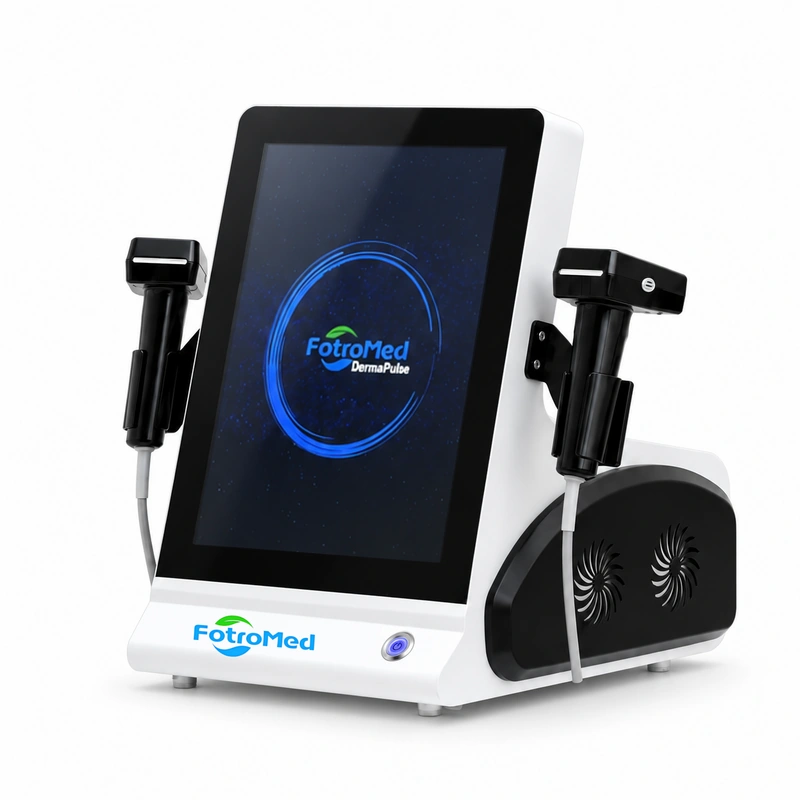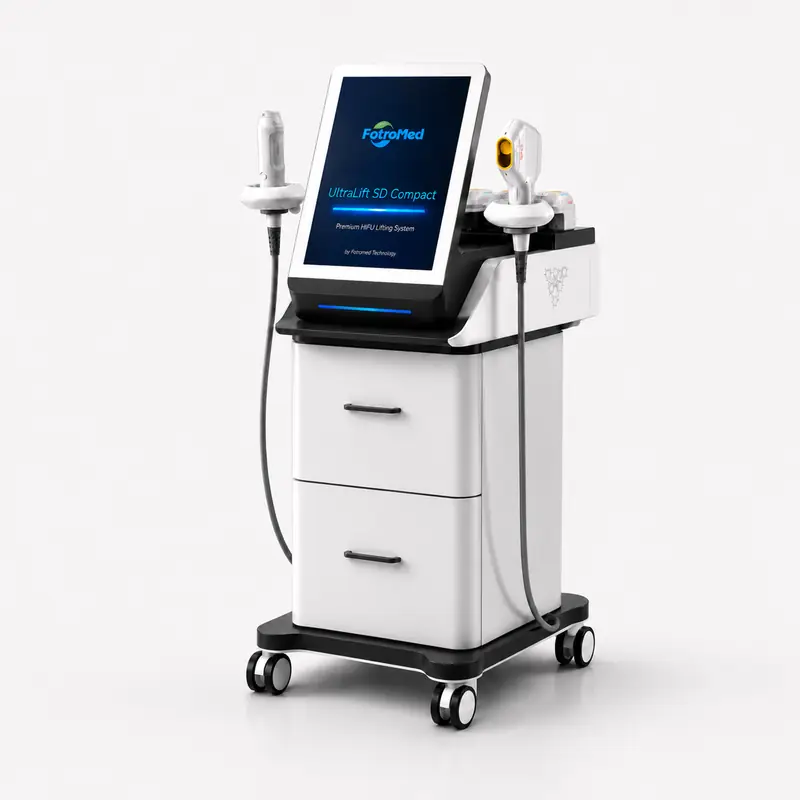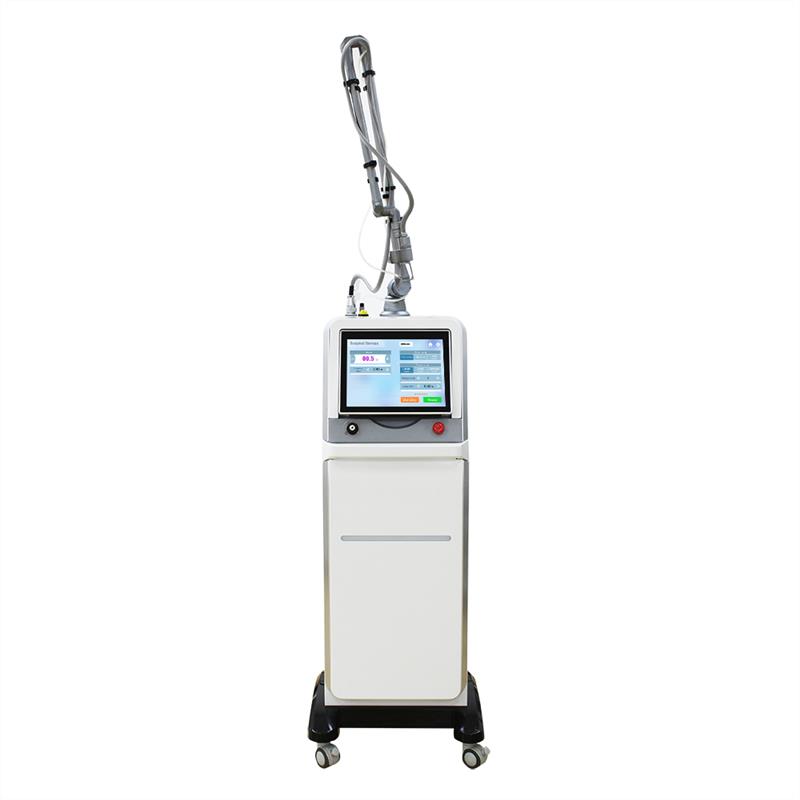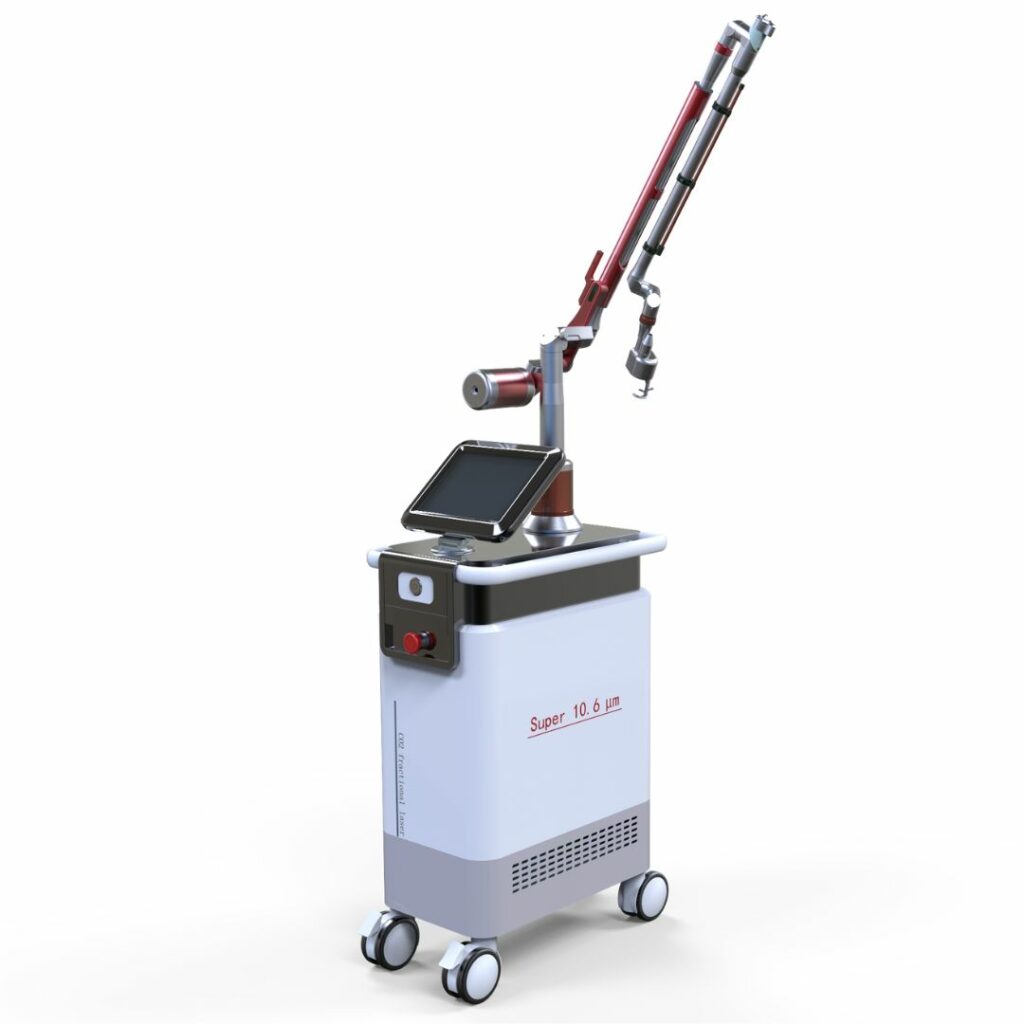
In 2025, a two-room clinic in Houston, Texas, reached out to us looking for a better RF microneedling machine after a disappointing $12,000 purchase. Their existing device had been marketed as „the best,“ with two treatment modes and a maximum needle depth of 7.0 mm. On paper, it looked promising. But after nearly 40 clients completed their planned treatment courses, around half reported less improvement in fine lines, Falten, or enlarged pores than expected. Follow-up testing found that the machine delivered less than half its advertised RF output under the test conditions. They wanted to replace it with a machine that could better support their clinic’s treatment needs.
Claims such as “best,” “dual mode,” and “7.0 mm depth” still leave buyers unsure whether the machine fits their clinic. Which configuration produced the advertised output? Will the supplied tips support the planned services? Does the team know how to use them? Is the “best” microneedling device really the right one for your clinic?
We compare 12 professional microneedling devices—three powered microneedling pens and nine RF microneedling machines—through five purchasing factors: regulatory indications, Technologie, client needs, Verbrauchskosten, and manufacturer training. The aim is to help new clinic buyers, growing RF teams, and distributors decide what to ask before ordering.
Wichtige Erkenntnisse
- Which is best? Start with Derma Frac for a small RF clinic, SkinPen Precision for mechanical microneedling, or Potenza and Morpheus8 Burst for established face-and-body teams.
- Regulatory fit comes before a purchase: Match the device’s market authorization and intended use with the local scope of practice of its operators.
- Headline specifications do not predict outcomes: Tiefe, Frequenz, and modes must be assessed for the exact model, Handstück, and treatment workflow.
- Long-term value depends on delivery: Verbrauchsmaterial, Ausbildung, Wartung, and repeatable treatment records affect whether a service can run consistently.
What Is a Professional Microneedling Device?
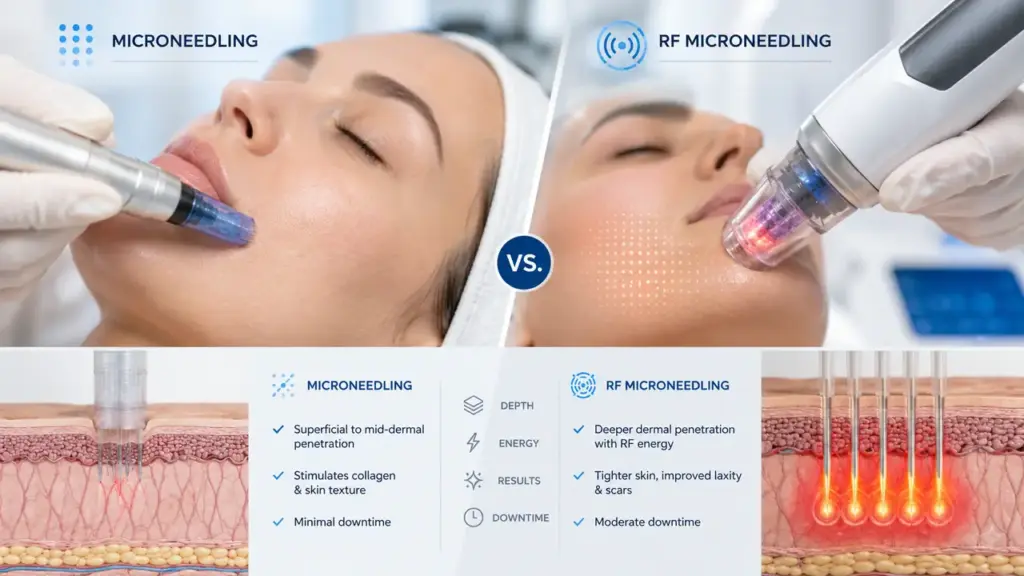
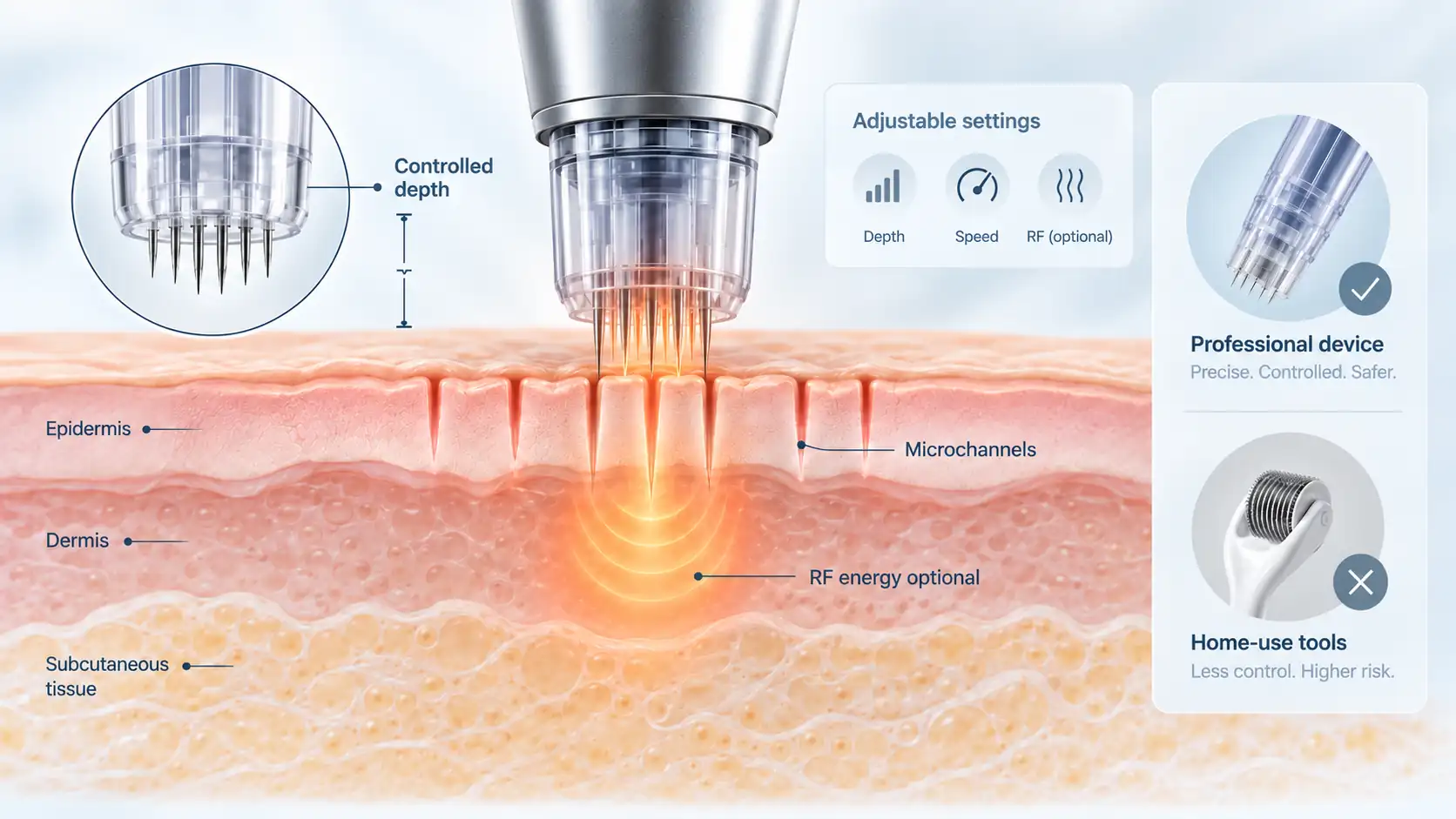
A professional microneedling device uses adjustable-depth needles to create controlled micro-channels in the skin, triggering its natural repair response and stimulating new collagen over a course of treatments. RF models also send radiofrequency energy through the needles to heat the tissue beneath the surface. Clinics use them for acne scars, wrinkles and rough skin texture.
Which specifications distinguish professional devices?
Diese 12 professional devices include powered pens and other types of machines. The specifications worth checking depend on how each one works. Powered pens in this comparison offer settings around 0.25–2.5 mm; some list 50–150 needle insertions per second. Standard RF tips in this comparison cover roughly 0.5–4.0 mm, while a dedicated deep tip reaches 7 mm. RF operating frequencies range from about 460 kHz to 4 MHz. Delivered heat also depends on power, Pulsdauer, monopolar or bipolar output, and tip design. From depth and insertion speed to RF output, clinic equipment involves far more settings and choices than a home roller.
Why can’t a home-use tool replace a clinic device?
A home roller is typically for surface care: it may have fixed needles of about 0.2 mm, be moved by hand, and deliver no RF energy. Clinic treatments for scars, Falten, or RF procedures can reach deeper skin tissue; RF also heats tissue. That depth and energy call for trained operators and closer control. Der FDA’s consumer guidance says no microneedling medical device has been authorized for over-the-counter sale and recommends a specially trained provider. A home roller cannot stand in for a professional clinic treatment.
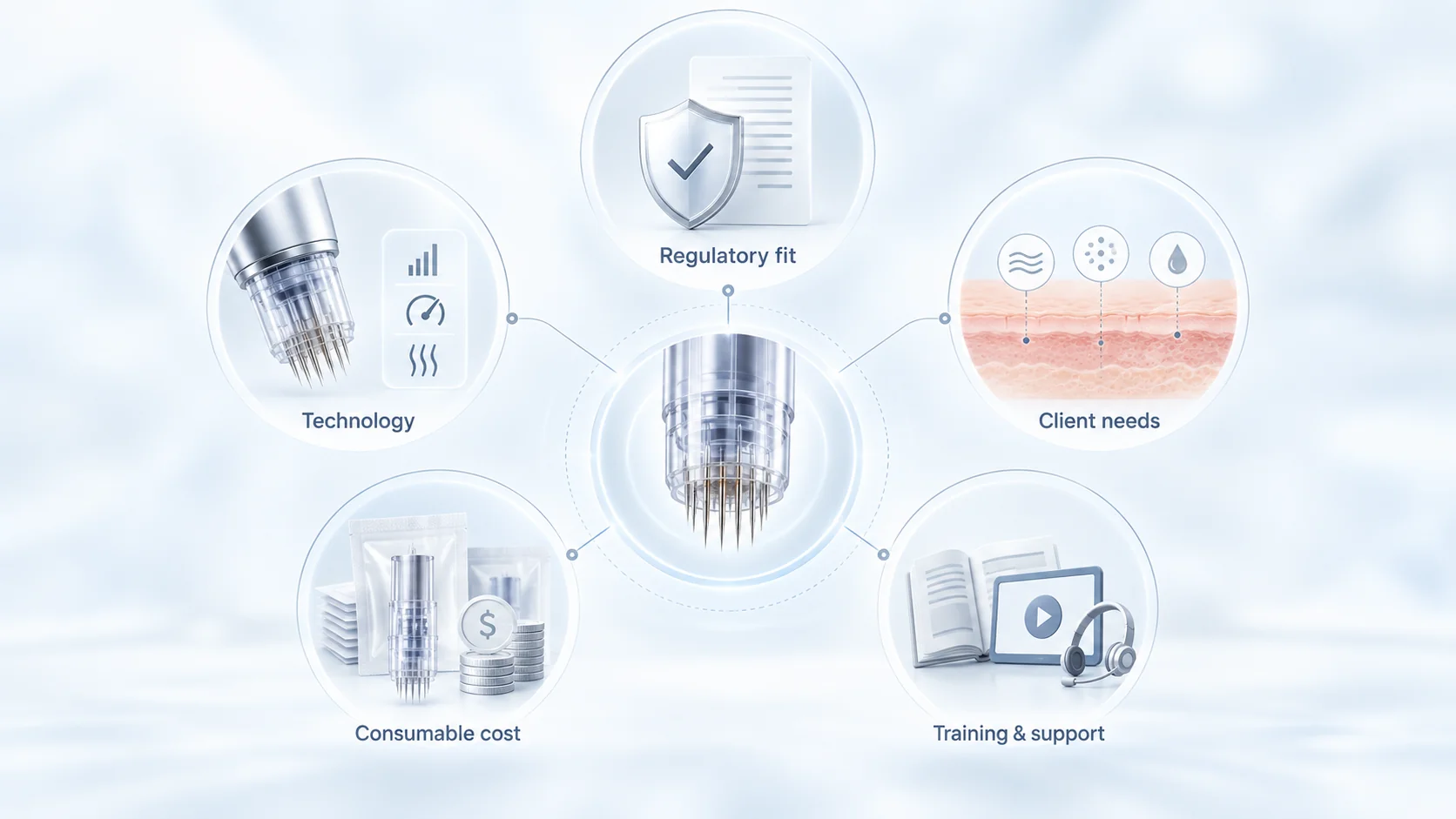
5 Factors for Comparing Professional Microneedling Devices
A device can look impressive on paper and still leave a clinic with a service it cannot offer, tips it cannot afford, or operators who were never trained on the delivered handpieces. These five factors trace those problems back to the buying decision.
Regulatory indications
Check who will use the device before comparing its maximum depth. In North Carolina, licensed estheticians can offer microneedling within their scope, but the state board’s guidance gives a needle depth of no more than 1 mm as an example and bars procedures that go beyond the epidermis. A clinic that buys on depth alone may find it cannot offer the planned service. Check local operator rules and the device’s intended use first; the profiles below also identify the FDA clearances we could verify.
Technologie
Maximum depth tells only part of the story. Monopolar versus bipolar RF, Frequenz, and pulse settings change how energy is delivered. Nadelanzahl, gauge, Tiefe, and insertion speed affect tip choice and handling; gold plating and insulation are separate design details. If the purchased configuration lacks a required mode or tip, the clinic may have to buy more equipment and retrain staff. We compare the technology actually supplied, not just the highest number on a brochure.
Client needs
Clients usually ask about acne scars, Dünne Linien, Falten, oder Laxheit. RF microneedling pairs needle insertion with heat and can support selected scar, wrinkle, and tightening services. Some powered pens have specific cleared indications for scars or wrinkles, but provide no RF heat. If the treatment plan calls for RF and the clinic buys a non-RF pen, it cannot deliver that plan and may disappoint the client. The right route starts with the service the clinic intends to offer.
Consumable costs
The console is only the first expense. Many treatments require a fresh sterile tip or cartridge each time. Expensive tips, slow replenishment, and repair downtime can increase costs and disrupt bookings; a high-priced system also needs enough appointments to recover its cost. Our comparison therefore looks at per-tip or treatment-kit costs alongside resupply and service support.
Manufacturer training and guidance
Check what the manufacturer actually provides: a user manual, operation videos, Online-Kurse, hands-on sessions, certificates, or follow-up support. The course should match the model and tips you buy. The profiles below list the guidance we could verify, so clinics can confirm who can attend, what costs extra, and whether new staff can train later.
12 Professional Microneedling Devices at a Glance
| Gerät | Technologie | Distinctive feature |
|---|---|---|
| FotroMed Derma Frac | Gold-plated insulated needles deliver bipolar RF with vacuum assistance. | Vacuum holds skin against the tip; the platform also offers needle-free RF and factory customization. |
| SkinPen-Präzision | Powered stainless-steel microneedling pen; kein RF. | Facial acne-scar and neck-wrinkle indications with a single-use protection system. |
| MicroPen EVO | Cordless powered stainless-steel microneedling pen; kein RF. | Angled tip improves visibility and the cordless handpiece moves easily between rooms. |
| SkinStylus SteriLock MicroSystem | Powered stainless-steel needle array; kein RF. | Indications include defined scar and periorbital-wrinkle populations. |
| Peninsula Reverse Time | Gold-plated microneedles deliver monopolar, bipolar, or mixed RF, with a suction-tip option. | One handpiece accepts suction and non-suction tips and supports layered RF during retraction. |
| Sincoheren RF-301 | Gold-plated insulated microneedles deliver bipolar RF, with a separate surface RF electrode. | 25-pin and 49-pin arrays offer different needle densities, alongside a surface RF electrode. |
| Cynosure Potenza | Gold-plated needles support monopolar and bipolar RF. | Four RF modes and layered tip designs broaden face and body options. |
| Cynosure Lutronic Genius | Insulated needles deliver bipolar RF with tissue-impedance monitoring. | Displays tissue feedback and delivered energy during treatment. |
| Cutera Secret RF | Bipolar RF through gold-plated needles. | Focused RF microneedling system with tip options for local and larger areas. |
| InMode Morpheus8 Burst | Gold-plated bipolar RF needles with multilayer output. | Can release energy at several depths during one insertion. |
| Candela-Matrix | Matrix Pro delivers bipolar RF through insulated needles. | One console supports microneedling, fraktionierte HF-Oberflächenerneuerung, and a non-needle treatment. |
| Cartessa VirtueRF | SmartRF and DeepRF use bipolar RF; ExactRF uses monopolar RF. | Separate face, Körper, and precision handpieces; DeepRF includes contact cooling. |
Spitze 12 Professional Microneedling Devices for Clinics
Consumable prices are approximate, with open-box listings clearly marked. Where exact prices are unavailable, we use estimates or other relevant information to help you assess ongoing costs.
FotroMed Derma Frac
Derma Frac is FotroMed’s vacuum-assisted bipolar RF microneedling system. Suction holds the skin against the gold-plated, insulated needle array as it enters and delivers RF energy. A needle-free RF option broadens the treatment menu. Factory customization, Bedienerschulung, and marketing support are available for distributors.
- Regulierungsstatus: Derma Frac is CE certified and FDA registered. FotroMed holds ISO 13485 certification for its medical-device quality management system.
- Technologie: Vacuum-assisted bipolar RF at 2–4 MHz, with needle depths up to 3.5 mm, 10-, 25-, and 64-pin gold-plated insulated tips, and two suction levels. The needle design determines where energy is released; suction helps maintain contact. A separate needle-free RF tip supports surface-contact treatments.
- Client needs: Compare it for acne scars, Dünne Linien, Gesichtsfalten, raue Textur, und leichte Schlaffheit. Needling and RF heat work together, while suction helps keep the tip in contact with the skin. Der 10-, 25-, and 64-pin tips cover different treatment areas.
- Verbrauchsmaterial: Tips cost about $7–$10 each, at the low end of the single-use tip prices in this comparison.
- Herstellerschulung: FotroMed offers one-on-one video training with a specialist to help customers use the device confidently and treat clients safely.
Am besten für: Small and midsize medical aesthetics clinics that want to control purchase and per-treatment tip costs while keeping needle contact steady and clients comfortable. It also suits distributors seeking OEM/ODM options, Ausbildung, und Serviceunterstützung. Suction holds the skin against the needle array and may reduce insertion discomfort for pain-sensitive clients.
SkinPen-Präzision
SkinPen Precision is a powered, non-RF pen that forms microchannels through repeated needle insertion. Its handpiece works with a single-use needle cartridge and BioSheath barrier; active needle retraction and liquid protection help manage handling and contamination risks.
- Regulierungsstatus: FDA-cleared under 510(k) K202243 to improve the appearance of facial acne scars in adults aged 22 or older and neck wrinkles in Fitzpatrick skin types II–IV.
- Technologie: A motor drives a 14-pin stainless-steel array to a maximum depth of 2.5 mm. The cartridge and BioSheath form the single-use protection system; the pen provides no RF heat.
- Client needs: Its cleared populations make it a focused option for facial acne-scar and neck-wrinkle services. The team can build a clear service around those two uses.
- Verbrauchsmaterial: A needle cartridge and protective sleeve cost about $45–$65 per set, excluding gel, placing it among the higher-cost non-RF consumables in this list.
- Herstellerschulung: Crown includes an online course and completion certificate with a new SkinPen purchase. Local representatives also offer on-site demonstrations and hands-on training, with further seminars and webinars available.
Am besten für: Small medical clinics starting with facial acne-scar or neck-wrinkle services and looking for clearly defined FDA-cleared uses. The handpiece takes little room, and the cartridge-and-sleeve set is easy to cost per visit.
MicroPen EVO
MicroPen EVO is a cordless powered pen with a rechargeable handpiece, angled needle tip, and protective sleeve. The angled neck improves the operator’s view of the skin, while the cordless design makes it easier to move between treatment rooms. It provides mechanical needle insertion without RF.
- Regulierungsstatus: FDA-cleared under 510(k) K212558 for the appearance of facial acne scars in adults aged 22 or older and neck wrinkles in Fitzpatrick skin types II–IV.
- Technologie: Battery-driven, 14 × 32G stainless-steel needles with 0–2.0 mm depth in 0.25 mm-Schritte. Nominal motor speed is 7,000 U/min (±10%). The angled cartridge, seal, and active retraction help handling; motor speed alone is not an outcome measure.
- Client needs: Suits mechanical microneedling for the specified acne-scar and neck-wrinkle populations. Cordless handling helps operators reposition around the face and neck, but cannot provide RF heat.
- Verbrauchsmaterial: One dedicated 14-pin disposable cartridge is replaced for every treatment.
- Herstellerschulung: MicroPen EVO provider material promises training and dedicated support for professional practices. It does not specify course length or delivery format.
Am besten für: Medical clinics sharing one pen across several treatment rooms. Cordless handling removes cable drag, while the angled tip improves the operator’s view; the clinic also needs a dependable supply of dedicated cartridges.
SkinStylus SteriLock MicroSystem
SkinStylus SteriLock MicroSystem is a powered pen that runs on batteries or an external supply. It pairs adjustable needle depth with a liquid barrier; its front components can be steam sterilized. Its uses span specific facial-scar, abdominal-scar, and periorbital-wrinkle populations.
- Regulierungsstatus: FDA 510(k) K253002 clears this model for improving periorbital wrinkles in adults aged 34 or older across Fitzpatrick skin types I–VI.
- Technologie: The MP1209SL uses a 6 × 6 array of 32G stainless-steel needles, with 0–2.5 mm depth in 0.1 mm increments. It has no RF. SteriLock helps keep liquids out of the handpiece.
- Client needs: Relevant to defined facial acne-scar, abdominal hypertrophic-scar, and periorbital-wrinkle services. Each indication has its own population criteria, so the team should screen for the service it actually offers.
- Verbrauchsmaterial: Single-use tips cost under $45 jede, a relatively manageable cartridge cost in this comparison.
- Herstellerschulung: SkinStylus materials describe training and support, and its website has a training inquiry option. Ask the supplier for the SteriLock course format and whether it comes with the system.
Am besten für: Dermatology or medical aesthetics clinics treating both scars and eye-area wrinkles, watching cartridge costs, and equipped to screen clients and sterilize components. Fine depth adjustment and liquid protection help the team manage those different services.
Peninsula Reverse Time
Peninsula Reverse Time combines monopolar, bipolar, and mixed RF modes in one system. Its MicroRF handpiece accepts suction and non-suction tips without a handpiece swap. With a suction tip, the needles deploy after the preset contact is reached; layered mode can release RF energy as the needles retract.
- Regulierungsstatus: Registered as a Class III medical device with China’s NMPA for treatment of facial atrophic acne scars in medical institutions.
- Technologie: Gold-plated microneedles with monopolar, bipolar, and mixed RF. Treatment depth spans 0.7–3.5 mm, with one to five energy layers. The MicroRF handpiece accepts suction and non-suction tips; suction secures contact before needle insertion.
- Client needs: Fits teams building a facial atrophic-acne-scar service and adjusting needle insertion and RF delivery by treatment area. Suction helps the tip maintain contact, while layered output lets the operator work at several depths.
- Verbrauchsmaterial: Four treatment-tip types are single use; budget each appointment for the tips actually used.
- Herstellerschulung: Peninsula has run Reverse Time hands-on workshops with the Chinese Association of Plastics and Aesthetics and offers physician training certification. Its site also lets buyers check listed trained physicians.
Am besten für: Chinese medical practices with an established RF team and a focus on facial acne scars. Monopolar, bipolar, Absaugen, and layered-output options give clinicians more configurations when the practice can train staff and budget for the relevant tips.
Sincoheren RF-301
Sincoheren RF-301 is a bipolar RF microneedling device made by a Shenzhen company. Its 25-pin and 49-pin tips offer different needle densities, alongside a 49-point surface RF electrode that does not insert needles. Operators set depth, Pulsbreite, and output level on the screen.
- Regulierungsstatus: FDA-cleared under 510(k) K231749 for electrocoagulation and hemostasis in dermatologic and general surgical procedures.
- Technologie: Gold-plated insulated microneedles deliver 1 MHz bipolar RF. The 25-pin and 49-pin electrodes adjust from 0.5 Zu 3.5 mm; pulse duration is 10–1000 ms. A 49-point surface RF electrode works without needle insertion.
- Client needs: Suits dermatology teams performing electrocoagulation and hemostasis that want a choice of microneedle and surface electrodes. The 25-pin and 49-pin arrays offer different needle densities.
- Verbrauchsmaterial: The 25-pin, 49-Stift, and 49-point RF electrodes are single use; count the electrodes selected for each appointment.
- Herstellerschulung: Sincoheren lists training videos, Benutzerhandbücher, live video guidance, and on-site training. Its company materials also say equipment customers receive a free course and training certificate.
Am besten für: Medical practices or distributors seeking a bipolar RF system for dermatologic electrocoagulation and hemostasis, with a choice of needle and surface electrodes. Three focused electrode options make training and stock planning simpler.
Cynosure Potenza
Potenza combines monopolar and bipolar RF with two frequencies. Four RF modes and several needle arrays let experienced teams work across smaller and larger treatment areas. TigerTip is designed for layered energy release; Fusion has a separate tip configuration and depth range.
- Regulierungsstatus: FDA-cleared under 510(k) K231216 for electrocoagulation and hemostasis in dermatologic and general surgical procedures.
- Technologie: Monopolar or bipolar RF at 1 oder 2 MHz creates four mode combinations. Gold-plated conductive needle sections come with different insulation patterns. Der 16-, 25-, and 49-pin tips operate at 0.5–4.0 mm; the 21-pin Fusion tip covers 0.5–2.5 mm.
- Client needs: Its polarity, Frequenz, and tip choices suit an established RF team serving texture, Akne-Narbe, and laxity consultations across face and body.
- Verbrauchsmaterial: Some treatment tips cost around $500 jede, the highest RF-tip price in this comparison and a substantial per-visit expense.
- Herstellerschulung: Cynosure University offers Potenza learning resources, Demonstrationen, und Webinare. Cynosure also hosts in-person Potenza training events.
Am besten für: Dermatology or medical aesthetics practices with steady face-and-body RF demand and budgets for several tip types. Its modes are most useful when the team needs to vary polarity, Frequenz, and needle array by treatment area.
Cynosure Lutronic Genius
Genius pairs bipolar RF microneedling with real-time tissue-impedance feedback. It reads tissue response, adjusts output, and shows delivered energy, giving operators process information to record alongside depth, pulse settings, and skin response.
- Regulierungsstatus: FDA-cleared under 510(k) K253484 for tissue coagulation, Kontraktion, and hemostasis in dermatologic and general surgical procedures.
- Technologie: Bipolar RF through insulated needles, with feedback adjustments 500 times per second and a display of delivered energy. Der 2026 version lists 460 kHz, 10–600 ms pulses, and depths up to 4.0 mm. Earlier versions have their own specifications.
- Client needs: A candidate for RF services involving wrinkles, Textur, and scars when the team wants information on energy transfer across different skin areas. It particularly suits clinics willing to document settings, Antwort, und Nachbereitung.
- Verbrauchsmaterial: A 49-pin treatment tip costs around €120 before tax, a relatively high recurring treatment cost.
- Herstellerschulung: Lutronic’s Genius product page lists workshops, Webinare, Vor-Ort-Training, and a device demonstration video.
Am besten für: Dermatology or medical aesthetics clinics with established RF services that value treatment records and clinician training. Impedance and delivered-energy feedback help compare procedures across skin areas, provided the clinic can sustain the tip costs.
Cutera Secret RF
Secret RF is a dedicated bipolar RF microneedling system. Its tip sizes and insulation options let operators choose coverage area and energy-release pattern, while depth and energy can be adjusted for face or body work. The platform and consumable range stay focused on RF microneedling.
- Regulierungsstatus: FDA-cleared under 510(k) K170325 for tissue coagulation and hemostasis in dermatologic and general surgical procedures.
- Technologie: 2 MHz bipolar RF through gold-plated 25- or 64-pin needles at 0.5–3.5 mm depths. Non-insulated and semi-insulated tips offer different coverage and energy-release patterns.
- Client needs: Can support RF programs addressing texture, Dünne Linien, Aknenarben, and selected body-texture concerns. Smaller arrays suit localized work; larger arrays cover more area.
- Verbrauchsmaterial: A 25-pin non-insulated tip costs about $85, near the lower end of the US-dollar RF-tip prices listed here.
- Herstellerschulung: Cutera University has offered advanced classes and live demonstrations for Secret RF customers. Cutera also provides on-demand sessions on tip choices and parameter use.
Am besten für: Small and midsize medical clinics that already own other skin devices and want to add a focused RF microneedling service. Tip size and insulation choices help organize face and body work and track consumable costs.
InMode Morpheus8 Burst
Morpheus8 Burst can deliver RF energy at several tissue depths during one needle insertion. Prime, Platzen, Erneuerung, and Deep address different areas and depth needs; Burst and Scale govern layered output. Face and body services therefore require different tip and setting choices.
- Regulierungsstatus: Included in the FDA-cleared Ignite RF system under 510(k) K251254 for soft-tissue coagulation, Kontraktion, and hemostasis in dermatologic and general surgical procedures.
- Technologie: Bipolar RF through gold-plated needles. Prime has 12 Stifte; standard Burst and Resurfacing have 24; Deep has 40. The tip family covers 0.5–7 mm mechanically, mit dem 7 mm maximum belonging to the Deep configuration. Burst releases energy at multiple depths during one insertion; Scale adjusts the layers.
- Client needs: Suits practices treating both facial and body RF concerns. A clinician can choose a tip according to tissue thickness and the target area; deeper settings require particular attention to anatomy, facial fat distribution, and thermal-injury risk.
- Verbrauchsmaterial: A 24-pin Burst tip costs about $187.50, toward the higher end of the US-dollar RF tips in this list.
- Herstellerschulung: InMode University offers expert demonstrations involving Morpheus8 Burst. In some regions, InMode also runs Burst-specific workshops and user training.
Am besten für: Medical aesthetics or plastic surgery practices with mature face-and-body RF services, qualified clinical teams, and budgets for dedicated tips. Layered output fits teams that plan treatment separately by area and depth.
Candela-Matrix
Candela Matrix is a multi-application RF console. Matrix Pro delivers RF microneedling, Sublative RF supports fractional resurfacing, and Sublime combines infrared light with RF. Matrix Pro adds impedance monitoring and multilayer delivery, while the shared console lets a clinic offer different skin services through separate handpieces.
- Regulierungsstatus: FDA-cleared under 510(k) K240070. Matrix Pro is cleared for tissue coagulation and hemostasis and for facial wrinkles in Fitzpatrick skin types I–IV.
- Technologie: Matrix Pro uses 1 MHz bipolar RF through a 7 × 7 array of 49 stainless-steel needles at 0.8–3.5 mm. Insulation, impedance monitoring, and up to three energy layers per insertion support controlled delivery. Sublative RF uses fractional bipolar RF; Sublime combines bipolar RF with infrared light.
- Client needs: Fits clinics seeing rough texture, Falten, and laxity across several service types. Matrix Pro addresses plans needing needle insertion and RF; the other handpieces support fractional or non-needle approaches. Shared hardware also requires coordinated booking.
- Verbrauchsmaterial: A six-tip open-box pack works out to about $66.67 per Matrix Pro tip.
- Herstellerschulung: Candela describes Matrix onboarding, virtual or in-person clinical training, and post-sale support. It has also held hands-on training for Matrix users.
Am besten für: Medium and large practices offering several skin services that want one console for RF microneedling, Fraktionalauferblut, and a non-needle option. They also need to coordinate bookings and consumables across the handpieces.
Cartessa VirtueRF
VirtueRF separates routine facial, Körper, and localized procedures across SmartRF, DeepRF, and ExactRF handpieces. SmartRF and DeepRF use bipolar RF and automated needle insertion; ExactRF uses monopolar RF. DeepRF also has a reusable contact-cooling plate.
- Regulierungsstatus: FDA-cleared under 510(k) K211562 for tissue coagulation and hemostasis. Its facial-wrinkle indication applies to the SmartRF 1 MHz configuration in Fitzpatrick skin types I–V.
- Technologie: SmartRF and DeepRF use 36 gold-plated needles for bipolar RF; ExactRF uses monopolar RF. Frequency options across handpieces and modes are 0.5, 1, Und 2 MHz. Automated insertion and RF subpulse control shape delivery; DeepRF adds contact cooling.
- Client needs: Suits teams expanding from facial wrinkles to body and small-area RF work. SmartRF handles the routine facial pathway; DeepRF offers a body configuration and cooling; ExactRF addresses localized regions. The handpiece should follow the target area and treatment plan.
- Verbrauchsmaterial: SmartRF tips cost about $85 jede; ExactRF treatment kits about $99 and DeepRF kits about $129.
- Herstellerschulung: Cartessa University offers online and live education. Cartessa also has a VirtueRF webinar on selecting and setting its three handpieces for different treatment areas.
Am besten für: Medical aesthetics clinics with an established facial RF service that plan to add body and localized work gradually. The three handpieces help cost each service separately; DeepRF’s contact cooling also addresses client-comfort concerns.
How to Choose the Best Microneedling Device for a Clinic or Supplier
Start with what clients want to improve. That tells you whether to compare powered pens or RF -Mikrone -Maschinen. Then check which tips will actually arrive, what you will replace after each appointment, and how your team will learn to use them. Clinics and suppliers building a private label should also ask what can be customized and who handles support after delivery.
Let client demand determine the technology
| Client need | Compare first |
|---|---|
| Acne scars and pitted skin | SkinPen-Präzision, Peninsula Reverse Time, Derma Frac, Geheimes RF |
| Feine Linien | Derma Frac, Geheimes RF, Leistung |
| Falten | SkinStylus (around the eyes), SkinPen Precision and MicroPen EVO (Nacken), Derma Frac (Gesicht), Matrix (Gesicht) |
| Hautschlaffheit | Derma Frac, Leistung, Morpheus8 Burst, Matrix |
| Rough texture and visible pores | Derma Frac, Geheimes RF, Matrix |
A powered pen makes microchannels through needle insertion and belongs on the shortlist for acne scars or wrinkles in particular areas. RF microneedling adds heat, bringing fine lines, Laxheit, and texture into the comparison.
Match configuration to treatment goals and clinic needs
| Buying priority | Vergleichen |
|---|---|
| Steady contact, Komfort, and low tip cost | Derma Frac |
| Aknenarben, Dünne Linien, and texture services | Derma Frac, Geheimes RF, Leistung |
| Face and body services | Leistung, Morpheus8 Burst |
| Multiple handpieces and precise areas | Matrix, TugendRF |
| Energie-Feedback in Echtzeit | Genius |
A small clinic starting RF microneedling can look at Derma Frac first. It covers acne scars, Dünne Linien, Textur, und Straffung; suction helps the tip stay in contact and may ease insertion discomfort. If the clinic plans multi-mode or layered treatments, compare platforms built for those services.
Choose by practice type
| Practice type | Check before choosing | Compare first |
|---|---|---|
| Esthetician-led salon | Local scope of practice and FDA-cleared use | SkinPen-Präzision, MicroPen EVO, SkinStylus |
| Small or midsize medical aesthetics clinic | Can one device cover several facial services? | Derma Frac, Geheimes RF, TugendRF |
| Established medical aesthetics practice | Area-specific tips or energy feedback | Leistung, Morpheus8 Burst, Genius |
| Verteiler | OEM/ODM options and after-sales support | Derma Frac, Sincoheren RF-301 |
For an esthetician-led salon, check what licensed staff may do locally and whether the device is cleared for the planned use. Our guide to Microneedling Machines for Estheticians examines RF options for teams qualified to offer them. A small or midsize clinic planning acne-scar, fine-line and texture services can compare the facial treatment range, Komfort, tip costs and training of Derma Frac, Secret RF and VirtueRF.
An established practice may need dedicated handpieces for facial, body and localized treatments, as well as feedback during treatment. Distributors should ask which OEM/ODM elements, Schulungsmaterialien, replacement tips and service support each manufacturer will actually provide. Use these starting lists to compare the delivered configuration against your planned services and team.
Build tip costs into treatment pricing
Start with two calculations: tip cost as a share of the treatment fee = tip price ÷ treatment fee × 100%; amount left after the tip = treatment fee − tip price. Comparing devices at the same treatment fee shows how much remains for staff, room time, and other supplies.
At a sample treatment price of $300: Assume one tip per appointment.
- Derma Frac: $300 − ($7–$10) = $290–$293 left; the tip uses about 2.3%–3.3% of the fee.
- Geheimes RF (25-Stift): $300 − $85 = $215 links; the tip uses about 28.3%.
- Morpheus8 Burst (24-Stift): $300 − $187.50 = $112.50 links; the tip uses 62.5%.
Personal, Zeit im Behandlungsraum, and other supplies must come from the amount left. Substitute your clinic’s fee into the same calculation to see how much room each tip leaves in your pricing.
Check the training supplied with the device
Put training on the delivery checklist. SkinPen includes an online course with a new system, Matrix includes onboarding, and Derma Frac offers one-on-one video training with a specialist. Vor der Bestellung, ask the supplier to specify the model covered, who may attend, the teaching format, and access for future staff. Distributors should also confirm which manufacturer materials they can use to train their own clinic customers.
Choose a customization partner for private-label plans
Clinics and distributors planning a private-label service can compare FotroMed Derma Frac with Sincoheren RF-301. FotroMed offers factory customization, and Sincoheren also offers OEM/ODM service. Ask each supplier to spell out which branding, interface languages, Verpackung, and instructions can be customized, and who handles tip replenishment, Ausbildung, Reparaturen, and target-market documentation.
Where We See Professional Microneedling Going
Return to the Houston clinic. Its machine produces RF, yet output measured under the advertised conditions falls short of the stated figure; about half the clients reached in follow-up also report less improvement than expected. Those findings need separate investigation. Client feedback alone cannot establish what caused the gap. We believe the next step for microneedling equipment is verifiable performance: manufacturers should state the mode, Tipp, and test conditions behind an output claim, and clinics should be able to check the delivered unit against them. Records of client selection, Behandlungseinstellungen, and follow-up give the team a way to investigate concerns.
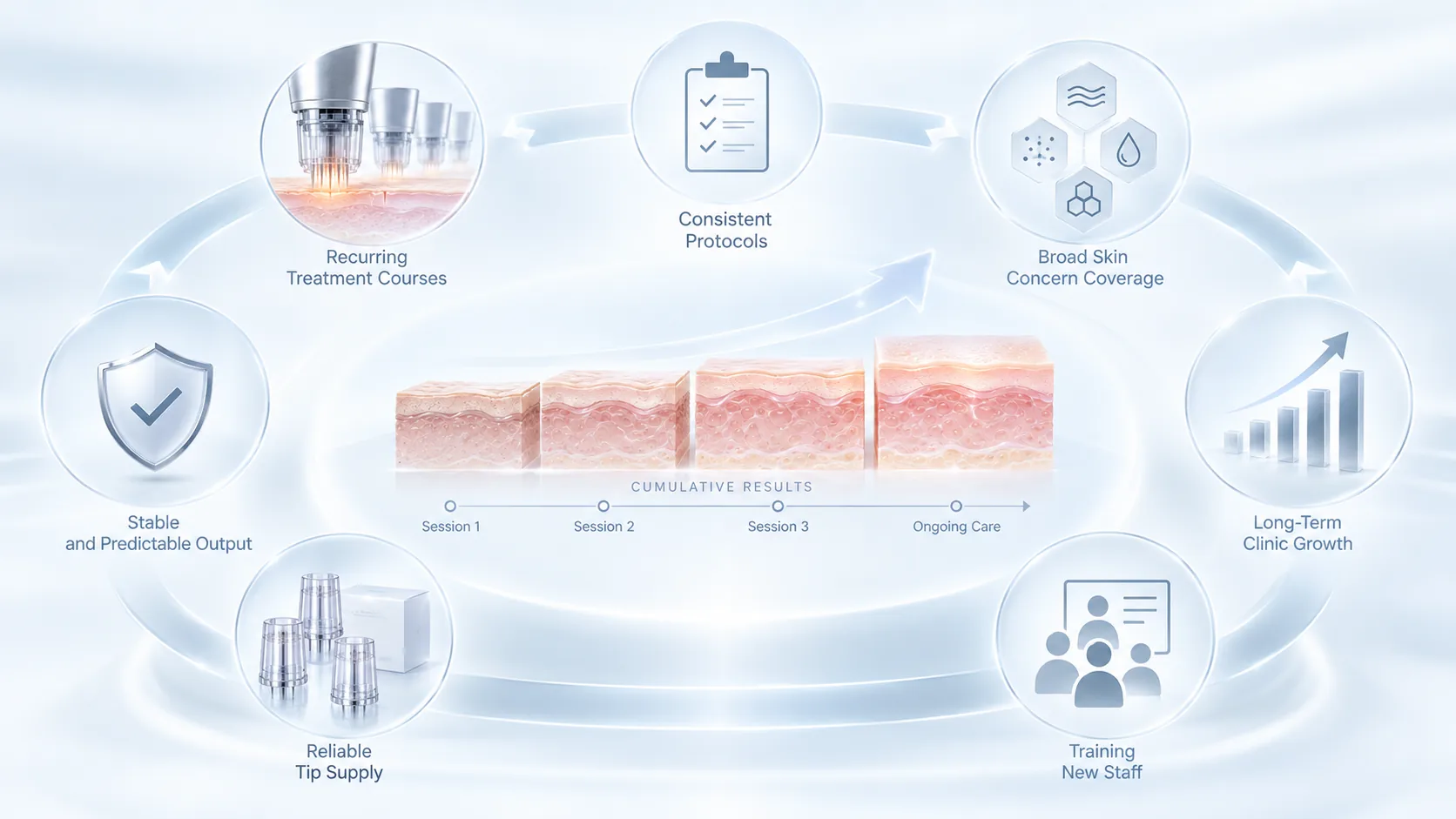
We see microneedling becoming a continuing skin service within medical aesthetics. Aknenarben, raue Textur, Dünne Linien, and mild laxity often call for a treatment course and follow-up, so the equipment has to support consistent work from one visit to the next. Stable tip contact, controlled output, tips suited to different areas, and training new operators can use matter more in daily practice than a single headline specification. Tip cost and dependable supply determine whether clinics can keep those services on the calendar.
That view shapes Fotromed’s Derma Frac: suction helps the tip stay in contact, needle arrays cover smaller and larger areas, tips cost about $7 jede, and we provide one-on-one video training with a specialist. For a small clinic, a sound investment is a device it can check on delivery, teach its team to use, and price into every treatment. The Houston clinic’s question about the “best” machine is answered through delivery and use over time.
FAQs
Which professional microneedling device is best for a clinic?
A clinic establishing its first mechanical microneedling service can compare SkinPen Precision, MicroPen EVO, and SkinStylus against its actual client population. A qualified RF team adding one service can begin with Derma Frac and Secret RF. Practices with established demand for face, Körper, or several RF approaches can compare Potenza, Morpheus8 Burst, Matrix, and VirtueRF configurations. Check the final shortlist against operator qualifications, Verbrauchskosten, and instructions for use.
Should a clinic choose RF or non-RF microneedling?
Choose according to the intended service. A medical team planning heat-based RF procedures can compare RF platforms and their training requirements. A practice offering mechanical microchanneling can begin with one of the three professional pens compared here. The two routes require different tips and skills, and the chosen service must match local scope-of-practice rules and the device’s intended use.
Is a deeper microneedling device better?
Look first at the target area and the device instructions, then have a qualified operator select an appropriate depth. A higher maximum depth brings different training and risk demands. For purchasing, the useful question is whether the settings the clinic will use cover its planned services.
Which microneedling consumables should a buyer budget for?
List every sterile cartridge, RF tip, sleeve, filter, or tube that must be changed, plus any skincare and aftercare products required by the service. Ask for unit price, minimum order, Haltbarkeit, and resupply time, then calculate the monthly spend at your expected appointment volume.
Can a beauty salon use an RF microneedling device?
Check local rules for the device, Nadeltiefe, HF-Energie, operator license, und ärztliche Überwachung. Vor dem Kauf, confirm that the salon can offer the planned service and that its insurance covers it. Manufacturer training teaches device operation; the operator’s legal scope comes from local rules.
Is FDA registration the same as FDA clearance?
NEIN. FDA registration records an establishment and its listed devices; it does not grant device clearance. A 510(k) clearance identifies a specific device and its cleared intended use. Check the exact model and indication before treating an FDA claim as a reason to buy. The FDA source at the end explains the distinction.
Referenzen & Quellen
- Prospective acne-scar study: newly synthesized collagen after a course of microneedling
- Ahluwalia et al.: Kosten, staffing, and space when acquiring an aesthetics device
- Fotromed: Derma Frac product and specifications
- US FDA: Microneedling-Geräte
- North Carolina Board of Cosmetic Art Examiners: scope of esthetic services
- US FDA: Sicherheitskommunikation zur HF-Mikronadelung
- US FDA: registration versus device clearance
Device clearance records (US FDA 510(k))
- SkinPen-Präzision: K202243
- MicroPen EVO: K212558
- SkinStylus SteriLock MicroSystem: K253002
- Sincoheren RF-301: K231749
- Cynosure Potenza: K231216
- Cynosure Lutronic Genius: K253484
- Cutera Secret RF: K170325
- InMode Morpheus8 Burst (Ignite RF system): K251254
- Candela-Matrix: K240070
- Cartessa VirtueRF: K211562