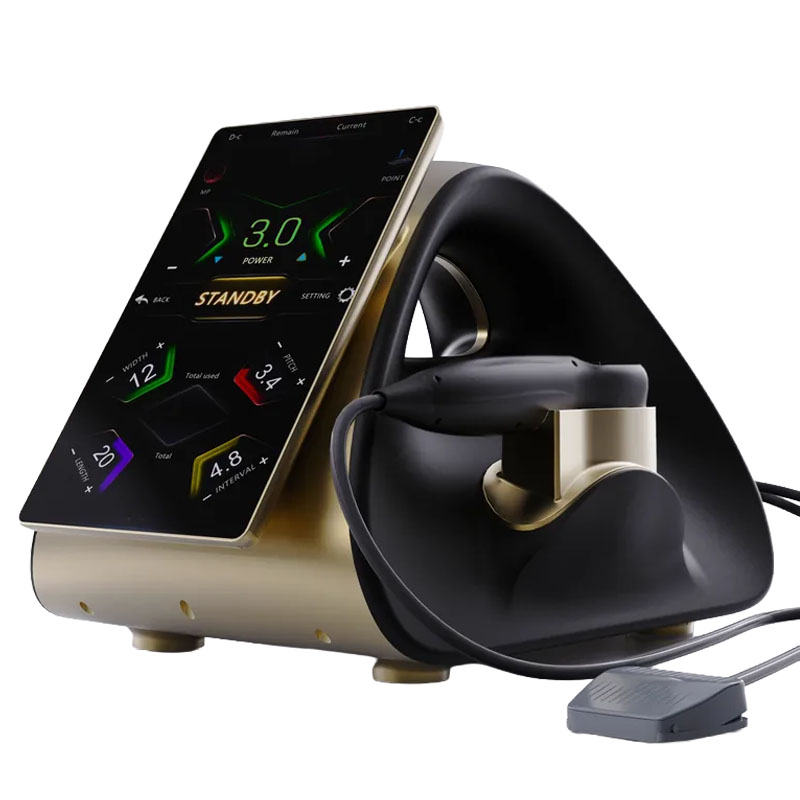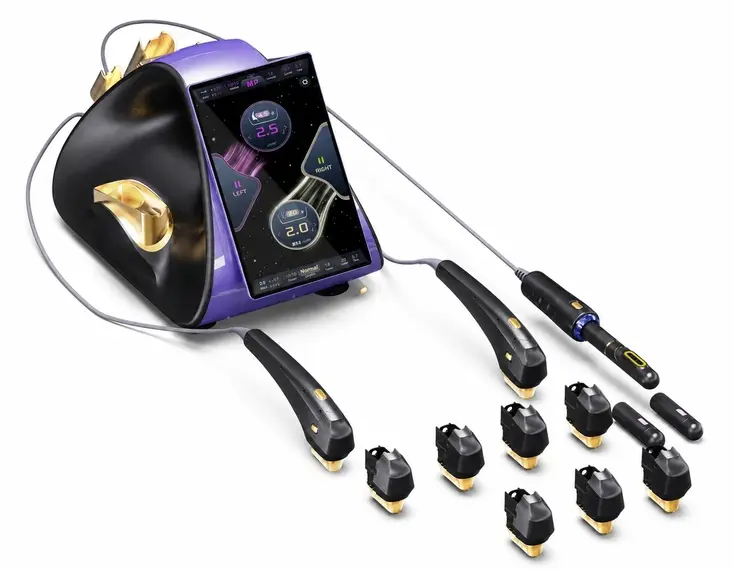
Two clinics can buy what is functionally the same Korean-built RF microneedling platform and pay prices that differ by $60,000 — because one bought it through a U.S. distributor under a familiar brand name, and the other traced it back to the factory. That gap exists because the RF microneedling market runs on a three-layer structure most price lists never show: the brand you know, the manufacturer that builds the device, and the distributor that sells and services it in your country. Until you can see all three layers, you are not comparing machines; you are comparing marketing budgets.
This guide maps the ten manufacturers behind the major RF microneedling systems sold in 2026, explains what FDA “cleared,” “approved,” and “registered” actually mean on a quote sheet, and breaks down realistic price tiers — including the consumable costs that decide your margin long after the purchase order. Sources: FDA fee schedules and device databases, peer-reviewed literature, manufacturer and distributor documentation, and Fotromed’s own manufacturing and export records across 50+ countries.
Who actually makes RF microneedling machines?
Start with the map. The table below pairs each major system with the company that manufactures it and the channel that sells it in the United States.
| # | Brand / system | Manufacturer | Manufactured in | U.S. sales channel | U.S. regulatory status |
|---|---|---|---|---|---|
| 1 | Morpheus8 | InMode Ltd. | Israel | InMode (direct) | 510(k) cleared |
| 2 | Genius, Infini | Lutronic | South Korea | Lutronic (direct) | 510(k) cleared |
| 3 | Secret RF, Secret PRO | ilooda | South Korea | Cutera (Distributor) | 510(k) cleared |
| 4 | Potenza | Jeisys Medical | South Korea | Cynosure (Distributor) | 510(k) cleared |
| 5 | VirtueRF | ShenB | South Korea | Cartessa Aesthetics (Distributor) | 510(k) cleared |
| 6 | Sylfirm X | VIOL | South Korea | Benev (Distributor) | 510(k) cleared |
| 7 | Exion (RF-Mikroneedling-Applikator) | BTL | Europa | BTL Aesthetics (direkt) | 510(k) cleared |
| 8 | Intensif (EndyMed PRO) | EndyMed | Israel | EndyMed (direkt) | 510(k) cleared |
| 9 | Pixel8-RF | Rohrer Aesthetics | USA | Rohrer (direkt) | 510(k) cleared |
| 10 | AWNS (OEM/ODM) | Fotromed | China | Direkt ab Werk | 510(k) cleared |
Der regulatorische Status spiegelt die öffentlich gelisteten Freigaben Stand Mitte 2026 wider; überprüfen Sie das spezifische Modell und die Indikation anhand der FDA- 510(k)-Datenbank vor dem Kauf, da Freigaben modellspezifisch sind und sich ändern.
Liest man die Spalte der Hersteller von oben nach unten durch, zeichnet sich ein Muster ab, das die Spalte der Marken verbirgt: Sechs der zehn bekanntesten Systeme auf dem “amerikanischen Markt” werden in Fabriken aus vier Ländern gebaut, und fünf dieser Systeme gelangen über einen Vertriebshändler und nicht über den Hersteller selbst in US-Kliniken.
Globale Markenplattformen: InMode, BTL, EndyMed
Diese drei stellen ihre eigenen Geräte her und verkaufen sie über ihre eigenen Tochtergesellschaften. Wofür Sie bezahlen, ist vertikale Integration: hauseigene F&E, veröffentlichte klinische Protokolle, direkte Schulungsakademien und ein Servicenetzwerk unter einem Dach. Morpheus8 ist das deutlichste Beispiel dafür — InMode entwickelt, baut, lässt zu und verkauft es, was einer der Gründe dafür ist, warum es den höchsten Preis im Segment und die stärkste Markenbekanntheit beim Patienten aufweist.
Die koreanische Fertigungsebene: Lutronic, ilooda, Jeisys, ShenB, VIOL
Südkorea baut mehr der weltweit führenden Premium-RF-Microneedling-Systeme als jedes andere Land — fünf der zehn Systeme in der obigen Tabelle. Drei davon (Secret RF, Potenza, VirtueRF) werden in den USA im Rahmen von Vertriebsvereinbarungen mit amerikanischen Ästhetikunternehmen verkauft. Das bedeutet, dass der Name auf der Rechnung (Cutera, Cynosure, Cartessa) nicht der Name auf dem Fertigungsband ist (ilooda, Jeisys, ShenB). Für einen Käufer ist dies in zwei praktischen Punkten von Bedeutung: Garantie und Ersatzteile laufen über den Händler, nicht über das Werk; und derselbe Hersteller kann die gleichwertige Plattform in anderen Regionen unter einem anderen Namen zu einem anderen Preis verkaufen.
In den USA montierte Plattformen: Rohrer Aesthetics
Pixel8-RF von Rohrer belegt das Preis-Leistungs-Segment des Markenmarktes — ein 510(k)-zugelassenes bipolares RF-Microneedling-System, das in der Regel deutlich günstiger als die Flaggschiff-Plattformen angeboten wird. Es zeigt, dass “amerikanisch kaufen” in dieser Kategorie normalerweise Montage und Support in den USA bedeutet und nicht einen grundlegend anderen Technologie-Stack.
Chinesische OEM- und ODM-Hersteller: Fotromed und die Ebene direkt ab Werk
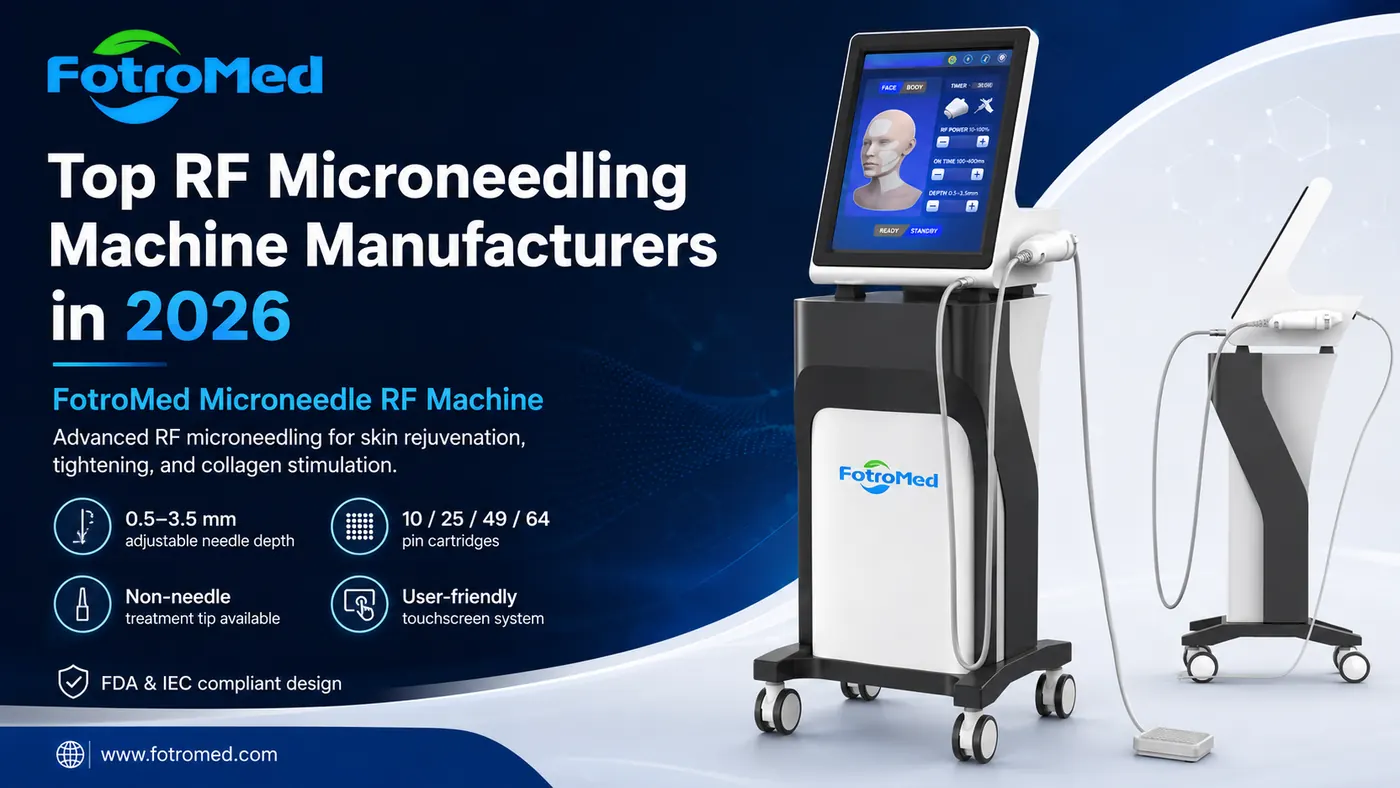
Chinas Rolle in diesem Markt ist die Fabrikebene selbst: OEM (Herstellung von Systemen, die unter den Marken anderer Unternehmen verkauft werden) und ODM (Entwicklung und Bau kompletter Systeme, die ein Käufer als Eigenmarke vertreiben kann). Fotromed stellt die Microneedle-RF-Gerät Linie bei diesem Modell her — CE-gekennzeichnet, unter einem ISO-13485-Qualitätssystem gebaut, direkt an Kliniken und Händler exportiert ohne den Aufschlag eines Markenvertreibers. Und diese Ebene ist nicht mehr synonym mit “keine US-Zulassung”: Das fraktionierte RF-Microneedling-System AWNS von Fotromed besitzt seine eigene 510(k)-Zulassung. Die Kompromisse, die bestehen bleiben, sollten klar benannt werden: Sie profitieren von 60–90% geringeren Anschaffungskosten und direkter Kommunikation mit dem Werk; Sie verzichten auf einen US-Showroom und einen bekannten Markennamen für das Patientenmarketing.
📐 Technischer Hinweis: Ebenenübergreifend sind es dieselben drei Komponenten, die ein stabiles System von einem problematischen unterscheiden: die Ausgangskonsistenz des RF-Generators unter Last, die Tiefengenauigkeit des Nadelantriebsmotors und die Fertigungstoleranzen der Kartuschen. Fragen Sie jeden potenziellen Lieferanten — ob Marke oder OEM — nach Ausgangstestdaten zu genau diesen drei Punkten. Ein Werk, das eine Qualitätskontrolle pro Einheit durchführt, wird diese innerhalb von Tagen vorlegen; ein Handelsunternehmen, das die Fertigung eines anderen weiterverkauft, kann dies in der Regel nicht.
FDA approved vs. cleared vs. registered: Was die Bezeichnungen beim Kauf bedeuten
Hier ist der Satz, der Ihnen bei Gesprächen mit Lieferanten am meisten Zeit spart: Kein RF-Microneedling-System auf dem Markt ist “FDA approved”.” Approval ist das PMA-Verfahren, das Risikoklasse-III-Geräten vorbehalten ist. RF-Microneedling-Systeme fallen unter Klasse II und gelangen über die 510(k)-Premarket-Notification — eine Clearance, die feststellt, dass das Gerät im Wesentlichen einem bereits legal vermarkteten Gerät entspricht. Morpheus8, Potenza, Secret RF, Sylfirm X: alle cleared, keines approved. Ein Lieferant, der Ihnen mitteilt, dass sein Gerät “FDA approved” ist, hat Ihnen gerade etwas Nützliches über sein regulatorisches Verständnis verraten.
Eine Stufe unter der Freigabe liegt Registrierung. Jedes Unternehmen, das Geräte für den US-Markt herstellt, muss sich bei der FDA registrieren und seine Produkte listen — ein Compliance-Schritt, der $11,423 Jahresgebühr im GJ2026 und beinhaltet keinerlei Überprüfung des Geräts. Die eigenen Richtlinien der FDA besagen, dass eine Registrierung weder eine Zulassung noch eine Freigabe bedeutet. “FDA-registriert” auf einem Datenblatt bedeutet lediglich den Papierkram und die Gebühr, sonst nichts.
Warum belassen es die meisten chinesischen Hersteller also bei der CE-Kennzeichnung und ISO 13485, anstatt eine 510(k)-Prüfung anzustreben? Ökonomie, nicht Technik. Allein die Standard-510(k)-Prüfgebühr für das GJ2026 beträgt $26,067, und die Tests, Prädikatsanalysen sowie die Beratung hinter einer Einreichung vervielfachen diesen Betrag typischerweise um ein Vielfaches, pro Gerät, pro Indikation — für den Zugang zu einem einzigen Markt. Eine Fabrik, deren Auftragsbücher Europa, den Nahen Osten, Südostasien und Lateinamerika umfassen, bedient diese Märkte mit CE-Kennzeichnung unter der EU-MDR und einem zertifizierten ISO 13485 Qualitätssystem. Der regulatorische Weg, den ein Hersteller wählt, sagt Ihnen, wo er verkauft, nicht wie gut er baut.
Die fünf Kennzeichnungen, die Sie auf Angebotsblättern nebeneinander finden:
| Label | Was es tatsächlich ist | Überprüft das Gerät? | Typische Inhaber in dieser Kategorie | Wo zu überprüfen |
|---|---|---|---|---|
| FDA-zugelassen (PMA) | Weg für Hochrisikogeräte der Klasse III | Ja — vollständige klinische Prüfung | None — kein RF-Microneedling-System besitzt diese | FDA-PMA-Datenbank |
| FDA 510(k)-freigegeben | US-Marktzulassung über wesentliche Gleichwertigkeit | Ja — vergleichende Prüfung | Alle großen Markenplattformen; Fotromed AWNS | FDA-510(k)-Datenbank |
| FDA registered | Annual establishment listing ($11,423/yr fee) | Nein | Any manufacturer or importer that pays the fee | FDA registration database |
| CE marked | EU conformity under MDR | Yes — via notified body | Most export-oriented manufacturers incl. Fotromed | EUDAMED / notified body no. |
| ISO 13485 | Factory quality-management system certificate | No — audits the factory, not the device | Any certified manufacturer | Issuing certification body |
The practical rule: match the certificate to where the machine will actually operate — not to the seller’s or buyer’s passport. For patient treatment inside the U.S., that means a 510(k)-cleared system, which is exactly why the factory-direct tier now includes cleared models like the AWNS rather than ceding that scenario to branded platforms. Outside the U.S. — Dubai, São Paulo, Madrid, Riyadh — the operative certificate is CE marking plus the buyer’s national registration requirements, and the absence of a 510(k) changes nothing about a machine’s suitability for those markets: the same production line serves both. Distributors buying for re-export follow the destination market’s rule, not the port of purchase. Treat a missing 510(k) as the market-strategy signal it is, not a quality verdict. Production quality is evidenced elsewhere: the ISO 13485 certificate’s scope and issuing body, named component sources, warranty terms in writing, and the factory’s willingness to show output test data.
⚠️ Buyer pitfall: the phrase “FDA approved” in RF microneedling marketing is a red flag regardless of who says it — including U.S. resellers. Either the seller doesn’t know the difference between approval and clearance, or is hoping you don’t. In both cases, verify every other claim on the quote twice.
How much does an RF microneedling machine cost?
Realistic 2026 price bands, by tier. These are typical transaction ranges observed across distributor quotes and Fotromed’s export experience, not list prices — treat them as negotiation reference points, and expect configuration (handpiece count, cartridge bundle, training package) to move the number.
| Kategorie | Typical price range | What the price includes |
|---|---|---|
| Flagship branded platforms (Morpheus8, Potenza, Secret RF, Sylfirm X, VirtueRF, Exion, Genius) | $70,000–$180,000+ | Device, distributor warranty, on-site or academy training, marketing assets, financing options |
| U.S. value platforms (Pixel8-RF and comparable) | $40,000–$60,000 | Device, manufacturer warranty, remote training |
| Direct-from-factory OEM/ODM systems (AWNS, DermaPulse and comparable) | $2,000–$10,000 | Device, factory warranty (typically 12–24 months), remote training and protocol documentation |
The spread inside the flagship tier is mostly channel structure — a distributor’s margin, showroom, sales commissions, and patient-brand advertising are all in the price — plus the amortized cost of U.S. clearance and clinical studies. What the spread is nicht is a proportional difference in hardware cost: needle cartridges, RF boards, and motors are sourced from overlapping supplier ecosystems.
The consumable line item most quotes leave out
Every RF microneedling treatment consumes a single-use needle cartridge, and cartridge pricing varies more between tiers than the machines themselves. Branded proprietary tips commonly run $150–$300 each; open-format or factory-direct cartridges run $15–$50 (market observation, mid-2026). A three-year picture for a modest clinic doing 20 treatments a month — illustrative example only:
| Cost line (3 years, 20 treatments/month) | Flagship branded platform | Factory-direct OEM system |
|---|---|---|
| Machine purchase | $120,000 | $5,000 |
| Cartridge unit price | $200 | $30 |
| Consumables per month | $4,000 | $600 |
| Consumables over 3 years | $144,000 | $21,600 |
| 3-year total cost of ownership | $264,000 | $26,600 |
| Cost per treatment (720 treatments) | ~$367 | ~$37 |
At that volume the annual consumable gap alone is roughly $40,000 — larger than the entire purchase price difference between some tiers, and the line that actually sets your minimum viable treatment price. Before signing anything, get the cartridge price, the minimum order, and the guaranteed supply term in the contract, because a proprietary cartridge is also a switching cost: the day tip prices rise, your only alternatives are paying or parking the machine.
💡 Pro tip: whichever tier you buy in, ask for a written cartridge supply commitment — price ceiling, lead time, and availability horizon (5 years is reasonable to request). Manufacturers can sign this directly; distributors have to go ask the factory, and the speed of that answer tells you how the relationship will work after the sale.
Buying direct from an OEM/ODM manufacturer: how it actually works
The direct-from-factory process is simpler than most first-time buyers expect, and knowing the standard sequence helps you evaluate any supplier — including us. From Fotromed’s side of several thousand export transactions, the honest version:
MOQ. Reputable OEM manufacturers, Fotromed included, sell single units — MOQ 1 is standard for clinic buyers. Volume pricing starts to move at 5–10 units, which is where distributor conversations begin.
Lead time. In-stock configurations ship in 3–7 working days; customized builds (private label, UI language packs, regional plug and voltage) typically run 15–25 working days. A quoted lead time under a week for a “customized” machine usually means nothing is being customized.
What can be customized — and what can’t. ODM customization realistically covers housing color and branding, handpiece configuration, cartridge formats, software language and UI skin, and packaging. It does not cover the core RF board architecture or safety-critical firmware — a factory that offers to rewrite those for a single-unit order is describing an untested device, not a service.
After-sales structure. Factory-direct support runs on remote diagnostics (most current systems log fault codes readable over a video call), spare-part dispatch with 12–24 month warranty coverage, and replacement handpieces shipped rather than repaired on-site. That is the genuine trade against a distributor’s local technician — plan for it: clinics that keep one spare handpiece on the shelf eliminate most of the downtime risk that matters.
If you want to see how a factory-direct spec sheet reads against the branded systems in the table above, the AWNS fractional RF microneedling system page lists its 510(k)-cleared configuration with 1MHz bipolar RF output, cartridge formats, and the same documentation we send in quote packages.
Sourcing for spas and small studios
Spas, medspas, and single-operator studios buy differently from clinic chains, and the manufacturer map above reads differently from that seat. Three adjustments:
Buy for your treatment menu, not the spec ceiling. A studio running facial rejuvenation and post-acne texture work uses a fraction of a flagship platform’s configuration. The specs that actually constrain a small operation are cartridge cost per session (it sets your minimum viable treatment price), handpiece weight over a 6-treatment day, and depth range for the indications you actually offer — typically 0.5–3.5 mm coverage is sufficient.
Financing changes the tier math. Flagship distributors lead with monthly financing ($1,500–$3,000/month over 5 years is a common shape), which reads affordable until you add the proprietary-cartridge line from the section above. A $3,000–$6,000 factory-direct system paid outright often reaches breakeven inside 15–30 treatments at typical session pricing — count the treatments, not the monthly payment.
Training weight. Spa operators without in-house medical directors lean harder on training. Ask any supplier — branded or OEM — exactly what training is included, in what format, and whether protocol documentation covers your specific treatment menu. Get the answer in writing before the deposit, because “full training included” spans everything from a three-day academy to a PDF.
Frequently asked questions
Who makes the Morpheus8 machine?
Morpheus8 is manufactured by InMode Ltd., an Israeli medical device company, and sold in the U.S. directly through InMode’s own sales organization under 510(k) clearance. It is one of the few major RF microneedling systems where the brand, manufacturer, and U.S. seller are the same company.
Which brand of microneedling device is considered the best?
There is no single best — flagship platforms differ mainly in handpiece design, pulse control, and support structure, while the right choice depends on your market, patient mix, and budget tier. For a model-by-model breakdown across clinic types, see our guide to choosing the best RF microneedling machine.
How much does an RF microneedling machine cost in 2026?
Typical transaction ranges: $70,000–$180,000+ for flagship branded platforms, $40,000–$60,000 for U.S. value platforms, and $2,000–$10,000 for direct-from-factory OEM systems. Add consumables: single-use cartridges run $150–$300 (proprietary) or $15–$50 (factory-direct) per treatment, which often exceeds the machine price gap within a year.
Why do some plastic surgeons not like RF microneedling?
The main professional criticisms are operator-dependence of results and marketing that outruns evidence for some claims. The clinical base is maturing: a 2026 systematic review of 22 studies (558 participants) found consistent aesthetic improvement with predominantly mild, transient adverse events (Journal of Cosmetic Dermatology). Buying decisions should still rest on cleared indications, not broad promises.
Are used RF microneedling machines worth buying?
Sometimes — a used flagship can cost 40–60% below new. Verify three things first: that the manufacturer or distributor will transfer warranty and service eligibility (many won’t), that cartridges for that model generation remain in production, and the handpiece shot count. A used platform with orphaned consumables is a monitor stand.
About this guide. Compiled by Fotromed’s editorial team from FDA fee schedules and device databases, EU regulatory documentation, peer-reviewed literature, public manufacturer and distributor materials, and Fotromed’s manufacturing and export records as an ISO 13485-certified RF microneedling manufacturer shipping to 50+ countries, whose AWNS system holds FDA 510(k) clearance. Price bands are market observations current to mid-2026, provided for procurement reference; regulatory statuses should be re-verified against official databases at purchase time.
Planning a purchase? Send fotromed your treatment menu and monthly volume, and we’ll return a DermaPulse configuration quote with cartridge pricing and a supply commitment within one working day.
Referenzen & Quellen
- Premarket Notification 510(k) — U.S. Food and Drug Administration
- Medical Device User Fee Amendments (MDUFA): Fees — U.S. Food and Drug Administration
- 510(k)-Premarket-Notification-Datenbank — U.S. Food and Drug Administration
- CE-Kennzeichnung — European Commission
- ISO 13485:2016 Medical devices — Quality management systems — International Organization for Standardization
- Radiofrequency Microneedling for Facial Rejuvenation: A Systematic Review — Journal of Cosmetic Dermatology, 2026