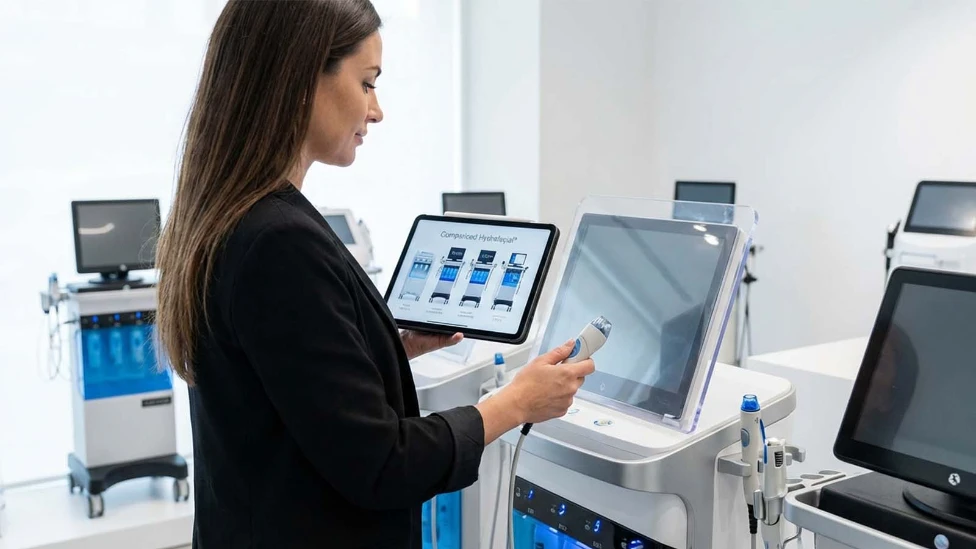
The professional hydrafacial machine market is growing fast. According to Grand View Research, the global medical spa market was valued at over USD 27 مليار في 2023 and is projected to expand at a CAGR of more than 13% خلال 2030 — with hydrafacial and hydrodermabrasion treatments consistently ranking among the most requested services. لاصحاب العيادات, spa managers, and equipment distributors, this creates a clear opportunity. But it also raises a practical question: with dozens of machines on the market, how do you actually pick the right one?
This guide is written for professionals — clinic buyers, wholesale distributors, and OEM partners — who need to make an informed purchasing decision, not just browse spec sheets. We’ll break down the core technologies, compare treatment modalities, and walk through the criteria that actually matter when choosing a professional hydrafacial machine for commercial use.
What Is a Professional Hydrafacial Machine?
A professional hydrafacial machine is a multi-function skincare device designed for clinical and spa environments. Unlike consumer-grade facial tools, these machines combine several treatment steps — cleansing, تقشير, اِستِخلاص, ضخ المصل, and often additional modalities like LED therapy or oxygen infusion — into a single, controlled workflow.
على المدى “الهيدروراداول” is widely used across the industry, though it’s worth clarifying: it refers broadly to a category of hydration-focused facial treatments, not one specific device. What sets professional-grade machines apart is output consistency, build durability, and the ability to handle back-to-back treatments across a full clinic day.
كيف تعمل: Vortex-Fusion vs. Hydrodermabrasion Technology
Most professional machines on the market today are built around one of two core delivery mechanisms — or a hybrid of both. Understanding the difference is the first step to matching a machine to your actual treatment menu.
What Is Vortex Fusion Technology?
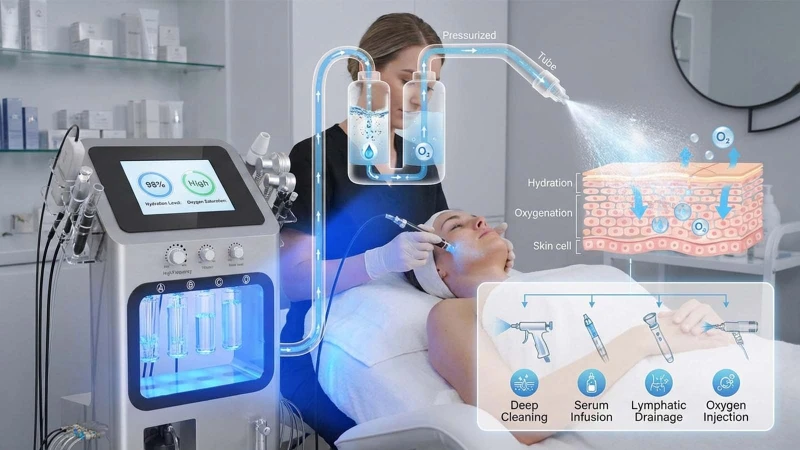
Vortex fusion uses a spiral-tipped handpiece that simultaneously exfoliates the skin surface and delivers treatment serums into the follicle. The dual-direction flow — inward suction removing debris, outward pressure infusing actives — is what makes this approach efficient. Clinical studies published on PubMed suggest that combining mechanical exfoliation with topical serum delivery under suction improves active ingredient absorption compared to passive topical application alone.
في الممارسة العملية, this means shorter treatment times and more visible immediate results — which matters a lot for client retention in a busy clinic setting.
What Is Hydrodermabrasion and How Does It Differ?
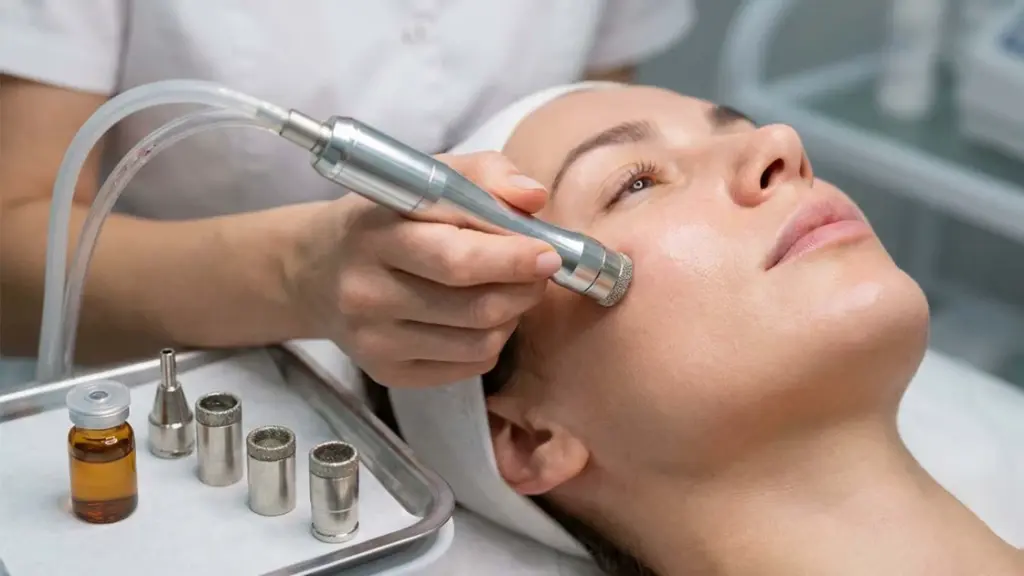
Hydrodermabrasion uses a water-assisted abrasion tip to physically resurface the skin while simultaneously flushing the treatment area with a solution. It’s gentler than traditional crystal microdermabrasion because the water cushion reduces friction-related irritation, making it suitable for a wider range of skin types — including sensitive and rosacea-prone skin.
The practical difference comes down to depth and finish. Vortex fusion tends to prioritize serum delivery and hydration outcomes. Hydrodermabrasion focuses more on surface resurfacing and pore clearance. Many professional machines today combine both, which is why the terms are often used interchangeably in product listings — though they’re technically distinct mechanisms.
In most cases, a machine that integrates both gives you the most flexibility across your client base.
Benefits of Using a Professional Hydrafacial Machine
Before evaluating specific machines, it helps to understand why hydrafacial treatments have become a staple service in modern clinics — and what that means for business performance.
وفقا ل American Med Spa Association (AmSpa), hydrafacial-style treatments are consistently among the top five most performed non-invasive procedures in medical spas across North America. The treatment’s appeal is straightforward: it delivers visible results immediately, requires no downtime, and suits almost every skin type. For a clinic, that combination translates directly into high rebooking rates.
Benefits for Clinic Owners and Distributors
From a business perspective, a professional hydrafacial machine is one of the more versatile investments a clinic can make. A single device can serve multiple treatment protocols — hydration, acne management, مكافحة الشيخوخة, and brightening — without requiring the operator to switch equipment. That means fewer machines on the floor and more revenue per square meter of treatment space.
For distributors and wholesale buyers, the market dynamics are also favorable. Hydrafacial treatments have strong cross-demographic appeal — they’re popular with clients in their 20s managing acne and clients in their 50s addressing fine lines. This broad addressable market makes it easier to sell into a wide range of clinic types, from medical spas to dermatology practices to high-end salons.
A few specific advantages worth noting:
- High treatment frequency: Unlike more aggressive procedures such as laser resurfacing or chemical peels, hydrafacial treatments can be repeated monthly or even bi-weekly, which supports recurring revenue
- Low operator skill barrier: Most professional machines are designed for straightforward operation, reducing training time for new staff
- Strong upsell potential: The serum-based nature of the treatment creates a natural consumable revenue stream alongside the device itself
- Minimal contraindications: According to Dermatology Times, hydrodermabrasion-based treatments are among the lowest-risk non-invasive procedures in clinical use, which reduces liability concerns for clinic operators
Benefits for End Clients
On the client side, the appeal is largely about the experience and the results profile. A standard hydrafacial session typically takes 30 ل 45 دقائق, produces no redness or recovery period, and leaves skin visibly more hydrated and even-toned immediately post-treatment. That immediacy is genuinely difficult to replicate with other modalities.
What matters most here — and what’s easy to overlook when evaluating machines purely on specs — is how the treatment feels during the session. Vortex fusion and hydrodermabrasion treatments are generally well-tolerated even by clients with sensitivity concerns. That comfort factor drives the word-of-mouth referrals that sustain a clinic’s hydrafacial bookings over time.
Key client-side benefits include:
- Suitable for all Fitzpatrick skin types
- يعالج مخاوف متعددة في جلسة واحدة: ازدحام, جفاف, الخطوط الدقيقة, نسيج غير متساو
- No pre-treatment preparation or post-treatment downtime required
- Results are visible immediately and improve further over 24–48 hours with proper homecare
For distributors assessing which clinics to target, research published by the International Journal of Dermatology indicates that patient satisfaction scores for hydrofacial-category treatments consistently outperform those for traditional facials — a data point worth including in your sales materials when approaching clinic buyers.
5 Key Criteria for Choosing the Best Professional Hydrafacial Machine
Specs alone don’t tell the full story. A machine can look impressive on paper but underperform in a real clinic environment — or come with hidden costs that erode its value over time. Here are the five criteria that actually matter when evaluating professional hydrafacial machines for commercial use.
1. Treatment Functions and Handpiece Count
Single-Function vs. Multi-Function Machines: Which Is Better?
The number of treatment handpieces a machine supports directly affects how many protocols you can offer from a single device. Entry-level professional machines typically include a core hydrodermabrasion handpiece plus basic extraction. Mid-range and high-end models expand this to include combinations of oxygen infusion, LED phototherapy, مكركرنت, الغسل بالموجات فوق الصوتية, and RF skin tightening.
For a clinic with a focused treatment menu, a dedicated single-modality machine may be sufficient and easier to maintain. But for spas and clinics looking to maximize revenue per treatment room, a multi-function platform reduces equipment footprint while expanding the service offering. The trade-off worth considering: more handpieces means more components that require calibration, تنظيف, and eventual replacement.
A common mistake buyers make is prioritizing handpiece count over handpiece quality. آلة بها 15 attachments where only 5 are regularly used and 3 are unreliable is a worse investment than a focused 9-in-1 device with consistent output across all heads. Count the functions you will actually use, not the ones that look good in a brochure.
2. Build Quality and Certifications
Key Certifications to Look for (م, FDA, ايزو 13485)
In the professional skincare equipment space, certifications are not optional — they’re the baseline for commercial deployment. The three most relevant for international buyers are:
| شهادة | Scope | Relevance |
|---|---|---|
| علامات CE | European Economic Area | Required for sale/import into EU markets |
| FDA 510(ك) / تسجيل | الولايات المتحدة | Required for clinical use in the US market |
| ايزو 13485 | Global | Quality management standard for medical device manufacturers |
ايزو 13485 in particular is worth paying attention to. Unlike product-specific certifications, it applies at the factory level and governs the entire manufacturing quality management system — from design controls to post-market surveillance. A supplier holding ISO 13485 certification has committed to a documented process for consistent device quality, not just a one-time compliance check.
Beyond certifications, physical build quality signals long-term reliability. Key indicators include: stainless steel or medical-grade ABS housing, sealed water circuit components to prevent leakage, and a minimum 1-year warranty on core components. If a supplier cannot specify what the machine housing and internal tubing are made of, that’s worth flagging before purchase.
3. سهولة الاستخدام والصيانة
Interface and Learning Curve for New Staff
In a busy clinic environment, a machine that takes 30 minutes to set up between clients or requires specialist training to operate is a practical liability. The best professional hydrafacial machines are designed so that a trained aesthetician can move between protocols with minimal reconfiguration — ideally through a touchscreen interface that stores preset treatment programs by skin type or concern.
Look specifically for: adjustable suction levels accessible mid-treatment, clear visual indicators for solution levels, and intuitive handpiece switching. These small UX details have an outsized impact on throughput when a clinic is running back-to-back appointments.
Routine Maintenance and Consumable Costs
This is an area where buyers frequently underestimate the true cost of ownership. The machine purchase price is a one-time expense; consumables are ongoing. Hydrafacial-style machines require regular replacement of filters, tubing, and treatment serums — and the margin on these consumables is often where suppliers make their recurring revenue.
Before committing to a machine, ask for:
- A full list of consumable components and their replacement intervals
- Pricing for consumables at wholesale volume
- Whether proprietary serums are required or if compatible third-party options exist
For a broader look at how dermabrasion-category equipment differs in maintenance requirements across device types, أفضل آلات جلدية الجلد المهنية لاستخدام السبا provides a useful comparison of the key operational considerations across machine formats.
4. دعم ما بعد البيع والتدريب
What to Expect from a Reliable Supplier
For distributors and clinic buyers sourcing from overseas manufacturers, after-sales support is arguably more important than the machine itself. A device issue that cannot be resolved remotely — and where the supplier provides no technical support path — can take a treatment room offline for weeks.
Minimum expectations from a serious supplier should include:
- Remote technical support with a defined response time (24–48 hours is reasonable)
- Operator training materials in your language, either video-based or live
- Spare parts availability with documented lead times
- A clear warranty policy that specifies what is and isn’t covered, and how claims are processed
For wholesale buyers and distributors specifically, ask whether the supplier offers co-branded training support or marketing materials — this matters when you’re reselling into clinics that need onboarding assistance.
5. OEM/ODM and Customization Options
For distributors and brand owners, the ability to source machines under your own label — with custom color schemes, interface language, and branded serum lines — is a meaningful competitive differentiator. OEM and ODM arrangements vary significantly between suppliers.
Key questions to clarify upfront:
- What is the minimum order quantity for OEM branding?
- Can the machine interface language and default protocols be customized?
- Is the supplier able to provide CE or other regulatory documentation under your brand name?
- What is the lead time for an OEM order versus stock product?
Not every clinic buyer needs OEM capability, but for distributors building a branded equipment line, this criterion can narrow the supplier shortlist considerably faster than any spec comparison.
Hydrafacial Machine Comparison: هيدرافيشل مقابل. Microdermabrasion vs. التقشير الكيميائي
Choosing between treatment modalities is one of the first decisions a clinic or distributor needs to make — and it’s often complicated by overlapping terminology in the market. This section breaks down how each approach works, where it performs best, and what the differences mean in practice for a professional setting.
هيدرافيشل مقابل. Microdermabrasion: Which Is Best for Professional Use?
“هيدرافيشل” مقابل. hydrodermabrasion: Understanding the Difference
This is a distinction worth clarifying before evaluating any machine, because the two terms are used interchangeably in the market — and they shouldn’t be.
هيدرافيشل is a registered trademark owned by BeautyHealth (formerly Edge Systems). It refers specifically to treatments performed using the company’s proprietary devices and branded serum lines. When a clinic advertises “HydraFacial treatments,” they are technically offering a branded service using that specific system.
hydrodermabrasion, by contrast, is a generic technology category. It describes any device that uses water-assisted exfoliation combined with suction and serum infusion to treat the skin — regardless of manufacturer. The underlying mechanism is the same: a pressurized aqueous solution loosens and removes dead skin cells and debris while simultaneously delivering active ingredients into the follicle.
The practical implication for buyers is straightforward: the vast majority of professional hydrafacial machines on the market — including multi-function platforms from manufacturers across Asia, أوروبا, and North America — are hydrodermabrasion devices. They replicate the core treatment protocol using the same technology principles, without the brand licensing costs or proprietary serum lock-in that comes with the trademarked HydraFacial system.
Side-by-Side Pros and Cons
Where hydrodermabrasion and traditional microdermabrasion genuinely differ is in the treatment experience and the skin concerns they address most effectively.
| Difference | hydrodermabrasion (Hydrafacial-style) | Microdermabrasion |
|---|---|---|
| آلية | Water-assisted exfoliation + ضخ المصل | Physical abrasion (crystal or diamond tip) |
| الترطيب | ✅ Built into the treatment | ❌ Not included |
| التوقف | لا أحد | الحد الأدنى (possible redness 24hrs) |
| مناسب للبشرة الحساسة | ✅ نعم | ⚠️ Use with caution |
| استخراج المسام | ✅ Strong | ⚠️ Limited |
| Resurfacing depth | Superficial to mid | سطحية |
| Session time | 30–45 min | 20–30 min |
| Consumable cost | أعلى (الأمصال) | أدنى |
| الأفضل ل | الترطيب, ازدحام, مكافحة الشيخوخة | نَسِيج, mild hyperpigmentation, صيانة |
The right choice depends on your client mix. For a clinic with a predominantly anti-aging or dehydration-focused clientele, hydrodermabrasion delivers a more complete result per session. For high-volume skin maintenance treatments, traditional microdermabrasion remains a cost-effective complement.
هيدرافيشل مقابل. التقشير الكيميائي: Suitability by Skin Type
Treatment Process Compared
Chemical peels work through a fundamentally different mechanism. Rather than physically removing surface cells, they use acidic compounds — typically glycolic, salicylic, lactic, or trichloroacetic acid — to chemically dissolve the bonds between dead skin cells and induce controlled skin shedding. The depth of the peel (superficial, medium, or deep) is determined by the acid concentration and contact time.
hydrodermabrasion, by contrast, works entirely at the surface-to-mid level and does not rely on chemical exfoliation. This makes it predictable across a wider range of skin types and significantly reduces the risk of adverse reactions.
| Difference | hydrodermabrasion | التقشير الكيميائي |
|---|---|---|
| Exfoliation method | ميكانيكية + aqueous | Chemical (acid-based) |
| التوقف | لا أحد | 1–7 days depending on peel depth |
| Results timeline | مباشر | 5–7 days post-peel |
| التخصيص | عالي (serum selection) | عالي (acid type + تركيز) |
| Risk of irritation | قليل | معتدلة إلى عالية |
| Fitzpatrick IV–VI suitability | ✅ Generally safe | ⚠️ Requires careful selection |
| Treatment frequency | Monthly or bi-weekly | Every 4–6 weeks minimum |
Which Skin Types Benefit Most?
Hydrodermabrasion is one of the more inclusive treatment options in a professional skincare menu. It works across all Fitzpatrick skin types and is generally well-tolerated by clients with rosacea, mild sensitivity, and post-inflammatory hyperpigmentation — groups that are often poor candidates for chemical peels or traditional microdermabrasion.
Chemical peels are the stronger option for clients dealing with moderate-to-severe sun damage, ندبات حب الشباب, or significant hyperpigmentation, particularly where deeper resurfacing is needed. The limitation is the downtime and the need for more careful skin typing, especially for darker Fitzpatrick skin tones where the risk of post-inflammatory hyperpigmentation from peels is higher.
في الممارسة العملية, the more productive question for a clinic isn’t “which is better” — it’s “which combination serves the most clients.” Many high-performing clinics run hydrodermabrasion as a standalone express treatment and position chemical peels as a more intensive quarterly option, letting the two modalities complement rather than compete with each other.
Top Professional Hydrafacial Machines for Clinics and Distributors
Not every clinic has the same needs, and the right machine depends on your treatment menu, client volume, and budget range. The three machines below represent different points on the spectrum — from a focused oxygen-therapy platform to a comprehensive multi-function workstation. If budget constraints are a primary consideration for your sourcing decision, أفضل آلات الوجه المائية للشركات الصغيرة تحت الميزانية is worth reading alongside this section for a more entry-level focused comparison.
| Difference | الأكسجين-مرجع | HydroRevive Pro 9-in-1 | HydroRevive Pro 15-in-1 |
|---|---|---|---|
| وظائف | 9-في 1 | 9-في 1 | 15-في 1 |
| Oxygen system | ✅ Built-in (≥95 ٪) | ❌ | ❌ |
| ضغط فراغ | 1 bar max | معيار | معيار |
| LED العلاج | ✅ PDT multi-spectrum | ✅ | ✅ |
| RF skin tightening | ❌ | ✅ Bio microcurrent | ✅ Bio RF |
| الأفضل ل | حَبُّ الشّبَاب, الأوكسجين, مكافحة الشيخوخة | Balanced general clinic use | High-volume, wide treatment menu |
| الشهادات | م, ايزو 13485 | م | م |
Best for Acne-Prone and Oxygen Therapy Protocols
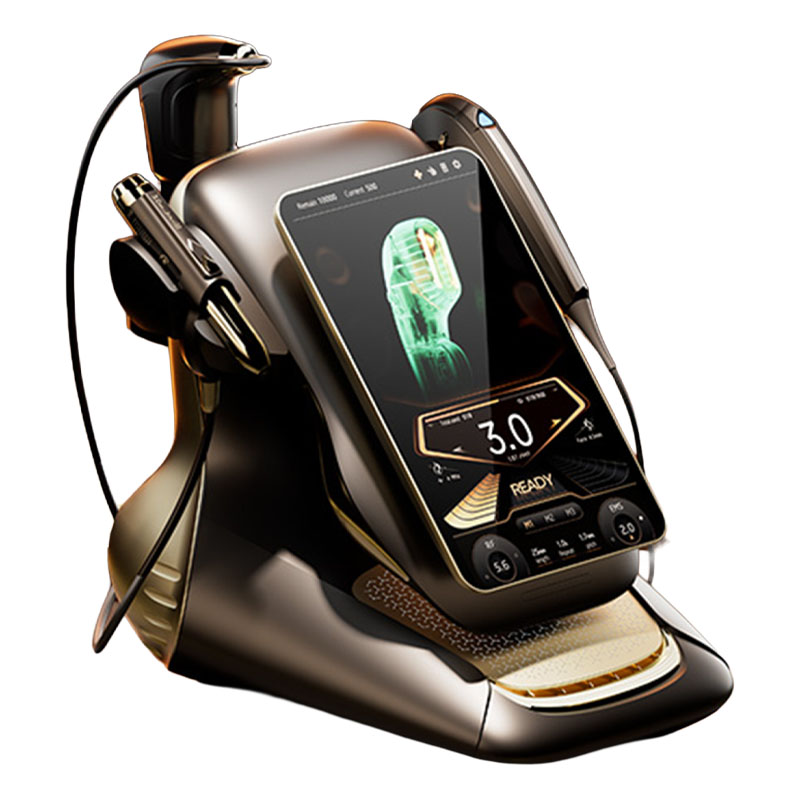
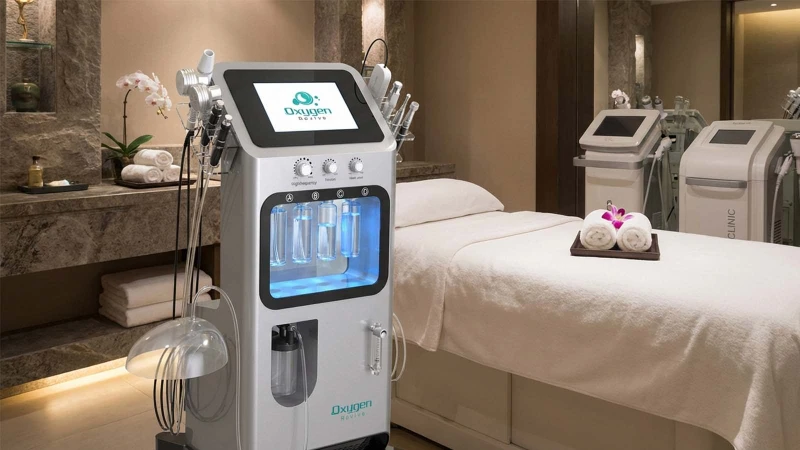
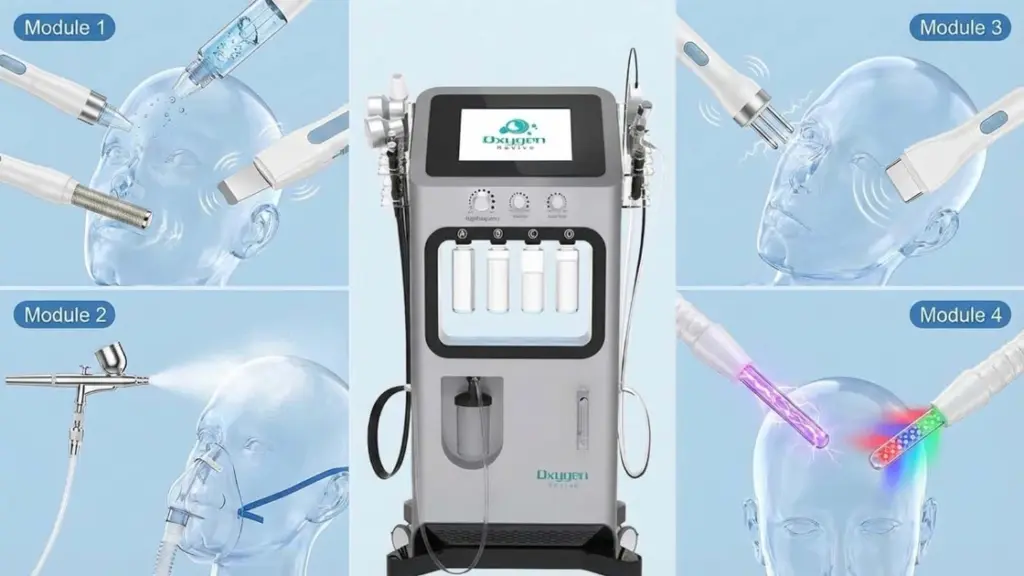
ال الأكسجين-مرجع stands apart from standard hydrodermabrasion machines because of one core hardware difference: a built-in molecular sieve that generates ≥95% clinical-grade oxygen at 3L/min on-device. Most competing platforms either rely on an external pump or skip oxygen infusion entirely, which limits the depth of cellular treatment they can deliver.
ال فوتروميد 9-in-1 platform covers four treatment modules: cleansing and physical exfoliation (H2O2 hydra dermabrasion, تقشير الجلد الماسي, ultrasonic skin scrubber), oxygen infusion therapy (spray mist gun, inhalation mask), dermal bio-stimulation (عصا مكركرنت الحيوية, ultrasonic facial handle), and PDT acne control (high frequency handle, multi-spectrum LED). Maximum vacuum pressure sits at 1 bar — notably higher than the 0.4–0.6 bar typical of standard-grade machines, which translates to more effective pore extraction in a single pass.
Key specs at a glance:
| المعلمة | مواصفة |
|---|---|
| الحد الأقصى للإخراج | 500فرجينيا |
| ضغط فراغ | 1 bar max |
| تركيز الأكسجين | ≥95 ٪ |
| تدفق الأكسجين | 3ل/دقيقة |
| شاشة | 10.4″ touchscreen |
| الجهد االكهربى | 110–240VAC, 50/60هرتز |
| الشهادات | م, ايزو 13485 |
For clinics with a strong acne treatment or anti-aging focus, the oxygen delivery system is the differentiating factor here. The PDT blue light module targets Propionibacterium acnes directly, while the high-concentration oxygen environment actively suppresses anaerobic bacterial activity — a combination that’s genuinely difficult to replicate with a standard hydrodermabrasion setup. OEM customization with logo integration is available with lead times as short as 3–5 days, which makes it a practical option for distributors building a branded equipment line.
Best suited for: Medical spas and dermatology clinics with a core focus on acne management, post-treatment recovery protocols, or wellness-oriented oxygen therapy services. Also strong for distributors targeting the medspa segment.
Best Multi-Function Platform for High-Volume Clinics:
ال HydroRevive Pro 14-in-1 occupies a practical middle ground between the specialized Oxygen-Revive and the expansive 15-in-1. It combines hydrodermabrasion, الغسل بالموجات فوق الصوتية, Bio microcurrent, and LED therapy into a more focused package — enough to cover the core treatment categories without the operational complexity of managing 15 handpiece attachments.
For clinics that are scaling up their hydrofacial offering but aren’t yet running the volume to justify a full 15-in-1 platform, this is arguably the more sensible starting point. The learning curve is shorter, maintenance is more manageable, and the treatment range still covers the majority of what a general-purpose facial clinic needs. For smaller operations specifically, the budget guide referenced in the intro of this section offers a more granular breakdown of where this machine sits in a cost-versus-capability comparison.
Best suited for: Growing clinics and independent practitioners adding hydrafacial treatments to an existing service menu, and wholesale buyers looking for a mid-range option to stock alongside a flagship machine.
Professional Hydrafacial Machine Price Guide and ROI
Understanding the price landscape matters, but the more useful question for a clinic or distributor is how quickly a machine pays for itself — and what affects that timeline. This section uses real data from Fotromed’s own client tracking to give a grounded picture rather than theoretical projections.
How Much Does a Professional Hydrafacial Machine Cost?
مستوى الدخول مقابل. Mid-Range vs. الآلات المتطورة
Professional hydrafacial machines sold at wholesale span a wide range depending on function count, build quality, والشهادات. The table below reflects general wholesale market positioning:
| الطبقة | Function Count | Typical Wholesale Price Range | الشهادات |
|---|---|---|---|
| مستوى الدخول | 3–6 in 1 | $800 - $1,500 | CE basic |
| متوسط المدى | 9–10 in 1 | $1,500 - $3,000 | م, ايزو 13485 |
| الراقية | 12–15+ in 1 | $3,000 - $8,000+ | م, ايزو 13485, optional FDA |
The Oxygen-Revive 9-in-1, for reference, sits in the mid-range tier at approximately $2,000 wholesale — a price point that includes both CE and ISO 13485 certification and the built-in oxygen generation system that most entry-level machines do not carry.
It’s worth noting that machines at the lower end of the price range often come without medical-grade certifications or meaningful after-sales support. For distributors reselling into regulated markets like the EU or US, that’s not a minor gap — it’s a compliance issue that can affect your ability to place the device with clinic buyers who carry liability insurance.
What Factors Affect the Price?
Several variables drive price differences between machines at similar function counts:
- Oxygen system: Machines with a built-in molecular sieve oxygen generator (like the Oxygen-Revive) cost more than those relying on external air pumps, but the clinical output difference is measurable — ≥95% purity vs. ambient air
- Vacuum pressure output: Higher pressure (1 bar vs. the industry-standard 0.4–0.6 bar) requires a more robust pump system, which adds to manufacturing cost
- Certification scope: ايزو 13485 certification at the factory level involves ongoing audits and quality management infrastructure that entry-level suppliers typically don’t maintain
- OEM capability: Suppliers who can offer logo customization, custom interface language, and branded packaging carry higher overhead, which is reflected in unit pricing
- After-sales infrastructure: Meaningful warranty coverage and remote technical support aren’t free — machines priced significantly below market usually offset cost somewhere in the support structure
عائد استثمار طويل الأجل: Is a Professional Hydrafacial Machine Worth It?
Revenue Potential Per Treatment
This is where the numbers get interesting. Based on Fotromed’s tracking of existing clients across markets, here’s what the revenue picture looks like per session for the Oxygen-Revive:
| سوق | متوسط. End-Client Charge | Consumable Cost/Session | Net Revenue/Session |
|---|---|---|---|
| الولايات المتحدة | $175 - $225 | $0.50 - $1.50 | ~$174 – $224 |
| أوروبا / المملكة المتحدة | €100 – €200 | $0.50 - $1.50 | ~€99 – €199 |
The consumable cost per session is notably low — $0.5 ل $1.5 per treatment — which reflects the machine’s reliance on clinic-compatible serums rather than proprietary locked consumables. That keeps the per-session margin high even as treatment volume scales up.
Break-Even Timeline: A Real-World Estimate
At a $2,000 wholesale cost and a conservative US market treatment price of $175 per session with $1.50 in consumables, the net revenue per treatment comes to approximately $173.50. That means:
| Weekly Sessions | Weeks to Break Even |
|---|---|
| 3 sessions/week | ~4 weeks |
| 5 sessions/week | ~2.5 weeks |
| 10 sessions/week | ~1.5 weeks |
Even at a modest treatment frequency of 3 جلسات في الأسبوع, a clinic recovers its machine cost in under a month. In the European market at €100 per session on the conservative end, the timeline extends slightly but remains well within the first quarter of operation in most cases.
This is genuinely one of the stronger ROI profiles in the professional skincare equipment category — not because the machine is cheap, but because the gap between treatment revenue and consumable cost is unusually wide. للمقارنة, machines that require proprietary branded serums can carry per-session consumable costs of $15–$40 or more, which significantly compresses the margin even at similar treatment pricing.
Client Retention and Repeat Business
The revenue-per-session figure only tells part of the story. Hydrodermabrasion treatments are typically recommended on a monthly or bi-weekly cycle for maintenance, which means a single client acquired represents recurring revenue rather than a one-time transaction.
A client who books monthly treatments at $200 per session generates $2,400 in annual revenue from that single treatment type alone — before any upsells to complementary services like LED add-ons or serum upgrades. For a clinic running 20 regular hydrofacial clients per month, that baseline alone represents $48,000 in annual treatment revenue from one machine.
For distributors assessing how to position the Oxygen-Revive to clinic buyers, these numbers translate directly into a sales conversation. أ $2,000 equipment investment with a 2–4 week break-even at modest volume and $2,400+ annual revenue per regular client is a straightforward business case — and one that’s grounded in actual market data from operating clinics rather than manufacturer projections.
التعليمات: Best Professional Hydrafacial Machine
What is the best professional hydrafacial machine for clinics?
The best professional hydrafacial machine depends on your clinic’s primary treatment focus. For acne management and oxygen therapy protocols, a 9-in-1 platform with a built-in oxygen generation system offers strong clinical results. For high-volume clinics needing maximum protocol flexibility, a 15-in-1 multi-function machine is more practical. In both cases, prioritize CE and ISO 13485 certification over function count alone.
What’s the difference between hydrafacial and hydrodermabrasion?
HydraFacial is a registered trademark owned by BeautyHealth, referring specifically to treatments performed using their proprietary devices and serum lines. Hydrodermabrasion is the underlying generic technology — water-assisted exfoliation combined with suction and serum infusion — used across a wide range of professional machines from different manufacturers. Most professional hydrafacial machines on the market are hydrodermabrasion devices.
How much does a professional hydrafacial machine cost?
Wholesale prices range from around $800–$1,500 for entry-level machines to $3,000–$8,000+ for high-end multi-function platforms. A certified 9-in-1 mid-range machine with ISO 13485 and CE compliance typically sits around $1,500–$3,000. Budget for consumables separately — reputable machines run $0.50–$1.50 per session in consumable costs, keeping per-treatment margins high.
What is a vortex fusion facial system?
Vortex fusion is a treatment delivery mechanism that uses a spiral-tipped handpiece to simultaneously exfoliate the skin surface and infuse serums into the follicle. The dual-direction flow — inward suction removing debris while outward pressure delivers actives — improves ingredient absorption compared to passive topical application. It is the core technology behind many professional hydrodermabrasion platforms.
Which hydrafacial machine is best for professionals starting out?
A 9-in-1 platform with core hydrodermabrasion, LED العلاج, and microcurrent functions offers the best balance of capability and manageability for new operators. It covers the most commonly requested treatment protocols without the operational complexity of a 15-handpiece machine. Look for a machine with a straightforward touchscreen interface and preset treatment programs to reduce staff training time.
Can hydrafacial machines be customized for OEM branding?
نعم. Many professional-grade manufacturers offer OEM and ODM options including custom logo integration, branded color schemes, interface language customization, and private-label serum lines. Lead times vary — some suppliers can deliver logo-customized units in as little as 3–5 days for standard configurations. Minimum order quantities for full OEM customization typically start at a higher threshold than stock orders, so confirm specifics with your supplier before committing.