
Your acne has cleared, but the indentations it left behind still catch the light. Makeup may even out your skin tone, yet the uneven texture remains visible. Or perhaps it is noticeable pores, fine lines or skin that feels less firm that have you considering treatment. You want a meaningful improvement, but you do not want to commit to another procedure without knowing what to expect.
If you are considering RF microneedling, you need to know more than how it “stimulates collagen.” You want to understand how much it could improve your particular concern. How uncomfortable is treatment, how might recovery affect work and everyday life, and is the potential improvement worth the total cost and risks? A before-and-after photo alone cannot answer those questions.
This guide explains what RF microneedling can and cannot improve, what treatment feels like, and why skin recovery and visible results follow different timelines. It also covers treatment sessions, overall costs and safety considerations. By the end, you will have a clearer understanding of what to expect, what to plan for and what to ask at a consultation—so you can decide whether treatment is worth exploring further.
RF Microneedling at a Glance
| 질문 | Practical answer |
|---|---|
| What does it combine? | It combines controlled microneedling with focused RF heat inside the skin. |
| What is it commonly used for? | It targets atrophic acne scars, 고르지 못한 질감, 보이는 모공, fine lines and mild laxity. |
| How many sessions are common? | An initial plan commonly includes two to four sessions, adjusted to the treatment goal and skin response. |
| What does early recovery look like? | Early redness, 부종, warmth or tenderness usually eases within three days. |
| When do results appear? | Texture changes often appear within weeks, while collagen remodeling continues for 6–12 months. |
| What is the main safety point? | Choose a licensed provider trained in RF microneedling and experienced with the device. |
RF 마이크로니들링: What It Is and How It Works
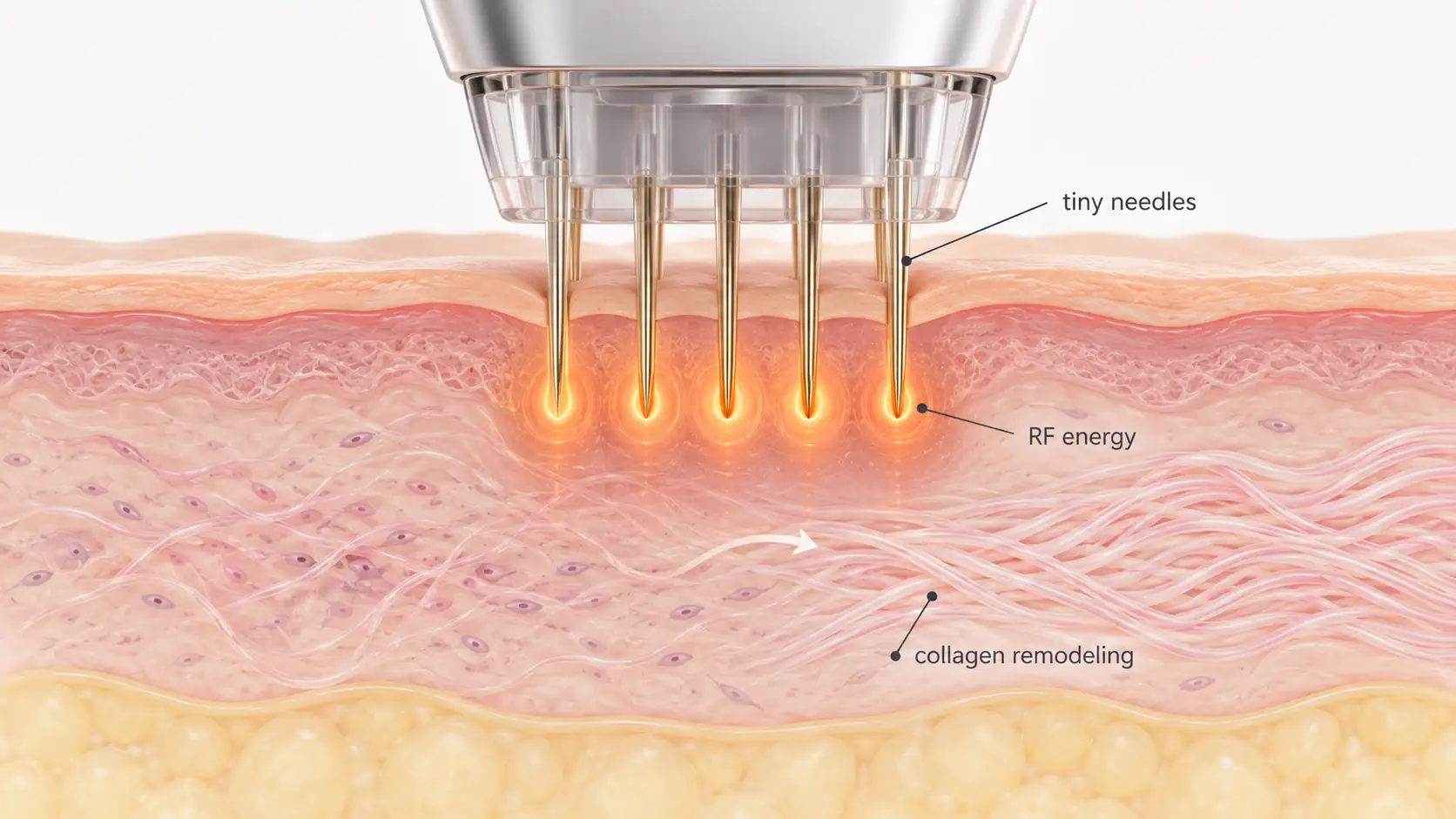
RF stands for radiofrequency, a form of electrical energy that produces heat in tissue. In RF microneedling, an array of tiny needle-shaped electrodes enters the skin and releases energy at selected depths. This makes it different from a surface-only heat treatment and from traditional microneedling, which does not add RF energy.
The treatment is also called radiofrequency microneedling, microneedle RF, fractional RF microneedling or microneedling radiofrequency. In consultations and clinic menus, these names usually describe the same treatment approach: needles enter the skin and then deliver RF energy. They are not four completely different procedures, although the device, needle design, energy delivery and settings can differ. “Fractional” means that many small columns of tissue are treated while tissue between them is left untreated, supporting healing around each treatment zone.
How Do Microneedles and RF Energy Work Together?
The needles and RF energy perform related jobs. Needle entry creates a controlled mechanical injury. RF energy adds focused heat in and around the target layer. The body responds by moving through its normal wound-healing process, including inflammation, repair and longer-term remodeling of collagen and other structural components in the dermis.
This is why the treatment does not behave like a filler. It does not place volume beneath a scar or wrinkle, and it does not tighten skin in one instant. The aim is to encourage gradual structural change. Early swelling can make skin look temporarily smoother.
치료 깊이, Energy and Tissue Response
Skin thickness and scar depth vary across the face, so one setting should not be copied everywhere. The useful test for a prospective patient is whether the provider can explain why a particular depth, energy level and pulse duration fit each area.
| Treatment variable | Common parameters | What it changes |
|---|---|---|
| 바늘 깊이 | 0.5-3.5mm | Which layer receives the mechanical and thermal effect |
| Energy and pulse duration | 4–70 W or 11–142 mJ/pin; 100–600 ms | The amount and spread of heating around each needle |
| Insulated or non-insulated needles | Insulated or non-insulated needles; monopolar or bipolar electrode configurations | Whether energy is concentrated near an exposed tip or delivered along more of the needle |
| Passes and coverage | One pass or 2–4 passes; single-direction, cross-hatched or layered coverage | How many treatment points overlap in one area |
Our Parameter View
As an RF microneedling device manufacturer, we cross-check device engineering parameters, tissue-response logic and published clinical data to define the ranges above. Depth determines which tissue layer receives energy; energy and pulse duration determine the intensity and spread of heat; needle design and passes shape energy distribution and coverage. Our conclusion is direct: results do not come from maximizing one number. They come from matching depth, 에너지, 펄스 지속 시간, needle design and coverage to one treatment goal.
RF Microneedling과 기존 Microneedling 비교
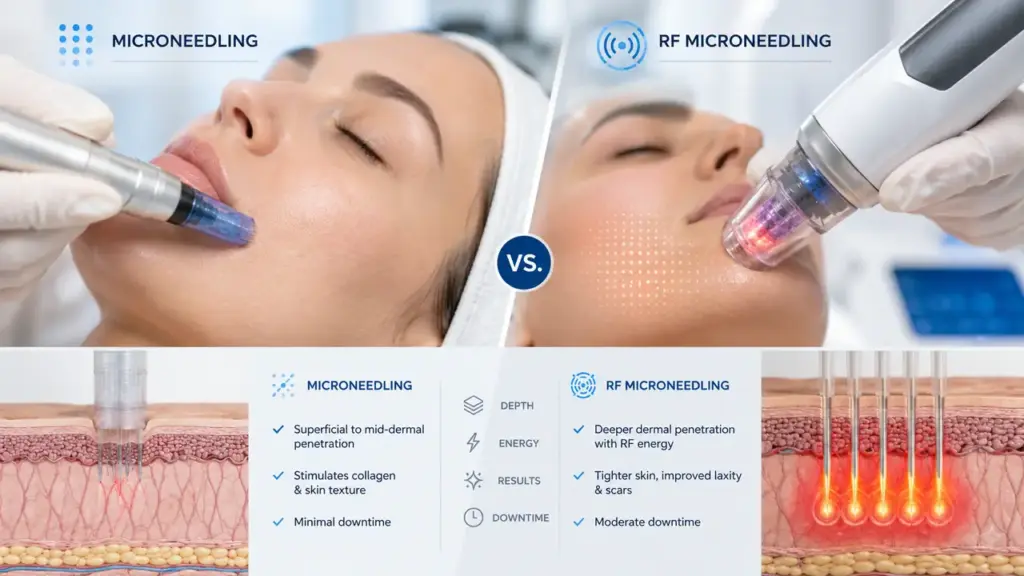
전통적인 미세침은 주로 기계적 자극에 의존합니다., so its treatment effect centers on skin renewal and superficial texture. RF microneedling adds heat at selected depths, creating another controllable treatment dimension for scar remodeling, fine lines and mild tightening. When depth, 에너지, pulse duration and needle design are matched, the remodeling zone becomes more complete; poorly matched settings also raise the risk of thermal injury.
| 특징 | Traditional microneedling | RF 마이크로 니들 |
|---|---|---|
| 주요 활동 | Mechanical micro-injuries | Mechanical micro-injuries plus controlled RF heating |
| 주요 타겟 | Skin renewal and texture through the wound-healing response | Texture and scar remodeling, with an added thermal effect in selected tissue layers |
| 치료효과 | Primarily skin renewal, superficial fine lines and mild acne-scar improvement | Adds thermal remodeling at selected depths for texture, 여드름 흉터, fine lines and mild laxity |
| Adjustable variables | 바늘 깊이, speed and passes | 바늘 깊이, needle type, 에너지, pulse duration and passes |
| Risk profile | Needling-related irritation, 출혈, infection and pigment change | Needling-related risks plus heat-related injury if treatment is unsuitable or poorly performed |
Our Device View
RF-assisted insulated microneedles are an important direction for professional microneedling systems. RF adds heat at a selected depth; gold plating improves electrode conductivity; insulation concentrates energy near the exposed tip. For scars, texture and mild laxity, this design provides more control over depth and energy than traditional microneedling. For a full side-by-side explanation, 보다 RF vs regular microneedling.
What Can RF Microneedling Treat?
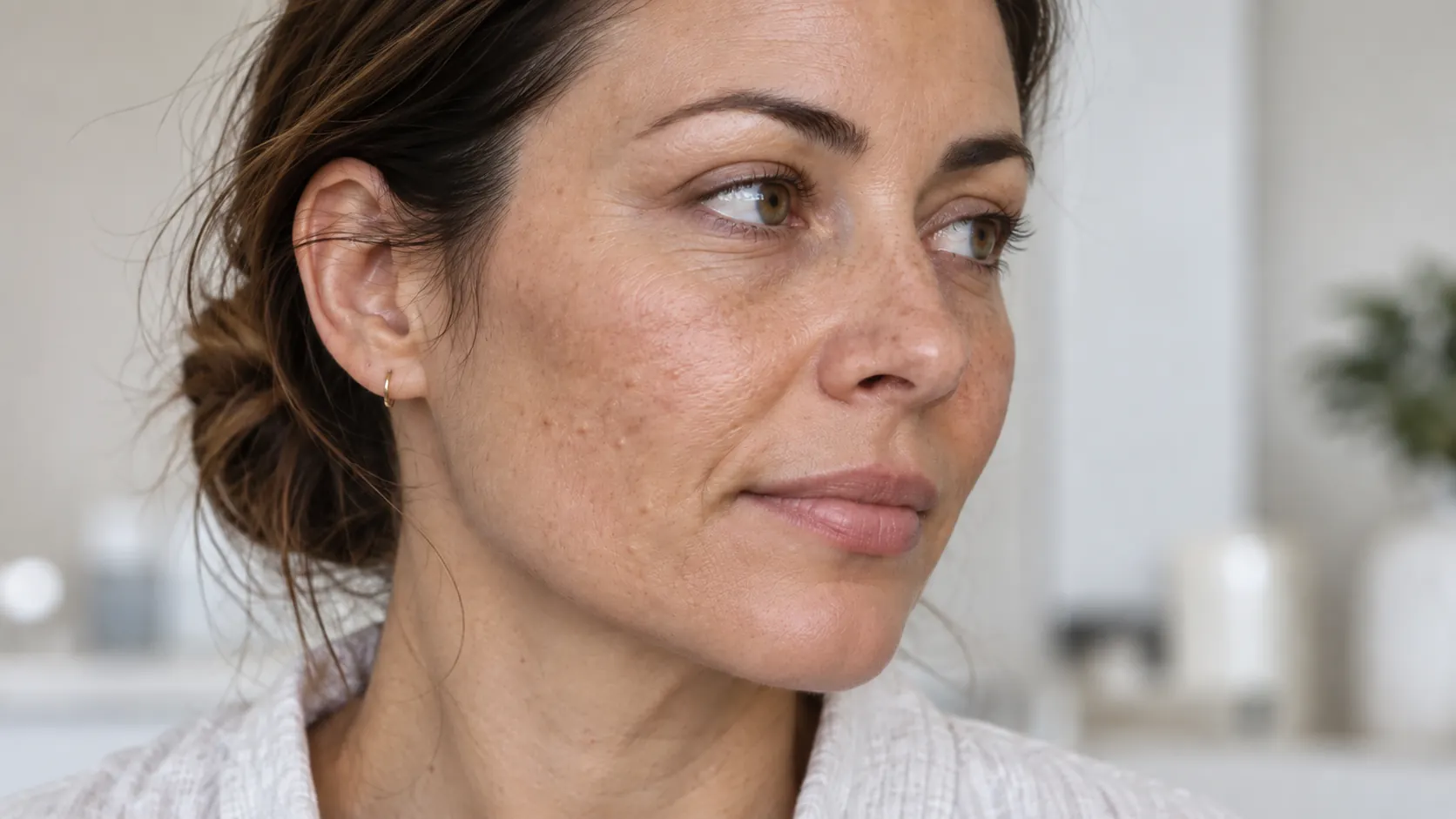
RF microneedling is mainly used to improve atrophic acne scars, 넓어 보이는 모공, 거친 질감, fine lines and mild laxity. Common treatment areas include the cheeks, 이마, 사원, 아랫면, jawline and selected parts of the neck; thinner areas around the eyes use more conservative depth, energy and coverage.
Atrophic Acne Scars
Atrophic acne scars are indentations left after acne resolves. Mechanical microneedling and RF heat work at selected depths to support tissue remodeling, gradually softening scar edges and reducing the visible height difference between the depression and surrounding skin.
Rolling scars and some boxcar scars are better suited to layered remodeling of their edges and depth changes. Narrow, deep ice-pick scars usually need an additional treatment method. When several scar types are present, a combined plan can address each depth and shape separately.
확대된 모공
The visible size of a pore is influenced by surrounding texture, oil distribution and small surface irregularities. By improving support and texture around the pore, RF microneedling can make its edges look tighter and less noticeable in natural light and at close range.
Rough Skin Texture
Small surface irregularities, dryness-related roughness and uneven texture can make skin look less smooth in the light. Mechanical stimulation and layered RF heat support repair and remodeling, producing a finer feel and a more even-looking surface over time.
Fine Lines and Superficial Wrinkles
RF heat delivered to selected skin layers starts a continuing collagen-remodeling response. As the skin’s support structure improves, fine lines and superficial wrinkles around the eyes, mouth and cheeks can look softer, and the skin surface appears smoother.
가벼운 피부 이완
For mild laxity along the lower face, jawline and selected parts of the neck, layered RF heating improves firmness and contour definition. The change develops as collagen remodels, helping the skin look tighter and feel better supported.
The Treatment Experience
A useful consultation starts before the device touches the skin. The provider should identify the concern, examine the treatment area, ask about health conditions and medications, review previous procedures, and discuss the degree of improvement that would count as worthwhile for you. Baseline photographs can make later comparisons more reliable than memory or day-to-day mirror checks.
What to Expect Before and During Treatment
Before the appointment, the clinic should give instructions that fit your medical history and planned treatment. Tell the provider about blood thinners, acne medication, a history of cold sores, poor wound healing, 켈로이드, 알레르기, active skin problems and recent procedures. Do not stop a prescribed medicine on your own; the clinician who manages it should guide that decision.
At the appointment, the skin is cleaned and topical numbing is usually applied. The handpiece then creates a grid or series of treatment points across the selected area. Pressure, quick pricks, warmth or a brief hot feeling are common sensations. A full visit often takes around an hour when numbing time is included; the treatment area and clinic workflow determine the final length.
What Happens in the First Hours After Treatment?
Immediately afterward, skin often looks red and feels warm, tight or tender—somewhat like a sunburn. 가벼운 붓기, pinpoint bleeding, tiny crusts or a grid-like appearance are common early reactions. They should gradually settle rather than intensify.
For the first few days, keep care simple: cleanse gently, avoid rubbing or picking, use bland moisturizer and daily sun protection, and pause strong acids, 레티노이드, exfoliants and other irritating products until redness and tenderness have settled. Increasing pain, 물집이 생기는, expanding dark or pale areas, 배수, facial weakness or persistent numbness needs prompt medical assessment.
What Should You Expect From Results and Recovery?
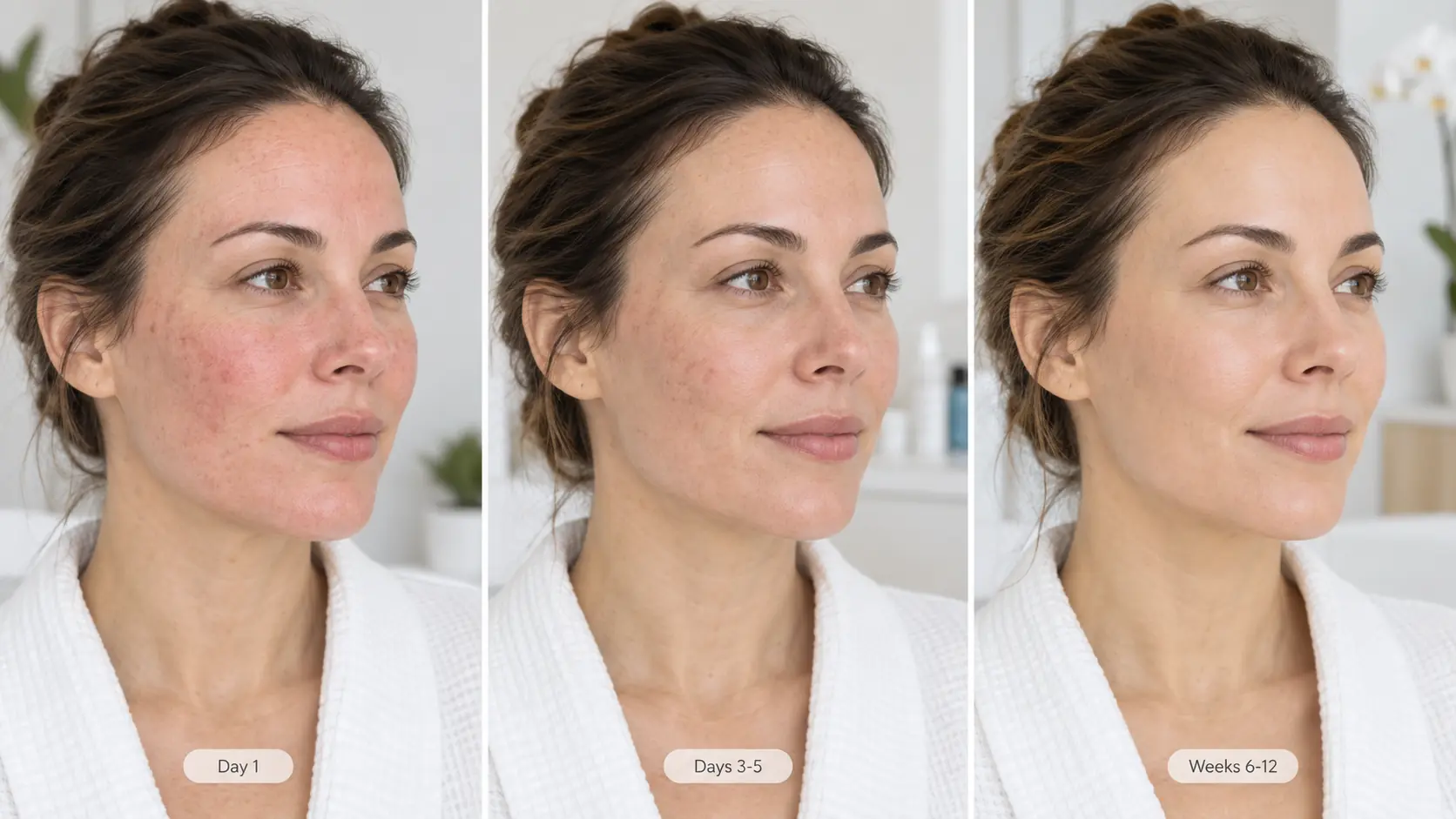
Downtime and results follow different clocks. Redness and swelling usually improve within days, while collagen remodeling takes weeks to months. Early swelling can temporarily make the skin look smoother, and the fuller structural change becomes clearer after the tissue has had time to remodel.
일반적으로 필요한 세션 수?
We usually recommend that clinics use two to four sessions as the initial range for facial acne scars, texture or mild laxity. This is not a fixed package: session count should be adjusted according to skin condition, target depth and recovery after each treatment. 소비자를 위한, completing one properly planned session before deciding on further sessions is more practical than buying a large package upfront.
The Results and Recovery Timeline
Planning Around Work or Events
Trying to fit treatment around work or a special event? Even if you feel ready to return to normal activities the next day, give yourself a few buffer days. Redness may still be easy to see, and early recovery calls for careful physical sun protection, such as a hat, shade and avoiding strong sunlight. Tell the clinic about any important dates and ask when you can wear makeup again. The timeline below shows how surface recovery and visible results unfold; for a day-by-day look, 참조 RF microneedling recovery timeline. 붉어지는 경우, pain or drainage becomes more noticeable each day instead of settling, contact the clinic or another licensed healthcare professional.
| 단계 | Common changes |
|---|---|
| Same day | 홍반, 따뜻함, 부종, tenderness or pinpoint bleeding |
| Days 1–3 | Redness and swelling ease; 건조 함, roughness or small crusts remain for a short period |
| 2~6주 | Texture begins to look smoother as the early repair phase settles |
| Months 1–3 | Scar texture, fine lines or firmness show more meaningful change |
| 3~6개월 | Collagen remodeling continues and the treatment series can be judged more fairly |
안전, Side Effects and Suitability
From our manufacturer perspective, the common short-term reactions are redness, 부종, warmth and tenderness, and the treatment plan should be designed so these reactions steadily settle. The safety boundary is equally important: in October 2025, the FDA warned that it had received reports of serious complications with certain uses of RF microneedling, 화상을 포함하여, 흉터, 뚱뚱한 손실, disfigurement and nerve damage. That is why device selection, 설정, technique and post-treatment observation must be treated as one safety system.
일반적인 단기 반응
Expected short-term reactions can include redness, 부종, 따뜻함, 유연함, 압박감, 건조 함, 거, 가려움, 필링, pinpoint bleeding, bruising or light crusting. The exact pattern depends on the treatment area, 바늘 깊이, 에너지, passes and the skin’s response.
A “normal” reaction should trend toward improvement. The clinic should give you a clear contact route and explain which symptoms require a same-day call, an office assessment or urgent medical care. That information is part of informed consent, not an optional extra.
When Can Treatment Be Risky or Unsuitable?
Suitability cannot be decided from age or skin type alone. Medical history, medication, 피부 상태, healing ability and previous procedures all change the safety decision. Factors that require individual assessment include:
- An active bacterial, viral or fungal skin infection, an active rash, or a current cold-sore outbreak in the treatment area.
- A history of keloid scarring, poor wound healing, 출혈 장애, immune suppression or uncontrolled diabetes.
- Blood-thinning therapy, current or recent isotretinoin use, and other medicines or treatments that affect healing.
- Pregnancy or breastfeeding, relevant metal or anesthetic allergies, and recent tanning or planned strong sun exposure.
- A history of eczema, 건선, vitiligo or autoimmune disease that requires individual medical assessment.
- Previous fillers, threads, energy-based procedures or surgery in the area, which change anatomy or treatment timing.
Darker skin is not an automatic exclusion. Safe planning depends on conservative energy selection, attention to heat buildup, suitable spacing between treatment points and strict sun protection during recovery. Temporary post-inflammatory hyperpigmentation can still occur, so experience with the patient’s skin tone and consistent before-and-after photography are important.
We recommend confirming four points before booking: the person performing treatment meets local licensing requirements and has RF microneedling training; the clinic can explain the device and parameter logic; the device use matches the treatment area; and there is a clear medical response process if an abnormal reaction occurs.
How Much Does RF Microneedling Cost?
Wondering what to budget? Our September 2026 review of seven U.S. clinics found standard face-only RF microneedling prices of $600–$1,200 per session. If your treatment plan includes three sessions, that adds up to $1,800–$3,600 before package discounts or any separately billed care. Looking at the full plan gives you a clearer picture of the commitment than the price of one appointment.
| Cost factor | Why it changes the price |
|---|---|
| Provider credentials and experience | 훈련, medical oversight and local scope-of-practice rules differ. |
| 위치 | Fees vary by city, clinic setting and local operating costs. |
| 치료 부위 | A small scar area and a full face or face-and-neck session require different time and supplies. |
| Number of sessions | A series raises the total even when a package discount is offered. |
| Included care | 마비, a new cartridge, 애프터 케어 제품, photographs and follow-up are bundled by some clinics and billed separately by others. |
Our Take
Compare the whole treatment plan, not just the price per session. Ask for a total that makes clear whether numbing, a fresh needle cartridge, aftercare products and follow-up are included. Then consider the practitioner’s experience and how well the proposed plan addresses the skin concern that brought you in. A package is worth considering when it fits that plan and your budget—not simply because the discount looks attractive.
Common Questions About RF Microneedling
Does RF Microneedling Really Work?
예. RF microneedling can improve atrophic acne scars, 거친 질감, fine lines and mild laxity, with changes developing over several weeks to months. A realistic outcome is softer scar edges, smoother-looking skin or a modest increase in firmness—not complete scar removal or surgical-level lifting.
What Is the Downside of RF Microneedling?
The main downsides are treatment discomfort, several days of redness or dryness, the need for multiple sessions and cumulative cost. RF also adds heat-related risk. Incorrect energy, depth or coverage can cause serious complications such as burns, 물집, 흉터, pigment changes, fat injury or nerve damage.
How Long Does It Take to Heal After RF Microneedling?
Visible redness and swelling usually ease within one to three days, 건조하면서, roughness or light crusting can last about a week. Remodeling beneath the surface continues for weeks to months. Increasing pain, 물집, drainage or unusual color changes are not routine healing and require prompt medical evaluation.
What Does Your Face Look Like Two Days After Microneedling?
On day two, mild to moderate redness, 부종, tightness and tenderness are common, often resembling a sunburn. Small needle marks or a slightly rough texture may still be visible. The reaction should be settling; worsening pain, widespread blistering or drainage needs prompt medical assessment.
What Should You Avoid After RF Microneedling?
During early recovery, avoid picking or peeling, hard exercise, 사우나, 뜨거운 목욕, swimming and strong sun exposure. While the skin still stings or feels disrupted, pause acids, retinoids and scrubs. Keep care simple with gentle cleansing, moisturizer and sun protection.
Is One Session of RF Microneedling Enough?
One session can show how the skin responds and may improve texture, but acne scars, fine lines or mild laxity usually need a series. A common plan is two to four sessions with recovery and remodeling time between them; the final number depends on concern depth, treatment goals and the previous response.
Who Should Avoid RF Microneedling?
Treatment should be delayed or avoided when the area has an active infection, rash, herpes outbreak or open wound, or when wound healing, clotting or diabetes is poorly controlled. 임신, 모유 수유, recent intense sun exposure, medicines that affect clotting or immunity, and abnormal-scarring history require an individualized medical assessment first.
~이다 50 Too Old for Microneedling?
아니요. Skin condition, 치유 능력, 병력, medications and the degree of laxity matter more than age. ~에 50, 가는 선, texture and mild looseness can still be reasonable targets. Pronounced sagging or deep folds exceed the procedure’s main scope and call for other treatment directions.
RF microneedling is worth considering when the goal is gradual improvement in scars, 조직, fine lines or mild laxity and the expected change matches what a minimally invasive treatment can deliver. Bring your medical history, medication list and previous procedure details to a consultation, and confirm that the device, 설정, expected recovery, realistic endpoint and complication plan are explained in language you understand.
참고자료
- 우리를. 식품의약품안전청: Potential Risks with Certain Uses of Radiofrequency (RF) 미세바늘. Issued October 15, 2025.
- 우리를. 식품의약품안전청: 마이크로 닝 장치. Updated October 15, 2025.
- Physics of Fractional Microneedle Radiofrequency: A Review. 피부미용외과학회지, 2024.
- Effectiveness of Radiofrequency Microneedling in the Treatment of Dermatological Conditions: 체계적인 검토. 미용성형외과, 2026.
- Fractional Radiofrequency Microneedling as a Monotherapy in Acne Scar Management: A Systematic Review of Current Evidence. 객관적인, 미용 및 연구 피부과, 2025.
- Radiofrequency and Radiofrequency Microneedling in Skin of Color: A Review of Usage, 안전, and Efficacy. 피부외과, 2023.
- 얼굴 회춘을 위한 고주파 미세침: 체계적인 검토. 미용피부과학저널, 2026.
- Complications of Radiofrequency Microneedling: A Comprehensive Review. BMC Plastic and Reconstructive Surgery, 2026.
- Cleveland Clinic: 무선 주파수 (RF) 미세바늘.
- 미국 피부과 학회: Statement on the FDA Safety Briefing About Radiofrequency Microneedling Risks. October 16, 2025.
우리를. pricing sources — checked September 2026
Published standard face-only single-session prices; discounts and add-ons excluded.
- Natural Body Spa + 스파 포함 - $600
- Bare Element Laser Salon - $600
- Aesthetic Medical Laser / Glow and Beauty Medspa - $699
- City Laser Clinic - $900
- Skin Works Medical Spa - $750
- Vivia Medspa - $1,200
- Lumière Aesthetics - $1,200