
Direct answer
Choose an RF microneedling machine by matching its needle tips, depth controls and radiofrequency (RF) modes to the treatments your team plans to run. Check the exact model’s market clearance and intended use, then compare complete quotes that include single-use needle tips, staff training and repair support within your budget.
This guide is for clinic owners, medspa and beauty-center managers, dermatology practices, clinic groups, equipment distributors and own-brand buyers. It explains how machine specifications affect daily work and helps you choose a purchase route that fits your business. Fotromed supplies RF microneedling machines directly from the factory, and we use the same practical criteria here to compare direct factory packages and international brands.
Quick selection
- If you have the budget for an established international brand and clients ask for a named treatment, look at Morpheus8 Burst, a bipolar RF system that releases energy at multiple depths in one cycle. Check what your local distributor includes for staff training, replacement tips and repairs.
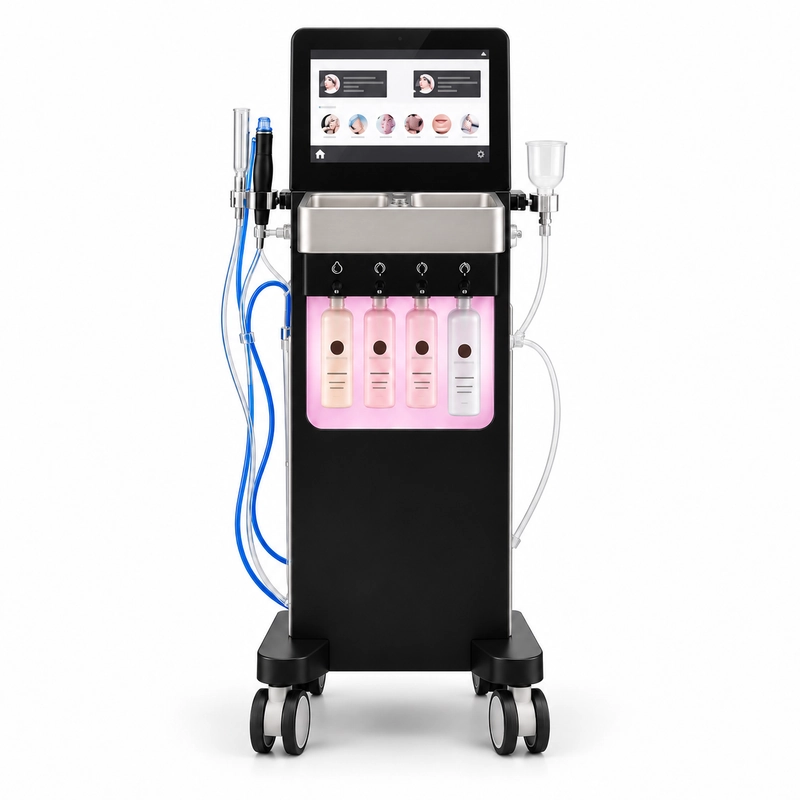
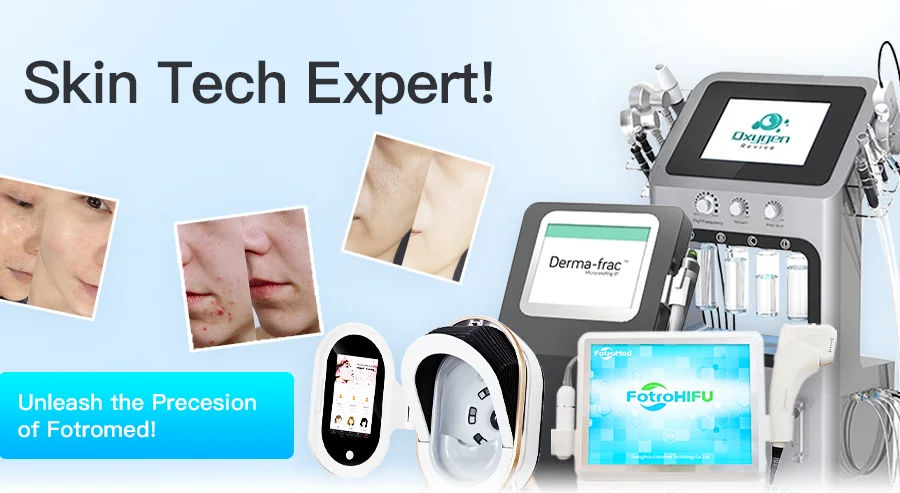
- If this is your first RF purchase and you want to focus your budget on core features, ask for a Derma frac quote with starter tips and operator training. Its published specs include vacuum-assisted skin contact and insulated gold-plated 10-pin, 25-pin and 64-pin tips.
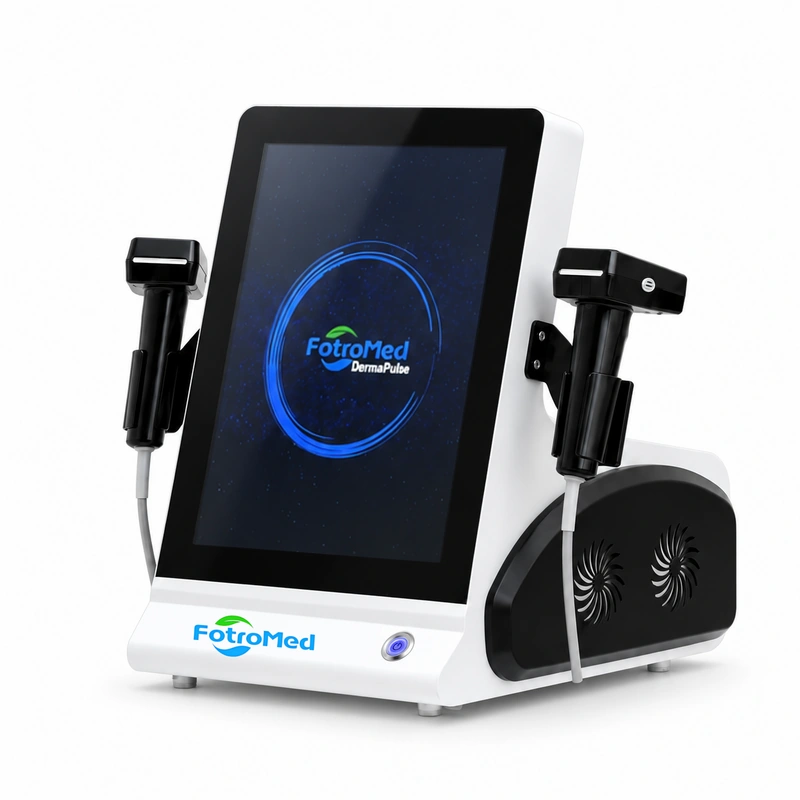
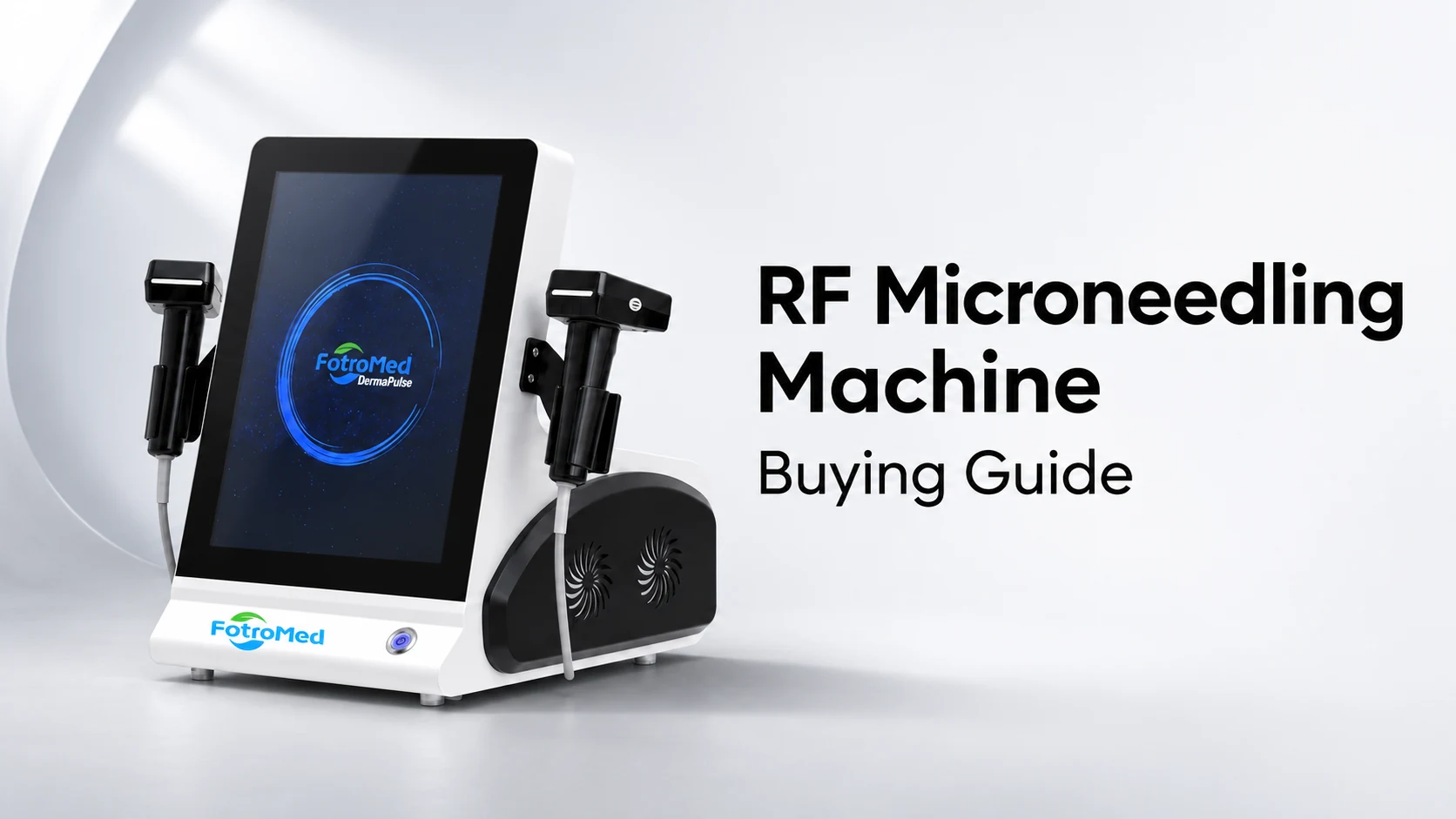
- If you want shared equipment and tips across clinic branches, 비교하다 더마펄스 XL, which lists motorized insulated needles, multi-level burst mode (releasing energy across several depths on one needle insertion) and 12P, 24P 및 40P 프로브. Confirm a shared tip list and branch training plan when you ask for pricing.
- If you want to build your own equipment brand, look into Fotromed OEM and private-label manufacturing. Original equipment manufacturer (OEM) and private-label orders put your brand on selected existing machines starting from one unit, while original design manufacturer (ODM) projects for deeper hardware or software changes use a separate project agreement.
Does your business need an RF microneedling machine?
Buy an RF microneedling machine only when it fills a clear job on your treatment menu or product list. A medspa might add a service that regular clients ask for every week, while a dermatology clinic might need specific depth and power settings. A clinic group may want the same machine across branches, and a distributor may be filling a gap in a local catalog.
Ordinary microneedling does not use radiofrequency energy. Standard mechanical microneedling pens only use moving needles to make tiny punctures in the skin, while an RF microneedling machine sends electrical current through needle electrodes to heat the tissue, as explained in the FDA’s RF microneedling safety communication. Because the needles deliver heat, needle design and energy control sit at the center of your buying choice.
Before you ask suppliers for quotes, check your booking records or client inquiries against four questions.
- Which treatment requests or buyer inquiries come up often enough to pay for the machine?
- How will this unit work alongside the lasers, energy devices or skin treatments you already run?
- Which licensed staff members will hold the handpiece, and what training do they need before seeing patients?
- Does your budget cover the machine, starter needle tips and room setup together?
For a first machine, start with the handpieces and tip sizes your team will use every week. You can add extra handpieces or a second unit later once bookings, staff hours and treatment rooms fill up.
What are the different types of RF microneedling devices?
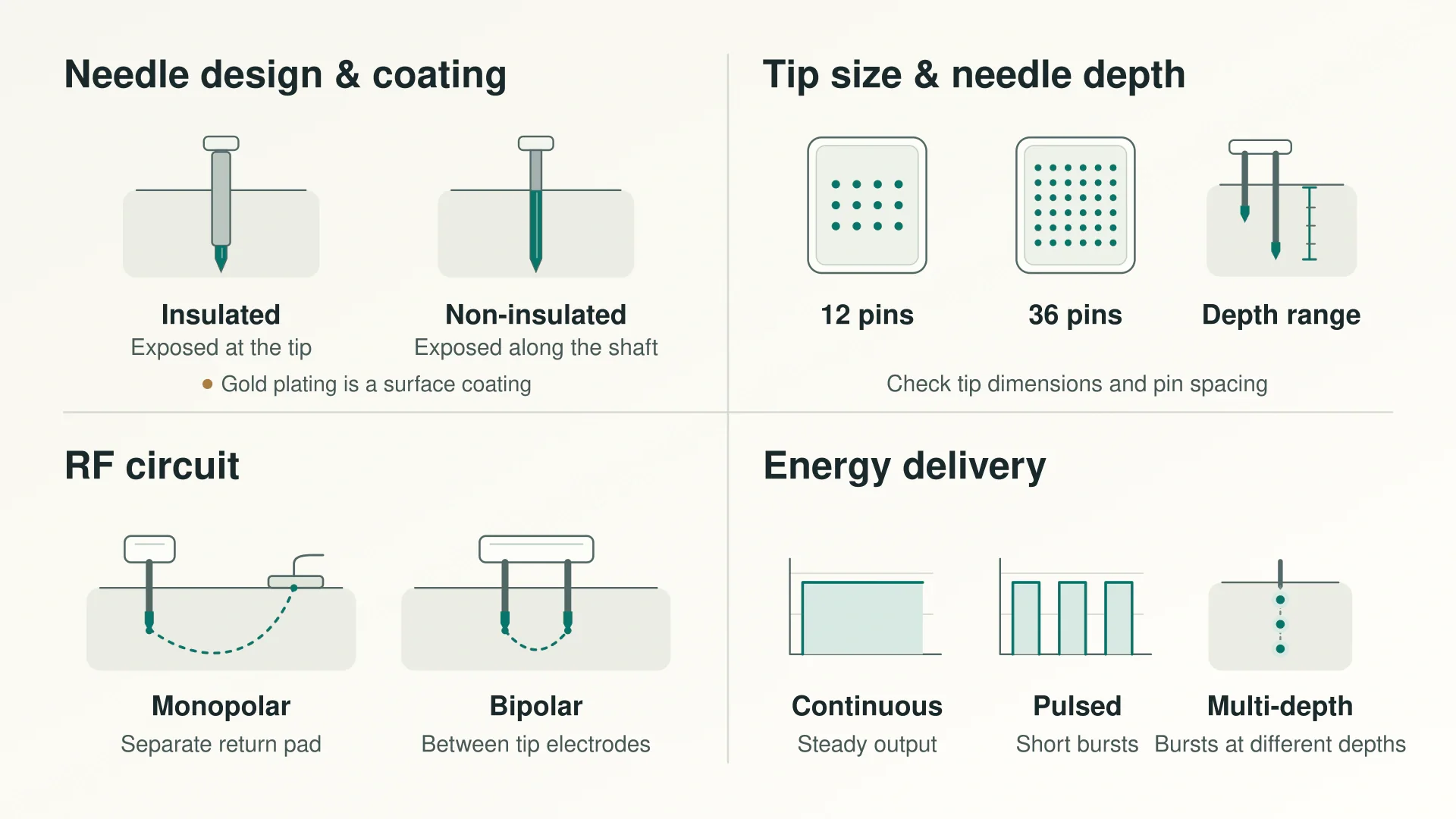
RF microneedling devices fall into four technical categories that shape daily treatments and purchasing. Buyers compare needle design and coating (insulated, non-insulated and gold-plated tips), tip structure and depth range, RF circuit type (단극 또는 양극성), and energy delivery controls such as continuous-wave (steady output), pulsed-wave (short bursts) or multi-level depth delivery.
| Technical category | Common options | Practical effect on treatment and buying |
|---|---|---|
| Needle design and coating | Insulated or non-insulated needles, with gold-plated options | Insulation changes where current leaves the needle, while coating changes the outer metal surface that touches skin |
| Tip structure and depth range | Different pin counts, tip sizes and needle depth settings | Affects area covered per stamp, fit on curved areas and which tip sizes you stock |
| RF circuit | Monopolar or bipolar RF | Changes the electrical current path and whether you need return pads for each visit |
| Energy delivery controls | Continuous-wave, pulsed-wave and multi-depth burst modes | Changes output timing or how energy releases across depths for different treatment plans |
How do insulated needles, non-insulated needles and gold coating affect buying?
Insulated needles coat the upper shaft so RF current releases at the bare needle tip, while non-insulated needles release current along a longer exposed conductive section of the inserted shaft. Gold plating adds a thin conductive surface layer over the needle metal, so buyers should review exposed tip length, insulation specs, skin-contact material records and replacement tip prices together.
Where current leaves the needle is separate from how heat spreads through the skin. Compare insulated tips when your operators want energy release focused at the tip with less direct release along the upper shaft, or non-insulated tips when your treatment plans heat a taller tissue column at once. Checking needle specs alongside power controls helps your team match the treatment goal and manage unintended heating risk.
Because tip construction also affects your supply budget and menu pricing, check four details before you buy.
- Exposed electrode length and shaft insulation details, showing where current enters the tissue
- Material records for the needle metal, gold plating and insulation layer to review what touches the patient’s skin
- Unit prices for the exact insulated, non-insulated or gold-plated tips your team plans to reorder most often
- Total cost per visit for menu pricing, combining the single-use tip price with operator room time and post-care products
Is 12-pin or 36-pin microneedling better for facial work?
Choose a system that supplies both 12-pin and 36-pin tips if your clinic treats broad facial areas alongside tight contours, provided the spec sheet confirms a smaller frame for spot work, a wider frame for cheeks and approved uses for each tip. Neither pin count is universally better on its own, because pin number alone does not tell you a tip’s physical size across manufacturers.
Check the frame dimensions, needle spacing and depth range on the spec sheet instead of guessing from the pin count. You also need to verify which handpiece, frequency and approved use apply to each tip. 예를 들어, one FDA 510(케이) summary for a multi-handpiece RF system lists 36-needle, 12-needle and single-needle options across handpieces while tying its facial wrinkle indication to a 1 MHz handpiece.
When a machine’s confirmed tip dimensions support both sizes, stocking both lets operators use the wider tip on cheeks and switch to the smaller tip around the nose or eyes. Opening two single-use tips for one patient visit adds two tips to that appointment’s supply cost, so include both in your price for that service.
How should a buyer compare monopolar and bipolar RF?
Compare monopolar and bipolar RF by checking published clinical results for the exact skin concerns your clients book and seeing how each circuit changes room prep. If clients mostly book for visible pores and facial texture, compare bipolar systems that have clinical data for those uses alongside comfort and recovery records across candidate systems, including monopolar options.
RF Mode Clinical Evidence
Checking clinical data by RF mode helps you weigh pore and texture results against patient comfort and recovery before you buy. In a 2025 randomized split-face pilot study comparing monopolar and bipolar RF microneedling, 20 women enrolled and 19 completed a single session on the same platform using 49-pin insulated tips. Under those settings, the bipolar side showed greater improvement on some Antera 3D camera pore measures, but it also caused higher pain scores and scabbing, and VISIA skin camera images did not show all of the same pore differences.
The two circuits also work differently in the treatment room. Bipolar RF passes current between needle electrodes inside the tip itself. Monopolar RF sends current from the needle tip to a separate return pad (a skin-contact conductive pad that completes the circuit), which adds pad placement to room prep and requires keeping return pads in stock. A machine with both modes makes sense when your team has active treatment plans for each.
Compare the complete setup
Gold coating, needle insulation, depth settings and RF output modes work together during a treatment. Watch them run together in a live video call or test the handpiece in person so your operators can see how the tips, handpiece and screen controls work in practice.
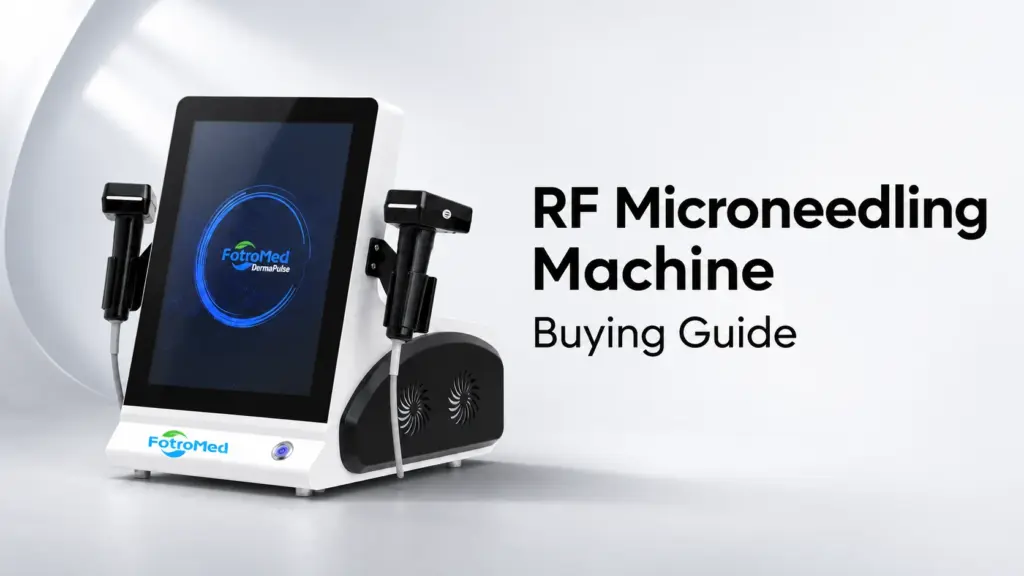
Our broader catalog includes both mechanical microneedling pens and thermal RF machines. To compare specific RF models side by side, see the RF section of our best rf Microneedling machine guide.
How to choose RF microneedling machines
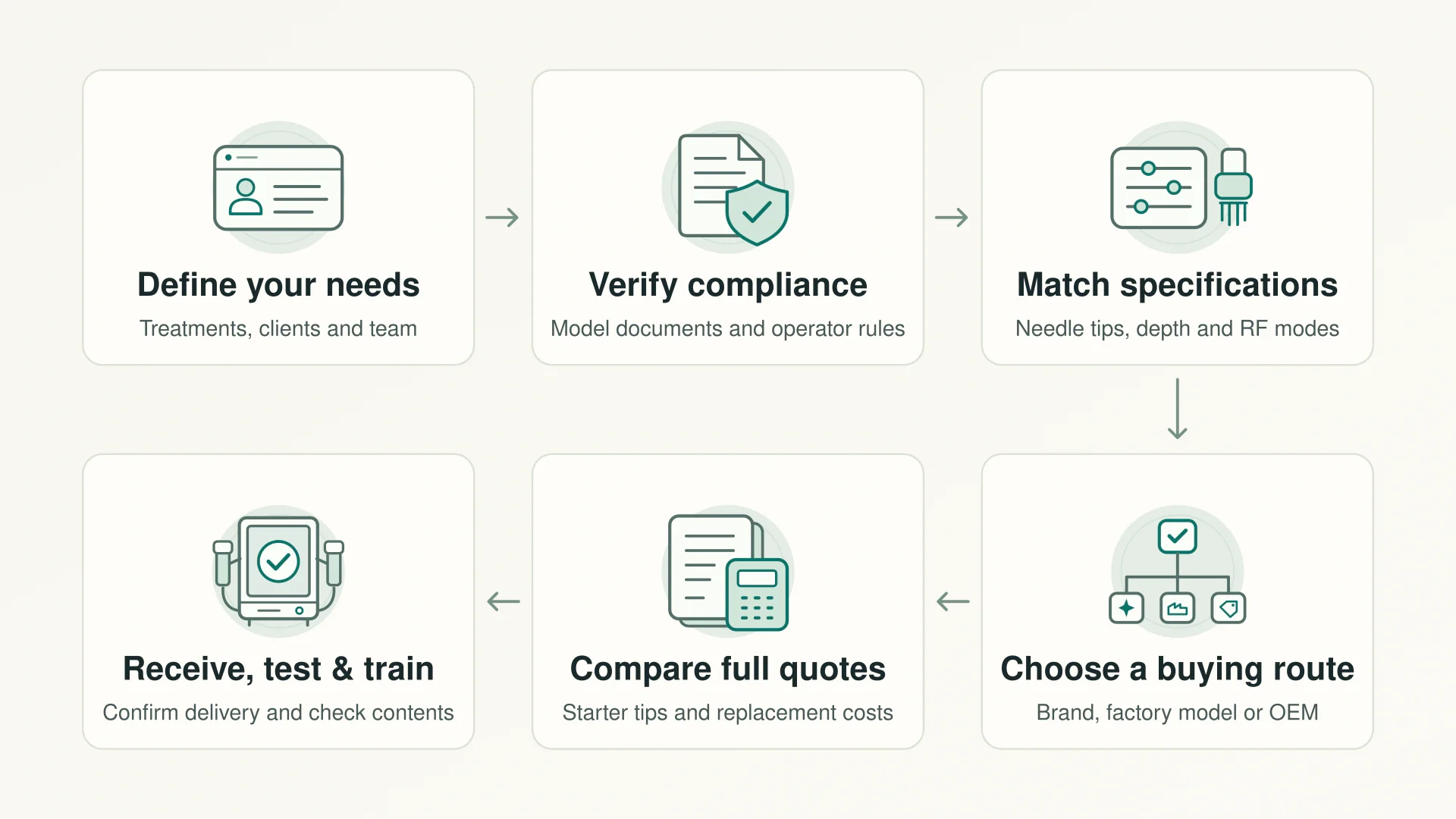
Define your treatments, clients and operating team → Check exact-model legal documents and operator rules → Match needle, depth and energy controls to your treatments → Choose an international brand, factory model or own-brand OEM route → Compare complete quotes, starter tips and ongoing supply costs → Confirm delivery details, test the machine and train your team.
Define your treatments, clients and operating team
Start by listing the skin concerns you treat most often, who will hold the handpiece each day and how many rooms need a machine. A single medspa has different priorities from a multi-branch group or an equipment distributor, so set your main requirements before asking for quotes.
| Buyer group | Main buying goal | Priority equipment and service |
|---|---|---|
| 단일 진료소, medspa or beauty center | Launch core services within budget | Everyday tip sizes, clear screen controls, starter tips and video training |
| Dermatology or scar practice | Fit the machine to medical treatment plans | Cleared intended use, depth and power range, and doctor training |
| Multi-service or multi-branch group | Fill menu gaps and keep branch work consistent | Shared tip sizes, unified branch training, restocking and repair plan |
| Distributor or own-brand buyer | Build a resale or private-label line | Branding scope, pre-shipment checks, spare parts and support split |
Check exact-model legal documents and operator rules
Before paying a deposit, check the exact model name and legal manufacturer in your market’s medical or aesthetic device registry, confirm that the user manual’s intended use (the specific treatments the manual says the machine is approved to perform) covers your planned menu, and verify local licensing and medical supervision rules for the staff who will operate the handpiece.
- 미국에서는, look up the exact model’s 510(케이) record (the FDA clearance file showing a device can be legally marketed in the US) and read the instructions for use to confirm the cleared indications, as noted in the FDA’s microneedling devices guidance.
- Outside the US, ask for the written registration files required by your national health authority, and for private-label orders get written proof linking the factory model to your brand name.
- Check state or national operator rules early, as the FDA의 15 October 2025 RF microneedling safety communication describes RF microneedling as a medical procedure with reported serious complications and recommends licensed healthcare providers with relevant training and experience.
Match needle, depth and energy controls to your treatments
For daily clinic work, shortlist machines that have supporting data for your planned treatments, steady depth and power controls, and a screen your team can learn quickly. Compare needle insulation, tip sizes and RF modes across those units to make sure they fit your facial or body menu.
A standalone RF machine keeps a focused skin-texture or tightening service simple to run. Pick a multi-function workstation only when the extra handpieces have a clear place in your menu, staff schedule and room calendar.
Choose an international brand, factory model or own-brand OEM route
Choose an international brand when local clients already ask for that treatment name and your budget covers the distributor’s local service package. Standard factory models fit single clinics, medspas and clinic groups that want core features and shared tips within budget, while OEM or ODM programs serve distributors and own-brand buyers.
When you weigh a local distributor against buying directly from a factory in China, compare what each quote actually includes. A local distributor quote may cover room installation and nearby repair visits, while a factory quote for a standard model like Derma Frac or DermaPulse XL focuses on the machine configuration, starter tips and remote support.
Picking an existing factory model avoids a separate custom-development project, and clinic groups can place the same unit across branches to share one tip stock. You can view current tabletop and vertical units on Fotromed’s rf Microneedling machine 카테고리 페이지, and compare more producers in our rf Microneedling machine manufacturer guide.
For own-brand buyers, Fotromed provides private-label branding starting from one unit on selected existing platforms, with the exact scope agreed for each model.
- Basic branding on selected platforms covers your logo, model label, startup screen, basic interface text, user manual and outer carton, while specific shell colors, wording or packaging details are agreed by model and order scope.
- 배송 전, you can check the finished unit through photos, video and a live video walkthrough, or ask for a physical sample first.
- Deeper hardware or software changes use a separate ODM project agreement that sets the model, engineering work and order volume.
Compare complete quotes, starter tips and ongoing supply costs
Compare complete RF microneedling quotations by checking the base machine and handpieces alongside starter and replacement tip prices, 직원 교육, warranty coverage and delivery terms. Written quotes should spell out these ongoing costs and tasks before you order.
- Production lead time, minimum order quantity and how many starter tips come in the box
- Box sizes and unit prices for the exact replacement tips your team will reorder every month
- Rates for training new hires later and any post-warranty calibration or repair fees
- Branding or setup limits in a distributor contract versus import paperwork, pre-shipment checks and first-line support in a factory order
For a closer look at equipment budgets and per-visit tip math, read our RF microneedling machine cost guide.
Plan the first order
UK practitioner Tanya ordered a tabletop RF microneedling machine and a separate 980 nm laser in an order that included a two-part payment plan and 25 disposable needle tips. Use your first quote request to discuss payment stages and the starter tip count you need for launch.
Confirm delivery details, test the machine and train your team
Before the machine ships, write the agreed delivery date, included accessories and support contacts into the final purchase order. When the crate arrives, check the nameplate, serial number, 핸드피스, tip counts and manuals against that order. Run a full power-on test and finish operator training before you book your first patient.
What training, tip supply and repair support should a supplier provide?
A supplier should provide model-specific training on machine setup, screen controls, handpiece use, daily cleaning and basic fault checks before you see patients. The purchase order should also lock in single-use sterile tip restocking and written warranty, remote fault-check and spare-parts terms.
A single clinic can usually pair the user manual with live video training, while a clinic group can set up a shared training plan so new hires at every branch learn the same steps. Because the FDA advises using a new sterile needle tip for each patient and each treatment session, plan your tip stock around booking volume and shipping time, and keep compatible tip codes, unit prices and reorder contacts on file.
Put four repair details in writing before you sign the order.
- Warranty length and which parts or handpieces are covered
- How remote video fault checks work and how fast technicians reply
- Who pays for replacement parts and shipping during and after the warranty
- For private-label orders, how your own customer service team passes part requests and deeper repairs to the factory
결론
Start by having the doctors or lead operators on your team confirm the handpieces, needle tips and RF modes needed for your planned services. Once your treatment setup is clear, pick the buying route that fits your business.
Look at an international brand when local clients already ask for it by name and the distributor’s local support justifies the quote. Compare standard factory models when you want a defined configuration within budget, or use an OEM and private-label agreement to build your own equipment brand. Weigh the full quote, including replacement tips, training and repair support, against the treatments you plan to run.
To request a tailored Fotromed quote, share your destination country, business type, planned treatments, working budget, expected monthly tip use and any OEM or private-label branding needs.
FAQ
Who can operate an RF microneedling machine?
The FDA describes RF microneedling as a medical procedure with reported serious complications and recommends that only licensed healthcare providers with relevant training and experience run the device. 구매하기 전에, check your state or national licensing and medical supervision rules for the staff who will hold the handpiece.
Can RF microneedling tips be used on different machines?
Single-use needle tips must match your exact machine model, 핸드피스, and compatible tip code on the spec sheet. Matching the pin count, such as 12-pin or 36-pin, is not enough on its own because frame dimensions, needle spacing, and handpiece frequencies vary across models and manufacturers.
Can I start a private-label RF microneedling brand with one machine?
예. Fotromed offers OEM and private-label branding starting from one unit on selected existing platforms, with the exact branding options agreed for each model. Basic branding can cover your logo, startup screen, user manual, and outer carton, while deeper hardware or software changes need a separate ODM development agreement.
What should I look for during an RF microneedling machine demonstration?
Have the staff who will use the machine check how the actual handpiece, compatible needle tips, screen interface, and depth and energy controls work together. A live video call shows the system running in real time, and an in-person demonstration lets your team hold the handpiece and test the controls themselves.
What should an RF microneedling machine purchase order include?
Your final purchase order should list the exact machine model, 핸드피스, 부속품, starter needle tip count, delivery date, and operator training plan. Also include the compatible tip codes and unit prices for reorders, 보증 기간, remote troubleshooting contacts, and who pays for replacement parts and shipping during repairs.
References and sources
Sources verified between 11 그리고 13 November 2026.
- Potential Risks with Certain Uses of Radiofrequency (RF) 미세바늘, FDA Safety Communication, 15 October 2025, 우리를. 식품의약품안전청.
- 마이크로 닝 장치, content current as of 15 October 2025, 우리를. 식품의약품안전청.
- FDA 510(케이) Summary K211562, 우리를. 식품의약품안전청.
- Xu et al. Preliminary Clinical Study of Monopolar Versus Bipolar Fractional Microneedling Radiofrequency for Facial Rejuvenation, 2025, 피부과 치료.
- InMode Morpheus8 Burst technology overview, 모드 중.
- Tanya’s Journey Elevating Her Clinic with Fotromed’s Derma Puls MNRF, 포트메드.