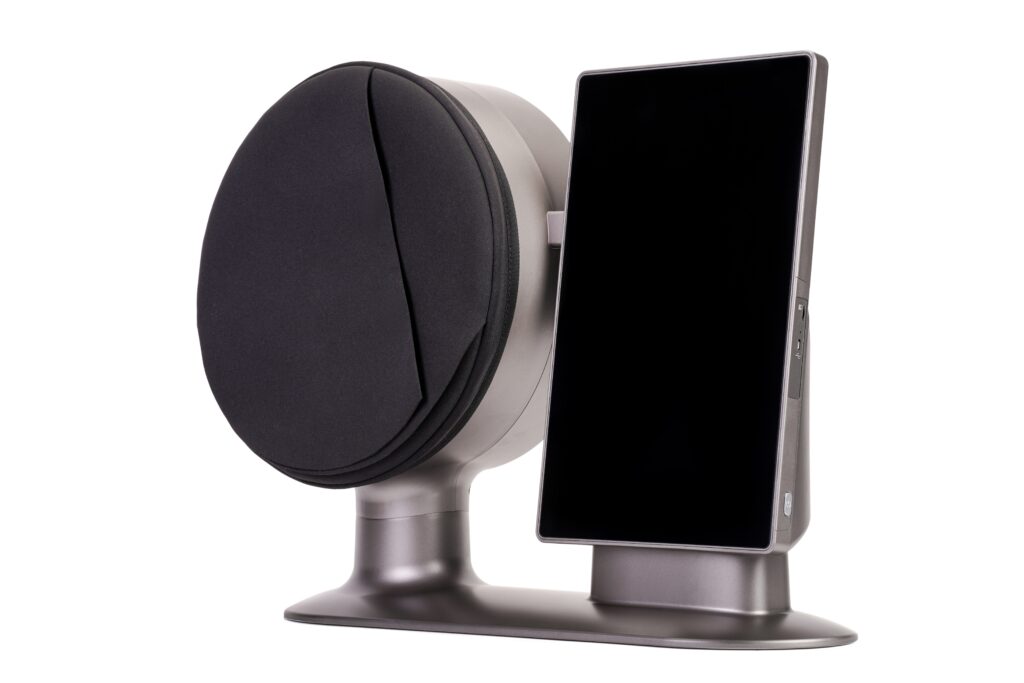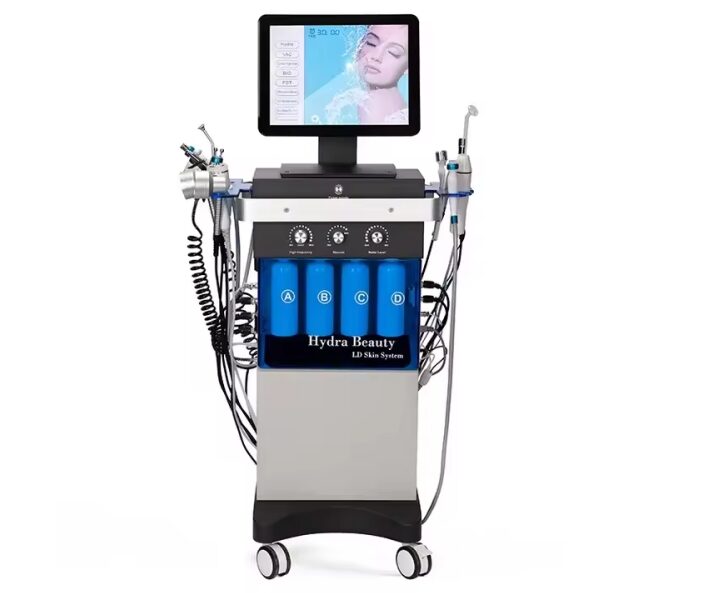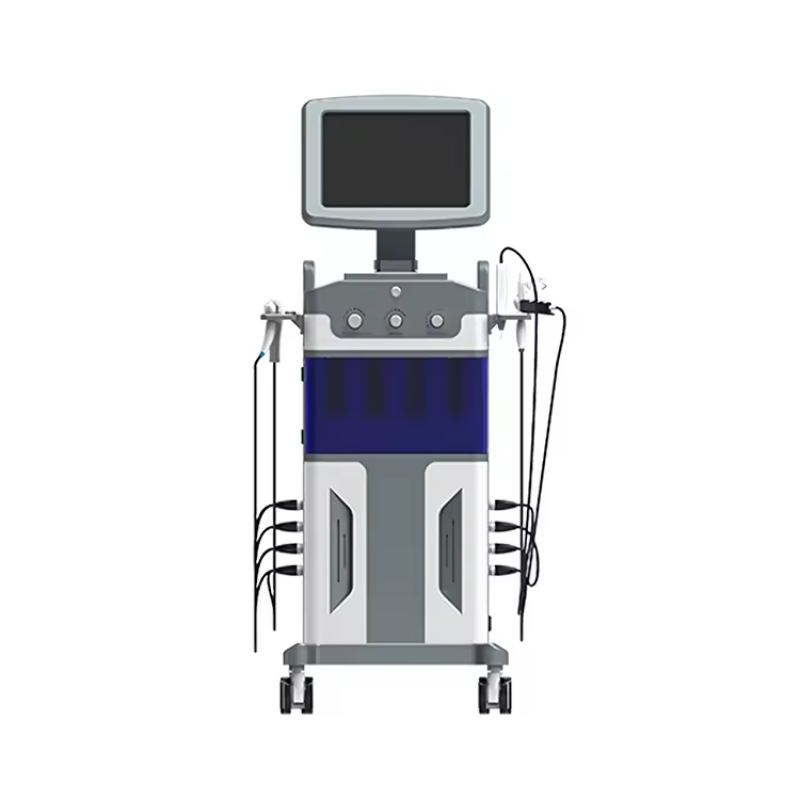

The best skin analysis machine for a clinic is the one whose imaging method, measurement depth, software, and follow-up workflow match its services. A skin imaging and analysis machine may use optical photography, calibrated 3D imaging, AI software, or ultrasound, but these technologies answer different questions and are not interchangeable. The market is also changing quickly: McKinsey expects the global beauty market to grow about 5% annually and reach $590 billion by 2030. AI adoption remains early: only 10% of surveyed beauty executives reported using AI regularly, while 60% were still exploring it. Clinics therefore need to know what an “intelligent” system actually measures and how it fits routine consultations.
Buyers first need to rule out capability gaps. Similar product names and scattered specifications can hide whether a machine includes the function a clinic needs. Even when the feature exists, it may not fit the clinic’s priority services, daily scan volume, follow-up process, or budget. An injectable clinic, for example, may need calibrated contour and volume change, yet some systems described as “3D” create only a visual surface rendering. A multi-location clinic may choose a machine for its long list of analysis labels, then find that inconsistent positioning, limited account permissions, or disconnected client histories make repeat scans hard to compare. A research team that needs tissue thickness requires ultrasound; an optical AI score cannot supply it. This guide compares all eight systems across the same ten dimensions and keeps the published parameters beside each score, so buyers can ask first whether a capability exists and then whether it fits.
Key Takeaways
- Optical imaging records surface and color features, calibrated 3D measures shape and volume, ultrasound examines tissue below the surface, and AI software automates interpretation or recommendations. These functions are not interchangeable.
- Capture repeatability, progress records, and usable reports are often as important as the number of light modes.
- Software costs, storage, multi-location access, product-library controls, and export options should be checked during a live demonstration.
- The score in this article measures documented capability breadth, not diagnostic accuracy or treatment outcomes.
Features to Look for in Skin Analysis Machines: How We Compared the Top 8
For this professional review of skin analysis devices, every machine was checked against the same ten dimensions: optical imaging, capture standardization, 3D capability, ultrasound or tissue measurement, automated analysis, AI analysis, progress tracking, clinic software, customization, and skin-and-scalp coverage. Each dimension receives 0 to 3 points, for a maximum documented capability score of 30.
The capability is absent or not publicly documented.
A limited or indirect version of the capability is available.
The capability is useful for routine professional consultation.
The capability is a defining strength of the system.
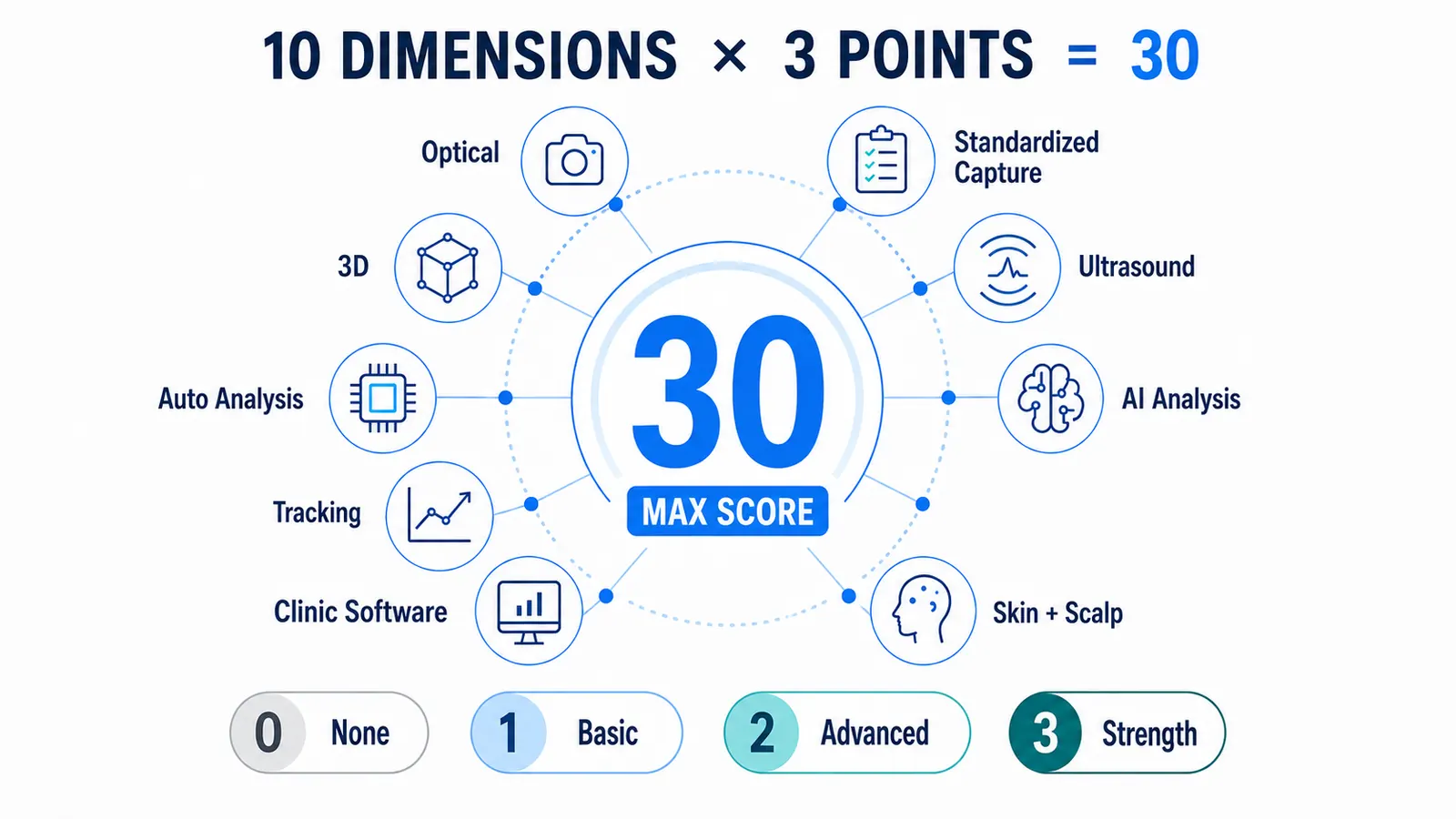
Automated analysis and AI analysis are scored separately. “Automated” means the software can turn captured data into measurements, classifications, comparisons, or reports with limited manual work. “AI” receives points only when the manufacturer explicitly documents AI or machine learning as part of image interpretation; an automatic report is not assumed to use AI. Customization covers configurable product or treatment libraries, reports and branding, languages, account permissions, data fields, and APIs or integrations. The tables show the machine parameters behind every score, so a zero identifies an absent capability rather than declaring the whole machine ineffective.
Searchers sometimes ask how to choose a “laser skin analysis tool,” but the term is often used too broadly. Most systems in this comparison are imaging or measurement devices that use visible light, polarized light, UV, 3D cameras, or ultrasound; they are not treatment lasers. Treatment platforms are outside this article’s scope.
Top 8 Professional Skin Analysis Machines for Clinics in 2026
1. Next-Generation VISIA Skin Analysis (2026)
Canfield launched its next-generation VISIA on March 25, 2026. In one click, the system captures front, left, and right standard facial views plus full-face 3D data, with instant 3D capture across standard, cross-polarized, and UV lighting. The company lists eight surface and subsurface feature groups: spots, wrinkles, texture, pores, UV spots, RBX brown, RBX red, and porphyrins. TruSkin Age, Comparison to Norms, video capture, and a built-in treatment and service library are designed to turn those images into consultation material.
For a multi-operator clinic with recurring follow-ups, guided positioning and one-sequence multi-angle capture reduce the risk that different staff members create non-comparable before-and-after images. The 3D Sculptor tools add automated measurements, volume difference, contouring, and grayscale views, extending skin documentation into facial-shape and injectable consultation. VISIA is easiest to justify when scan volume and operator consistency warrant the investment. A practice that performs occasional basic skincare scans may use little of the platform. It does not measure tissue by ultrasound or provide a dedicated scalp workflow, and buyers should confirm that a demonstration covers the 3D-capable 2026 generation rather than an earlier 2D model.
| Comparison Dimension | Machine Parameters | Score |
|---|---|---|
| Optical imaging | Standard, cross-polarized, and UV; eight listed groups: spots, wrinkles, texture, pores, UV spots, RBX brown/red, and porphyrins | 3/3 |
| Capture standardization | Guided positioning; one-click front, left, and right standard views plus full-face 3D capture | 3/3 |
| 3D capability | Instant full-face 3D; automated measurements, Volume Difference, Contouring, and Gray Mode in 3D Sculptor | 3/3 |
| Ultrasound / tissue measurement | No ultrasound module listed | 0/3 |
| Automated analysis | Automatic feature analysis, Comparison to Norms, TruSkin Age, and 3D measurement outputs | 3/3 |
| AI analysis | Canfield describes the 2026 VISIA workflow as AI-driven; public materials identify AI use but provide limited model-training and validation detail | 2/3 |
| Progress tracking | Standardized 2D/3D before-and-after records for visible features, contour, and volume difference | 3/3 |
| Clinic software | Windows and macOS support; video capture, 3D Sculptor, and Industry Brand Library | 2/3 |
| Customization | Industry Brand Library and treatment/service content support; broader white-label, field, and API controls are not publicly detailed | 1/3 |
| Skin and scalp coverage | Facial skin; no dedicated scalp workflow listed | 0/3 |
| Documented capability score | 20/30 | |
Best For: Dermatology, plastic-surgery, and established aesthetic practices with high facial-consultation volume, several operators, and a real need for standardized 2D/3D follow-up photography. The budget should be planned as a professional fixed imaging system, with the 3D module, software, training, and service terms confirmed in addition to the base hardware. A low-volume practice performing only simple skincare consultations may struggle to use enough of the platform to justify that investment.
2. Perfect Corp. AI Skin Analysis
Perfect Corp. is a software-first AI option that runs through phones, tablets, or web cameras without a fixed imaging booth. Its 180° full-face mapping uses three images (front, left, and right) to detect more than 15 visible concerns and classify eight skin types. Perfect Corp. reports a model trained on more than 70,000 medical-grade data points, 95% test-retest reliability, and more than 80% correlation with physician evaluations and industry-standard imaging. Those figures describe the company’s stated test conditions. They do not show that every clinic scan will produce the same result across different cameras, lighting, distances, and angles. Buyers should verify repeatability with a standardized in-clinic test.
The business value comes from touchpoint coverage and data integration. Skincare Pro adds client profiles, before-and-after views, and progress tracking; APIs and SDKs can feed results into an existing brand or clinic platform; and the recommender can connect an analysis with a skincare routine. Repeatability still depends on the input image: a change in phone model, ambient light, distance, or angle can make two scans less comparable. Perfect therefore fits large-scale digital consultation, remote acquisition, and retail recommendation, but it is not an equivalent substitute for controlled UV/polarized imaging, calibrated 3D, or high-frequency ultrasound.
| Comparison Dimension | Machine Parameters | Score |
|---|---|---|
| Optical imaging | RGB input from phone, tablet, or web camera; front/rear camera plus photo and live-camera modes | 1/3 |
| Capture standardization | Guided front, left, and right image capture; no fixed light source or head-positioning hardware | 1/3 |
| 3D capability | Three-image 180° full-face mapping; no stereophotogrammetry or calibrated volume measurement | 1/3 |
| Ultrasound / tissue measurement | No ultrasound module listed | 0/3 |
| Automated analysis | Two-second analysis of 15+ concerns and eight skin types, with automated recommendation outputs | 3/3 |
| AI analysis | AI is the core interpretation layer; the company discloses more than 70,000 training data points and repeatability/correlation testing | 3/3 |
| Progress tracking | Skincare Pro profiles, before-and-after views, treatment progress, and measurable outcome records | 3/3 |
| Clinic software | CRM, product/routine recommendations, Expert Mode API, SDK, and cloud-based multichannel deployment | 3/3 |
| Customization | API/SDK integration, Expert Mode, branded app/web deployment, and configurable product or routine recommendations | 3/3 |
| Skin and scalp coverage | No dedicated scalp workflow listed | 0/3 |
| Documented capability score | 18/30 | |
Best For: Skincare brands, chains, digital-first med spas, and independent estheticians that need the same consultation concept across phones, iPads, websites, and remote channels. It also suits businesses that want to connect analysis with a CRM, product recommendations, or a proprietary app. The system can reduce the upfront budget for dedicated capture hardware, but enterprise licensing, API/SDK integration, scan volume, cloud storage, and custom development may create recurring costs. Buyers should model the license against actual scan volume.
3. Fotromed DermaVision Master
DermaVision Master uses three cameras to capture and analyze 18 left, center, and right facial images in one positioning sequence. Its manual documents nine spectral image types: white light, cross-polarized light, parallel-polarized light, UV, Wood’s light, composite UV, red, brown, and pigment distribution. Compared with a single frontal RGB photograph, this dataset is designed for side-to-side and cross-spectrum comparison. A magnetic light shield, adjustable chin rest, and one-sequence three-angle capture reduce variation from ambient light and repeated repositioning.
DermaVision Master combines full-face, microscopic-skin, scalp, sunscreen-visualization, and sectional-moisture workflows in one system. Quantitative reports group seven acne indicators, four sensitivity indicators, six pigment indicators, and four aging indicators. The software keeps complete histories, spectral and category comparisons, and case records. Main/sub-accounts, statistics, clinic-product uploads and recommendations, configurable panels and copy, multiple languages, and update controls support day-to-day clinic use.
Hands-On Testing and Delivery Experience
We provided a DermaVision Master solution for a UK spa group with five locations, including custom logo design and dedicated API access to the backend client management system. This allows the group to manage client profiles, historical analysis data and skincare recommendations across all five locations.
| Comparison Dimension | Machine Parameters | Score |
|---|---|---|
| Optical imaging | Triple-camera capture; 18 views across nine documented spectral image types | 3/3 |
| Capture standardization | Magnetic light shield, adjustable chin rest, and single-sequence left/center/right capture | 2/3 |
| 3D capability | 3D simulation slicing, local enlargement, and texture heatmap | 1/3 |
| Ultrasound / tissue measurement | No ultrasound module listed | 0/3 |
| Automated analysis | Quantitative and departmental reports: seven acne, four sensitivity, six pigment, and four aging indicators | 2/3 |
| AI analysis | AI skin-image and algorithm analysis | 2/3 |
| Progress tracking | Spectral views, departmental indicators, full client test history, and case management | 3/3 |
| Clinic software | Main/sub-accounts, statistics, clinic product upload/recommendation, panel/copy/data controls, languages, and updates | 3/3 |
| Customization | Full OEM/ODM options include logo, machine color, boot screen, custom skincare recommendations, reports, languages, watermarks, and account permissions | 3/3 |
| Skin and scalp coverage | Full face; five-zone microscopic skin with three light sources; scalp/hair; sunscreen imaging; sectional moisture | 2/3 |
| Documented capability score | 21/30 | |
Best For: DermaVision Master fits medical spas, skin-management clinics, and combined skin-and-hair centers that need facial, microscopic, scalp, or sunscreen consultation plus client history, reporting, and a clinic-owned product library. The budget case is strongest for a practice that wants one platform to reduce separate purchases of a scalp microscope, moisture tester, and stand-alone recommendation software.
4. Cortex DermaScan
DermaScan is the only system in this list built specifically to capture cross-sectional ultrasound images of skin. Its 20 and 50 MHz broadband probes illustrate the resolution-depth tradeoff directly: a 20 MHz configuration provides 60 × 150 µm resolution with up to 14 mm penetration, or 60 × 200 µm with up to 23 mm penetration; the 50 MHz option provides 30 × 60 µm resolution with up to 7 mm penetration. Higher frequency reveals finer superficial detail but does not penetrate as deeply.
The system scans in real time at 6 to 8 frames per second, supports A/B modes, and records a 100-image automatic cineloop. Windows software adds ROI, edge detection, intensity segmentation, TIFF/JPG export, and quantitative comparison. It measures thickness, echo intensity, and subsurface soft tissue that optical photographs cannot capture, which suits clinical research, cosmetic efficacy testing, and product development. It does not automatically create pore, pigment, or treatment-sales reports and is not designed for the same retail consultation workflow as a full-face analyzer.
| Comparison Dimension | Machine Parameters | Score |
|---|---|---|
| Optical imaging | B-mode grayscale imaging and A-mode echo display for localized skin-tissue review | 3/3 |
| Capture standardization | Closed-water-chamber probe; contact-based protocol with a defined scan site | 3/3 |
| 3D capability | No 3D facial capture listed | 0/3 |
| Ultrasound / tissue measurement | 20 MHz: 60 × 150 µm/14 mm or 60 × 200 µm/23 mm; 50 MHz: 30 × 60 µm/7 mm | 3/3 |
| Automated analysis | A/B mode, ROI, edge detection, intensity segmentation, swept gain, and quantitative calculations | 3/3 |
| AI analysis | No AI or machine-learning image interpretation is listed in the reviewed product information | 0/3 |
| Progress tracking | 6 to 8 frames/second and 100-frame automatic cineloop; individual and full-sequence storage for comparison | 3/3 |
| Clinic software | Windows interface with autosave, zoom/scroll, and TIFF/JPG image conversion | 2/3 |
| Customization | Gain, ROI, segmentation, and measurement parameters can be configured for research projects | 2/3 |
| Skin and scalp coverage | Skin-tissue measurement; no dedicated scalp consultation workflow | 0/3 |
| Documented capability score | 19/30 | |
Best For: Clinical and dermatology research, cosmetic efficacy testing, and product-development teams that specifically need cross-sectional skin, thickness, or echo-intensity data at different depths. The budget is justified only when ultrasound outputs feed a research protocol or billable specialist service, and it should include the selected 20/50 MHz probes, software, operator training, warranty, and future upgrades. For fast visual retail consultation, a specialist ultrasound platform is usually the wrong use of budget.
5. Canfield VECTRA M3
VECTRA M3 is a fixed stereophotogrammetry system for the face, neck, and décolletage. Canfield lists 1.2 mm geometric resolution, expressed as triangle-edge length, and a 3.5 millisecond capture time. Multiple cameras and onboard flash units freeze facial geometry and generate a rotatable 3D model. This data answers questions about contour, symmetry, projection, and volume rather than the pore or pigment labels produced by a UV or polarized-light skin scanner.
Face Sculptor supports automated measurements, volume difference, color-distance mapping, contour simulations, and markerless tracking; RBX separates red and brown color signatures. For injectables, rhinoplasty, lifts, or contour procedures, these tools turn photography into structured shape and volume comparison. The system occupies about 122 × 56 × 180 cm and uses a Canfield-configured capture computer, so space, capital cost, and training requirements are higher than for a desktop analyzer. Canfield also states that simulations support consultation and do not guarantee outcomes or replace proper pre-surgical measurements.
| Comparison Dimension | Machine Parameters | Score |
|---|---|---|
| Optical imaging | High-resolution multi-camera photography; RBX processing separates red and brown color signatures | 3/3 |
| Capture standardization | Fixed stereophotogrammetry and onboard intelligent flash; 3.5 ms capture; 122 × 56 × 180 cm | 3/3 |
| 3D capability | 1.2 mm geometric resolution; Face Sculptor, automated measurements, volume difference, color map, and contour simulation | 3/3 |
| Ultrasound / tissue measurement | No ultrasound module listed | 0/3 |
| Automated analysis | Automated facial measurements, volume-difference calculation, color-distance mapping, and markerless surface tracking | 3/3 |
| AI analysis | No AI or machine-learning image interpretation is explicitly listed in the reviewed VECTRA M3 materials | 0/3 |
| Progress tracking | 3D-aligned contour, volume, and color-distance comparison; pre/post-treatment and simulation views | 3/3 |
| Clinic software | VECTRA Capture, Face Sculptor, RBX, 3D Analysis, and Mirror 2D tools; reports and ViewMyConsult | 3/3 |
| Customization | Configurable modular simulation, measurement, and consultation-report workflows | 3/3 |
| Skin and scalp coverage | Face and neck skin imaging; no scalp workflow | 1/3 |
| Documented capability score | 22/30 | |
Best For: Plastic-surgery and premium aesthetic practices whose core revenue comes from injectables, facial contouring, rhinoplasty, or reconstructive consultation and that need calibrated 3D shape, measurement, and volume-change records. This is a high-capital, space-intensive specialist system. The budget should include hardware, the supplied computer, software modules, training, and more than one meter of fixed-width space. If the primary need is product recommendation, pore imaging, or scalp analysis, that budget is unlikely to produce an adequate return.
6. Zemits VeraFace
VeraFace is an enclosed device built for fast facial consultation. It uses RGB, UV, and polarized light to generate a 12-factor analysis. The vendor lists a 15.6-inch display, a 20MP imaging specification, and completion of a comprehensive analysis in about 15 seconds; published dimensions are approximately 45 × 35 × 55 cm at 11.2 kg. These figures address two practical med-spa questions: whether the unit fits a consultation room without major space planning, and whether scanning becomes a bottleneck during high-volume intake.
Compared with mobile AI, the enclosure makes repeat-image inputs easier to control. Compared with VISIA or VECTRA M3, VeraFace emphasizes a simpler route to a client-readable report, clinic-service recommendations, and before-and-after review rather than a specialist 3D or research workflow. It does not provide high-frequency ultrasound or calibrated 3D volume data. Public pricing and financing vary by region, so freight, training, warranty, software updates, and local support should be checked instead of copying a price from another country.
| Comparison Dimension | Machine Parameters | Score |
|---|---|---|
| Optical imaging | 20MP imaging specification; RGB, UV, and polarized light; vendor lists aging signs, UV damage, and wrinkles | 3/3 |
| Capture standardization | Controlled enclosure; 15.6-inch display; approximately 45 × 35 × 55 cm and 11.2 kg | 3/3 |
| 3D capability | No 3D capture publicly listed | 0/3 |
| Ultrasound / tissue measurement | No ultrasound module listed | 0/3 |
| Automated analysis | Approximately 15 seconds for a 12-factor analysis with clinic-service recommendations | 2/3 |
| AI analysis | VeraFace is marketed with AI-powered algorithms for skin-factor interpretation; public model-training and validation detail is limited | 2/3 |
| Progress tracking | Client history, follow-up reports, and treatment before-and-after image comparison | 3/3 |
| Clinic software | 15.6-inch on-device display; client reports, personalized skincare suggestions, and treatment-planning support | 2/3 |
| Customization | Service-based recommendation and report workflow can reflect a clinic offer; no public API/SDK or deep white-label controls listed | 2/3 |
| Skin and scalp coverage | No scalp-analysis mode listed | 0/3 |
| Documented capability score | 17/30 | |
Best For: Medical spas, spas, and beauty clinics with high daily consultation volume that want a scan in roughly 15 seconds and a visual report that leads quickly into service or skincare discussion. It fits a mid-range dedicated-device budget: more controlled than mobile software, without paying for surgical-grade 3D or research ultrasound. Use local quotations to model freight, financing, warranty, software, and support rather than relying on another region’s website price.
7. Pure Tone Mark-Vu
Mark-Vu uses four capture modes (normal, specular, polarized, and UV) to generate 14 analysis views. A fixed-focus lens avoids refocusing between visits, a blackout curtain reduces external light, and a rotating positioning pallet guides front, left, and right capture. These controls do not prove the clinical accuracy of a particular analysis result, but they improve consistency in focus, ambient light, and head angle for before-and-after records.
For data use, Mark-Vu combines client files, treatment history, before-and-after comparison, visual simulation, and reports delivered by QR code, PDF, or email. Its 3D Viewer supports visual assessment and consultation, but the brochure does not describe stereophotogrammetry or calibrated volume measurement. It is therefore best understood as a repeatable-photography and shareable-report system, not as ultrasound or surgical volume-planning equipment.
| Comparison Dimension | Machine Parameters | Score |
|---|---|---|
| Optical imaging | Four capture modes: normal, specular, polarized, and UV; software generates 14 analysis views | 3/3 |
| Capture standardization | Fixed-focus lens, blackout curtain, one-touch operation, and rotating pallet; front/left/right views | 2/3 |
| 3D capability | 3D Viewer for visual assessment; no calibrated volume specification | 2/3 |
| Ultrasound / tissue measurement | No ultrasound module listed | 0/3 |
| Automated analysis | 14 analysis views, 3D Viewer, and visual simulation; no calibrated volume calculation documented | 2/3 |
| AI analysis | Pure Tone describes Mark-Vu software processing as AI-driven analysis; model-training and external-validation details are not published | 2/3 |
| Progress tracking | Client treatment history, same-angle before-and-after images, and simulation records | 2/3 |
| Clinic software | Client files and history; reports shared by QR code, PDF, or email | 2/3 |
| Customization | Report sharing, client-file options, and basic interface configuration | 2/3 |
| Skin and scalp coverage | No scalp-analysis mode listed | 0/3 |
| Documented capability score | 17/30 | |
Best For: Aesthetic and beauty practices that want fixed-focus, light-controlled, three-angle photography plus client education, historical comparison, and QR/PDF/email reports. Budget for a dedicated multispectral imaging system rather than simple tablet software, and confirm whether reports, storage, 3D Viewer, software updates, and training are included or licensed separately. A practice needing calibrated volume or scalp data should direct that budget to a different technology.
8. Sylton OBSERV 520x
OBSERV 520x is controlled through an iPad app. Its Skin Diagnosis + Appearance package provides eight light modes, including True UV and Wood’s light, while the aesthetic package with 360 Light expands the system to ten modes. Patented face positioning, an ergonomic chin rest, five-angle imaging, and an average capture time of about 10 seconds are designed to create repeatable multi-light records quickly. At about 32 × 43 × 63 cm and 11.2 kg, it is easier to move between consultation rooms than a large fixed 3D workstation.
The software emphasizes guided interpretation rather than one opaque overall score: practitioners can compare light modes, annotate images with FaceNotes, create dynamic reports, and use Ghost overlays to reproduce historical head position. A product and treatment catalogue links observations with the practice’s consultation content. 360 Light, Facial Harmony, and grayscale views visualize contour and surface shape, but Sylton does not document them as a calibrated 3D mesh or volume measurement. Because the eight-mode, ten-mode, and 360 Light configurations differ, quotations should specify the exact package plus cloud-record and catalogue terms.
| Comparison Dimension | Machine Parameters | Score |
|---|---|---|
| Optical imaging | Eight modes in Skin Diagnosis + Appearance, including True UV and Wood’s light; aesthetic package reaches ten | 3/3 |
| Capture standardization | Patented positioning, ergonomic chin rest, and five angles; about 10 seconds; 32 × 43 × 63 cm, 11.2 kg | 3/3 |
| 3D capability | 360 Light multi-angle contour visualization for reviewing facial form and light-shadow changes | 3/3 |
| Ultrasound / tissue measurement | No ultrasound module listed | 0/3 |
| Automated analysis | Automatic light-mode switching with comparable appearance views and dynamic reports | 3/3 |
| AI analysis | AI-assisted multi-light appearance interpretation and skin-feature analysis | 2/3 |
| Progress tracking | Ghost historical-position overlay, same-light before-and-after comparison, follow-up records, and dynamic reports | 3/3 |
| Clinic software | iPad app, Bluetooth 4.1, FaceNotes, dynamic reports, and a product/treatment catalogue | 3/3 |
| Customization | Configurable product/treatment catalogue and dynamic report workflow; package-level options vary by configuration | 2/3 |
| Skin and scalp coverage | Facial skin; no dedicated scalp-analysis workflow listed | 0/3 |
| Documented capability score | 22/30 | |
Best For: Aesthetic clinics, spas, and skin professionals that need rapid five-angle photography, multi-light client education, and iPad-based reports, Ghost overlays, and a product/treatment catalogue. Budget by configuration rather than model name: eight-mode, ten-mode, 360 Light, cloud records, and catalogue access may sit in different packages. For a smaller practice, portability and fast capture may generate more actual use than a larger 3D workstation.
Imaging and Analysis Comparison
This skin analysis device comparison combines public hardware specifications with the four image-acquisition and measurement scores. A parameter is shown before its score so the number remains traceable to a documented capability.
| Machine | Camera / Capture | Optical Imaging | Capture Standardization | 3D Capability | Ultrasound / Tissue Measurement |
|---|---|---|---|---|---|
| Next-generation VISIA (2026) | Instant 2D and 3D facial capture; video capture | Standard, cross-polarized, and UV (3/3) | Dedicated controlled capture system (3/3) | 3D facial model and measurable volume change (3/3) | Not included (0/3) |
| Perfect Corp. AI Skin Analysis | Compatible phone, tablet, or web camera | Standard RGB-device imaging (1/3) | Guided capture, but environment remains device-dependent (1/3) | 180° facial mapping rather than calibrated volume capture (1/3) | Not included (0/3) |
| Fotromed DermaVision Master | Triple-camera system; 18 left/center/right images in one sequence | Nine documented spectral image types (3/3) | Magnetic light shield and adjustable chin rest (2/3) | 3D simulation slicing and texture heatmap (1/3) | Not included (0/3) |
| Cortex DermaScan | 20 or 50 MHz ultrasound probes; 6 to 8 fps | B-mode grayscale imaging and A-mode echo display (3/3) | Closed-water-chamber probe and fixed scan site (3/3) | Not included (0/3) | Up to 23 mm penetration depending on probe/configuration (3/3) |
| Canfield VECTRA M3 | Fixed multi-camera high-resolution face and neck capture | High-resolution multi-camera photography with RBX red/brown visualization (3/3) | Dedicated fixed capture geometry (3/3) | 3D simulation, automated measurements, volume difference (3/3) | Not included (0/3) |
| Zemits VeraFace | 20MP; enclosed capture; 15.6-inch screen | RGB, UV, and polarized light (3/3) | Controlled enclosed capture (3/3) | Not publicly listed (0/3) | Not included (0/3) |
| Pure Tone Mark-Vu | Fixed-focus lens; front, left, and right views | Normal, specular, polarized, and UV (3/3) | Blackout curtain and rotating positioning pallet (2/3) | 3D Viewer for visual assessment (2/3) | Not included (0/3) |
| Sylton OBSERV 520x | iPad-controlled; five-angle capture; about 10 seconds | Eight core modes; some configurations add 360 Light and grayscale (3/3) | Patented positioning, chin rest, and ghost overlay (3/3) | 360 Light multi-angle contour visualization (3/3) | Not included (0/3) |
Software and Clinic-Use Comparison
The second table scores the six analysis, software, and workflow dimensions and shows the total out of 30. The total is most useful for seeing feature breadth; the “Best For” column should carry more weight when choosing for a specific clinic.
| Machine | Automated Analysis | AI Analysis | Progress Tracking | Clinic Software | Customization | Skin + Scalp | Total | Commercial Model | Best For |
|---|---|---|---|---|---|---|---|---|---|
| Next-generation VISIA (2026) | Feature analysis, norms, age, and 3D outputs (3/3) | Explicitly AI-driven; limited public model detail (2/3) | Strong standardized before-and-after documentation (3/3) | Professional reports and consultation workflow (2/3) | Industry Brand Library; limited public API/white-label detail (1/3) | Facial skin only (0/3) | 20/30 | Manufacturer/distributor quotation | Dermatology and established aesthetic clinics |
| Perfect Corp. AI Skin Analysis | 15+ concerns and recommendations in about two seconds (3/3) | Core AI layer with disclosed training and validation data (3/3) | Profiles, history, before-and-after, progress (3/3) | CRM, product links, API/SDK, multi-channel deployment (3/3) | API/SDK, branded deployment, recommendation controls (3/3) | No dedicated scalp mode listed (0/3) | 18/30 | Subscription and enterprise plans | Software-first and omnichannel consultation |
| Fotromed DermaVision Master | Quantitative and grouped concern analysis (2/3) | AI skin-image and algorithm analysis (2/3) | Comparison, complete test histories, and case management (3/3) | Main/sub-accounts, statistics, product upload, report controls, updates (3/3) | Full OEM/ODM: logo, machine color, boot screen, custom skincare recommendations, reports, languages, watermarks, and account permissions (3/3) | Dedicated facial, microscopic-skin, and scalp workflows (2/3) | 21/30 | Supplier quotation; confirm hosting and regional configuration | Broad clinic, skin-and-scalp, and multi-practitioner use |
| Cortex DermaScan | ROI, edge detection, intensity, and segmentation tools (3/3) | No explicit AI interpretation listed (0/3) | Stored images, cineloop records, and quantitative comparison (3/3) | Windows analysis, autosave, and image export (2/3) | Configurable research-measurement parameters (2/3) | Skin measurement; no dedicated scalp-analysis workflow (0/3) | 19/30 | Specialist equipment quotation | Research and subsurface measurement |
| Canfield VECTRA M3 | Automated measurements and simulation tools (3/3) | No explicit AI interpretation listed (0/3) | Volume and shape comparison (3/3) | Consultation reports and portal workflow (3/3) | Configurable modular simulation, measurement, and report workflows (3/3) | Face and neck skin imaging (1/3) | 22/30 | Manufacturer/distributor quotation | Facial aesthetics and surgical consultation |
| Zemits VeraFace | 12-factor analysis and service-based recommendations (2/3) | AI-powered algorithms; limited public model detail (2/3) | Before-and-after tracking (3/3) | Client-facing reports and treatment-planning support (2/3) | Service recommendation/report configuration (2/3) | No scalp mode listed (0/3) | 17/30 | Regional listed price or seller quotation | Fast med-spa consultation |
| Pure Tone Mark-Vu | 14 analysis modes and simulation tools (2/3) | AI-driven analysis; model-validation detail not published (2/3) | Client history and before-and-after comparison (2/3) | Client files plus QR, PDF, and email reports (2/3) | Report, client-file, and basic interface options (2/3) | No scalp mode listed (0/3) | 17/30 | Distributor quotation | Controlled photography and shareable reports |
| Sylton OBSERV 520x | Automatic light switching with comparable views and dynamic reports (3/3) | AI-assisted multi-light appearance interpretation (2/3) | Ghost positioning and before-and-after comparison (3/3) | iPad app, FaceNotes, dynamic reports, and product/treatment catalogue (3/3) | Product/treatment catalogue and dynamic reports (2/3) | Facial skin only (0/3) | 22/30 | Distributor quotation; configuration-dependent package | Repeatable imaging and visual consultation |
The comparison reflects publicly available manufacturer information checked on August 4, 2026. Features, regional configurations, software licenses, storage policies, training, and commercial terms may change. A listed feature does not establish medical diagnostic performance.
How to Choose a Skin Analysis Machine for Your Clinic
Choose by Clinic Size and Volume
The best skin analysis devices for large dermatology clinics should prioritize controlled lighting, repeatable positioning, historical comparison, and multi-user record management. The next-generation VISIA is well suited to standardized facial documentation. DermaVision Master also fits multi-practitioner clinics: its magnetic light shield, adjustable chin rest, and one-sequence three-angle capture support consistent records, while client history and main/sub-accounts support long-term follow-up.
A skin analysis machine for estheticians and small practices should also be judged by footprint, learning time, and recurring fees. Perfect Corp. can reduce dedicated hardware by using compatible phones, tablets, or web cameras, while OBSERV 520x provides a transportable device with an iPad interface. Efficient skin diagnostic solutions for busy clinics must shorten the full journey rather than only the camera step. VeraFace emphasizes rapid reporting; DermaVision Master combines one-sequence capture, client history, role-based accounts, video training, and after-sales support for multi-operator workflows.
Match Features to Core Services
When comparing skin analysis equipment for aesthetic clinics, start with the clinic’s main paid services and consultation workflow, then work backward to the imaging, measurement, and software capabilities required. The most useful features to look for in skin analysis machines are those that support the clinic’s existing services and follow-up model. The mapping below is more useful than choosing by the number of light modes or AI labels alone.
| Core Service or Buying Goal | Capabilities to Prioritize | Better-Matched Machines |
|---|---|---|
| Standardized facial records and before-and-after comparison | Controlled lighting, repeatable positioning, multi-angle capture, historical comparison, and reports | Next-Generation VISIA, DermaVision Master, Mark-Vu, OBSERV 520x |
| Facial, microscopic-skin, scalp, and sunscreen consultation | Multiple workflows, scalp probe, sectional moisture, client history, and product recommendations | DermaVision Master |
| Injectables, plastic surgery, and facial-volume change | Calibrated 3D facial capture, shape analysis, and volume measurement | VECTRA M3 |
| Subsurface tissue or skincare-efficacy research | High-frequency ultrasound, thickness, echo intensity, and tissue measurement | Cortex DermaScan |
| Fast visual consultations and reports | Short capture-to-report workflow, client-readable results, and treatment communication | Zemits VeraFace |
| Mobile, web, or remote AI consultation | Cross-device deployment, API/SDK access, and personalized recommendations | Perfect Corp. AI Skin Analysis |
| Private-label, chain, or OEM/ODM purchasing | Logo, machine color, boot screen, skincare library, reports, languages, account permissions, and API customization | DermaVision Master |
Calculate Cost and ROI
Total investment cost should include the machine, freight, optional hardware, software licenses, cloud storage, API integration, training, maintenance, and updates. The initial quotation is only one part of the cost. To estimate the ROI of investing in skin analysis equipment, use the formula below with the clinic’s own operating data.
ROI (%) = net profit attributable to the machine ÷ total investment cost × 100
Payback period (months) = upfront investment ÷ average monthly net contribution.
Example with actual amounts: Suppose the machine costs US$2,000 and first-year software, training, and maintenance add US$500, bringing the total investment cost to US$2,500. If the machine generates US$8,000 in incremental gross profit from treatments and skincare sales during the first year, net profit is US$5,500 and ROI = 5,500 ÷ 2,500 × 100 = 220%. This is an illustrative calculation; use the clinic’s actual scan volume, treatment and retail margins, repeat visits, and recurring costs when evaluating a purchase.
A Manufacturer’s View: Where Skin Analysis Technology Is Going
Hardware and AI Will Work as One System
The next stage is not simply adding more AI labels. More useful systems will connect controlled image capture, consistent lighting, multi-angle or 3D information, and algorithms that can organize observations for the practitioner. This matters because AI output is only as dependable as the image and workflow supplied to it. Professional judgment will remain essential, particularly when an image could be confused with a medical condition.
Long-Term Tracking Will Matter More Than a Single Scan
A one-time score may attract attention, but longitudinal records create more value for a clinic. Consistent follow-up images can help practitioners explain whether visible change is stable, whether a treatment plan needs review, and whether the client understands progress. We expect comparison tools, time-based reports, and structured client histories to become central rather than optional features.
Software Flexibility Will Become Part of the Product
Buyers increasingly evaluate the database and software together with the camera. Multi-store access, permissions, language options, interface branding, storage policies, and the ability to connect a clinic’s own services or product recommendations will influence purchasing decisions. Manufacturers will need to make these software boundaries clearer and support responsible data handling across regions.
If your team is comparing a compact facial analyzer with a broader skin-and-scalp platform, review Fotromed’s skin analysis machine range or request a configuration consultation. Share your clinic type, expected daily scan volume, required languages, and software needs so the recommendation can be based on workflow rather than on a feature count alone.
Frequently Asked Questions
What Does a Professional Skin Analysis Machine Reveal?
A professional skin analysis machine can show surface texture, pores, wrinkles, red or brown features, polarized or UV images, facial shape, treatment-related volume change, or ultrasound information below the surface. The output depends on the technology used. No single machine measures every category, and a consultation report is not a medical diagnosis.
What Is the Difference Between Consumer and Professional Skin Analysis Tools?
Consumer skin analysis tools usually depend on a phone camera and uncontrolled room lighting. Professional systems add features such as enclosed illumination, fixed positioning, multispectral capture, calibrated 3D geometry, ultrasound probes, client records, or repeatable before-and-after workflows. A professional software platform may still use mobile hardware, but staff should follow a consistent capture protocol.
How Accurate Are Skin Analysis Machines?
Skin analysis machines do not have one accuracy rate that applies to every function. Results depend on what the system measures, how that function was validated, and whether images were captured under comparable conditions. Lighting, angle, distance, makeup, skin preparation, and operator technique can all affect a photographic comparison.
How Do Skin Analysis Machines Support Acne or Pigmentation Consultations?
For acne or pigmentation consultations, multispectral systems can record visible texture, red areas, brown features, and UV-related images under more consistent conditions. These views help practitioners document and discuss change, but they do not determine the cause. Suspected disease or a condition requiring medical assessment should be referred to a qualified professional.
What Should I Ask a Vendor Before Buying?
Before buying, ask the vendor to confirm the camera and light modes, capture time, client-record functions, storage location, software fees, update policy, report formats, account permissions, languages, warranty, training, and support process. If product recommendations matter, ask for a live demonstration of how the clinic’s own products or services are added and managed.
How Often Should a Clinic Repeat a Skin Scan?
The repeat-scan interval should match the service plan and the type of change being documented; there is no fixed schedule for every service. Each follow-up should use the same device, position, lighting mode, preparation instructions, and reporting method. Clinics should also obtain appropriate consent and follow applicable rules for storing identifiable images and client data.
Conclusion
The best professional skin analysis machine is the one whose measurement method matches the clinic’s real decisions. VISIA, Mark-Vu, and OBSERV 520x emphasize controlled photographic documentation; VECTRA M3 focuses on facial 3D shape and volume; DermaScan adds specialist ultrasound information; Perfect Corp. prioritizes flexible AI software; VeraFace supports efficient visual consultations; and DermaVision Master combines broad skin, scalp, comparison, reporting, and clinic-management functions.
Use the tables to narrow the shortlist, then test each finalist with the same client journey and the same questions about data, software, reports, and support. That practical demonstration will reveal more about clinic fit than a single headline score.
Sources
- Canfield Scientific: Next-Generation VISIA Skin Analysis, Now in 3D
- Perfect Corp.: AI Skin Analysis Technology
- Cortex Technology: DermaScan
- Canfield Scientific: VECTRA M3 3D Imaging System
- Zemits: VeraFace Skin Analyzer System
- Pure Tone Aesthetics: Mark-Vu Product Brochure
- Pure Tone Aesthetics: AI-Driven Analysis for Mark-Vu and Line-Vu
- Sylton: OBSERV 520x Product Brochure
- PubMed: Review of Imaging and AI Technologies for Skin Assessment (2026)
- PMC: Standardized Photography and Reproducibility in Dermatology
- McKinsey & Company: From Aisle to Algorithm: Beauty Growth Through 2030 (2026)
- McKinsey & Company: The State of Fashion: Beauty, 2025