Quick answer
Clinics choosing a HIFU system should prioritize suppliers with a proven product line, structured operator training, and a real local service channel—price alone is a poor filter. Distributors, importers, and private-label buyers should weigh manufacturing control, documented quality management such as ISO 13485, applicable product-level CE documentation, OEM/ODM boundaries, repeat-supply reliability, and how upgrades are handled. Before comparing any single machine, decide what you’re actually buying—a treatment brand to run under, or a product line to build and distribute yourself.
That distinction changes what is being negotiated. A factory-direct manufacturer may support branding, packaging, interface localization, enclosure changes, and deeper ODM development when technically feasible. Every change should be controlled through approved samples, documentation, and change management. A brand-led clinical company generally provides a proprietary platform, established product positioning, professional education, and an authorized distribution structure. Its customization range is narrower, while its brand, training, and channel ecosystem are more standardized. Under either model, local service responsibilities, spare-parts planning, and escalation to the manufacturer should be agreed before purchase.
This guide compares 12 HIFU machine manufacturers and suppliers active in 2026 by company history and HIFU business continuity, representative product direction, customer and market fit, OEM/ODM and private-label capability, and global supply and training. The shortlist includes brand-led clinical companies and factory-direct/OEM manufacturers. The aim is to help clinics, distributors, importers, and private-label buyers compare the companies and long-term support behind the equipment. Specification sheets belong in the later model-selection stage.
Key Takeaways
- Start with the manufacturer’s operating model. Brand-led clinical companies provide established brands, professional education, and authorized channels; factory-direct manufacturers offer more flexible OEM/ODM and distributor supply. Neither is automatically better—the right fit depends on how the buyer plans to operate.
- Manufacturer capability cannot be judged by founding year or one representative system alone. More important are continuity of the HIFU business, control of R&D and production, whether quality management covers the actual manufacturing entity, and whether repeat orders can be supplied consistently.
- OEM/ODM should be divided by customization depth. Logo and packaging changes, interface localization, enclosure development, and engineering modifications require different resources and controls. Buyers should define the approved sample, design and tooling ownership, permitted component changes, and change-management process in advance.
- Long-term support determines whether cooperation works in practice. Training, local first response, spare-parts planning, technical escalation, and field-feedback routes should be agreed before purchase. ISO 13485 applies at manufacturer quality-system level, while CE and other market documents must match the exact model and destination.
How We Selected These HIFU Machine Manufacturers and Suppliers
This article compares manufacturer capability. Treatment outcomes and individual machine specifications fall outside the ranking scope. To be included, a company must still operate a professional HIFU or MFU product business in 2026, with an identifiable company entity, a representative product, and a supply-support structure. Home-use beauty devices, tumor-ablation equipment, and pure resellers whose manufacturing entity cannot be identified are outside the scope.
The evaluation covers company background, current products, quality management, international operations, and Fotromed’s accumulated experience and professional knowledge in the medical-aesthetics industry. Conflicting dates or company-entity details are presented separately.
Company Background and HIFU Market Experience
The founding year provides historical context. The assessment also considers the relationship among the company, brand, and HIFU product line; whether products continue to evolve; and whether consumables and technical support remain available. Continued product development and support for existing customers indicate long-term commitment to the category.
Product Specialization and Technical Direction
We assess whether HIFU is a core product line and whether the representative system shows a clear technical direction in energy control, transducer and cartridge design, delivery modes, treatment depth, visualization, or integration with other energy modalities. Larger “D” labels, mode counts, and maximum settings describe model-level configurations. Technical evaluation focuses on improvements to treatment efficiency, operating consistency, or application range and on evidence of continuing product development.
Manufacturing, R&D, and Quality Management
We distinguish the brand owner, legal manufacturer, and actual production entity, then consider whether the company controls R&D, production, and quality activities. ISO 13485 should be matched to the certificate holder, covered address, and certification scope. Supplier management, production inspection, product traceability, and change control also affect manufacturing consistency.
OEM/ODM and Private-Label Capability
Logo and packaging changes, interface and language localization, enclosure and mold development, and hardware or software modifications represent different levels of OEM/ODM. The assessment therefore considers customization scope, MOQ, sample process, design ownership, mass-production standards, and how later changes are managed.
Global Supply, Training, and Company-Level Support
The number of export countries indicates market reach. Service capability depends on who provides training and repairs, whether spare parts and consumables remain available, how technical issues are escalated, and whether repeat orders retain a consistent configuration. Manufacturer support and the execution capability of the local distributor are considered separately to judge whether a company is better suited to clinics, multi-location groups, or regional distributors.
Profiles of the Top 12 HIFU Machine Manufacturers and Suppliers
Merz Aesthetics
Company Overview
Merz traces its parent-group history to 1908 in Frankfurt, Germany. The group entered medical aesthetics through a series of investments, acquired Ulthera in 2014, and organized Merz Aesthetics as an independently operating business in 2020. Merz manages HIFU as part of a premium medical-aesthetics business built around brand governance, clinical education, and controlled market channels.
Main Products & Technical Direction
Ultherapy PRIME is the current representative platform. Its defining technology combines real-time ultrasound imaging and microfocused ultrasound therapy in one system, allowing the operator to view the target tissue layer before energy delivery. In the 2026 market, it sits in the mature visualization-led clinical tier, with its main technical advantages in image guidance and a standardized workflow.
Manufacturing, R&D & Quality Management
Merz manages Ultherapy as a proprietary medical-aesthetics platform and retains control of product positioning, professional education, and life-cycle support. Purchases follow its authorized market structure, which defines the contracting entity, device documents, traceability, and service route. Merz is a brand-led platform company.
Markets and Customer Profile
Physician-led clinics, dermatology practices, and established medical-aesthetic groups usually shortlist Merz when they want a recognized treatment brand with structured education and an appointed service channel. The commercial package combines the Ultherapy platform, training, service, and brand position. Low-cost private labeling and frequent hardware changes are outside the central offer.
OEM/ODM and Private-Label Capability
Merz operates through the Ultherapy brand and its permitted channel structure. Standard OEM, ODM, private-label versions, custom logos, and buyer-owned interfaces fall outside this commercial model. Merz fits brand-led clinical procurement. Distributors building their own equipment brand should compare factory-direct manufacturers.
Global Supply & Training
Merz supports international markets through regional entities and appointed partners, including an Asia-Pacific headquarters established in Singapore in 2015. Supply, clinical education, account support, and servicing follow the structure of each market. For a clinic group, the decisive details are the appointed seller, the provider of initial and continuing education, the repair location, and the local rules governing treatment marketing.
Classys
Company Overview
CLASSYS was established in South Korea in January 2007. It completed its first Ultraformer system in 2012, listed on KOSDAQ in 2017, and opened a second production plant in 2019. The company has continued to build production capacity and overseas operations, including entities in Japan and Brazil. This development path shows sustained investment in professional aesthetics and the HIFU category.
Main Products & Technical Direction
Ultraformer MPT is the current representative platform. It uses micro- and macrofocused ultrasound, Normal dot and MP modes, plus F-type and Booster cartridges to extend facial and body workflows. This places it in the mature, high-throughput non-imaging tier, with mode switching, delivery efficiency, and applicator range as its main technical characteristics.
Manufacturing, R&D & Quality Management
CLASSYS combines product development with an expanding production base; the second plant opened in 2019 is one marker of manufacturing continuity. The Ultraformer family sits within a continuing R&D and production structure. Quality-system scope and market documents still belong to the exact system and supplying entity; the group name provides company context only.
Markets and Customer Profile
Clinics and regional distributors usually choose CLASSYS to build around an established Korean brand and a continuing Ultraformer product family. The model works best where recognizable product naming, professional education, and recurring consumable supply support the commercial plan. A startup that needs its own logo, enclosure, and product identity will have little room to shape the platform.
OEM/ODM and Private-Label Capability
CLASSYS uses a branded-distribution model. Distributors develop a territory around the company’s products, training, and marketing framework, and the devices retain the CLASSYS identity. Commercial discussions center on territorial responsibilities, launch planning, sales targets, consumable supply, and service readiness.
Global Supply & Training
International subsidiaries and distribution partners support market entry, education, and product supply. Product versions, consumables, language materials, and service workflows can differ by country. The practical comparison is local: who teaches operators, who repairs the system, how much stock the distributor keeps, and how unresolved technical cases reach CLASSYS.
Hironic
Company Overview
HIRONIC began with SP Medical in 2006 and established Hironic Co., Ltd. in 2008. The Doublo line followed in 2011, giving the company a long operating history in focused ultrasound; 2026 marks twenty years from its business roots. HIRONIC has since expanded into a broader energy-based device portfolio while retaining the identity of a Korean professional aesthetic manufacturer with its own brands and education activities.
Main Products & Technical Direction
New Doublo 2.0 represents HIRONIC’s current MFU direction. The system combines microfocused ultrasound and RF, with dot and line delivery, contact and movement sensors, four handpieces, and saved treatment parameters. Combined energy, operator feedback, and workflow control place it among the newer multimodality platforms.
Manufacturing, R&D & Quality Management
HIRONIC develops and commercializes its own energy-based platforms, so R&D, product management, and manufacturer training sit within a brand-led structure. The long-running Doublo line shows development continuity. Manufacturer-owned product development is the main advantage for distributors; general private-label factory access falls outside this model.
Markets and Customer Profile
HIRONIC usually enters projects led by clinics, physicians, medical-aesthetic groups, and regional distributors building a branded Korean HIFU line. The partner is expected to develop local clinical education and the professional brand. A wholesaler competing mainly on generic-machine price is working with a different commercial model.
OEM/ODM and Private-Label Capability
HIRONIC focuses on its own branded platforms and distributor network. Partnerships are channel-led: the distributor represents the company’s product identity, develops the territory, and follows the agreed commercial and training framework. Buyers wanting a custom logo, a buyer-owned enclosure, or low-volume white labeling should prioritize factory-direct manufacturers.
Global Supply & Training
HIRONIC combines international partners with academy-style education and marketing resources for professional users. Product naming, availability, and service routes can vary by territory. The appointed importer therefore matters as much as the corporate brand: it controls operator training, parts, repairs, and the handoff of complex cases to the manufacturer.
Jeisys Medical
Company Overview
Jeisys began as an individual business in 2001 and converted to Jeisys Medical in 2004. It subsequently grew into a multi-platform professional aesthetic-device business with a continuing international expansion strategy. Jeisys should be evaluated through its operating history, product breadth, and multi-platform technology capability. LinearZ represents its current HIFU direction.
Main Products & Technical Direction
LinearZ, launched in 2022, is the representative HIFU platform. It switches between dot and linear modes, while four cartridge groups adjust the energy form and target depth. The handpiece displays mode, depth, transducer position, and cartridge temperature for immediate operating feedback. This is a modern multi-mode, non-imaging platform with developed depth control, mode switching, and handpiece feedback.
Manufacturing, R&D & Quality Management
Jeisys established an affiliated R&D center and recorded ISO 13485 quality-system certification in 2004, early in its corporate development. Its multi-platform portfolio places hardware and application development within one company framework. The certificate holder, covered address, and scope remain specific to the supplying entity and selected model.
Markets and Customer Profile
A Jeisys project often starts with a clinic group or distributor that wants one Korean technology partner across several device categories. The relationship is built around consistent brand positioning, professional training, and a multi-device portfolio. Private-label control is limited, while adjacent Jeisys platforms can strengthen a distributor’s offer within one territory.
OEM/ODM and Private-Label Capability
The company is positioned around Jeisys-branded platforms. Buyers normally work through its product, distribution, and education structure. Broad OEM HIFU supply, private logos, and buyer-owned industrial design fall outside the central offer. Contract discussions should focus on territorial rights, the portfolio to be represented, launch obligations, service capability, and ongoing access to consumables and product education.
Global Supply & Training
Jeisys extended its international structure through entities in Australia, Vietnam, North America, Brazil, Europe, and China between 2022 and 2026. This can shorten communication, but sales, training, parts, and escalation responsibilities still differ by territory. A distributor needs a clear map of those roles, especially for product naming and consumable supply.
Asterasys
Company Overview
ASTERASYS Co., Ltd. was established in South Korea on July 7, 2015. The company has built its identity around clinical aesthetic technologies, with focused ultrasound occupying an important place in the portfolio. Its concentrated brand proposition comprises a Korean professional product family, clinical positioning, and a partner network. Buyers can assess portfolio breadth separately through the current product catalog.
Main Products & Technical Direction
Liftera 2 is the representative system. Its Line handpiece and Pen applicator address different facial contours and smaller treatment areas, with digital control and continuous delivery supporting the treatment rhythm. It belongs to the modern precision-applicator, non-imaging HIFU tier. Its technical strengths are pen contact, curved-area access, and line-workflow efficiency.
Manufacturing, R&D & Quality Management
Asterasys manages Liftera as a proprietary focused-ultrasound family within a professional clinical-device business. Product development and life-cycle responsibility sit inside its brand model. Its primary commercial direction is branded distribution and clinical market development, with Liftera 2 documents and consumable controls tied to the market-specific product version.
Markets and Customer Profile
Clinics, physicians, and clinical-brand distributors choose Asterasys when they want to build a market around the Liftera name. The model requires professional education and local brand development. In countries without a direct Asterasys operation, the appointed importer becomes the working face of the brand and carries much of the service responsibility.
OEM/ODM and Private-Label Capability
The commercial direction centers on the Asterasys and Liftera brands. Standardized, low-MOQ private-label HIFU supply falls outside its central model. Distributor discussions address territory, market development, product education, and service competence.
Global Supply & Training
Distribution, operator education, and technical support are coordinated with partners in each market. The local partner controls the day-to-day experience: product availability, access to trainers, consumable supply, repairs, and the point at which a technical case moves from the local team to Asterasys.
Newpong
Company Overview
NEWPONG was established in South Korea in April 2015 and launched Sonoqueen in July of that year. It has since developed around ultrasound technologies for aesthetic and other professional applications. Its company identity centers on ultrasound specialization and a concentrated technology portfolio.
Main Products & Technical Direction
LINCURVE PRO is Newpong’s representative HIFU system. Its curved cartridge and curved-motion delivery are designed to follow facial contours, while Deep and Booster modes operate through the same cartridge family. This is a newer structural innovation within non-imaging HIFU, focused on surface contact and consistent focal depth. The platform is relatively recent, so its global channel and long-term installed-base ecosystem are still developing.
Manufacturing, R&D & Quality Management
Newpong established its R&D center soon after its 2015 formation, added ISO 13485 quality management in 2016, and completed a second factory in 2020. Its organization covers hardware, software, mechanical design, regulatory work, production, QC, and QA. That functional depth is meaningful for ultrasound-focused buyers because development, production, and quality feedback can remain within one specialized operating structure.
Markets and Customer Profile
The typical Newpong buyer is a clinic or distributor building a focused ultrasound offer. Its narrower technology range gives that partner a clear product story and access to a team centered on ultrasound development. A multi-category wholesaler may still prefer the convenience of a broader factory.
OEM/ODM and Private-Label Capability
The company emphasizes its technology and partnership model. Localization, co-development, and branding are handled as defined commercial projects. The permitted changes, engineering responsibility, approval process, and ownership should be set before development begins. Normal distributor support and full ODM are separate scopes.
Global Supply & Training
Newpong works with B2B partners across Europe, Asia, the Middle East and Africa, and Latin America. The quality of delivery still depends on the territory partner’s registration work, education, spare-parts stock, and repair capability. The most important channel detail is the handoff to Korea when a local team cannot close a technical case.
Fotromed
Company Overview
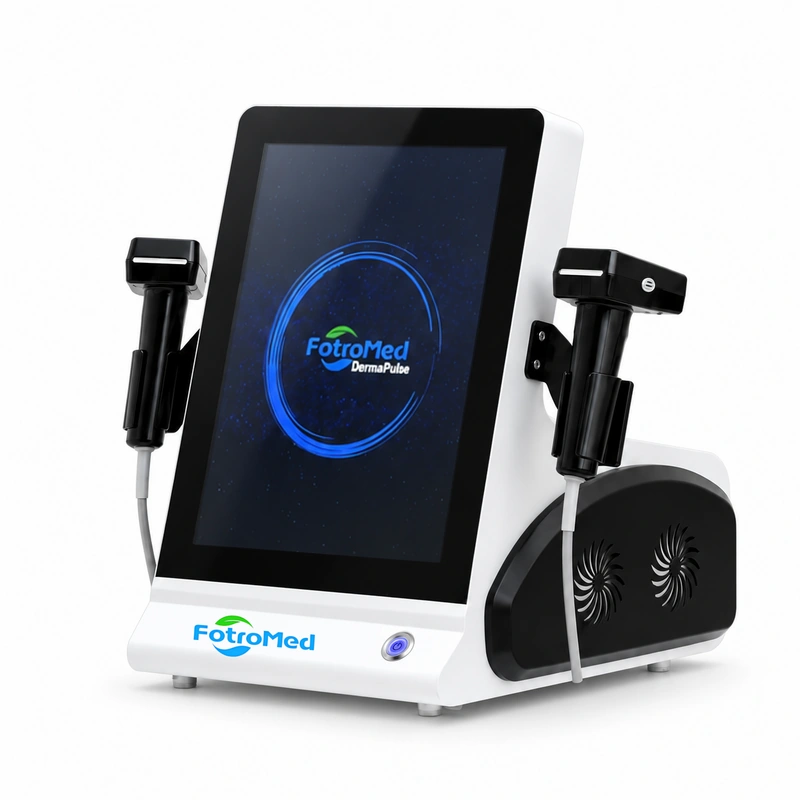
Fotromed was founded in Beijing in 2018. We began expanding our professional hifu machine line in 2020 and established an R&D center in 2021. Current operations cover factory-direct supply, multi-category purchasing, OEM/ODM projects, regional distribution partnerships, and procurement for clinic groups.
Main Products & Technical Direction
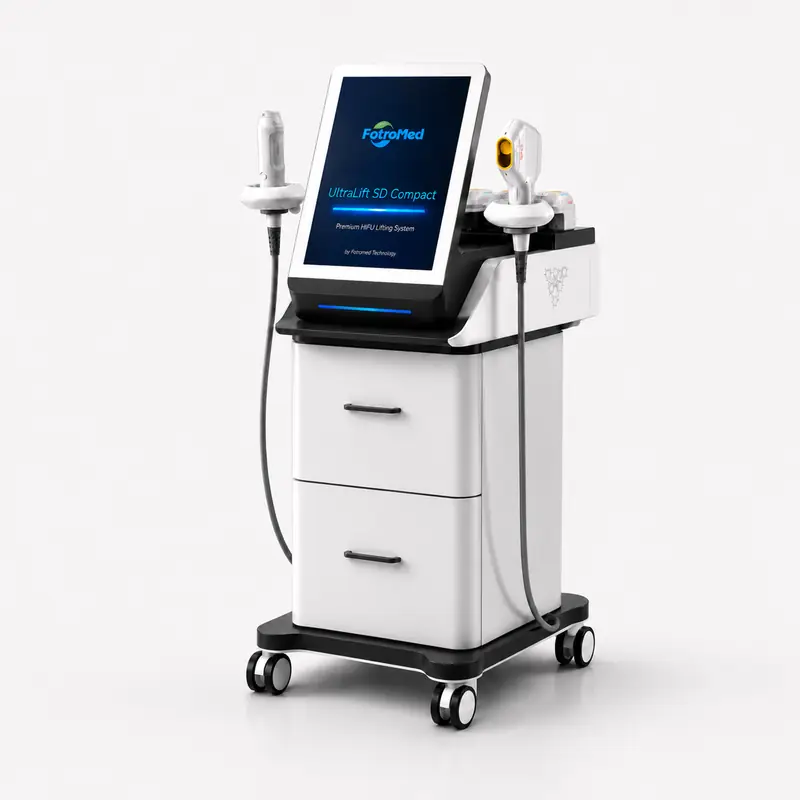
UltraLift SD Compact is Fotromed’s representative HIFU system. It adds an RF handpiece to focused ultrasound to shorten combined-care workflows and improve operating comfort. The system sits in the combined-energy, non-imaging tier, above a basic single-energy HIFU platform; image guidance is the next development step. Our catalog covers more than 95% of the common machine formats in standard HIFU inquiries, and our R&D team plans a visualization-enabled platform by the end of 2026. That project remains in development.
Manufacturing, R&D & Quality Management
We apply our ISO 13485 quality management system to product development, purchasing, assembly, inspection, nonconformity handling, and corrective action. Each OEM/ODM project needs a defined sample standard, mass-production inspection requirements, and an engineering change process. Our annual shipment volume has remained above 5,000 aesthetic devices. Before delivery, every unit goes through assembly checks, functional testing, and final shipment inspection under our quality-control and warranty procedures; any abnormal result enters the nonconformity and corrective-action process.
Markets and Customer Profile
Fotromed serves distributors, importers, private-label brands, independent aesthetic practices, clinic groups, and premium multi-location medspas. Larger medspa groups often need consistent appearance and configuration, centralized training, coordinated rollout schedules, spare-parts planning, and service across several locations. We can build product mixes, language materials, batch plans, and training arrangements around those needs, while helping distributors expand from one HIFU product into a broader aesthetic-equipment range.
OEM/ODM and Private-Label Capability
We support logo and private-label work, packaging, interface and language localization, appearance changes, and deeper ODM development when technically feasible. Common buyer pain points include differences between samples and production units, unclear ownership of artwork or molds, missing software-language deliverables, and component changes without advance notice. At project launch, we work to define the MOQ, approved sample, design ownership, permitted component changes, inspection standards, and change-notification process.
Global Supply & Training
Global supply and training are major parts of Fotromed’s operating model. Before shipment, we can help customers define the product mix, branding and language content, launch materials, sales training, operator training, and initial spare-parts plan. After shipment, support continues through troubleshooting, technical escalation, repeat-order configuration, market feedback, and engineering or quality follow-up. Our goal is to help customers build an executable aesthetic business around the equipment, including product presentation, team training, local service, and repeat purchasing.
Sincoheren
Company Overview
Beijing Sincoheren S&T Development Co., Ltd. was established in 1999, giving it one of the longer operating histories among the factory-direct companies in this list. Its business combines R&D, manufacturing, international sales, and after-sales functions across multiple aesthetic-equipment categories. Each order still needs to identify the producing entity and the quality-system scope that covers it.
Main Products & Technical Direction
3D HIFU can serve as Sincoheren’s baseline representative system, while its current HIFU catalog also includes 4D three-in-one and 5D five-in-one platforms. The technology direction extends from multi-line delivery to Radar Carving, Liposonic, and multifunction integration. The range has moved beyond early single-line HIFU and now sits in the feature-integrated, non-imaging tier, with multiple modes and combined-energy functions as its technical focus.
Manufacturing, R&D & Quality Management
Sincoheren integrates R&D, manufacturing, inspection, international sales, and after-sales within a multi-category factory structure. This can support repeat orders and cross-category sourcing. For HIFU, the relevant evidence comes from the responsible engineering team, manufacturing site, inspection plan, and applicable quality-system scope. Total catalog size only describes the range of the company.
Markets and Customer Profile
A regional distributor can use Sincoheren to combine HIFU with laser, RF, IPL, and body-contouring systems in one factory relationship. Consolidated orders and direct factory communication are the main commercial reasons to choose it. A clinic purchasing one physician-led treatment brand is solving a different procurement problem.
OEM/ODM and Private-Label Capability
The company supports OEM, ODM, and private-label cooperation across brand identity, product configuration, packaging, and other adaptations. A simple logo project and an engineering project need different samples, tooling terms, component approvals, inspection plans, and design responsibilities. The written scope needs to name which level of work is being purchased.
Global Supply & Training
International sales and distributor support cover product supply, product education, troubleshooting, and after-sales coordination. A long-term distribution program needs one agreed route for product updates, field complaints, repeat-order forecasts, and cases that require the HIFU engineering team. That communication route matters more here than the size of the overall export catalog.
ADSS
Company Overview
Beijing ADSS Development Co., Ltd. was established in July 2005. Its main business is medical-aesthetic laser and optoelectronic equipment, including diode-laser hair removal, picosecond and Q-switched lasers, CO2 lasers, IPL, and related light-based platforms. HIFU is a supporting category within this wider catalog. ADSS is therefore best evaluated as a laser-led, multi-category manufacturing and channel partner.
Main Products & Technical Direction
FG 660-D+ is ADSS’s current representative HIFU system. It uses an established replaceable-cartridge focused-ultrasound architecture for facial and body applications. The platform belongs to the mature conventional, non-imaging HIFU tier. Its operating structure and configuration are easy to understand, while its technical level remains conservative. Its commercial value comes mainly from standardized supply within a wider equipment portfolio.
Manufacturing, R&D & Quality Management
ADSS combines product development, manufacturing, inspection, and service in an integrated factory model. Its broad portfolio can support engineering reuse and bundled production. HIFU still needs its own approved sample, inspection criteria, and technical owner, especially when an OEM/ODM project changes appearance, software, or internal configuration.
Markets and Customer Profile
A regional seller may choose ADSS to source laser, light-based, and HIFU equipment through one manufacturing relationship. This reduces the number of vendors behind a broad aesthetic catalog and leaves room for private-label or channel projects. A physician-led clinic purchasing one tightly controlled HIFU treatment brand will usually begin with a clinical-brand company.
OEM/ODM and Private-Label Capability
ADSS offers OEM and ODM work covering branding, interface localization, appearance, packaging, and project-specific development. An existing-platform private label is a different job from one that changes engineering or tooling. The production agreement needs to record the approved sample, permitted substitutions, artwork and mold ownership, inspection standards, product-change notice, and responsibility for local documents.
Global Supply & Training
ADSS supports international distribution with product education, marketing resources, technical service, and complaint-handling routes. Its business school and optoelectronic training center give channel development a dedicated support structure. The distributor agreement still needs a clear division between local training and repair work and cases that return to the manufacturer.
HUIMAIN
Company Overview
HUIMAIN’s development timeline begins with investment and product work from 2013 to 2016, followed by the brand launch in Guangzhou in 2017. The company moved into a 3,000-square-meter factory in 2019 and established a mold facility in 2022. The 2017 milestone is the brand-launch date. Legal incorporation should be verified from company registration records and the entity named in the contract.
Main Products & Technical Direction
HI-8D HIFU is the representative system. Its product route includes single- and multi-line delivery, multiple frequencies, dual handpieces, and a 360-degree line-sculpting mode. This is a feature-complete, high-throughput non-imaging platform above basic single-line HIFU. “8D” is a manufacturer model label; the technical value comes from line output, mode switching, and energy control.
Manufacturing, R&D & Quality Management
HUIMAIN’s move to a larger factory in 2019 and establishment of a mold facility in 2022 support in-house production and appearance-development work. These assets matter most in private-label projects that need enclosure changes. The contracting entity, production address, quality documents, sample standard, and change-control process need to refer to the same project.
Markets and Customer Profile
A startup equipment brand can use HUIMAIN for localized branding, smaller opening orders, and a catalog that expands across several device categories. The factory and mold capability are more useful to this buyer than an established treatment name. Physician-led clinics purchasing a premium clinical brand will normally follow another route.
OEM/ODM and Private-Label Capability
HUIMAIN supports product design, private labeling, packaging, configuration, and enclosure development. Its mold capability can support appearance-led projects, while the production model can move from smaller batches toward larger orders. The project scope needs to separate standard parts from new tooling and state who owns the final design, approves samples, and controls later component or software changes.
Global Supply & Training
Export support includes manuals, training videos, one-to-one remote guidance, spare-parts coordination, and marketing or training materials. Private-label partners use these resources to support local customers under their own name. Language coverage and the division of first-response work between the local brand and HUIMAIN are the main service questions.
Goodway
Company Overview
Goodway traces its operating origins to the early 2010s. Its brand story places the founding team in 2009 and formal company establishment in 2015; its manufacturer profile uses 2010 as the founding year. This article retains both timelines. The legal entity on the contract needs to match the manufacturing address, quality documents, bank account, and party responsible for the order.
Main Products & Technical Direction
GW-12D MAX is the representative HIFU system. It uses dual output, an NP multi-point line mode, Superpulse ultrasound, and separate face and body handpieces to extend treatment workflow. This is a mid-tier, feature-integrated non-imaging platform with more delivery options and higher throughput than traditional single-line equipment. “12D” is a product label and does not define a technical generation by itself.
Manufacturing, R&D & Quality Management
Goodway positions its operation around factory production, laboratories, and OEM/ODM development. Because its company pages use different dates, the contracting entity, manufacturing address, quality-system documents, and bank beneficiary deserve more attention than the brand timeline alone. For HIFU, the approved sample and named engineering owner provide the clearest project-level reference.
Markets and Customer Profile
Goodway’s typical project combines multi-category sourcing with factory customization for a wholesaler, regional distributor, importer, or private-label brand. Its export story includes Japan, Europe, and the United States, and the commercial model assumes that the local partner can handle branding, sales, training, and first-line service. A clinic seeking a turnkey premium treatment name will usually compare brand-led companies first.
OEM/ODM and Private-Label Capability
Goodway supports OEM, ODM, branding, packaging, and wholesale production. A logo project does not require the same work as a new enclosure, interface, or internal configuration. The order process needs to identify sample approval, artwork and mold ownership, permitted component changes, inspection criteria, quality-system scope, and notice of later design or supplier changes.
Global Supply & Training
Export sales, product guidance, and technical support are available for channel partners. A private-label buyer becomes the visible brand in its own market, so it needs training files, a defined troubleshooting boundary, spare-parts planning, complaint feedback, and access to the factory when local support reaches its limit.
Winkonlaser
Company Overview
Beijing Winkonlaser Technology Limited was founded in 2012. The company combines R&D, production, overseas sales, warehouse support, and distributor cooperation across a multi-category aesthetic-device range. Its export model connects the quoted product, producing entity, warehouse, and regional partner; those roles can belong to different parts of the supply chain.
Main Products & Technical Direction
HU700 is Winkonlaser’s representative platform, integrating HIFU, Liposonix, intimate-care functions, and microneedle RF in one workstation. Platform breadth is high and supports several service categories. Its HIFU subsystem uses multi-depth cartridges and remains on a conventional non-imaging control path, while the multifunction integration is more recent.
Manufacturing, R&D & Quality Management
Winkonlaser combines R&D and production with export warehouses and channel operations. This can shorten commercial response times, but manufacturing and regional fulfillment remain separate responsibilities. For HU700, the production site and its quality system control the product; the warehouse controls local stock and delivery.
Markets and Customer Profile
A regional distributor may use Winkonlaser to combine a broad device catalog with overseas stock and local customer service. That model can shorten delivery and parts response within a territory. A physician-led clinic buying one established treatment brand is unlikely to use the warehouse network in the same way.
OEM/ODM and Private-Label Capability
The company offers OEM, ODM, logo, packaging, exterior or casing changes, interface customization, wholesale, and private-label cooperation. Branding, interface, enclosure, and engineering work form separate scopes. The commercial agreement needs to assign samples, design ownership, molds, software languages, component approval, inspection, product-change notice, territory, and documentation responsibilities.
Global Supply & Training
Winkonlaser’s channel network includes warehouse arrangements in China, the United States, France, and Turkey. Distributor support can include manuals, training videos, live online training, marketing materials, territorial cooperation, and spare-parts coordination. The distinctive issue is the warehouse boundary: local stock and basic service may sit close to the buyer, while repairs and product changes can still return to the factory.
HIFU Manufacturer Comparison Table
| Manufacturer | Founded | HQ | Positioning | HIFU | Route | Best for | Price |
|---|---|---|---|---|---|---|---|
| Merz Aesthetics | 1908 | Germany | Premium clinical brand | Ultherapy PRIME | Authorized channel | Physician clinics | $$$ |
| Classys | 2007 | South Korea | Professional manufacturer | Ultraformer MPT | Branded distribution | Clinics, groups | $$$ |
| Hironic | 2008 | South Korea | Branded manufacturer | New Doublo 2.0 | Branded distribution | Clinics, distributors | $$$ |
| Jeisys Medical | 2004 | South Korea | Technology company | LinearZ | Branded distribution | Clinics, groups | $$$ |
| Asterasys | 2015 | South Korea | Clinical-device brand | Liftera 2 | Branded distribution | Clinics, distributors | $$$ |
| Newpong | 2015 | South Korea | Ultrasound company | LINCURVE PRO | B2B partnerships | Clinics, distributors | $$$ |
| Fotromed | 2018 | Beijing, China | Factory-direct/OEM | UltraLift SD Compact | OEM/ODM, private label | Distributors, private-label buyers, clinics, medspa groups | $$ |
| Sincoheren | 1999 | Beijing, China | Multi-category factory | 3D HIFU | OEM/ODM | Distributors, catalog buyers | $$ |
| ADSS | 2005 | Beijing, China | Laser/multi-category factory | FG 660-D+ | OEM/ODM, distribution | Distributors, clinic groups | $$ |
| HUIMAIN | 2017 | Guangzhou, China | Factory-direct/OEM | HI-8D HIFU | OEM/ODM, private label | Private labels, value buyers | $ |
| Goodway | 2010 | Guangzhou, China | OEM/ODM manufacturer | GW-12D MAX | Wholesale, private label | Wholesalers, brand projects | $ |
| Winkonlaser | 2012 | Beijing, China | Factory/channel partner | HU700 | OEM/ODM, distribution | Regional distributors, private labels | $ |
Note: Merz uses the parent-group year, HUIMAIN the brand year, and Goodway the 2010 company timeline. $, $$, and $$$ indicate relative procurement levels; configuration, training, documentation, and service determine the final quotation.
Which Company Fits Each Buyer Type?
The table provides a first-pass shortlist. Start by comparing companies that use the same commercial model, then request matched quotations with equivalent product scope, training, documents, consumables, and service. Mixing a premium clinical-brand package with an entry-level private-label package can distort both price and support comparisons.
| Buyer need | Companies to compare first | Why | Facts to confirm |
|---|---|---|---|
| Physician clinic | Merz Aesthetics, Classys, Hironic, Asterasys | Established brands and education | Local training, repairs, and documents |
| Medspa or aesthetic clinic | Classys, Jeisys Medical, Fotromed, Sincoheren | Supply, training, and budget choice | Staff training, parts, and total cost |
| Distributor or importer | Fotromed, Sincoheren, ADSS, Winkonlaser | Factory access and repeat supply | Legal entity, lead time, and territory |
| OEM/ODM or private label | Fotromed, Sincoheren, HUIMAIN, Goodway | Private label and engineering | MOQ, sample, and design ownership |
| Multi-location group | Classys, Jeisys Medical, Fotromed, ADSS | Standardized rollout and batch control | Configuration, training, parts, and upgrades |
Physician-Led Clinics
Physician-led clinics should begin with Merz Aesthetics, Classys, Hironic, and Asterasys when established product positioning, professional education, and an authorized local channel are central to the purchase. Reduce the list to companies with an active seller, qualified trainer, clear repair route, and suitable product documentation in the clinic’s market.
Distributors and Private-Label Buyers
Distributors, importers, and private-label buyers should start with Fotromed, Sincoheren, ADSS, and Goodway. Compare the legal entity, producing factory, customization depth, territory, sample process, inspection standard, design ownership, and repeat-supply plan. These fields reveal the practical difference between a logo project, a localized private label, and a deeper ODM program.
Medspas and Multi-Location Groups
Medspas and clinic groups need consistent configurations, repeatable staff training, coordinated rollout, spare-parts planning, and a service path that works across locations. Classys, Jeisys Medical, Fotromed, and ADSS can enter the first comparison. Premium medspa chains can examine Fotromed for consistent batches, localized materials, centralized training, and phased deployment across sites.
Conclusion
There is no single best HIFU machine manufacturer for every buyer. Merz Aesthetics, Classys, Hironic, Jeisys Medical, Asterasys, and Newpong are logical starting points for buyers seeking a defined clinical brand and professional channel. Fotromed, Sincoheren, ADSS, HUIMAIN, Goodway, and Winkonlaser are more relevant when factory access, OEM/ODM, private labeling, catalog breadth, and distributor economics are central.
The strongest shortlist is the one that matches the commercial task. First decide whether you are buying a branded clinical ecosystem or building a supply and distribution program. Then compare company continuity, quality management, factory control, customization depth, target-market documents, training, and long-term support.
Future Trends in HIFU Machine Manufacturing
A Southeast Asian distributor was initially impressed by a supplier’s specification sheet advertising “9 lines, 12 heads, and more than 20 treatment modes,” and signed an initial distribution agreement. Customer feedback during the first few months was positive. From the second order onward, probe output began to vary noticeably, and some batches failed to reach the promoted performance. Lead times for replacement cartridges and spare parts stretched from the promised two weeks to six to eight weeks, while the interface-language version differed from the first shipment. Within six months, the distributor was maintaining two operating manuals, complaints were increasing, and the product line was abandoned in favor of a supplier willing to sign batch-consistency terms.
Fotromed evaluates HIFU projects through product control and delivery. A larger D label or a longer mode list does not answer whether energy output stays stable, treatment depths are clearly defined, or operators can repeat the same workflow after training. Distributors face a different test: the next batch must match the approved sample, cartridges and parts must remain available, localized interfaces must stay consistent, and product changes must be recorded.
Visualization and combined-energy platforms are two active engineering directions. A 2025 systematic review and meta-analysis of MFU-V documents the clinical evidence accumulated around visualized microfocused ultrasound. A 2025 randomized split-face study of MFU combined with microneedle RF and the MFU and RF platform shown by HIRONIC at IMCAS Asia 2026 examine or apply layered treatment with more than one energy type. These examples do not prove that every combined platform is technically advanced. The design still has to control energy, software logic, treatment order, safety boundaries, and operator training.
In Fotromed projects, the purchasing discussion now covers the manufacturing entity, quality system, model documents, consumable supply, and local service alongside unit price. OEM/ODM scopes also extend beyond a logo: sample approval, version control, quality traceability, and later upgrades all affect repeat orders. A supplier that cannot keep those records and responsibilities connected will be difficult to support after the first shipment.
FAQ
What Is the Difference Between a HIFU Manufacturer, Supplier, Brand, and Distributor?
A manufacturer controls or directly manages production. A brand owns the market identity and product proposition. Production may be completed internally or through a partner factory. A supplier sells equipment and may be a factory, exporter, wholesaler, or service company. A distributor represents products within an agreed territory and often provides local sales, training, and support. Ask which legal entity manufactures the machine, which entity appears on product documents, and which party is responsible after delivery.
Which HIFU Manufacturers Offer OEM or Private-Label Services?
Fotromed, Sincoheren, ADSS, HUIMAIN, Goodway, and Winkonlaser offer OEM, ODM, or private-label cooperation at different depths. Logo and packaging are entry-level customization. Interface localization, enclosure design, engineering changes, and jointly developed models require deeper development. Buyers should request a written scope, MOQ, sample process, tooling ownership, change-control procedure, and responsibility for technical files.
Why Does ISO 13485 Matter When Choosing a HIFU Manufacturer?
ISO 13485 is a quality-management standard for organizations involved in medical-device design and manufacturing. At manufacturer level, it can provide a framework for document control, supplier management, production, inspection, nonconformities, corrective action, and traceability. For distributors that need consistent repeat orders, it gives useful evidence of long-term production discipline. A generic quality logo provides no equivalent system detail.
Is ISO 13485 Alone Enough to Prove a Supplier Is Reliable?
ISO 13485 has a defined and limited role. Confirm the certificate holder, issuing body, validity, covered address, and scope, then compare those details with the factory and legal entity named in the quotation and product documents. Product-specific market access requires separate evidence for the exact model and country. Product sampling, factory assessment, inspection, training, and contract terms remain necessary.
How Can Buyers Verify That a HIFU Supplier Owns or Controls a Factory?
Match the business license, factory address, QMS certificate, product labeling, and bank beneficiary. Ask for a live video walkthrough or an on-site audit that follows the actual production flow from incoming inspection through assembly, testing, final inspection, packaging, and warehouse release. A third-party inspection can then check the approved sample, quantity, labeling, accessories, and agreed tests before shipment.
Should Clinics and Distributors Choose the Same Type of HIFU Company?
The priorities differ. A clinic buying a small number of systems may prioritize a ready-to-use platform, local training, and a clear service route. A distributor or private-label buyer must also evaluate manufacturing control, MOQ, margin structure, territory, documentation, design ownership, repeatability, and technical escalation. One company may serve both groups through separate contracts and support models.