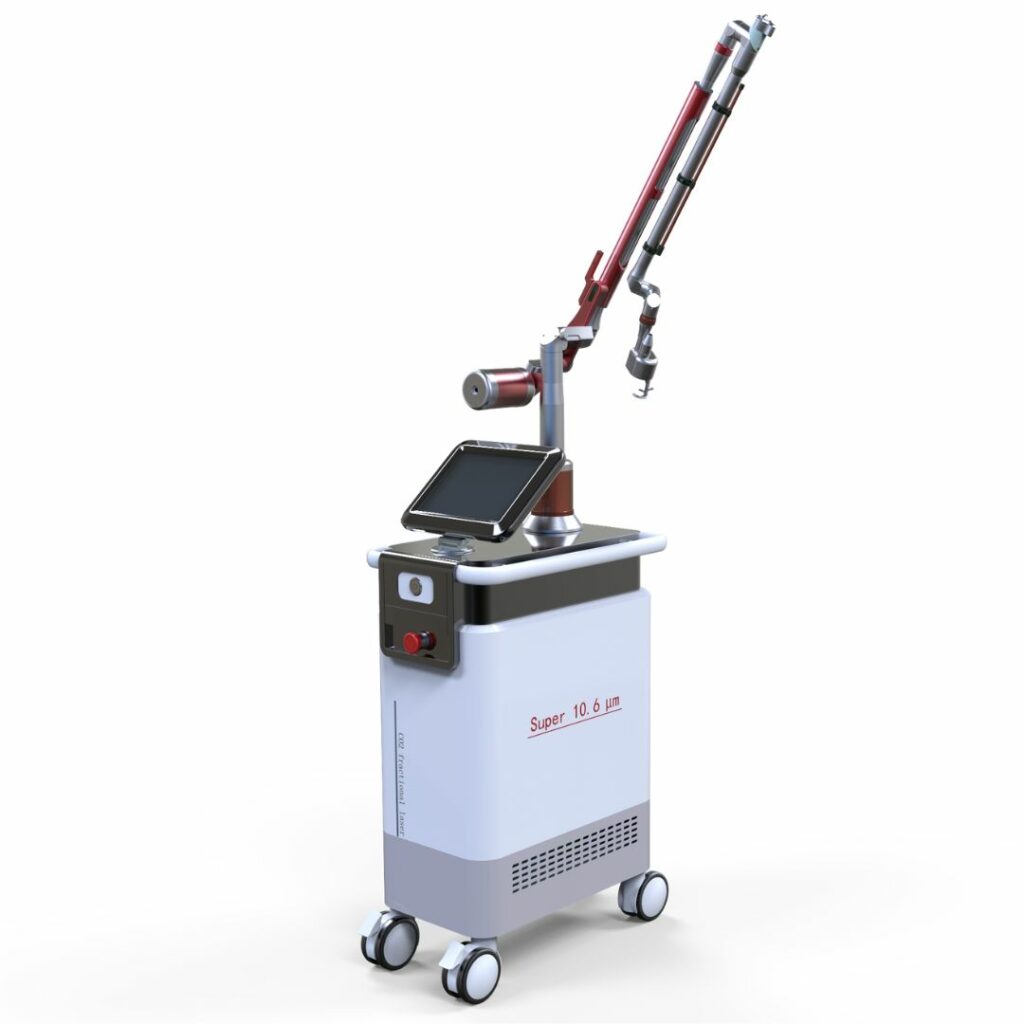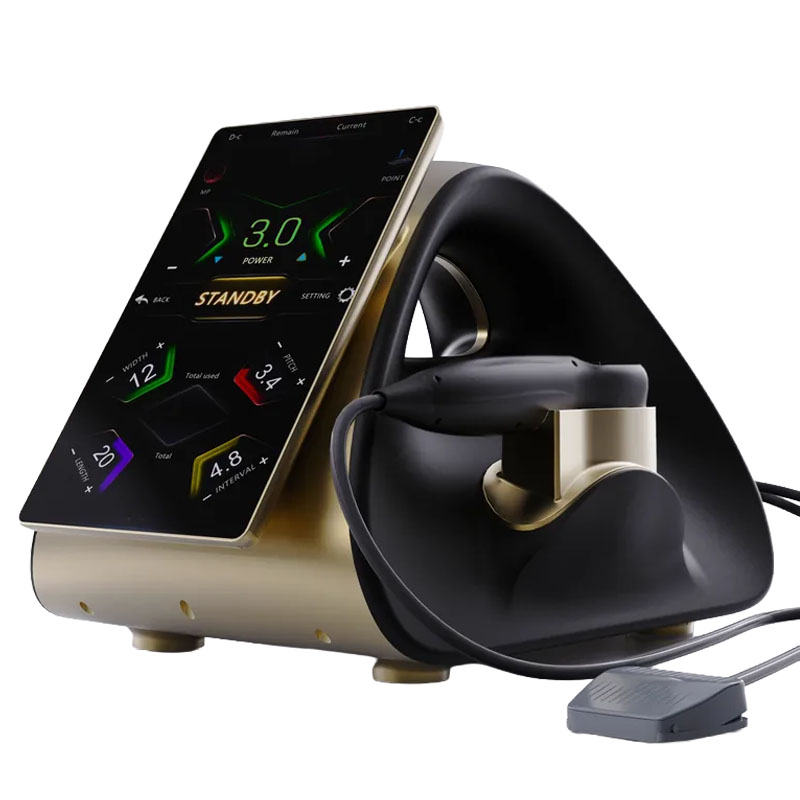

HIFU results develop gradually after treatment. Depending on the area and plan, you may notice a firmer look, a clearer jawline, less visible looseness under the chin, or a subtle lift in the cheeks or brow. Early changes may appear within a month, while about three months is a more useful point for judging the result.
HIFU suits people who want gradual improvement in mild to moderate looseness and are not currently considering surgery. The usual result is a moderate change in firmness and contour. If you want a more noticeable lift, compare other options during the consultation.
This guide explains the HIFU before-and-after process from a machine manufacturer’s perspective. It covers what may change in each area, what recovery can feel like, when results may appear, how long they may last, and why the machine, treatment plan, and your starting condition all matter.
What changes can HIFU before and after show?
HIFU directs focused ultrasound energy below the skin surface and creates controlled heating at selected depths. The tightening response develops gradually, so the final result is usually assessed after several weeks or months.
For the lower face, look at jawline definition and firmness under the chin. For the cheeks, compare contour and looseness. Brow treatment usually focuses on a small lift. The useful comparison follows the treatment area.
Manufacturer note
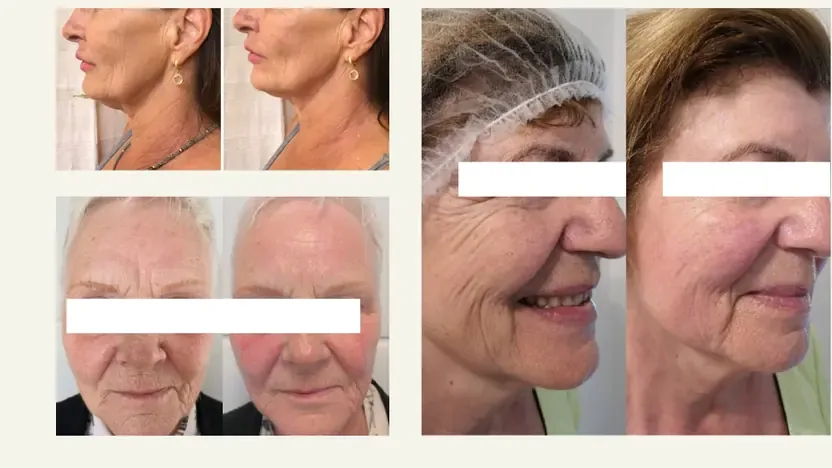
We generally advise clinics to photograph clients against a white or plain light background, with similar lighting, camera angle, and distance each time. Marking where the client stands also helps. Even small changes in position or light can change facial shadows, making the treatment result harder to compare.
These three examples place different face and neck changes together, making contour and looseness easier to compare. Treatment area, follow-up time, and starting looseness add the context needed to read the result.
HIFU results by treatment area
Different areas call for different comparisons. Start with the same treatment area, then check whether the device and plan are similar.
| Treatment area | Changes you may look for |
|---|---|
| Face and cheeks | A firmer look and a modest change in cheek or lower-face contour. Facial hollowing is a volume concern and needs a separate assessment. |
| Jawline and under the chin | A clearer transition between the lower face and neck, with less visible looseness in suitable candidates. |
| Neck | A tighter-looking neck contour. Deep folds or marked excess skin are less likely to change dramatically. |
| Brow | A small lift may be visible. In one prospective face-and-neck study, the brow change was smaller than the change under the chin and was not sustained as clearly at 180 days. |
| Body areas | Some devices and studies address skin firmness and local contour in areas such as the lower abdomen or thigh. Weight-loss goals require a different approach. |
A 25-person prospective study found the most noticeable lift under the chin at 90 days, while brow improvement was smaller. Another 32-person study reported improved elasticity and appearance at 12 weeks after treating the cheek, lower abdomen, or thigh. Together, the studies show why the treatment area determines which changes are worth watching.
HIFU recovery and results timeline
After HIFU, many people ask the same question: “When will I see the result?”
Recovery and visible change happen on different timelines. During the first few days, you are more likely to notice how the treated skin feels. A firmer look and a change in contour usually take several weeks or months to develop.
Drawing on our experience with HIFU equipment and clinic training, the stages below explain what you may notice and how to follow your progress.
| Time after treatment | What you may notice |
|---|---|
| Same day to 48 hours | Temporary redness, localized swelling, tenderness, or warmth can occur. An immediate tighter look may partly reflect this short-term response. |
| Days 3 to 7 | Redness and swelling often settle. Tenderness or muscle soreness can remain for several days. |
| About 2 to 4 weeks | The early reaction should be largely settled in an uncomplicated recovery. Subtle contour change may start to become easier to see. |
| Around 3 months | This is a useful checkpoint for judging tightening and contour change. Two recent facial studies found their strongest measured response around this point. |
| Around 6 months | A later comparison can show whether the visible result has remained or continued to change after the three-month review. |
| 9 to 12 months | Some study participants still had measurable improvement at later visits, which helps show how results may hold over time. |
Same day to 48 hours: focus on recovery first
Right after HIFU, the treated area may look slightly red or feel warm, tight, or sensitive to touch.
You may be tempted to check the mirror straight away and ask whether the area has already lifted. At this stage, what you see mainly reflects the skin’s immediate response to treatment. It is too early to judge the main result.
Focus on recovery and follow the aftercare advice from your clinic. Keep any before and after photographs. Later, photos taken in similar lighting and from the same angle will make real changes easier to see.
Days 3 to 7: give the skin time to settle
For most people, short-term discomfort gradually eases during the first week.
There is no need to judge the result yet. HIFU delivers focused energy to a planned depth, followed by a gradual repair response that contributes to a firmer appearance over time.
At this stage, pay attention to how the area is recovering instead of looking for a dramatic change every day. Early changes can be subtle and are often easier to spot when photographs are compared after a longer interval.
About 2 to 4 weeks: early changes may appear
At around one month, some people begin to notice small changes in facial contour.
Compare the area you originally wanted to improve. If your main concern was the jawline, look at the jawline. If it was cheek laxity, look at whether the cheek contour appears firmer.
During this period, the change is usually gradual. You may notice a clearer contour or skin that looks a little firmer, rather than a sudden, dramatic difference.
Around 3 months: review the overall change
Three months is a useful time to assess the main change after one HIFU treatment.
When we train clinics, we recommend taking another set of consistent photographs at this stage and comparing them with the baseline record. Return to the original treatment goal and look at the area that mattered to you, instead of asking only whether the whole face looks younger.
For example, check whether the jawline looks clearer, the lower face appears firmer, or cheek laxity has improved.
Use the three-month review as an important checkpoint for facial firmness and contour change.
Around 6 months: see whether the change is holding
At around six months, you can check whether the change seen earlier has held.
Comparing the baseline, three-month, and six-month photographs together gives you a clearer picture than looking at one image on its own.
Also consider changes during the same period, such as weight fluctuation, other aesthetic treatments, or a different skincare routine. These can all affect how the final appearance looks.
9 to 12 months: record the longer-term result
If you want to follow the longer-term change after HIFU, continue taking notes and photographs through months nine to 12.
The pace and duration of change are different for each person. The treatment area, device plan, and starting skin condition all play a part.
Keep a record of your own treatment rather than applying one online case to yourself. A sequence of your own photographs and treatment notes is usually the most useful reference.
What to expect before, during, and after HIFU
Fotromed training workflow
Fotromed’s customer training covers more than switching on the machine. We connect consultation, standardized photos, room and device setup, treatment planning, handpiece selection, area-by-area delivery, skin checks, treatment records, aftercare, and follow-up. The sequence below shows what a consumer should see when a trained clinic turns those steps into one organized appointment.
Many people focus on HIFU before and after results, although the final change depends on more than the device. A well-organized HIFU appointment includes an assessment, treatment planning, the procedure itself, and records for later review.
Knowing what happens at each stage can help you judge whether a clinic follows a professional process.
Before treatment: assess the skin and prepare a plan
Before treatment starts, the provider should ask what you want to improve, such as the lower-face contour, jawline, or laxity across the face and neck.
The provider will also look at the current condition of your skin and take baseline photographs for later comparison.
These photographs matter because HIFU changes tend to develop gradually. Without a consistent baseline image, small differences can be hard to judge from your day-to-day reflection in the mirror.
The provider then selects a treatment plan for your skin and treatment area, including the target depth, the zones to be treated, and the matching treatment head.
During treatment: work through the planned zones
The provider normally applies ultrasound coupling gel to the target area so the treatment head stays in good contact with the skin.
HIFU is planned by area rather than applied evenly over the whole face. The lower face, face and neck, and cheek areas have different concerns, so the treatment approach can also be different.
During the session, the operator can adjust the treatment based on the device display, the area being treated, and how you feel. The clinic should record the treatment head, settings, and coverage so the same information is available at follow-up.
After treatment: record recovery and follow longer-term change
Once the session is finished, the provider normally cleans the skin and records how the treated area looks that day.
Some people experience temporary redness, warmth, or mild sensitivity after treatment. These are commonly reported short-term responses.
The main HIFU change does not appear all at once on the day of treatment. Follow-up photographs and review appointments are used to track changes in firmness, contour, and skin condition over time.
Complete treatment records help the clinic follow your progress and make better decisions about aftercare or a future treatment plan.
How many HIFU treatments are needed, and how long do results last?
From our experience working with HIFU equipment and training clinics, facial HIFU usually starts with one complete treatment, followed by the main review at around three months. By then, changes in firmness and contour are easier to assess, and the clinic can discuss whether another treatment would be useful.
If the first treatment has met your goal, you can continue to observe the result. If certain areas still need attention, the clinic should reassess your original goal, skin condition, treatment area, and previous treatment record before recommending an additional session. This approach is more personal than fixing a package of two or three sessions from the start.
A common period for observing how the result holds is six to 12 months. The treatment area, device plan, starting laxity, age-related changes, weight, daily habits, and natural aging can all affect the duration.
In our clinic training, we recommend keeping photographs and treatment records from before treatment, around three months, six months, and later when needed. The decision about another session can then be based on the same person’s progress over time, rather than a fixed package or an online case.
Why HIFU results differ from person to person
Two groups of factors explain much of the variation: the machine and treatment plan, and the person’s starting condition.
Machine and treatment-plan differences
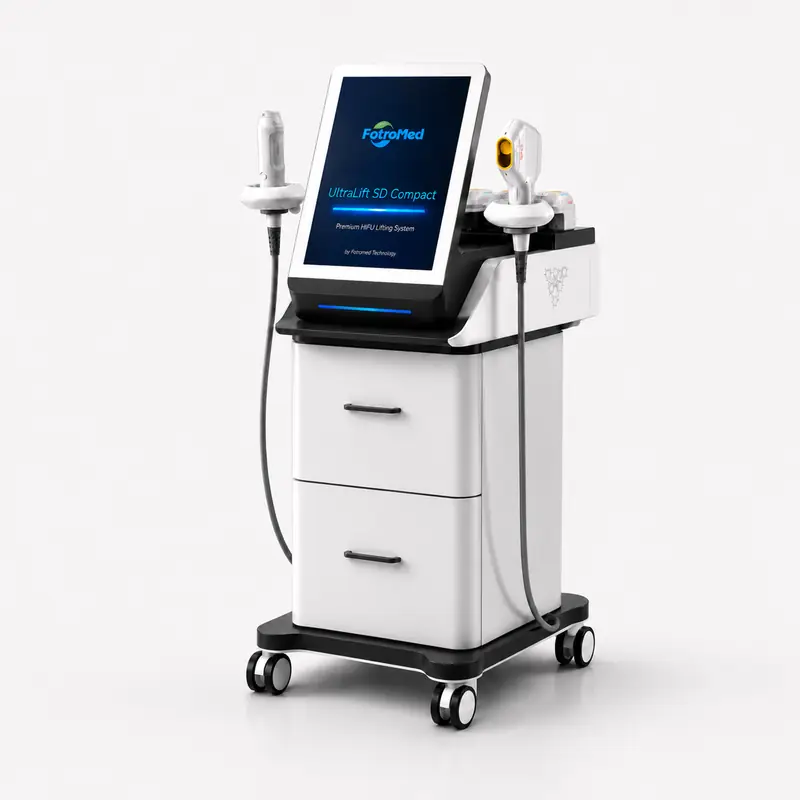
Treatments sold under the HIFU name can use different handpieces or cartridges, focal depths, energy settings, treatment-line counts, coverage patterns, and imaging functions. These choices affect where and how energy is delivered. Cases become more useful when the machine and plan are close to the treatment being considered.
Ask for the exact device, treatment area, planned depths or cartridges, and number of sessions in the quote. Fotromed’s 7D HIFU machine guide explains why handpieces, focal depths, and application ranges matter when a clinic uses the term 7D HIFU.
Individual skin and facial differences
Starting looseness, tissue thickness, facial structure, fat distribution, age-related change, and the exact position of the concern all affect the visible starting point. A prospective study found that the measured response differed by facial area and by facial morphology. An earlier retrospective study did not find age or skin type alone to predict improvement, so a similar age or complexion is not enough to expect the same result.
Medical history, previous or simultaneous treatments, weight change, and skincare changes may also affect the plan or how a before and after result is interpreted. A qualified provider should assess these factors in person.
HIFU benefits, limitations, and safety
The main appeal of aesthetic HIFU is the possibility of gradual tightening without an incision and with a shorter visible recovery period than surgery. It can suit someone who wants a moderate change and accepts that the result develops slowly.
HIFU mainly addresses mild to moderate looseness and local contour. Marked skin laxity, facial volume loss, and weight concerns need other treatment options. Higher energy is not automatically better; the provider should select settings for the area and tissue condition.
Clinical studies describe short-term redness, swelling, tenderness, and pain. FDA guidance for aesthetic focused-ultrasound systems also lists risks such as thermal injury, mechanical injury, ocular injury, inflammation, electrical shock, and use error. Contact the clinic or a doctor promptly if pain keeps getting worse, blisters appear, or the skin develops an obvious abnormal change.
HIFU before and after FAQ
How long after HIFU do you see results?
Early changes may become visible within two to four weeks. Around three months is a more useful checkpoint in facial studies, with a later comparison at six months. Timing varies with the device, area, plan, and individual response.
What changes can HIFU make to the face?
HIFU may create a firmer appearance and improve definition along the lower face and jawline. It may also reduce the look of mild looseness under the chin or produce a small lift in the cheek or brow. The usual aim is a moderate, gradual change.
Is one HIFU session enough?
One-session studies have reported measurable improvement. The device, treatment area, starting condition, goal, and response at follow-up all shape the next step in the plan.
How long do HIFU results last?
The studies cited here report results at three and six months, and one prospective study observed some improvements through 12 months. Scheduled reviews show how the result is holding for you.
What should be avoided after HIFU?
Follow the instructions for the exact device and the aftercare advice from your provider. Contact the clinic or a doctor if a symptom concerns you, persists, or gets worse.
Is HIFU worth it?
HIFU is worth discussing if you want gradual, moderate tightening without surgery. During the consultation, confirm the treatment area, device, session count, recovery time, expected change, and cost.
Questions to ask at a HIFU consultation
Bring these questions to the consultation so you can connect the advertised result with the treatment actually being offered:
- Which exact device and treatment heads will be used?
- Which area is being treated, and what change is realistic for my starting condition?
- How many sessions are included, and when will the result be reviewed?
- What short-term reactions are expected, and which symptoms require contact with the clinic?
HIFU before and after photos become more useful when the treatment area, timeline, plan, and expected size of the change all match the consultation.
References
- Prospective study of facial tightening, recovery, and 12-month follow-up
- Prospective study of mid- and lower-face recovery and outcomes
- Prospective study of face and neck outcomes at 90 and 180 days
- Prospective study of cheek, lower-abdomen, and thigh treatment
- Retrospective study of factors associated with face and neck improvement
- FDA guidance for aesthetic focused-ultrasound systems
- Microfocused-ultrasound complications case series
- Full-face and neck microfocused-ultrasound mapping and treatment-planning protocol
- Standard operating protocol for energy-based aesthetic devices and treatment records