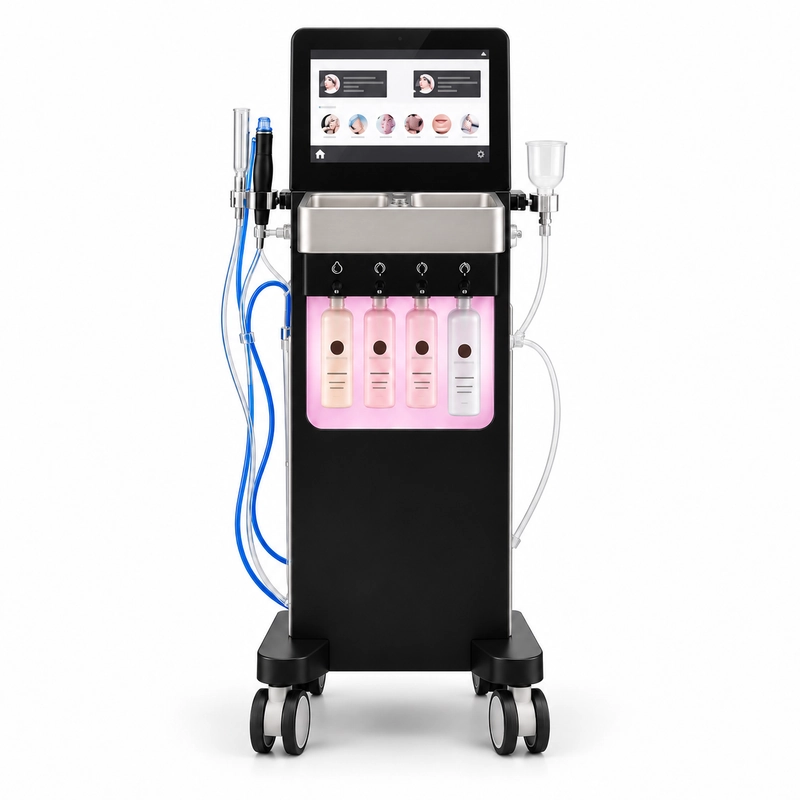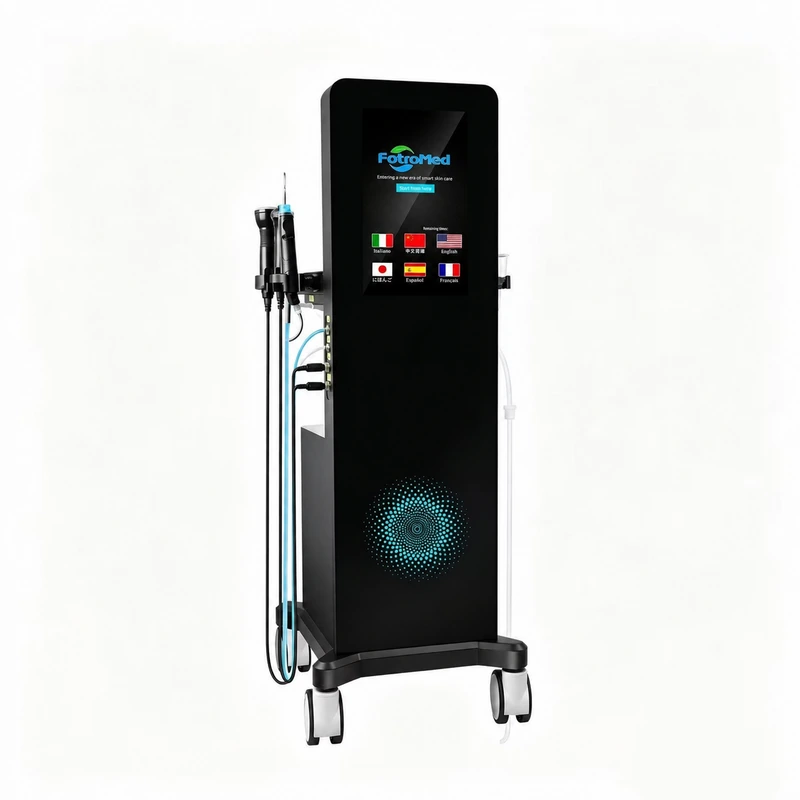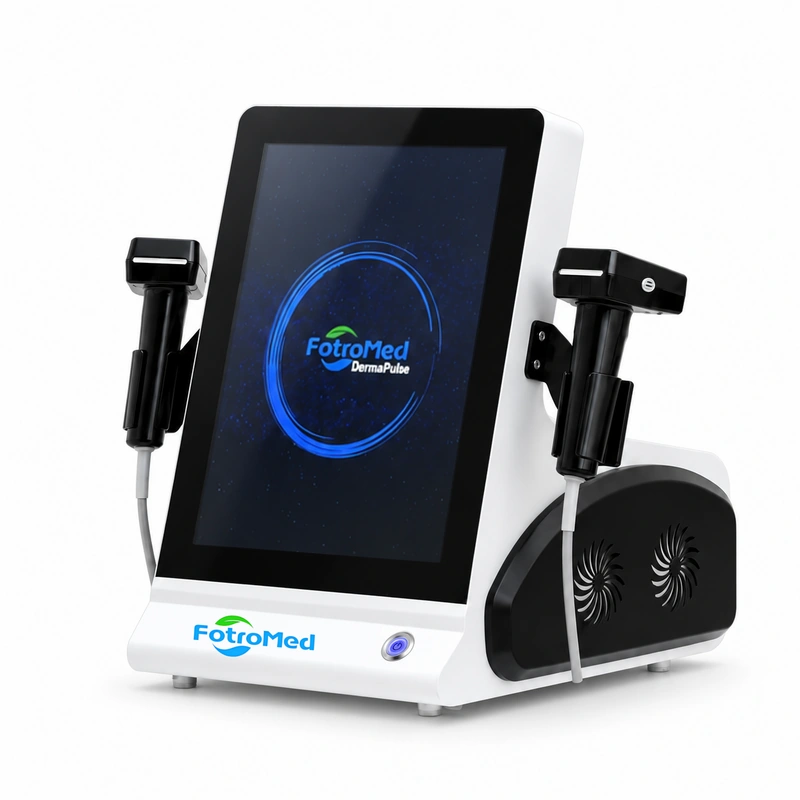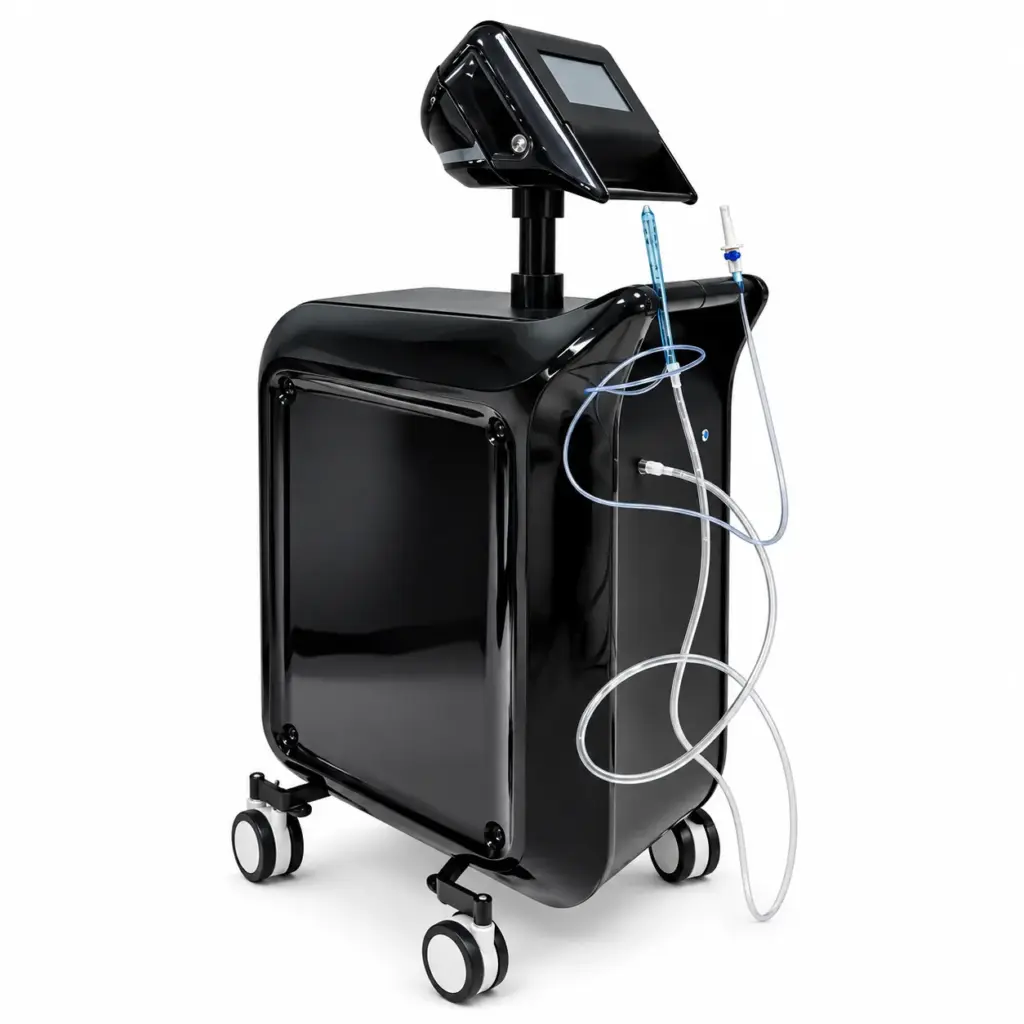

In July 2026, a Melbourne salon owner contacted Fotromed after buying a “9D” high-intensity focused ultrasound (HIFU) machine advertised at US$2,680. Six handpieces were promised, but only four arrived. The machine repeatedly failed to recognize two cartridges, and some advertised radiofrequency (RF) functions had no matching hardware. She had spent US$450 promoting the service and had to cancel six appointments.
Our engineers identified mismatches between some handpieces and the main unit. With original parts and technical documentation unavailable, she ultimately replaced it with a US$3,580 facial HIFU system.
Choose a professional HIFU machine by matching cartridge depths, tay khoan, and energy options to your treatment menu. Then check package contents, cartridge costs, actual device testing, đào tạo, và hỗ trợ nhà cung cấp.
This guide is for aesthetic clinics adding HIFU, beauty salons expanding facial rejuvenation services, skin care centers complementing existing IPL or RF treatments, multi-location groups standardizing equipment, and beauty equipment brands exploring OEM/ODM partnerships. It explains facial and body cartridge depths, D labels, handpiece compatibility, and purchase and treatment costs.
Bài học chính
- Assess facial lifting, body skin tightening, and localized fat reduction as separate treatment goals, each with its own equipment requirements.
- Compare cartridge depth together with the focusing design, tay khoan, delivery modes, and energy types built into the machine.
- Compare SD Compact’s MFU and combined MFU/RF handpieces against your priorities for treatment speed, sự thoải mái của khách hàng, and daily workflow.
- Calculate cartridge costs using the machine’s actual counting unit, and include every cartridge used in the treatment.
Compare facial and body cartridges separately
Professional HIFU machines focus ultrasound energy at selected tissue depths to produce localized heating. Facial microfocused ultrasound (Nhà máy) uses small focal zones to trigger collagen contraction and remodeling. Tần số vô tuyến (RF), used on some combined platforms, heats tissue with high-frequency electrical current.
A HIFU cartridge is a replaceable ultrasound transducer used with a compatible handpiece. Its nominal focal depth is the distance below the skin surface where it is designed to concentrate energy.
Facial and body configurations need to suit different tissue targets, khu điều trị, and contours. Assess handpiece contact around the cheeks, đường viền hàm, and area under the chin, known as the submental area. For larger areas such as the abdomen and thighs, also consider energy distribution and treatment coverage.
Match focal depth to the treatment goal
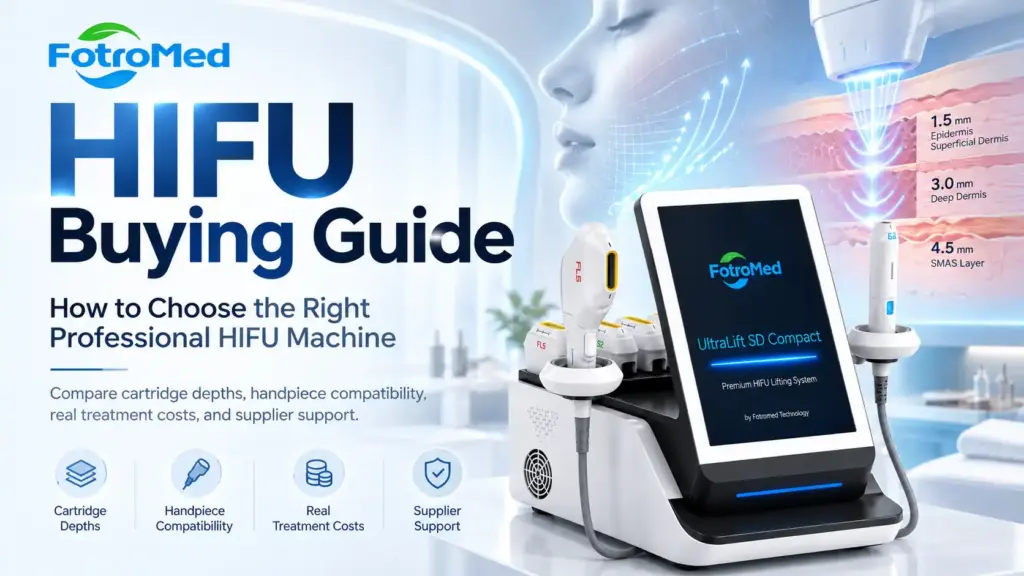
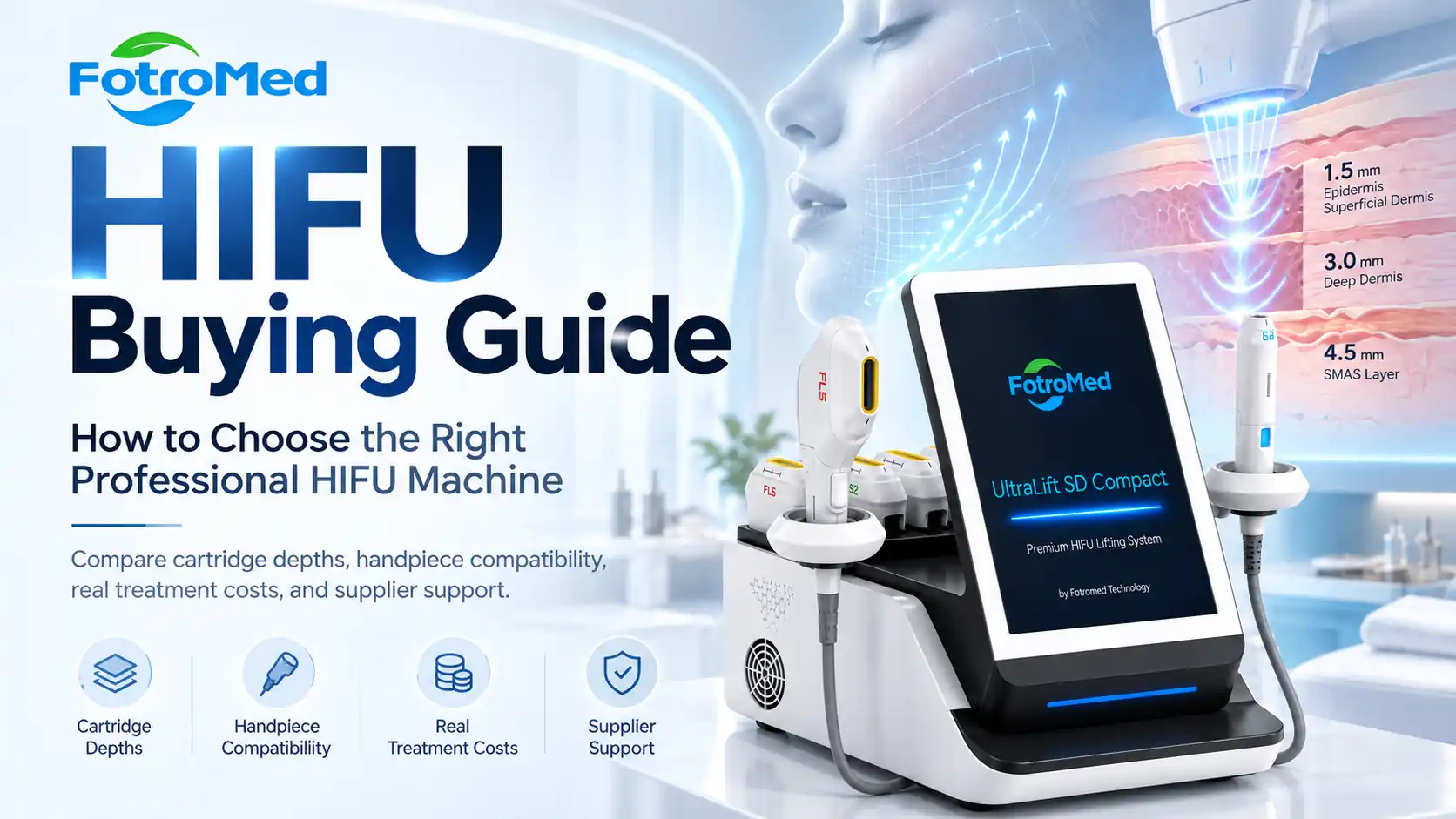
Facial skin-quality treatments and deeper lifting target different tissues. The dermis is rich in collagen, while the superficial musculoaponeurotic system (SMAS) is a deeper facial support layer. Select facial cartridge depths for the intended tissue targets.
What the depth studies show
In Lee and colleagues’ facial study published in the Journal of Dermatological Treatment, researchers used 1.5 mm và 3.0 mm transducers to evaluate pores and skin elasticity. MỘT study of lower-face, submental, và thắt chặt cổ used a combination of 3.0 mm và 4.5 mm transducers. These studies illustrate how different facial treatment goals relate to different depth selections. Đối với phương pháp điều trị cơ thể, distinguish skin tightening from localized fat reduction. The FDA’s overview of body contouring technologies discusses effects on skin and subcutaneous fat. MỘT pilot study of body skin and subdermal-tissue tightening used a transducer set that included 1.5, 3.0, 4.5, 6.0, Và 9.0 độ sâu mm. Compare the cartridge range against the intended treatment area and tissue target.
Assess facial contact and body coverage
The contact window is the part of the handpiece that rests against the skin. Its size and the cartridge’s shape affect how the handpiece fits along facial contours. Assess the window, handpiece shape, and compatible cartridges together.
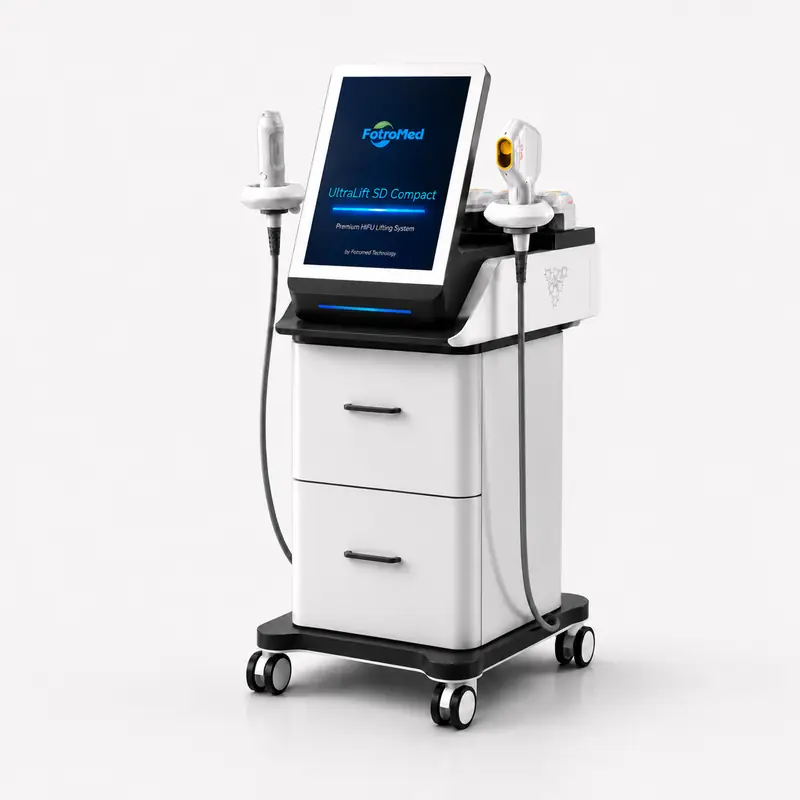
UltraLift SD Compact shows why contact-window size and cartridge depth should be assessed separately.
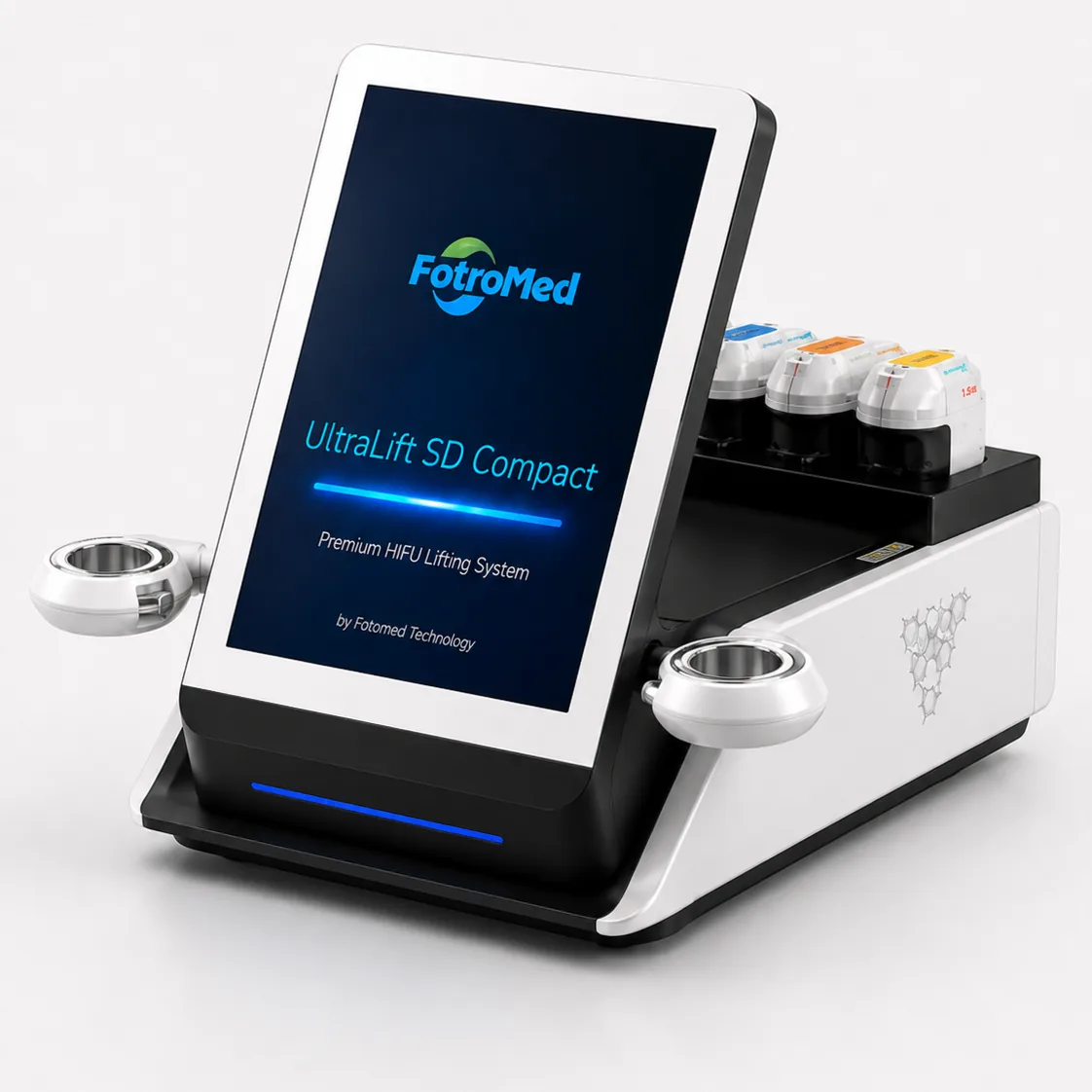
Two handpieces for MFU and MFU with RF, with a focus on treatment speed and client comfort in busy clinics.
View Model Details →The SD Compact’s 9 mm treatment window describes the width of the contact surface, which helps with positioning where access is limited. Của nó 1.5, 3.0, Và 4.5 mm cartridge ratings describe the nominal focal depths. Window size helps you assess how the handpiece will fit; focal depth helps you assess the tissue targets it can reach.
The abdomen and thighs involve larger treatment areas, so the operator needs to reposition the handpiece to cover the planned area. Line length, point spacing, and linear or multi-point modes affect the pattern of each output and the sequence of handpiece movements. Check both the depths required for the intended treatment and how the handpiece supports coverage of that area.
The treating professional selects the appropriate nominal focal depth for each client after assessing the tissue and following the device’s instructions.
| Cartridge depth or option | Areas and treatment goals | What to consider |
|---|---|---|
| 1.5 mm | Facial skin-quality treatments for concerns such as enlarged cheek pores and reduced elasticity. | Match this option to the skin-quality treatments you plan to offer. |
| 2.0 mm option | UltraLift 7D Pro offers a dedicated 2.0 mm cartridge for manufacturer-specified facial areas, including the forehead. | Check the compatible handpiece and its contact window. |
| 3.0 mm | An option used in tightening treatments for the cheeks, giữa mặt, mặt dưới, đường viền hàm, và cổ. | Compare its role alongside 4.5 mm in a multi-depth configuration. |
| 4.5 mm | A deeper focal-depth option for the lower face, đường viền hàm, submental area, và cổ. | Assess the depth against tissue thickness and handpiece contact. |
| 6.0 / 9.0 mm | Deeper cartridge options for body treatments involving areas such as the upper arms, lower abdomen, và đùi. | Compare the required tissue depth and treatment coverage. |
| 13.0 / 16.0 mm | The manufacturer’s deeper cartridge options for body treatments. | Consider these where the intended body treatment requires a deeper focal point. |
Check handpiece compatibility alongside depth
The SD Compact’s FL and SD handpieces both support 1.5, 3.0, Và 4.5 mm cartridges. FL delivers linear MFU, and SD combines MFU with RF. List the compatible cartridges for each handpiece separately in your purchase plan so you can see which functions are available at each depth.
SD Compact’s SD handpiece has a central MFU emitter surrounded by bipolar RF electrodes that contact the skin surface. RF microneedling delivers RF through needle electrodes. Consider the energy-delivery method alongside handpiece and cartridge compatibility.
For facial HIFU treatments, start by checking for compatible 1.5, 3.0, Và 4.5 mm cartridges. các 1.5 mm option serves shallower skin-quality goals, trong khi 3.0 Và 4.5 mm options appear in protocols for the lower face, đường viền hàm, submental area, và cổ. Add a dedicated 2.0 mm option where the model’s specified facial applications require it.
For body HIFU treatments, kiểm tra 6.0 Và 9.0 mm options alongside any shallower 1.5, 3.0, hoặc 4.5 mm cartridges needed for the intended skin-tightening service. Some systems also have 13.0 Và 16.0 mm cartridges for deeper body targets. Match the body handpiece and compatible depths to the planned areas and tissue targets within the device’s specified applications.
How HIFU complements your existing equipment
Facial laxity often comes with fine lines, visible pores, sắc tố, hoặc màu da không đều. HIFU provides focused-ultrasound tightening, while RF, tái tạo bề mặt bằng laser, and light-based treatments address other aspects of skin quality and appearance. Combining treatments around these different concerns can produce a more complete improvement.
RF microneedling with HIFU: texture and deeper tightening
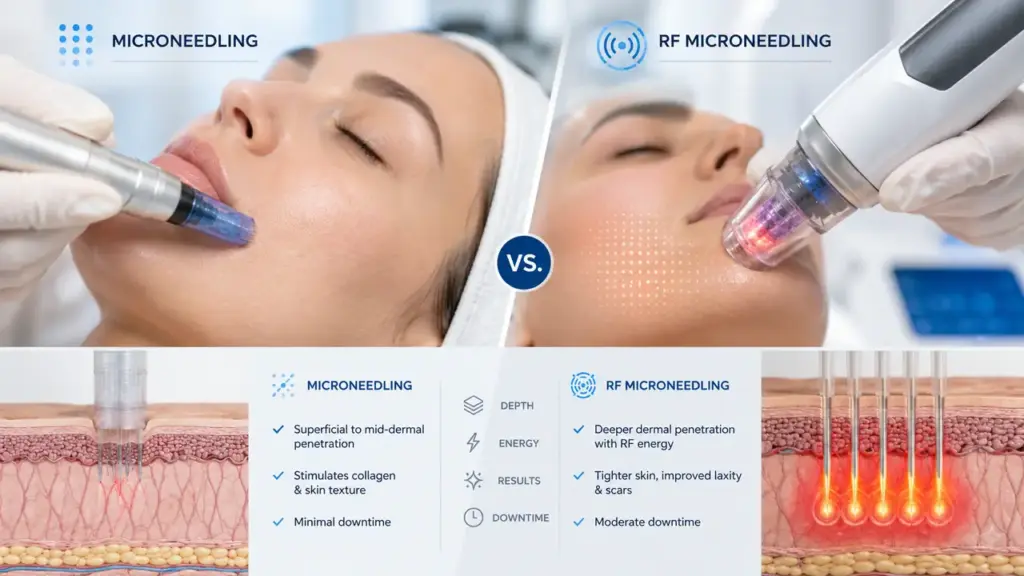
RF microneedling delivers energy through fine needles to stimulate collagen remodeling in the dermis, improving pores, nếp nhăn, và kết cấu. HIFU adds focused heating at selected depths to address laxity and facial contours. Used together, they can improve skin quality alongside firmness.
Fractional CO₂ with HIFU: resurfacing and contour tightening
For skin affected by sun damage, fractional CO₂ resurfacing creates microscopic channels that encourage skin renewal and collagen remodeling. HIFU complements this work by addressing facial and neck laxity, so a combined approach can target uneven texture and wrinkles alongside contour tightening.
Light-based treatments with HIFU: skin tone and firmness
Light-based treatments such as intense pulsed light (IPL) and delicate pulsed light (DPL) address pigmentation and redness through light absorbed by melanin and hemoglobin. When these concerns occur alongside laxity, HIFU adds a focused-ultrasound tightening option, allowing the treatment plan to address skin tone and firmness together.
Monopolar RF with HIFU: broader heating and focused energy
Monopolar RF heats a broader volume of tissue, while HIFU concentrates ultrasound energy at selected depths. Both stimulate collagen contraction and remodeling through heat. Combining these different energy distributions can help address facial laxity and a sagging jawline.
Choosing facial HIFU for a Valencia skin care center
In June 2025, we helped a skin care center in Valencia, Spain evaluate plans to add HIFU. The center had been in business for eight years and already offered fractional CO₂ and monopolar RF. Its owner initially considered a €6,200 multifunction HIFU system, with a purchasing budget of €6,500. We recommended logging inquiries for a month before choosing the configuration. Thirty-one clients asked about facial tightening, most often the jawline, Má, and recovery time. Based on those inquiries, we proposed a €3,750 facial HIFU configuration, with total launch spending capped at €4,000 including logistics, vật tư tiêu hao, đào tạo, promotion, and a reserve. Existing CO₂ and RF services continued, and HIFU launched as a separate facial contouring and tightening service. In the first 90 ngày, the center recorded 24 paid HIFU treatments involving 16 existing clients and 8 new clients. The average fee of €275 generated €6,600 in revenue. Direct labor and consumables cost approximately €1,680, leaving a contribution of about €4,920 before fixed overhead. Nguồn: customer case records provided by the Fotromed project team.
Compare D models by their features and output
When comparing 4D, 7D, 12D, 22D, and 25D models, look at the energy types, the handpieces included, and how each handpiece delivers its points or lines. Compare those details model by model, and identify what each handpiece would contribute to your treatment menu.
Understand depth, point spacing, và chiều dài dòng
A cartridge’s nominal focal depth is its designed focus below the skin surface. Sân bóng đá, or point spacing, is the distance between adjacent focal points. Line length is the length of a single delivery path. Multi-point and scanning modes determine how those points are distributed. These features affect coverage, handpiece placement, and cartridge changes. For a fuller explanation, xem của chúng tôi guide to 4D, 7D, 12D, 22D, and 25D HIFU machines.
| D model | Fotromed model | Main configuration |
|---|---|---|
| 4D | FotroHIFU kép | 4D HIFU with a V-Max/PEN handpiece. |
| 7D | Ultralift 7D Pro | vi mô- and macrofocused ultrasound. Multiple depths, adjustable pitch and line length. |
| 12D | 12D Max | Separate facial and body ultrasound handpieces, with Normal and MP (multi-point pattern) chế độ. |
| 22D | 22D Max | Facial ultrasound handpieces. The body handpiece combines focused ultrasound with 6.78 MHz tần số vô tuyến. |
| 25D | 25D 360 Tối đa | HIFU, RF, và EMS (electrical muscle stimulation), with facial and body handpieces. |
Choose output controls for your treatment areas
If your clinic treats smaller facial areas as well as the abdomen and thighs, compare the available pitch and line-length adjustments. The 7D Pro lists a pitch range of 1–2 mm and a line-length range of 5–25 mm. These controls let the operator adjust the spacing between focal points and the length of each delivery path for different areas. The 7D Pro is therefore worth shortlisting when you need both multiple ultrasound depths and an adjustable delivery pattern.

vi mô- and macrofocused ultrasound with cartridge options for facial and body treatments.
View Model Details →Purchasing reminder: match advertised functions to the delivery list
Ask the supplier to map each advertised function to its handpiece, compatible cartridges, and energy type. Request a full demonstration of the quoted configuration, including recognition and output checks for each cartridge. List operating modes, energy types, and handpiece quantities separately. The quotation should also state replacement-cartridge prices, model-specific training, and after-sales responsibilities so you can verify delivery and calculate ongoing costs.
Match a HIFU model to your practice
Build the shortlist around your treatment menu, appointment volume, and staff experience. UltraLift SD Compact is one of our first recommendations for practices that prioritize speed and client comfort. Assess the handpieces, hộp mực, and training needed for the complete setup.
Use your planned services and operating needs to compare configurations in our professional HIFU machine range.
| Practice type | Operating needs | Model to consider |
|---|---|---|
| Phòng khám thẩm mỹ | A busy schedule, with treatment speed and client comfort as purchasing priorities. | UltraLift SD nhỏ gọn |
| Full-service beauty salon | Nâng mặt, thắt cổ, and body contouring on one platform. | FotroHIFU kép |
| Independent beauty studio | A defined menu that needs several ultrasound depths and adjustable pitch and line length. | Ultralift 7D Pro |
| Face and body treatment center | An established team using separate ultrasound handpieces and a multi-point delivery option. | 12D Max |
| Body treatment studio | A body service plan using combined ultrasound and RF, with facial options retained. | 22D Max |
| Spa y tế | A defined EMS service and training plan alongside ultrasound and RF. | 25D 360 Tối đa |
Why we shortlist SD Compact for busy practices
UltraLift SD Compact’s FL handpiece delivers linear MFU, and its SD handpiece combines MFU with contact bipolar RF. The team can choose the handpiece for the intended service. Treatment speed and client comfort are design priorities that fit the purchasing needs of a busy practice.
The two handpieces sit on either side of the unit for easy access. Preset shot counts and displays showing shots used and remaining help the operator plan output and cartridge usage. The handpiece screen keeps parameters visible, và 9 mm treatment window helps with positioning where access is limited.
Organize the manual, demonstration videos, and online training around the handpieces your team will use. Prepare consultation forms and service information alongside the equipment purchase, and allow time and resources for those launch tasks.
UltraLift SD Compact also offers extensive OEM/ODM customization support for distributors and private-label brands. Partners can discuss their branding and product requirements with Fotromed to define the scope of each project.
Two handpieces for MFU and MFU with RF, with a focus on treatment speed and client comfort in busy clinics.
View Model Details →Consider other configurations for specific services
Consider the 12D Max when your menu specifically calls for separate facial and body ultrasound handpieces. Compare the 22D Max when the body service requires ultrasound and RF in the same handpiece. Include the 25D 360 Max when EMS already has a defined place in your menu. Give each additional function a clear job before funding it.
Choose a setup for your daily workflow
Đối với một phòng khám bận rộn, a useful measure of efficiency is how smoothly the team can complete a full appointment. Consider handpiece positioning, cartridge changes, output adjustments, tư vấn, and preparation. Compare equivalent treatment areas and goals, using each device according to its own protocol.
Plan for back-to-back appointments
The FL and SD handpieces sit on opposite sides of SD Compact, ready for the operator to switch between MFU and combined MFU/RF services. Plan cartridge changes and replacement stock around the treatment areas your team handles most often.
UltraLift SD Compact also has adjustable energy, sân bóng đá, và chiều dài dòng, along with preset shot counts and displays of shots used and remaining. Operators can view parameters on the handpiece screen and work within the device’s instructions and their training. Include consultation, sự chuẩn bị, and room reset when scheduling the full appointment.
Train for the handpieces and modes you buy
HIFU operator training should cover every energy type, tay khoan, and delivery mode in the purchased configuration. An experienced ultrasound operator may still need instruction on a handpiece that combines ultrasound with radiofrequency (RF). For systems with several handpieces, establish how the platform operates before planning its use across staff and treatment rooms.
Supporting the team’s training
We provided Dr. Najeh and his team with an SD Compact operating manual, Video đào tạo, Và one-on-one Zoom training. The manual gives the team a written reference, the videos let them review demonstrations, and live training provides time for questions. Build that learning time into your launch plan when the chosen setup introduces an unfamiliar handpiece or mode.
Budget for the complete treatment setup
Compare the full package needed to launch your treatments: the main unit, the handpieces you will use, compatible cartridges, đào tạo, delivery, and any service arrangements included in the quote. Add the cost of extra cartridges required for your treatment menu before comparing package prices.
Define a shot before comparing its cost
HIFU specifications use terms such as points, dòng, ảnh, and cycles. A treatment line can contain several focal points, and a machine’s counter may record a line or another defined unit. Confirm what the counter deducts when the machine fires, then use that unit for both cartridge capacity and treatment usage.
If a treatment uses several cartridges, calculate the cost of each one: new cartridge price ÷ rated usable capacity × units used in that treatment. Express capacity and usage in the same counting unit, then add the costs for all cartridges used.
If cartridge A costs $120 and has a rated capacity of 10,000 counter units, sử dụng 200 units in a treatment costs $2.40. If cartridge B costs $150 vì 10,000 đơn vị, sử dụng 400 units costs $6.00. The combined cartridge cost is $8.40 per treatment. Replace these inputs with your quoted prices and the usage for your planned treatment.
SD Compact cartridge costs: about USD 3.75 vì 300 ảnh
SD Compact cartridges support up to 20,000 ảnh. The system lets operators preset the shot count and see shots used and remaining in real time. At USD 250 per cartridge and 20,000 usable shots, the theoretical cartridge cost is USD 0.0125 mỗi lần bắn. If a treatment uses 300 shots in total at that same rate, the allocated cartridge cost is about USD 3.75. At this usage, cartridge costs are just a few dollars per treatment.
Test the budget at a lower booking volume
Estimate the amount you expect to collect per treatment, then subtract consumables, the cost of staff time, and other expenses that rise with bookings. Account separately for additional fixed costs and the initial investment. Run the numbers again with fewer bookings to see how well the budget holds up.
This helps you assess whether an extra body handpiece or integrated function makes financial sense for your clinic. For a more detailed breakdown of purchase and operating costs, xem của chúng tôi Hướng dẫn tính giá máy HIFU.
Phần kết luận
As a HIFU equipment manufacturer, we recommend planning for technical fit, team training, and ongoing operation together. Choose the depths and handpieces needed for a defined menu. Select additional energy types for specific services, and include consumables and training in the initial plan.
Let your core services set the initial investment and a clear expansion plan guide what comes next. A facial studio, body-focused clinic, and multiservice aesthetic practice may need different equipment and training. Base the next purchase on client demand, sự sẵn sàng của nhân viên, and available funding.
For practices focused on facial tightening, we recommend considering UltraLift SD Compact early. Its separate MFU and combined MFU/RF handpieces give the team a choice of delivery options. Match the cartridges, đào tạo nhân viên, and daily workflow to the menu you intend to build.
Our ambition at Fotromed is to help more practices make professional skin tightening a lasting part of their business. By connecting focused ultrasound technology with practical equipment design and operator support, we aim to help clinics develop a distinctive service and a stronger position in their market.
Frequently asked questions
Which HIFU machine is best for a small clinic?
For a small clinic focused on facial tightening, Fotromed’s UltraLift SD Compact and UltraLift 7D Pro are two configurations to compare. SD Compact offers separate microfocused ultrasound (Nhà máy) and combined MFU/radiofrequency (RF) tay khoan, with speed and comfort as design priorities. The 7D Pro emphasizes multi-depth ultrasound with adjustable pitch and line length. Match the supplied cartridges and training to the clinic’s planned services and budget.
Does a higher D number mean a better HIFU machine?
The D number on a HIFU machine is a model designation. Compare handpieces, focal depths, delivery modes, energy types, and device evidence to assess suitability. Fotromed’s 22D Max combines body ultrasound with radiofrequency (RF), and its 25D 360 Max also includes electrical muscle stimulation (Ems). Select these additional energy types for services that need them.
Are machines with matching cartridge depths equivalent?
Machines with the same nominal HIFU focal depths can differ in handpiece compatibility, delivery pattern, and energy combination. Fotromed’s UltraLift SD Compact illustrates the distinction: its FL handpiece delivers linear microfocused ultrasound (Nhà máy), while its SD handpiece combines MFU with radiofrequency (RF). Confirm each handpiece’s compatible cartridges and functions when comparing machines.
Should I buy every available cartridge at the start?
Start with the HIFU cartridges needed for your confirmed launch services and compatible with the handpieces you are buying. Add cartridges for a later service once its launch plan is clear. Check the package contents and estimate replacement stock from each cartridge’s expected consumption and replenishment lead time.
Can I compare HIFU operating costs by price per shot?
For each HIFU cartridge, treatment cost = cartridge price ÷ rated usable capacity × units used. Use the same counting unit for capacity and consumption, then add the costs of all cartridges used in one treatment. Machines may count points, dòng, or other defined outputs as a shot, so confirm that unit before comparing prices. Include staff time and other expenses in the full treatment budget.
Tài liệu tham khảo & nguồn
- FDA: Non-Invasive Body Contouring Technologies
- Facial pore and skin-elasticity study: 1.5 mm và 3.0 mm
- Lower-face, submental, and neck laxity study: 3.0 mm và 4.5 mm
- Pilot study of body skin and subdermal-tissue tightening
- MFU with RF microneedling: randomized split-face facial-rejuvenation study
- MFU with fractional CO₂: retrospective facial and neck tightening/resurfacing analysis
- MFU with DPL: randomized split-face facial-rejuvenation study
- Monopolar RF with focused ultrasound: facial-tightening clinical study