

If you own a med spa and want to compare its performance with other practices, start with revenue and net profit for the same period. Revenue records the services and products sold; net profit is the amount remaining after expenses such as payroll, barang habis pakai, premises and equipment. Bersama, they show how much the practice sells and how much it retains.
For a recent revenue reference, Zenoti’s 2026 Medspa report gives $1.86 million in median annual revenue per location among its North American platform customers, menggunakan 2025 data. For profitability, Matt Remuzzi’s CapForge guidance suggests a 15%–25% net profit margin as a planning range for established practices.
How to check your profit margin
Calculate your own margin by dividing net profit by revenue for the same period. If it falls below the planning range above or declines over time, review payroll, persediaan, rent and marketing as shares of your revenue to identify which costs or revenue changes explain the result.
This guide walks through that cost review and the revenue needed to cover the practice’s monthly expenses. If you are planning an equipment-based service, start by estimating monthly revenue from the treatment fee and the sessions you expect to complete. Then deduct treatment-delivery costs and monthly operating expenses to estimate what remains each month and how long it would take to recover the upfront investment. Those calculations belong alongside the practice’s cash-flow plan when setting a purchase budget.
What Is the Average Med Spa Revenue?
Zenoti’s Medspa report records $1.86 million in median annual revenue per location for its North American medical spa customers in 2025. Rank those locations by revenue, and the median is the middle value. It gives a recent reference for revenue at a location in that sample.
For historical U.S. context, itu American Med Spa Association’s report recap disclosed $1,398,833 in average annual medical spa revenue. An average combines respondents’ revenue and divides by their number. The two references describe different populations and use different measures; a growth comparison requires the same population and measure across both years.
| Revenue reference | Sample and measure | Annual figure | Monthly equivalent |
|---|---|---|---|
| Zenoti 2026 report, menggunakan 2025 operating data | North American platform customers; per-location median | $1,860,000 | $155,000 |
| AmSpa 2024 report recap | KITA. medical spa survey; rata-rata | $1,398,833 | Sekitar $116,569 |
Dividing annual revenue by 12 produces the monthly figures in the table, making the scale easier to understand. In daily operations, a clinic earns revenue through completed treatments and retail sales. Its available team, treatment rooms and service mix determine how much work it can complete each month.
For treatment revenue, that relationship can be expressed as:
Monthly service revenue = completed visits × average service revenue per visit.
Misalnya, assume a practice completes 250 visits each month and records an average of $400 in service revenue per visit. It earns $100,000 in monthly service revenue, atau $1.2 million over 12 months at that activity level. These are illustrative inputs. A change in completed visits or the revenue earned on each visit changes the total, even when the practice uses the same rooms and equipment.
This formula helps an owner understand why the practice’s revenue differs from the industry reference. Fewer completed visits may reflect empty slots, cancellations or a patient base that is still developing. Lower revenue per visit may reflect the service mix, pricing or discounts. Team size and the number of treatment rooms also affect capacity. Finding the reason for the gap points to the growth decision the practice needs to make.
Use the same season and consistent records when comparing revenue, keeping retail sales, refunds and discounts identifiable. Set a revenue target from the visits the practice can complete and the fees it expects to earn. Then use the full expense statement to see how much of that revenue the practice retains.
What Is a Good Med Spa Net Profit Margin?
Net profit margin shows the share of revenue remaining after expenses. Using the same expense categories, including consistent treatment of working-owner pay, helps owners compare practices of different sizes and track their own results over time.
CapForge’s guidance gives a 15%–25% net profit margin planning range for established practices. At that range, setiap $100 of revenue leaves $15–$25 after the expenses included in the calculation. The guidance also explains how growth stage and working-owner pay affect the comparison.
Revenue records the treatments and retail products sold. After paying variable treatment-delivery costs, the remaining amount helps cover overhead. Deduct those operating expenses to arrive at operating profit. Net profit then deducts the other expenses in the financial statement, including financing costs and applicable business taxes.
Net profit margin = net profit ÷ revenue × 100.
Pay for an owner’s treatment or management work belongs in the relevant payroll expense. The remaining profit is then available for the business’s planned reserves, reinvestment and distributions. Including working-owner pay consistently makes the comparison useful when the owner’s involvement differs between practices or periods.
The following illustrative statement continues the $100,000-per-month practice from the revenue section. Treatment-delivery labor varies with completed treatments in this example; administration payroll is fixed. Pay for the owner’s work is included in the relevant payroll line.
| Monthly item | Illustrative amount |
|---|---|
| Pendapatan | $100,000 |
| Products and consumables | $20,000 |
| Treatment-delivery labor | $25,000 |
| Administration payroll | $10,000 |
| Rent, utilities and insurance | $12,000 |
| Pemasaran, software and administration | $8,000 |
| Equipment maintenance and depreciation | $5,000 |
| Operating profit | $20,000 |
| Financing costs and applicable business taxes | $5,000 |
| Net profit | $15,000 |
| Net profit margin | 15% |
In this statement, $100,000 in revenue pays $80,000 of operating expenses, leaving $20,000 in operating profit. Financing and business taxes reduce that amount to $15,000 in net profit, A 15% batas. Itu $80,000 left after products alone still has to pay the team, premises and other expenses. Checking which costs have been deducted explains why the same revenue can produce different profit margins.
Once those expense categories are clear, compare your own margin with the planning range and with the same period in the previous year. If it has declined, review expense shares and their underlying amounts. A higher payroll share can result from increased staff costs, fewer completed treatments or both. Explaining the change requires looking at how staffing, room use and purchasing affect costs.
How Do Operating Costs Affect a Med Spa’s Net Profit?
The financial statement shows where revenue is spent. To understand a change in profit, an owner also needs to understand what makes each expense rise, and how much completed treatment that expense supports.
Staff time and completed appointments
Konsultasi, persiapan, getting rooms ready for the next patient and training all use staff time alongside treatment delivery. They affect how many appointments a team can complete in a shift. For staff paid fixed salaries or hours, unfilled appointment time still carries payroll cost. Completed treatments therefore need to earn enough revenue to cover the paid time.
Tidak bisa, an Australian salon owner, had experienced leaks and filter issues with an older IPL device. With a busy schedule, she was concerned about support, team training and budget. Equipment problems affect both the treatments a booked schedule can deliver and the revenue available to pay the salon’s ongoing costs.
Konnie’s salon scheduled 12 IPL appointments a day at A$150 per session. Equipment problems prevented four appointments from being completed that day, reducing treatment revenue from A$1,800 to A$1,200, a daily reduction of A$600. Each session carried A$50 in consumable, payment and other per-session costs. After accounting for those costs, the four missed treatments left A$400 less each day to cover fixed wages, rent and other overhead.
For Konnie’s purchase, our team arranged tailored online training and marketing materials, along with access to a Sydney technician; on-site visits were charged separately. With the equipment and support arrangements in place, the salon resumed the four affected daily appointments, restoring A$600 in treatment revenue. After the A$200 delivery costs, those appointments left A$400 a day to help cover fixed expenses and additional support charges. This experience shows why an owner comparing suppliers should consider the appointments the clinic needs to complete alongside training, support response and service fees.
Premises, service mix and pricing
Rent, insurance and basic utilities recur while a room is busy or empty. Completed services provide the revenue to cover them. A longer treatment uses more of the room’s available time, while a higher-priced service may also require more supplies or provider time.
To compare the menu’s earnings, put each service fee beside its delivery costs. Record consumables, delivery labor and occupied room time, then calculate the amount left after direct costs for each occupied hour. That amount shows how the service helps cover premises and other overhead. The practice’s professional team also assesses clinical suitability when deciding which services to offer.
Persediaan, maintenance and marketing
Buying supplies uses cash before the practice earns revenue from the treatments that use them. Stock that expires adds cost without corresponding treatment revenue. Whether a bulk discount helps therefore depends on how much stock the practice can use and how long the purchase ties up cash.
Pemeliharaan, software and service arrangements create further commitments. Marketing creates opportunities to acquire patients; completed treatments generate the revenue that must pay both delivery costs and the marketing spend. Relating that spend to the amounts left from completed services makes its financial effect clearer than booking counts alone.
Match supply purchases to expected consumption, keep recurring service charges visible, and connect marketing activity to completed treatment revenue and costs. Bersama, these commitments determine the minimum sales the practice needs to cover its operations.
How Much Revenue Does a Med Spa Need for Operating Break-Even?
These costs change in different ways as treatment volume rises. Fixed operating expenses still need to be paid at low volume, while variable delivery costs arise with treatments. Each treatment’s revenue pays those variable costs first; what remains is available for fixed expenses. Operating break-even occurs when that remaining amount covers the fixed operating costs.
Using the monthly financial statement in the net profit margin section, the practice has $100,000 dalam pendapatan, $20,000 in products and consumables, Dan $25,000 in treatment-delivery labor. These two cost lines total $45,000, atau 45% of sales, leaving a 55% contribution margin: setiap $100 of revenue leaves $55 for fixed operating expenses. Those expenses total $35,000, including administration payroll, premises, marketing and administration, and equipment maintenance and depreciation.
The revenue needed to generate that $35,000 adalah:
Operating break-even revenue = fixed operating costs ÷ contribution margin.
$35,000 − 0.55 = approximately $63,636 in monthly operating break-even revenue.
At that revenue and cost structure, the practice covers the operating expenses listed. Additional contribution above the fixed costs produces operating profit. Financing and business taxes are recorded after operating profit in this example; the cash-flow plan also schedules the corresponding payments, loan principal and upfront purchases.
If treatment providers receive fixed salaries, those salaries belong in fixed costs and the variable-cost share changes accordingly. Equipment depreciation belongs in the financial statement, while the purchase payment and loan principal belong in the cash plan. Keeping these records distinct allows the operating calculation and purchase budget to use the right amounts.
Which Industry Trends Could Shape Med Spa Revenue in 2027?
Knowing the revenue needed to cover operating costs gives an owner a baseline for a growth plan. The next step is to assess where additional completed visits or revenue per visit could come from. The 2025–2026 findings below inform a 2027 plan through existing-location growth, returning patients and treatment demand.
Same-location growth depends on the practice’s own completed visits
Zenoti’s report records 8% total medical spa revenue growth in 2025, including new locations, Dan 2% same-location growth in its North American platform sample. These measures describe different sources of growth. Opening additional locations adds sales to the sample; an existing clinic grows through the visits, fees and service mix within that clinic.
The difference matters when an owner plans costs. Rent and basic staffing commitments continue while appointment slots are empty. Filling those slots generates treatment revenue with the team and rooms already available. Adding a provider or room increases capacity and brings additional costs. Each route to growth therefore needs its own budget.
A 2027 target can then be translated into the extra completed visits or revenue per visit it requires. Cancellation, rebooking and room-use records show how much the existing team can deliver before expansion adds new costs. This makes the location’s own capacity the basis of its forecast.
Member spending must cover the services the plan promises
CorralData’s H1 2026 riset covers more than 100 aesthetics brands across roughly 500 locations on its platform, including aesthetics, wellness and telehealth models. It found median member spending at 2.5 times non-member spending and a 35-percentage-point member retention advantage. These observations describe a patient group with higher spending and higher retention within that sample.
Returning patients give an owner opportunities to plan future services and revenue. Members’ higher spending may come from more completed visits, more revenue per visit or both. Patients who already expect frequent treatment may also choose membership. Understanding those patterns helps the clinic estimate how much revenue a new program could add.
Every treatment included in a plan uses supplies, provider time and an appointment slot. If the membership fee stays fixed, more use of included treatments increases delivery costs. Discounts reduce the revenue available to pay those costs. To understand what remains per member, compare the fee with the services actually delivered.
For the membership budget, use the same membership period for fees, net revenue from separately charged services, and the expected costs of fulfilling included and additional treatments. Compare those costs and appointment needs with the income, then check the estimates against services actually delivered when setting the plan’s price, benefits and size.
Treatment demand must turn into completed services and a contribution
Itu ASPS statistics report ranks laser skin treatments third among minimally invasive procedures, after neuromodulator injections and hyaluronic acid fillers. Hair removal, IPL and tattoo removal form the fourth-ranked group. Skin-related services occupy prominent positions in this U.S. procedure ranking, providing a demand reference for practices reviewing their menu.
At an individual clinic, inquiries become revenue when they lead to completed treatment. The fee must then pay for supplies, delivery labor and the service’s share of overhead. Differences in treatment time and costs explain why services generating the same increase in sales can leave different amounts.
Untuk a 2027 menu decision, connect local inquiries and completed-treatment records to the amount a service leaves after direct costs per session and per occupied treatment hour. Expected completed volume generates the monthly contribution that first covers allocated expenses; the remainder supports recovery of the upfront equipment investment.
How Do New Equipment Services Affect Profit and Payback?
Growth opportunities become an investment decision when they require a new device. To assess an equipment-based service, budget separately for upfront investment, treatment delivery and allocated operating costs. Together with expected completed sessions, these figures show what the service must earn and how much it can leave to recover the investment.
The initial purchase and payment dates determine the cash needed to start. Bahan habis pakai, delivery labor, maintenance and room use determine what ongoing treatments leave. Separating these commitments makes both the launch budget and the service’s payback calculation easier to assess.
Tanya’s clinic: starter supplies and payment timing
Tanya’s UK clinic raised questions about disposable needle tips, training and payment arrangements. In that purchase, our team supplied 25 disposable microneedling tips, instructional materials and live online training, alongside a two-part payment arrangement.
Starter supplies cover a defined quantity. Once they are used, continuing treatments need replacements. Splitting purchase payments changes when cash is due, while replacement supplies remain part of treatment-delivery costs. Put payment dates in the cash-flow plan, and replacement tips and staff time in the ongoing per-session cost calculation.
A Spanish clinic’s budget: session volume and payback
A Spanish clinic we work with evaluated an added equipment-based service using the investment, pricing and cost inputs below to calculate monthly operating results and payback at different treatment volumes:
- $18,000 total upfront investment, covering equipment and initial setup.
- $200 service revenue per completed session.
- $80 variable delivery cost per session, including consumables, treatment-delivery labor and payment costs.
- $1,500 monthly operating costs allocated to the service, covering its share of premises, pemasaran, maintenance and administration.
Completed sessions per month
10
- Monthly revenue
- $2,000
- After variable costs
- $1,200
- After allocated costs
- −$300
- Simple payback
- Operating shortfall
Completed sessions per month
25
- Monthly revenue
- $5,000
- After variable costs
- $3,000
- After allocated costs
- $1,500
- Simple payback
- 12 bulan
Completed sessions per month
40
- Monthly revenue
- $8,000
- After variable costs
- $4,800
- After allocated costs
- $3,300
- Simple payback
- Sekitar 5.5 bulan
Itu 12-bulan Dan approximately 5.5-month payback estimates use the investment and costs listed above and assume 25 Dan 40 completed sessions every month, masing-masing; lower treatment volume during launch, financing costs and equipment downtime can change the actual payback period.
These calculations use the same investment, fees and costs; completed session volume changes. Setiap $200 treatment leaves $120 after variable costs to cover the monthly $1,500 allocation. Pada 10 sesi, that amount falls short of the monthly costs. Pada 25 sesi, it covers them and leaves $1,500 to recover the upfront investment. Pada 40 sesi, the larger monthly remainder shortens the calculated payback period.
The service reaches operating break-even at 13 completed sessions per month: $1,500 − ($200 − $80), rounded up. Simple payback then divides the upfront investment by the positive monthly amount remaining after the costs listed here. The treatment volume determines whether there is an amount available to recover the investment in the first place.
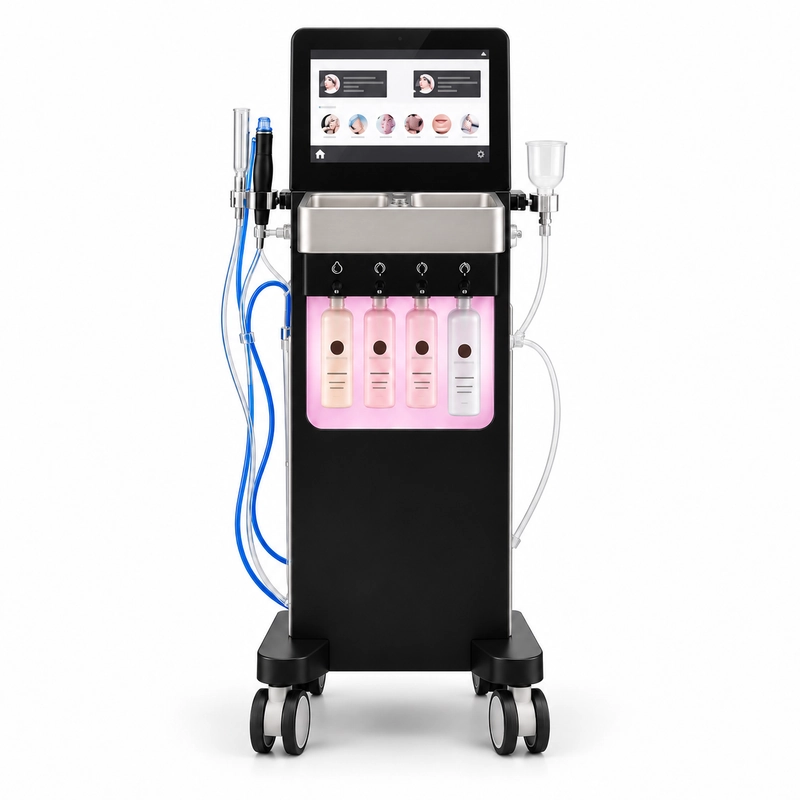
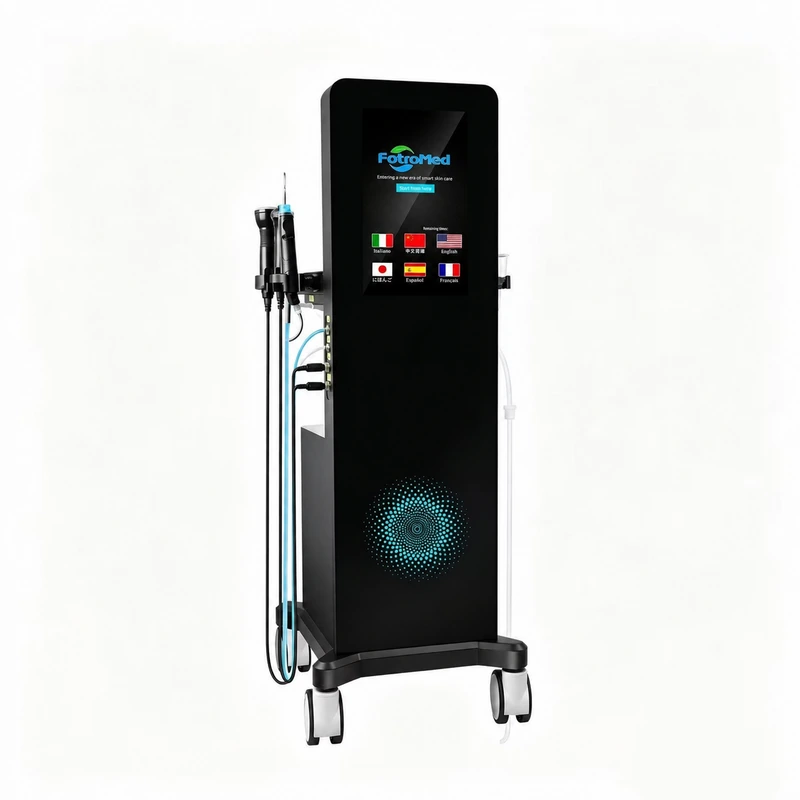
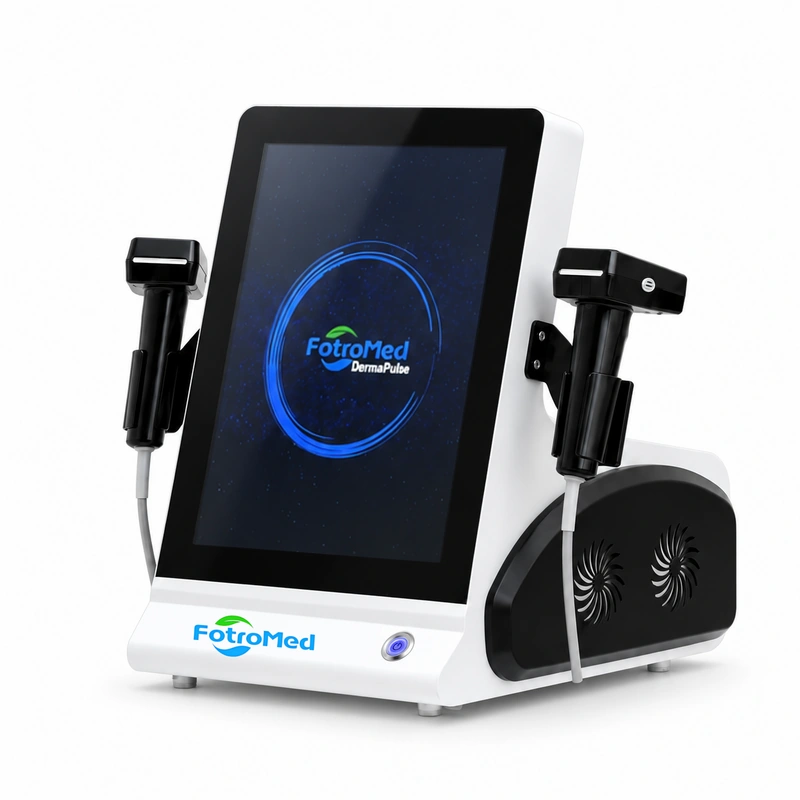
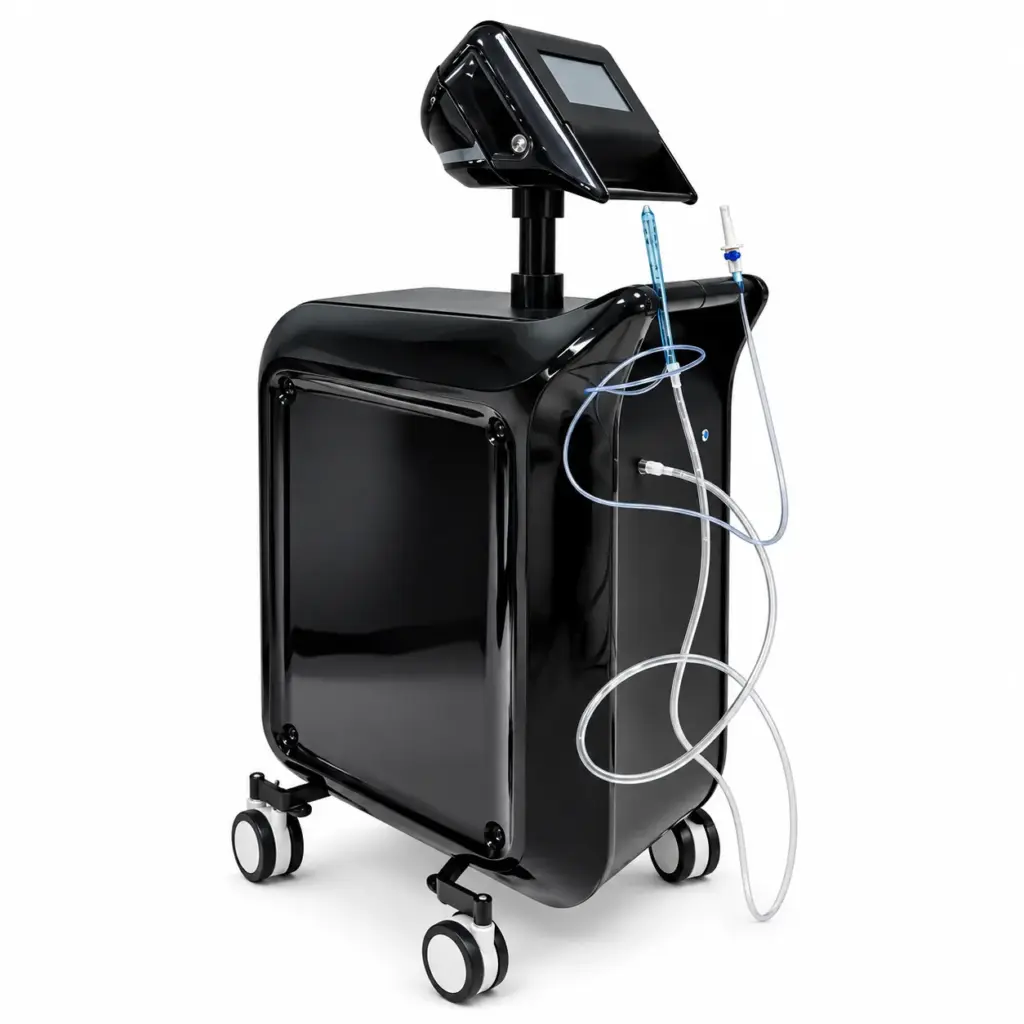
An equipment decision connects three figures: upfront investment, the amount left per session and completed sessions per month. Ask Fotromed for a written breakdown of the device, starter supplies, training and maintenance arrangements. Put those terms beside your own fees, delivery costs and expected completed volume when discussing the equipment budget.
Industry revenue figures provide a reference for scale. Set revenue and profit targets using the practice’s own completed treatments, fees and full expenses. For a new service, calculate the monthly amount remaining after treatment and allocated operating costs, then use it with the upfront investment to estimate payback.
Pertanyaan yang sering diajukan
How much do med spas make per month?
Zenoti’s 2026 report gives a 2025 per-location annual median of $1.86 million for its North American platform sample, equivalent to $155,000 per month when divided by 12. Actual monthly revenue comes from completed treatments and product sales, with seasonal variation. The earlier AmSpa average and its monthly equivalent appear in the revenue table above.
Are med spas profitable?
A practice earns a profit when revenue covers treatment delivery and its other expenses. The illustrative practice in this guide pays $85,000 in total monthly expenses from $100,000 dalam pendapatan, leaving $15,000 in net profit. Its cost structure explains the result; the practice’s own financial statement provides the figures for an actual comparison.
How much do med spa owners make?
Owner income includes pay for work and any profit distributed after business commitments. Working-owner pay is already included in the example’s payroll. The remaining profit also supports the reserves and reinvestment the business plans to retain, so the owner’s distribution depends on those commitments.
Are memberships worth implementing?
Membership fees pay for the benefits and services promised in the plan. More use of included treatments increases delivery costs and appointment needs. The amount remaining per member, alongside the time needed to fulfill the plan, provides a basis for setting its price and deciding how many memberships the practice can support.
How long does med spa equipment take to pay back?
Payback depends on the monthly amount available after delivery and allocated operating costs. Pada 25 completed monthly sessions, the Spanish clinic’s budget leaves $1,500; dividing its $18,000 upfront investment by that amount gives a calculated simple payback of 12 bulan. The monthly cash-flow plan also accounts for the launch period, financing and downtime.
Referensi & Sumber
- Zenoti: 2026 Beauty and Wellness Benchmark Report — Medspa Edition (PDF). Penggunaan 2025 North American platform data. See PDF pages 3 Dan 22 for coverage and methodology, page 17 for revenue, and page 6 for growth.
- Asosiasi Spa Med Amerika: 2024 State of the Industry report recap, published November 6, 2024. KITA. annual revenue comparison.
- Matt Remuzzi / CapForge: med spa net-profit planning benchmarks, published September 8, 2026. Guidance for established practices.
- CorralData: The State of Aesthetics, H1 2026, published July 2026; January–June 2026 operating sample.
- American Society of Plastic Surgeons: 2025 Procedural Statistics Report (PDF), released September 1, 2026. Halaman 14 ranks minimally invasive treatments and explains its reporting approach; page 40 describes the methodology for surgical estimates. Used here as a treatment-demand reference.
- The linked Konnie and Tanya stories are Fotromed’s supplier accounts, first published in 2024. They describe the training, consumables and service arrangements in those collaborations. Konnie’s appointment counts, penetapan harga, downtime and recovery details were additionally confirmed by the Fotromed team; the monetary effects are calculated from those fees and costs. The practice-wide financial statement uses illustrative inputs. The equipment comparison calculates outcomes at the session volumes shown for the Spanish clinic’s budget.