
Direct answer
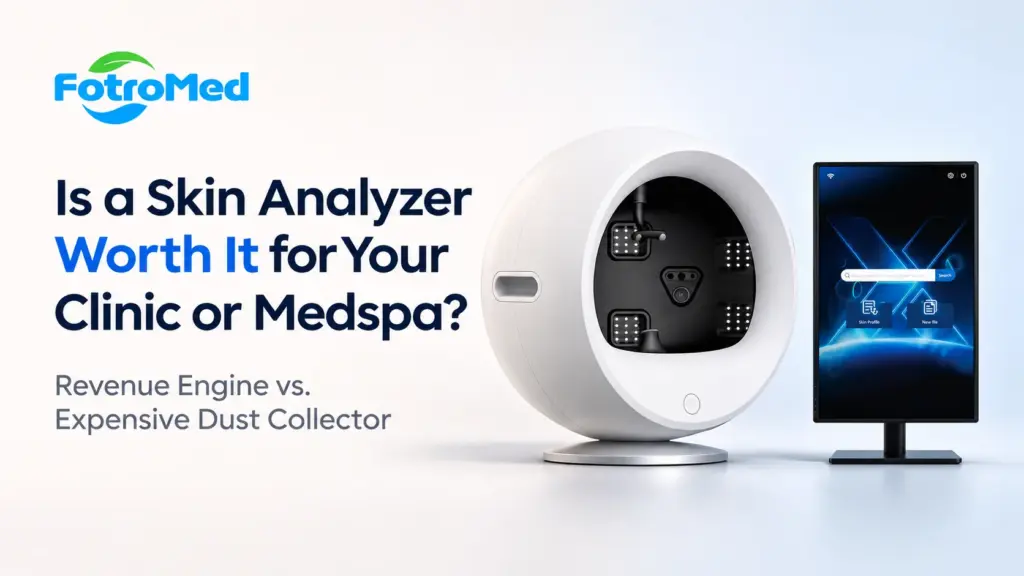
Yes—a professional mesin analisis kulit is worth the investment for clinics and medspas that build it into every new-patient consultation. While the device generates little standalone procedure revenue, it acts as a clinical conversion multiplier: visualizing subsurface UV damage, vascular redness, and pore congestion turns skeptical consults into multi-session treatment packages, medical skincare retail, and objective follow-up proof. Most practices break even within 2 ke 4 months—whereas clinics that treat scanning as “opsional” almost always end up with an expensive dust collector.
Written for aesthetic clinic directors, medspa owners, and lead estheticians. Before you sign an equipment lease or wire a deposit, let’s break down the clinical evidence, hidden ownership costs, and exact payback math for your practice.
Editorial & Clinical Review Note:
Financial benchmarks reference the American Med Spa Association (AmSpa) State of the Industry data, and clinical workflow claims cite peer-reviewed dermatology literature published between 2024 Dan 2026.
The Consultation Bottleneck: Why Clinics Invest in Skin Imaging Now
Walk the floor of any aesthetic trade show and every vendor will tell you the same thing: digital skin imaging is mandatory for modern practices. Yet if you peek into the back storage rooms of clinics across the country, you will find plenty of five-figure imaging booths unplugged and gathering dust.
Jadi, is investing in a professional skin analysis machine actually worth the capital—or is it just another case of medspa “shiny object syndrome”?
The medical aesthetics market is booming, but individual clinics are fighting harder than ever for every patient dollar. The number of U.S. dengan spa rose from 8,899 di dalam 2022 ke 10,488 di dalam 2023. The American Med Spa Association survey puts average monthly patient visits at 245 per location. AS. is projected to have tentang 13,000 med spas by the end of 2026.
With more clinics competing for the same local foot traffic, sustainable growth comes down to increasing your average spend per visit ($527 in medspas vs. $110 in traditional day spas) and protecting your 73% repeat-patient baseline. That battle is won or lost in the consultation room.
1. Moving From “Pushy Selling” to Objective Prescribing
When a client looks into a standard handheld mirror, they only see the surface concern that brought them in—a single hyperpigmented spot or mild texture roughness. If a provider verbally pitches a $2,400 series of IPL, Kulit kimia, and medical-grade home care, skeptical new clients often put their guard up.
Controlled multi-spectral and UV imaging flips the dynamic. By revealing subsurface UV photodamage, vascular erythema, and porphyrin congestion invisible to the naked eye, the screen validates your clinical recommendation. You are no longer “upselling”; you are co-reviewing objective baseline data.
2. Closing the Gap Between Junior and Senior Providers
In single-location medspas, the founder or lead injector typically closes consultations at a high rate while newer estheticians struggle to recommend high-ticket plans. Using image-based skin evaluation lets staff record and visually compare visible color, pigmentasi, kemerahan, and texture during the visit. When team members use the same capture approach and lighting conditions, every provider can review a consistent set of images with the client.
What Does a Clinic-Grade Skin Analyzer Really Cost?
When clinic owners search for professional skin analysis machine cost, vendor quotes can feel opaque. Across the market, hardware generally falls into three investment tiers:
| Equipment Tier | Typical Upfront Cost | Best Operational Fit |
|---|---|---|
| Entry-Level Tablet / Handheld Probes | $1,000 - - $3,500 | Solo estheticians, mobile practices, basic facial menus |
| Mid-Tier Multi-Spectral Smart Systems | $2,000 - - $8,500 | Growing medspas, kulit & scalp clinics, retail-heavy practices |
| Flagship Clinical 3D Imaging Booths | $18,000 - - $40,000+ | Multi-provider clinics focused on injectables, laser & volumetric aging |
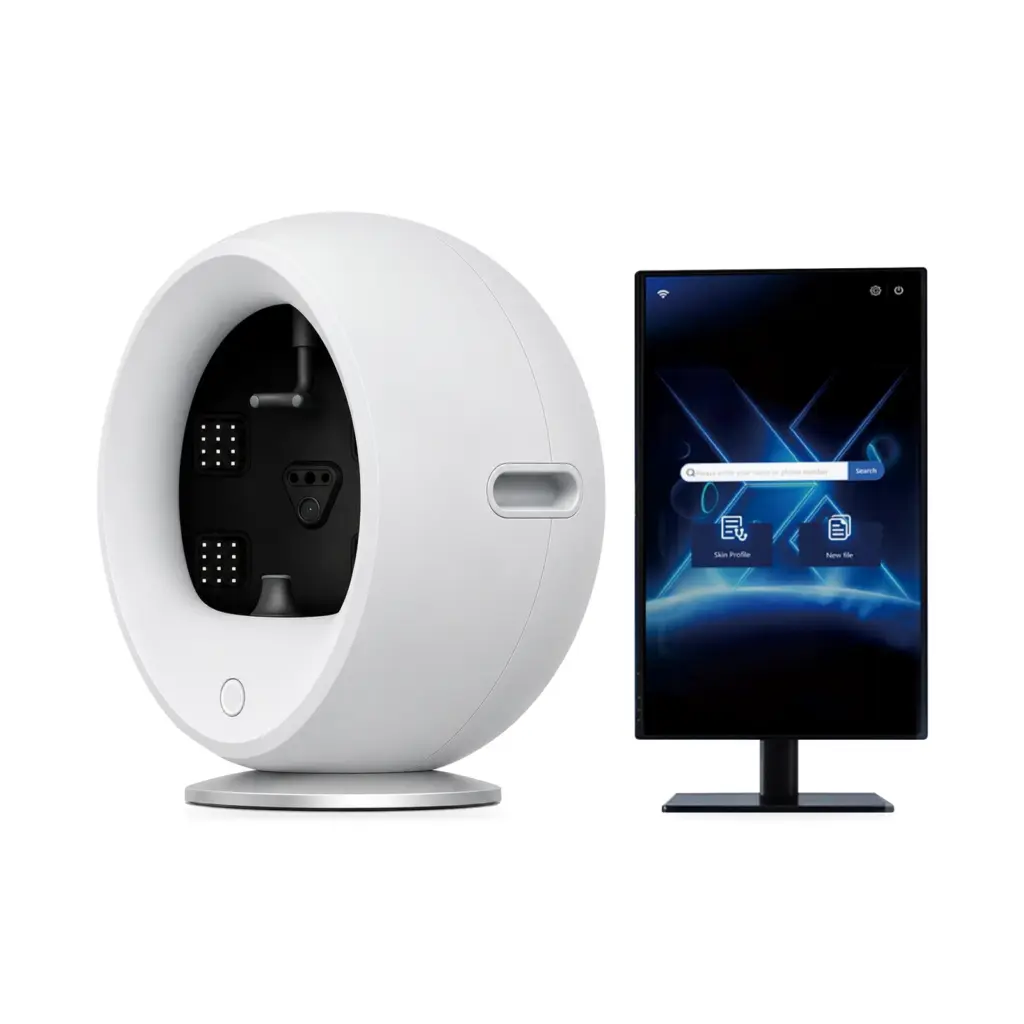
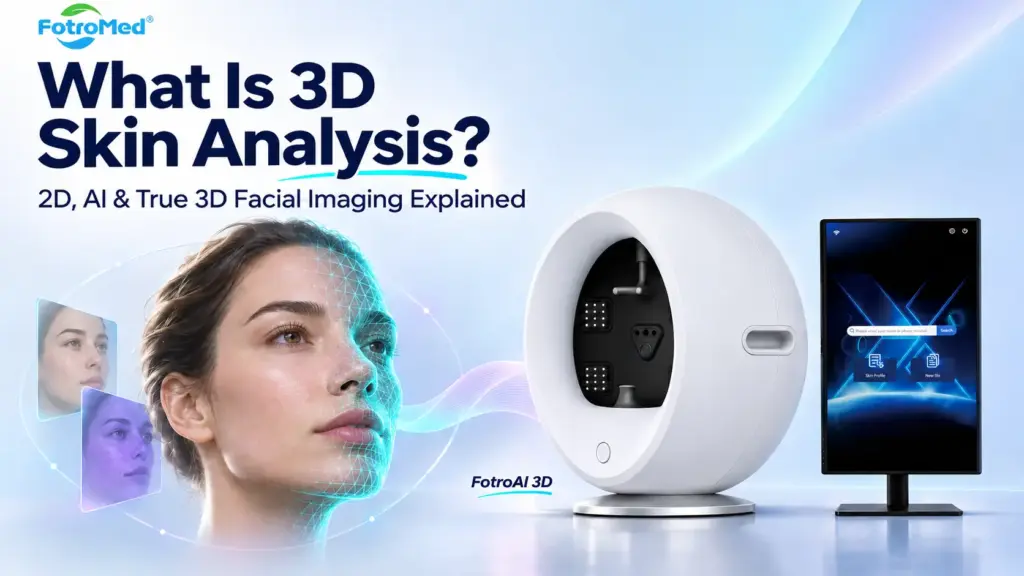
Why does pricing swing from under two thousand dollars to forty thousand? Much of the price gap comes down to optical sensors, controlled lighting chambers, and volumetric modeling capabilities. Since we won’t rehash hardware physics here, read our dedicated breakdown on 2D Multi-Spectral vs. True 3D Skin Imaging to see which optical setup matches your treatment menu—so you never overpay for specs your providers won’t use.
Matching Hardware to Budget: Flagship 3D vs. Everyday Versatility
Smart equipment buyers match the machine to their revenue mix rather than buying on ego:
- For High-Ticket Anti-Aging & Klinik Estetika: Practices selling full-face rejuvenation, laser fraksional, and biostimulators benefit most from a dedicated professional 3D AI skin analyzer with multi-angle capture, 360-degree localized problem amplification, and aging-trend simulations that justify multi-thousand-dollar treatment plans.
- For Versatile Medspas & Skin-Health Centers: If you want clinical depth without flagship overhead, a cost-effective all-in-one workhorse like the Derma Vision Master X5 bridges the gap. By combining multi-spectrum AI facial imaging, UV sunscreen checks, lifestyle/sleep correlation tracking, and an HD scalp magnification probe in one unit, clinics can cross-sell facial therapies, hair-restoration protocols, and post-care retail without buying two separate machines.
Hidden Costs Vendors Rarely Mention Upfront
Sticker price is only part of your Total Cost of Ownership (TCO). Before approving a budget, account for:
- Perangkat lunak, Penyimpanan Awan, and Support Fees. Confirm in your model-specific quote which software features, cloud storage tiers, and annual support services come with the hardware. Ask the vendor to itemize any storage plans, software upgrades, or support agreements that carry separate charges.
Manufacturer Cloud Storage and Support Details
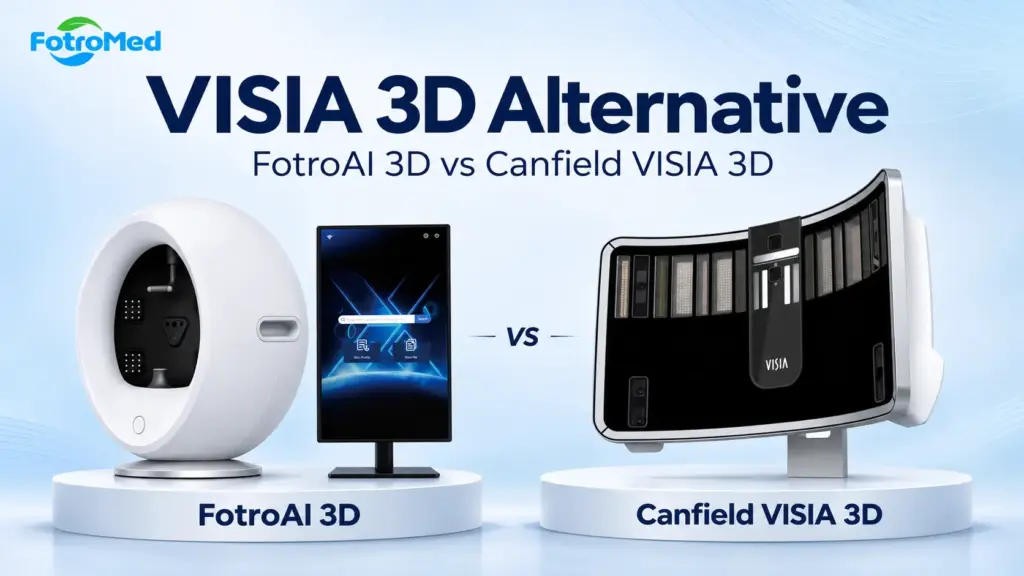
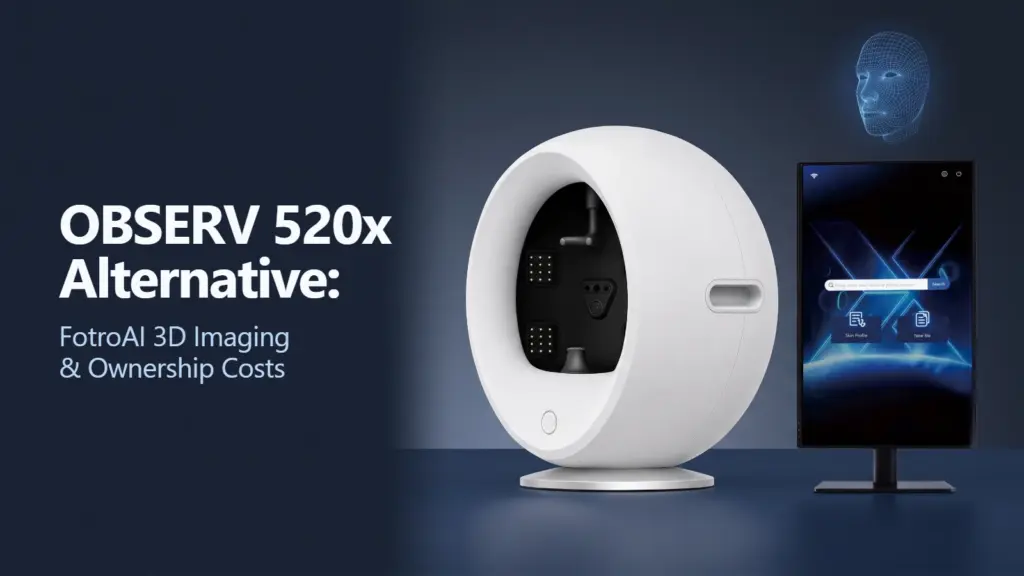
Silton's professional OBSERV 520x uses a chin rest to position the face for full-face imaging, and each Observ device includes 5 GB of free storage. Optional paid U.S. Sylton Connect Pro plans tiers run from $25/month (100 GB) to $130/month (1 TB), covering additional cloud storage and associated account features. Canfield Care offers annual support and software upgrades for Canfield systems, including VISIA. Ask Canfield for the annual fee for your VISIA model.
- Floor Space Opportunity Cost: Large open-room camera rigs require dedicated dimmed lighting zones. Enclosed canopy booths shield out ambient room light so you can scan accurately in a compact consultation corner.
- Staff Chair Time: If a scan takes 15 minutes to calibrate and load, your team will skip it on busy Saturdays.
How a Skin Analyzer Pays for Itself: 4 Proven Revenue Levers
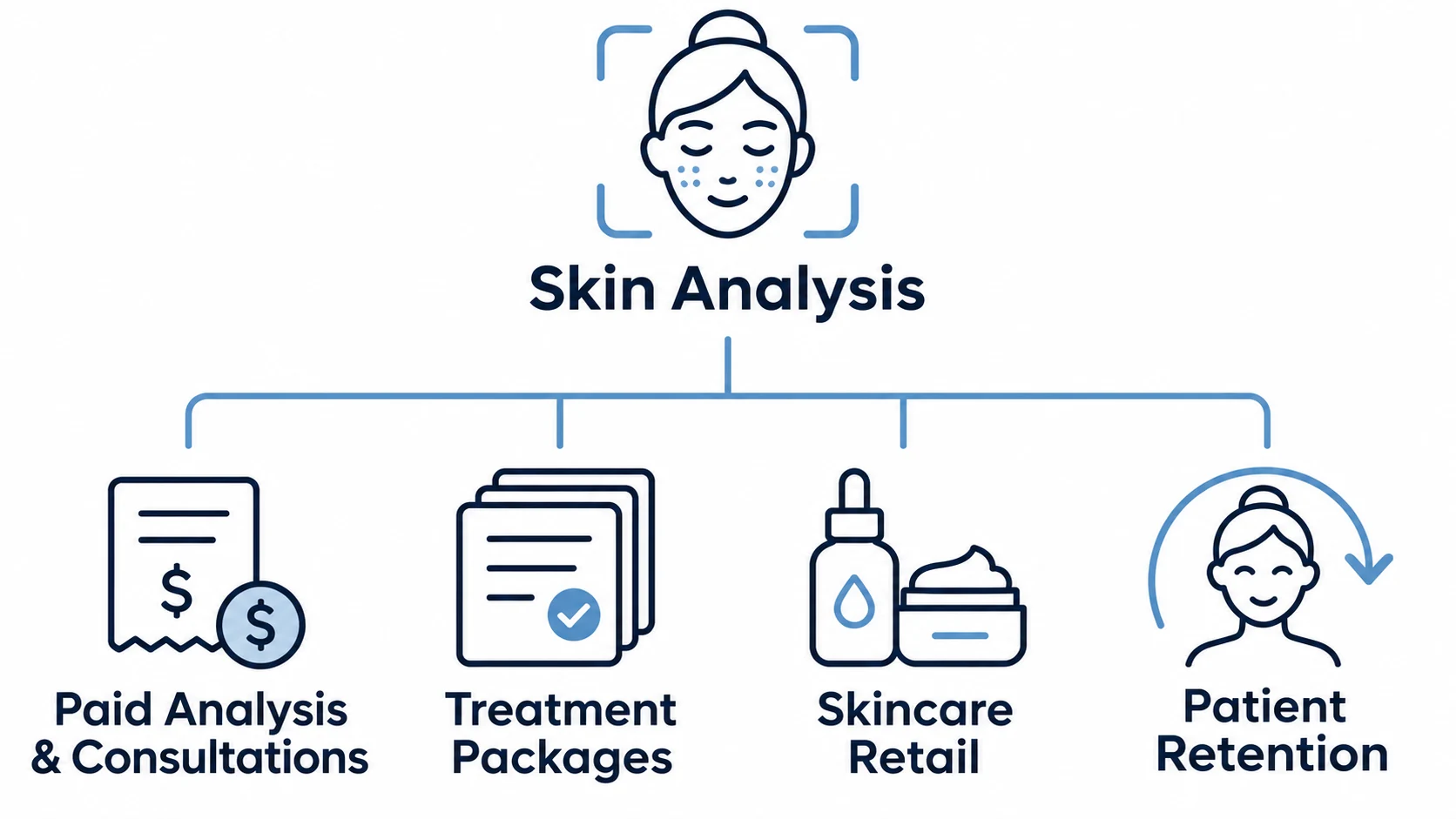
Clinics that generate massive ROI from skin imaging don’t treat the scan as a free party trick—they tie it directly to four monetization levers:
1. Paid Skin Analysis and Creditable Consultation Fees
Lintas 16 KITA. practices reviewed, $50–$175 is the posted range for standalone skin analysis appointments and consultations that include VISIA imaging. Practices charging for these visits should state upfront on their booking page what the fee covers. If the payment can be applied toward later treatment, post those credit terms clearly in advance.
Where the prices come from
We reviewed published fees from 16 KITA. practices using Canfield VISIA, including providers in New York, Massachusetts, and Hawaii. The sample covered standalone skin analysis and consultations that include imaging, with posted fees of $50–$175 per visit before any treatment credits.
2. Converting Single Sessions into Multi-Modality Packages
A new client books a $175 signature facial. During intake, polarized and UV views reveal deep dermal melanin clusters alongside compromised barrier redness. Instead of checking out with a one-off facial, your provider maps out a 90-day corrective roadmap—combining barrier prep, three IPL or peel sessions, and targeted LED recovery—turning a $175 ticket into a $1,650 kemasan.
3. Frictionless Medical-Grade Skincare Retail
Estheticians often hate selling retail because they fear sounding transactional. Modern AI analyzers allow you to pre-load your clinic’s exact backbar and retail SKUs into the software. When the report flags UV porphyrin congestion or inadequate sun protection coverage, your custom cleanser, corrective serum, and SPF appear automatically on the client’s printed or digital treatment plan.
4. Objective “Sebelum & Setelah” Proof That Protects Retention
Patient drop-off is a silent profit killer. Chronic skincare and aesthetic regimens suffer from notoriously poor follow-through when patients cannot see gradual changes in a bathroom mirror. Taking standardized photos for visual records and comparison under comparable lighting and positioning shows visible changes across visits that are hard to judge from memory.
The 5-Minute ROI Math: How Fast Will Your Clinic Break Even?
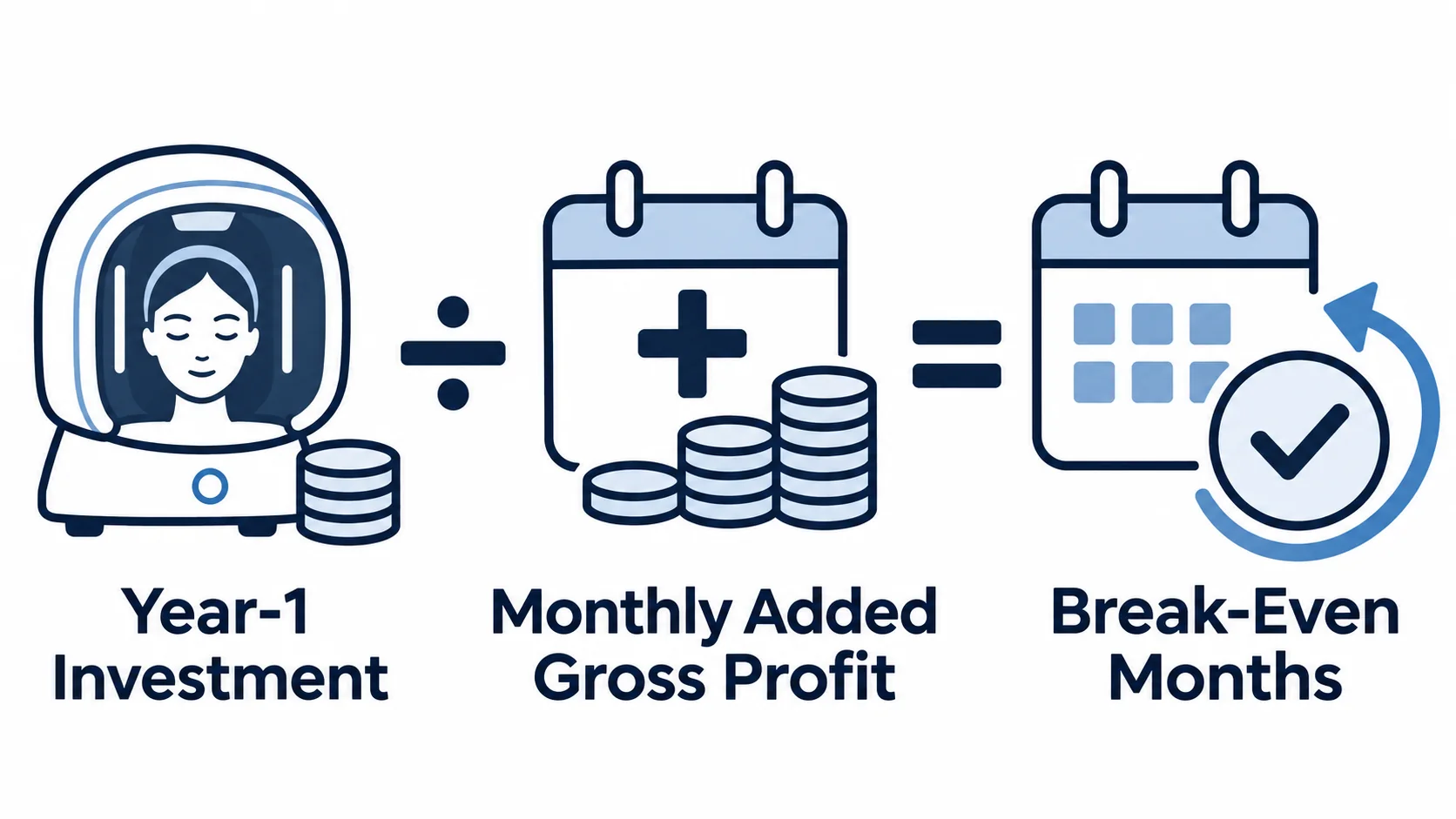
Use this conservative formula to calculate your real payback period:
Break-Even Months = Total Year-1 Cost (Perangkat keras + Perangkat lunak) ÷ Monthly Incremental Gross Profit
Below are two realistic clinic scenarios (factoring in COGS and consumables, not just top-line revenue):
Skenario A: Boutique Skin & Scalp Studio (Investing ~$2,500–$4,500 in a Multi-Functional System)
- Incremental Retail: 3 extra home-care regimens per week @ $120 net margin = $1,440/month
- Incremental Packages: 2 facial or scalp-care series upgrades per month @ $650 net margin = $1,300/month
- Total Monthly Lift: $2,740 net profit/month
- Estimated Break-Even: ~1.5 months
Skenario B: Multi-Provider Medspa (Investing ~$15,000–$25,000 in a Flagship 3D System)
- Incremental High-Ticket Plans: 2 extra laser/RF/injectable packages per week @ $1,300 net margin = $10,400/month
- Incremental Paid Consults + Retail: 4 extra skincare bundles per week @ $150 net margin = $2,400/month
- Total Monthly Lift: $12,800 net profit/month
- Estimated Break-Even: ~1.5 to 2 bulan
Even if your team achieves half of those numbers, the machine pays for itself within a single quarter and produces pure margin lift for the next four to five years.
Why Some Skin Analyzers Collect Dust (When It Is NOT Worth It)
To give you an honest assessment, we also have to examine why some owners regret their purchase. Adoption often hinges on everyday usability and fitting the device into existing clinic routines and appointment workflows. If image capture takes too long or the software interface feels clunky, staff may skip scans whenever the schedule runs tight, leaving expensive hardware underused.
In real-world medspas, analyzers collect dust for three predictable reasons:
- “Opsional” Intake Protocols: If scanning is left up to whether an esthetician “feels like she has time,” usage plummets within weeks. One clinic treating hair loss sent staff a 2-minute video on how to take the photos. Kemudian, correct photo documentation increased from 32% (16/50) ke 66% (33/50).
- Score-Dumping Without Solution Mapping: Handing a client a printout showing “42% wrinkle percentile” without translating it into an empathetic, step-by-step care plan creates anxiety rather than bookings.
- No High-Margin Backend Menu: If your studio only offers $85 express facials and carries zero retail skincare, there is nowhere to channel the diagnostic insights.
Putusan Cepat: Should You Buy Now or Wait?
- Buy Now If: Anda lihat 15+ new aesthetic consults per month, offer multi-session corrective packages or medical skincare retail, and want consistent conversion rates across multiple providers.
- Hold Off If: You haven’t stabilized basic lead generation yet, run a high-turnover walk-in express bar with zero consultation time, or refuse to train staff on consultation scripting.
4 Things to Check Before Signing a Purchase or Lease Agreement
Once your numbers make sense, vet every vendor against these four operational safeguards (for a full technical scorecard, bookmark our step-by-step guide on how to choose a skin analyzer):
- Capture-to-Report Speed Under 2 Menit: Look for fast multi-spectrum capture and automated AI scoring so front-desk flow never bottlenecks.
- Light-Blocking & Alignment Consistency: Ambient window light ruins before-and-after credibility. Prioritize enclosed hoods/canopies and chin-rest alignment overlays that guarantee reproducible follow-up angles.
- Inclusive Skin-Tone Calibration (Fitzpatrick I–VI): Ask vendors how their AI differentiates melanin from vascular erythema on deeper skin tones, as poorly trained algorithms can misread darker complexions.
- HIPAA Privacy, BAAs & Marketing Consent Compliance: HIPAA’s Safe Harbor method for de-identification requires removing full-face photographs and comparable images. If HIPAA applies to your practice, sign a Business Associate Agreement (BAA) with cloud providers that handle protected health information (PHI) and keep clinical records encrypted. Before using client scan images containing PHI in social media marketing, get written marketing authorization from the client. Also ensure staff frame outputs strictly as aesthetic skin-quality assessments, never medical diagnoses for skin cancer or pathology.
When a Skin Analyzer Is Worth the Investment
Jadi, is a skin analyzer worth it for your clinic or medspa? Yes—provided you treat it as the backbone of every new-patient consultation and 90-day progress check. In a crowded market where patient acquisition costs keep rising, visual proof is the fastest ethical shortcut to patient trust, higher treatment acceptance, and long-term retention.
Ready to compare specific models side by side? Explore our updated roundup of the best skin analysis machines for clinics and medspas, or reach out to our clinical equipment specialists to see a live workflow demo of both our professional 3D AI skin analyzer systems and the high-value Derma Vision Master X5 tailored to your treatment menu.
Pertanyaan yang sering diajukan (Pertanyaan Umum)
How accurate are professional AI skin analysis machines?
Clinical multi-spectral analyzers are far more reproducible than naked-eye exams or smartphone selfies because they lock in fixed focal distances, cross-polarized filters, and UV wavelengths. While AI skin models deliver high consistency across targeted visual parameters like pore density, Tempat UV, and erythema, outputs should always be interpreted by a trained provider rather than used for medical pathology diagnosis.
Should clinics offer free skin analysis or charge a consultation fee?
Clinics can either fold complimentary skin imaging into their standard consultation or charge a fee for a standalone scan or an in-depth imaging consultation. If you charge a fee, disclose before booking what the appointment covers, whether any portion can be credited, which treatments or products are eligible, and the timeframe for using that credit.
Is a skin analyzer worth it for a solo esthetician?
Ya, as long as you right-size the hardware budget. Solo estheticians rarely need a $30,000 surgical-grade 3D rig; choosing a cost-effective multi-spectrum system (such as a compact smart analyzer or a 2-in-1 skin and scalp unit like the Derma Vision Master X5) can put the estimated payback period at 2 ke 4 bulan. The estimate depends on your equipment and operating costs and the added gross profit from retail skincare bundles and facial series upgrades.
Is it better to buy outright or lease a skin analysis machine?
If your clinic has healthy cash reserves, buying outright avoids financing interest and maximizes total equipment margin. Namun, financing or leasing ($150–$500/month depending on tier) allows newer medspas to preserve working capital for marketing while letting just one converted treatment package per month cover the equipment payment. (Consult your CPA regarding Section 179 equipment tax deductions in your jurisdiction.)
Referensi & Clinical Sources
- Asosiasi Spa Med Amerika (AmSpa). 2024 Medical Spa State of the Industry Report. americanmedspa.org
- Pooth R, dkk. Transforming Skin Quality Evaluation With AI: From Subjective Grading to Data-Driven Precision. Jurnal Dermatologi Kosmetik. 2025;24(Suppl 4):e70371. PMID: 40847895
- Cao N, Hu Y, Wang X, Wu S, Zhang M. Standardized Clinical Photography for Improving Dermatological Treatment Adherence (Scoping Review): Evidence Landscape and Research Gaps. Klinis, Dermatologi Kosmetik dan Investigasi. 2026;19:639866. PMID: 42898099
- Makhseed A, Arian H, Shuaib A. Sociotechnical-systems analysis of IoT-AI convergence in cosmetic health. Frontiers in Medicine. 2026;13:1677802. DOI: 10.3389/fmed.2026.1677802
- Rose L, Khuhro A, Rojas S, dkk. Standardization of Clinical Photos for Tracking Management of Hair Loss in Dermatology Clinics. Jurnal Dermatologi Kosmetik. 2025;24(8):e70381. PMID: 40772607
- KITA. Department of Health & Human Services (HHS). HIPAA Privacy Rule: De-identification Standard (45 CFR § 164.514) & Uses and Disclosures Requiring Authorization (45 CFR § 164.508). ecfr.gov
- Sylton OBSERV 520x specifications
- Sylton Connect plans and U.S. penetapan harga
- Canfield Care annual support and updates
- Canfield VISIA equipment specifications