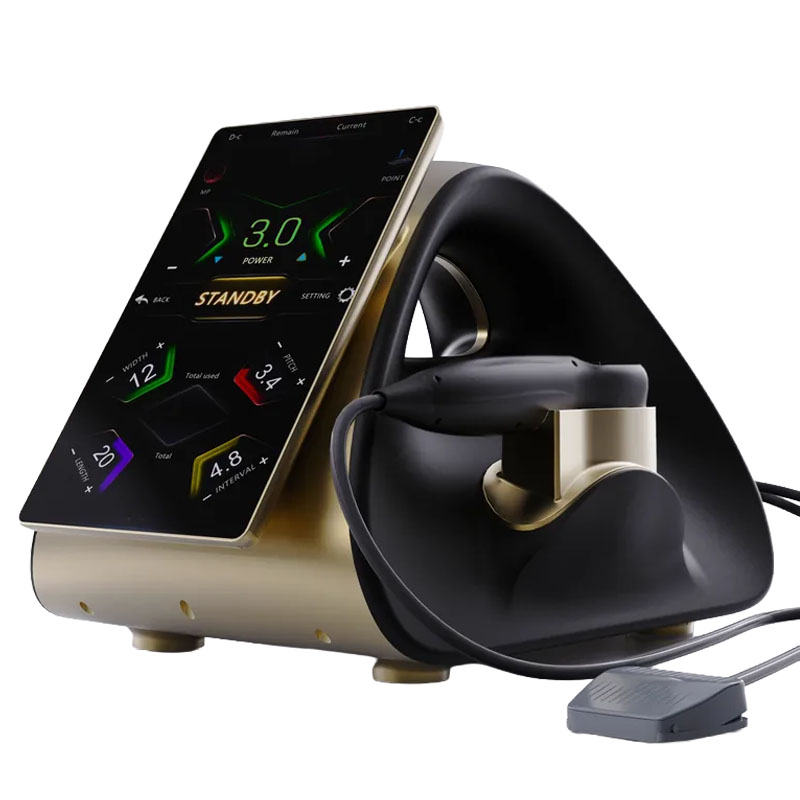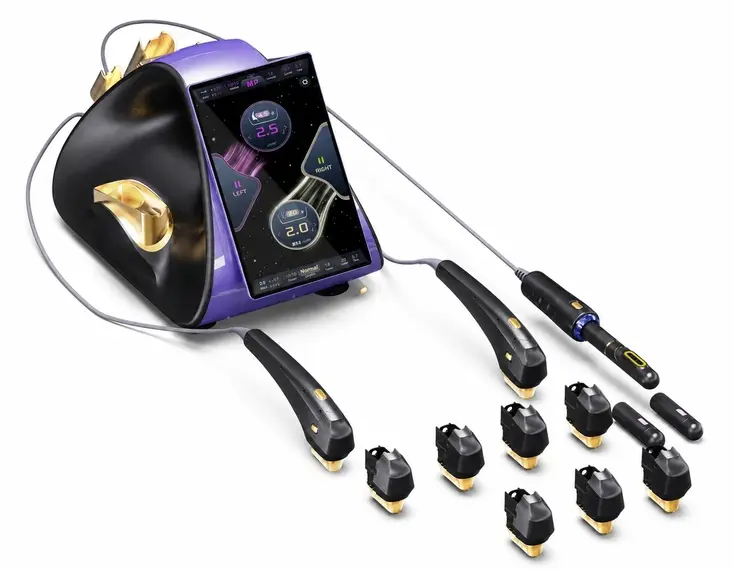
Choosing among RF microneedling machines for estheticians before confirming who can legally operate them can turn an equipment purchase into an unused asset. For an esthetic practice, the right shortlist depends on more than maximum needle depth. Licensing, medical oversight, staff training, disposable-tip supply, warranty terms, and the exact applicator included in the quotation all affect whether a machine is a practical fit.
Based on clinic onboarding and after-sales experience at fotromed, this guide compares five professional systems: Morpheus8, EXION Fractional RF, POTENZA, SYLFIRM X, and FotroMed AWNS. The goal is to help you identify the type of practice each system may suit, the facts that can be verified, and the details that still require written confirmation from the supplier.
Is an RF Microneedling Machine Right for Your Practice?
An RF microneedling machine should enter your buying process only after your operating structure is clear.
Independent esthetician without confirmed medical oversight. Pause the equipment shortlist. First ask the state licensing board, the relevant medical board, and your insurer whether your license and supervision arrangement cover RF microneedling. A supplier training certificate does not expand a legal scope of practice.
Small practice with an established supervision structure. Prioritize a focused workflow, limited consumable types, clear onboarding, and responsive service. A platform with many modes may look more capable, but every additional tip and energy option creates another training and inventory requirement.
Growing med spa with several operators. Look beyond the demonstration performed by the supplier’s most experienced trainer. Ask whether your full team can follow the same setup, documentation, tip-selection, and troubleshooting process. Consistency matters more as treatment volume and staff count increase.
Physician-led or multi-room clinic. A broader platform may be justified when the practice can support more handpieces, protocols, consumable SKUs, and service dependencies. Confirm that the extra capabilities belong to the quoted applicators; do not attribute every function of a multi-technology platform to its RF microneedling handpiece.
Readiness Check
Use this sequence before comparing brands: legal scope confirmed -> supervision confirmed -> insurer acceptance confirmed -> exact device and labeling checked -> staff training and consumable plan reviewed.
5 Best RF Microneedling Machines for Estheticians in 2026
To qualify for this shortlist, a system had to combine microneedles with RF energy, be intended for professional use, and have enough current manufacturer or regulatory documentation to verify buyer-relevant facts. SkinPen is not included because the FDA De Novo record for the SkinPen Precision System classifies it as a powered microneedle device, not an RF microneedling system.
Fotromed manufactures one of the five options in this article. The same comparison rules were applied to every system. The “best fit” labels below are editorial judgments about practice setup, not clinical-effectiveness rankings or claims that one device is universally superior.
| System | Published RF configuration | Published physical needle depth | Published tip or applicator facts |
|---|---|---|---|
| Morpheus8 | 1 MHz bipolar fractional RF | 0.5-7.0 mm, depending on applicator and tip | Prime, 24-pin, 40-pin Body, and other configurations exist |
| EXION Fractional RF | 1 MHz monopolar RF | 0.5-4.0 mm | 36-microneedle tip; separate superficial-pin configurations also exist |
| POTENZA | 1 or 2 MHz; monopolar or bipolar | 0.5-4.0 mm for published invasive tips | Insulated, semi-insulated, non-insulated, pumping, and non-invasive options vary by market |
| SYLFIRM X | 2 MHz bipolar RF; PW and CW programs | 0.3-4.0 mm | Published specifications list 18-, 25-, and 49-pin formats |
| FotroMed AWNS | 1 MHz bipolar fractional RF | 0.5-3.5 mm | 25-pin and 49-pin microneedle tips plus a 49-RF surface tip |
Buyer Pitfall: Compare the Applicator, Not Just the Platform Name
Morpheus8 and EXION can be supplied through larger workstation or platform configurations. POTENZA and SYLFIRM X also have market-dependent tip sets. Require the quotation to identify the console, applicator, tip types, software version, and regulatory document as separate line items.
1. Morpheus8
Best fit: physician-led clinics and established med spas that value a recognized premium platform, face-and-body applicator choices, and potential expansion within the InMode ecosystem.
Morpheus8 is better understood as a family of fractional RF applicators used with compatible InMode workstations than as one fixed machine configuration. U.S. clearance documentation identifies 1 MHz fractional RF and several sterile, single-use tip arrangements.
The published configurations include a 12-pin Prime tip adjustable to 4.0 mm, 24-pin and 40-pin Body tips adjustable to 7.0 mm, and a superficial T tip fixed at 0.5 mm. A separate Morpheus8 90 applicator has its own clearance and should not be assumed to be part of a standard quotation.
That configuration range is useful for a practice building both facial and body workflows, but it also makes the purchase harder to compare. Ask which workstation is being quoted, which applicators are enabled, and which tip formats the initial package contains. Obtain the per-tip packaging quantity, reorder terms, software requirements, training scope, and service response in writing.
The current FDA K231790 documentation also shows why broad claims such as “safe for every skin type at every setting” should be avoided: use above 62 mJ per pin is limited to Fitzpatrick skin types I-IV. Morpheus8 may not be the most practical starting point for a small practice that wants one simple RF microneedling workflow without a broader workstation commitment.
2. EXION Fractional RF
Best fit: comprehensive med spas, dermatology practices, and plastic-surgery clinics that want RF microneedling inside a platform with additional applicators and can support the associated training and service complexity.
The accurate purchasing description is the BTL EXION platform with the EXION Fractional RF applicator. It should not be confused with EXION Clear RF or with the platform’s separate face, body, and other applicators. According to FDA K233604, the BTL-785-4 applicator uses 1 MHz monopolar RF, a 6 x 6 array of 36 microneedles, and a physical needle depth of 0.5-4.0 mm. The document also identifies separate 32-pin and 64-pin superficial configurations.
BTL markets AI Pulse Control, single-pass delivery, and an Extended Mode that allows energy to affect tissue beyond the needle tip. This creates an important wording distinction: regional marketing pages may describe a treatment depth of about 7.5-8 mm, but the documented physical microneedle depth remains a maximum of 4.0 mm. A supplier should explain both measurements instead of calling it “8 mm needle penetration.”
The platform may be excessive when a practice needs only a straightforward RF microneedling service. Before purchase, confirm which applicators are included, whether AI Pulse Control and Extended Mode are enabled in the quoted software and market, and which disposable tips correspond to Fractional RF rather than Clear RF.
Buyer Operations Note
A larger platform can reduce the number of consoles in a clinic, but it can also concentrate service risk in one system. Ask what happens to each revenue line if the shared console is unavailable, how quickly a loaner or replacement part can be supplied, and whether each applicator has separate warranty exclusions.
3. POTENZA
Best fit: established med spas and physician-led practices that already have a disciplined training system and want broad RF mode, frequency, and tip configurability.
Manufactured by Jeisys Medical, POTENZA offers 1 MHz and 2 MHz output with monopolar and bipolar RF modes. Its published specifications list both invasive and non-invasive options, including insulated, semi-insulated, non-insulated, pumping, and single-pin formats. Published invasive-tip depth is generally 0.5-4.0 mm in 0.25 mm steps, while the depth and available RF mode depend on the selected tip.
This breadth is POTENZA’s main buying advantage and its main operational trade-off. More combinations can support a wider service design, but they also increase the number of protocols, tips, consumable SKUs, and staff decisions the practice must control. Monopolar operation may also involve a neutral electrode pad, so the supplier should demonstrate the complete workflow rather than only the handpiece.
Do not assume all 18 published tip types are included or authorized in every country. The U.S. FDA K231287 record and market-specific packages do not necessarily contain the same configuration. Require the quote to identify each included tip, whether it is insulated, its permitted frequency and RF mode, sterilization and single-use status, reorder lead time, and the training provided for that exact set.
4. SYLFIRM X
Best fit: physician-led practices that want a focused bipolar RF microneedling platform and are prepared to train operators on pulsed-wave and continuous-wave selection.
Published SYLFIRM X specifications list 2 MHz bipolar RF, four continuous-wave programs, four pulsed-wave programs, and adjustable physical needle depth from 0.3 to 4.0 mm in 0.1 mm steps. The published tip formats include 25-pin, 18-pin, and 49-pin configurations with different spacing and array layouts.
PW/CW differentiation gives a practice a clear protocol-design dimension, but it should not be converted into a broad U.S. clearance claim for melasma, pigmentation, redness, or another named cosmetic concern. The U.S. FDA K213612 record concerns electrocoagulation and hemostasis in dermatologic procedures. Marketing permissions and indications in Korea, Taiwan, or other markets do not automatically transfer to the United States.
The published 49-pin format should not be assumed to be included in every local package. Ask the supplier to match each tip to the destination market’s documentation, training materials, sterile packaging, price, minimum order quantity, and replenishment lead time. SYLFIRM X is less suitable for a team that wants a minimal learning curve and does not intend to build governance around eight waveform programs.
5. FotroMed AWNS
Best fit: supervised small-to-midsize practices and distributors that want a focused bipolar RF microneedling system, direct manufacturer communication, and a simpler tip set than a multi-modality platform.
The current FotroMed AWNS page lists 1 MHz bipolar RF, pulse width from 10 to 1,000 ms, physical needle depth from 0.5 to 3.5 mm, and 25-pin and 49-pin microneedle tips plus a 49-RF surface tip. It also lists foot-pedal or hand-button control, AC 100-240 V compatibility, one-to-one online training, and a one-year warranty. These commercial terms should still be repeated in the final quotation, including exclusions, freight responsibility, and replacement-part arrangements.
AWNS does not offer POTENZA’s 1/2 MHz and monopolar/bipolar combinations or the broader workstation ecosystem associated with Morpheus8 and EXION. Its value proposition is a more focused configuration and direct onboarding, not a claim that it duplicates the capabilities, clinical evidence, or market recognition of premium platforms.
From Fotromed’s Training and Support Experience
Clinics commonly focus on the console during the first conversation, then discover that launch readiness depends on smaller details: how many sterile tips arrive with the unit, whether the team can repeat the training, what records are supplied for the destination market, and who pays freight when a warranty part must be replaced. Put these items in the written quotation before paying a deposit.
How State Rules Affect Who Can Operate an RF Microneedling Machine
Rules are not uniform across the United States. The same RF microneedling machine may require a different operator license or supervision structure depending on where the clinic is located.
California
California is the strictest of these three examples. The California Board microneedling bulletin says microneedling and derma rolling are outside the scope of every license regulated by that Board. 16 CCR section 991 also classifies penetration beyond the epidermis by metal needles as invasive.
For a clinic buyer, the practical result is straightforward: a California esthetician license alone does not cover RF microneedling.
Washington
Washington uses a different licensing structure. Effective March 1, 2026, RCW 18.16.020 includes radio-frequency medical devices within master esthetics, while still requiring any delegation or supervision called for by other laws and rules. The Washington Department of Health guidance notes that prescription devices may require a supervising physician (MD or DO).
A clinic therefore needs to distinguish a standard esthetician from a master esthetician and confirm the supervision required for the exact device.
Texas
Texas draws the line around needles and the dermis. The Texas TDLR med-spa guidance says estheticians may perform facial services within their license, but not medical-type procedures requiring needles. It also directs questions about procedures that contact or penetrate the dermis, medical acts, and delegation to the Texas Medical Board.
For a clinic buyer, a standard esthetician license alone is therefore not enough evidence that the operator may perform RF microneedling.
What These State Rules Mean Before You Buy
Put simply, the same RF microneedling machine can fall under different operator rules in each state. California excludes microneedling from the Board’s esthetician scope; Washington has a master-esthetician route but may still require supervision; Texas treats needle-based or dermis-penetrating work as outside ordinary esthetician services. Before ordering, confirm two points with the relevant state authority and insurer: who may operate the machine and what supervision is required. FDA clearance and supplier training do not answer those state-level questions.
FDA Safety Reminder
The FDA’s October 15, 2025 RF microneedling safety communication describes RF microneedling as a medical procedure and reports serious complications with certain uses, including burns, scarring, fat loss, disfigurement, and nerve damage. The FDA recommends seeking a licensed health care provider with training and experience. Before purchasing, confirm the state board, medical board, insurer, device labeling, supervision structure, and training requirements that apply to your practice. This section is educational and not legal advice.
Frequently Asked Questions
Can an esthetician perform RF microneedling?
Sometimes, but an esthetician license alone is not a nationwide authorization. The answer depends on the state, license level, whether RF microneedling is treated as a medical procedure, the required physician delegation or supervision, device labeling, and insurer acceptance. Confirm all five before purchasing or offering the service.
What is the best RF microneedling machine for an esthetician?
There is no universal best model. A supervised small practice may value a focused system and direct onboarding, while a physician-led clinic may justify a broader platform or more RF and tip combinations. The best fit is the system your legal structure, staff, consumable plan, and service capacity can support consistently.
Is SkinPen an RF microneedling machine?
No. SkinPen is a powered mechanical microneedling device and does not deliver radiofrequency energy. It may be relevant in a general microneedling comparison, but including it in an RF-only machine shortlist would mix two different device categories and mislead the buyer.
Does FDA clearance mean an esthetician is allowed to operate the machine?
No. FDA clearance concerns the legal marketing of a specific device for stated indications. State licensing boards and medical boards determine professional scope and delegation requirements, while insurers decide whether they will cover the service. These checks must be completed separately.
Final Buying Decision
Start with operator eligibility, not brand preference. Once scope, medical oversight, insurance, and device labeling are confirmed, compare the exact console and applicator bundle, physical needle depth, RF modes, sterile-tip supply, training, warranty exclusions, and service response. If you are ready to compare a focused rf microneedling machine for your clinic or distribution market, prepare those requirements before requesting a model recommendation.
About This Guide
This article was reviewed against current manufacturer pages, FDA records, and official state sources available on July 15, 2026. Product configurations and local rules can change. Verify the exact unit, label, documentation, consumables, and professional requirements before purchase or use. Fotromed manufactures one system included in the comparison, and that commercial relationship is disclosed in the selection methodology.
References & Sources
- FDA K231790: InMode System with Morpheus8 Applicators – U.S. Food and Drug Administration
- FDA K233604: BTL-785S – U.S. Food and Drug Administration
- FDA K231287: POTENZA – U.S. Food and Drug Administration
- FDA K213612: SYLFIRM X – U.S. Food and Drug Administration
- FDA De Novo Record: SkinPen Precision System – U.S. Food and Drug Administration
- Microneedling and Derma Rolling Industry Bulletin – California Board of Barbering and Cosmetology
- 16 CCR Section 991: Invasive Procedures – California Code of Regulations
- RCW 18.16.020: Esthetics and Master Esthetics Definitions – Washington State Legislature
- Operating a Med Spa or Esthetic Business – Washington State Department of Health
- Medical Spas: Barbering and Cosmetology – Texas Department of Licensing and Regulation
- Potential Risks with Certain Uses of RF Microneedling – U.S. Food and Drug Administration